
Introduction: The Maturation of Decentralized Energy Architecture
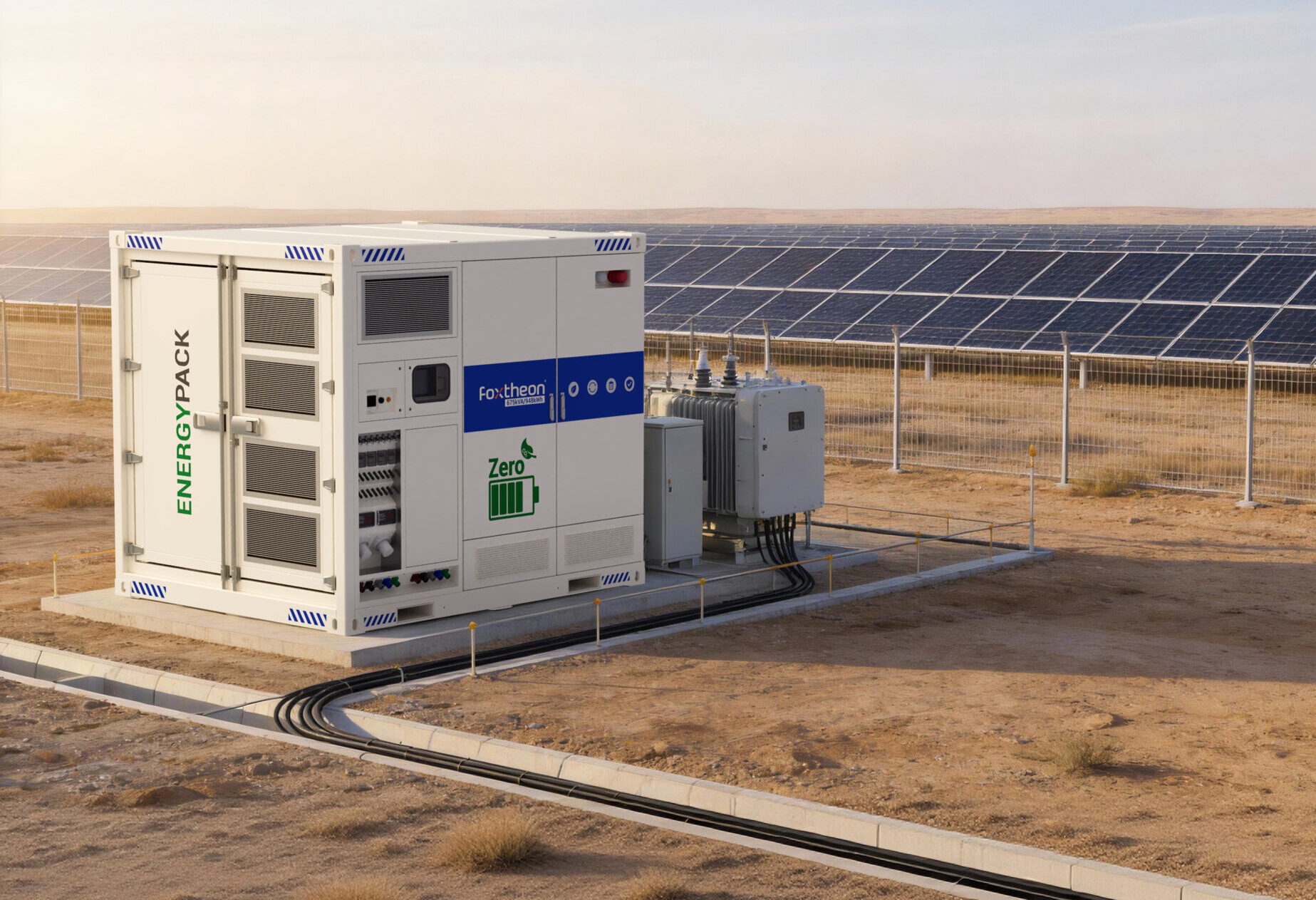
The transition toward decentralized energy networks requires sophisticated infrastructure capable of balancing generation and consumption dynamically. As commercial and industrial (C&I) facilities face increasing grid volatility, stringent carbon mandates, and complex utility tariff structures, the deployment of distributed battery storage has become a foundational component of modern energy asset management. Rather than relying solely on centralized grid infrastructure, facility managers and energy developers are adopting localized power management strategies to stabilize voltage, optimize existing thermal generation assets, and execute precise load-shifting operations.
This technical analysis examines the engineering principles, economic advantages, and integration strategies associated with modern energy storage systems. By focusing on asset synergy, specifically the hybridization with existing power generation infrastructure, we outline how behind-the-meter (BTM) and front-of-the-meter (FTM) storage applications deliver measurable operational efficiency.
1. Technical Architecture and Component Synergy
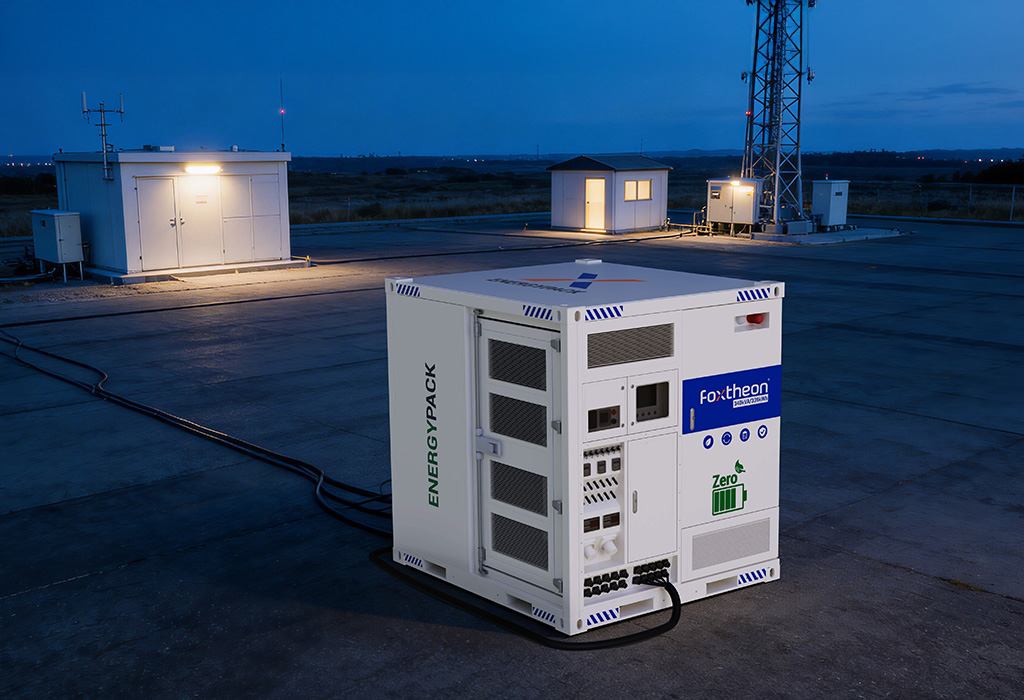
A robust energy storage system is not merely a collection of electrochemical cells; it is a complex, integrated network of hardware and software designed for instantaneous power dispatch.
Advanced Battery Management Systems (BMS)
At the cell and module level, the Battery Management System (BMS) operates as the primary safeguard and optimization engine. Utilizing high-fidelity sensors, the BMS continuously monitors voltage, current, and temperature at a granular level. Through active and passive cell balancing algorithms, the system ensures uniform charge distribution across the lithium-iron-phosphate (LFP) matrix. This prevents localized overcharging, mitigates thermal gradient formation, and directly extends the overall cycle life of the installation.
Power Conversion Systems (PCS) and Grid Interaction
The bidirectional Power Conversion System (PCS) serves as the bridge between the direct current (DC) battery modules and the alternating current (AC) facility load. Modern smart inverters feature both grid-following and grid-forming capabilities. In grid-forming mode, the PCS provides synthetic inertia and establishes a localized voltage and frequency reference, allowing facilities to maintain stable microgrid operations during primary utility outages seamlessly.
2. Synergy and Hybridization with Existing Power Assets
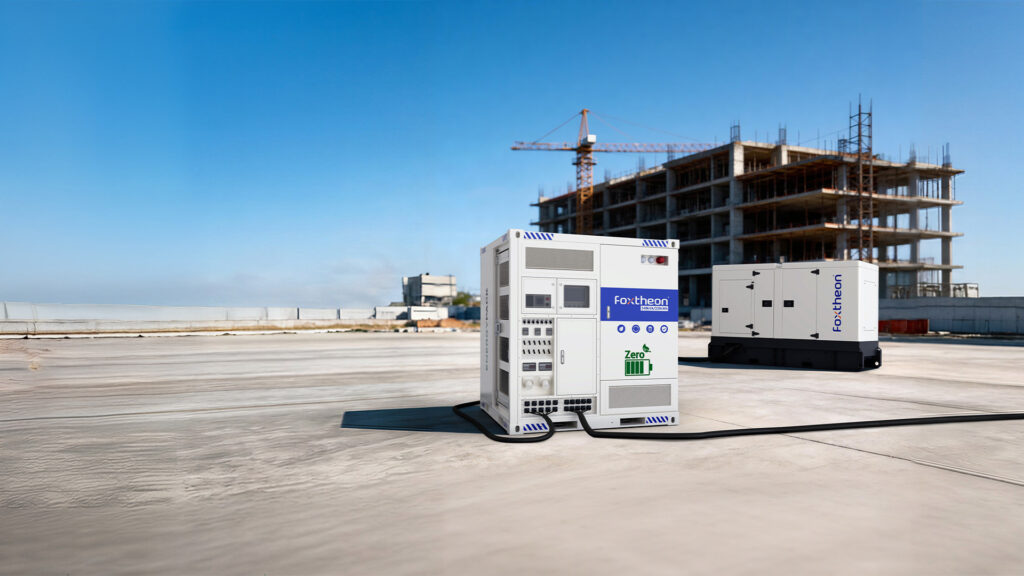
One of the most valuable applications of distributed battery storage lies in its ability to hybridize with existing thermal generation infrastructure, such as diesel or natural gas generator sets. This operational strategy focuses on optimizing existing capital assets rather than rendering them obsolete.
Optimizing Generator Load Factors
Traditional generators suffer from decreased fuel efficiency and increased maintenance requirements (such as wet stacking in diesel engines) when operating at low or highly variable loads. By integrating an energy storage system, facility operators can employ a load-leveling strategy. The generator is dispatched to run strictly within its optimal efficiency tier (typically 70% to 85% of rated capacity). Excess power generated during this period is absorbed by the battery subsystem. Once the battery reaches a predefined State of Charge (SoC), the generator safely shuts down, and the battery assumes the facility load. This strategy drastically reduces engine run-hours, decreases mechanical wear, and optimizes fuel consumption.
Transient Load Support and Spinning Reserves
Industrial facilities frequently experience massive transient load spikes, such as motor start-up inrush currents. Relying solely on generators to handle these spikes requires over-sizing the genset, which is capital-intensive and inefficient. A hybrid system utilizes the high-discharge capability of the battery to absorb these micro-second transient spikes, functioning as a highly responsive spinning reserve. This collaboration between thermal and electrochemical assets ensures superior power quality and system reliability.
3. Commercial Load Shifting and Demand Charge Management
Utility billing structures for large C&I consumers are highly complex, often featuring substantial demand charges based on the single highest 15-minute interval of energy consumption during a billing cycle. In many jurisdictions, demand charges can constitute up to 50% of a facility’s total monthly electricity expenditure.
Implementing distributed battery storage provides a highly effective mechanism for peak shaving. Through an intelligent Energy Management System (EMS), the facility predicts daily load profiles using historical data and localized weather forecasting. When the algorithm detects an impending demand spike, it automatically commands the battery to discharge, effectively capping the power drawn from the utility grid. Furthermore, through time-of-use (TOU) arbitrage, the system charges from the grid during off-peak hours when electricity rates are lowest, and discharges during premium on-peak hours, creating a consistent, measurable reduction in operational expenditure (OPEX).
4. Intelligent Thermal Management and Safety Compliance
Operating high-density energy storage within C&I environments necessitates rigorous adherence to safety protocols and advanced thermal engineering.
Active Liquid Cooling vs. HVAC Air Cooling
Maintaining lithium-ion cells within their optimal temperature bandwidth (typically 20°C to 25°C) is fundamental to maximizing asset longevity. While traditional HVAC forced-air cooling is adequate for lower C-rate applications, sophisticated B2B solutions increasingly utilize active liquid cooling systems. Liquid cooling plates integrated directly adjacent to the battery modules offer superior thermal conductivity, ensuring temperature deviations between individual cells remain below 3°C. This uniform thermal management prevents localized degradation and significantly lowers auxiliary parasitic load compared to high-velocity air conditioning units.
Regulatory Adherence and Fire Suppression
Enterprise-grade equipment supplied by industry leaders like Foxtheon is engineered to meet rigorous international safety certifications, including UL 9540 for system safety, IEC 62619, and compliance with NFPA 855 installation standards. Multi-tiered safety architectures include off-gas detection sensors, isolation contactors, and automated aerosol or clean-agent fire suppression systems that deploy autonomously at the module level in the event of a thermal anomaly.
5. Grid Ancillary Services and Revenue Stacking
Beyond behind-the-meter savings, distributed battery storage empowers C&I facilities to participate actively in wholesale energy markets. This transitions the storage system from a pure cost-saving mechanism into a revenue-generating asset through a strategy known as revenue stacking.
- Frequency Regulation (FCAS): Because battery systems can respond to dispatch signals in milliseconds, they are highly valued by grid operators for maintaining grid frequency at a strict 50Hz or 60Hz. Facilities are compensated financially for committing a portion of their battery capacity to fast frequency response markets.
- Demand Response Programs: During extreme grid stress, grid operators issue dispatch commands to curtail load. Storage systems allow facilities to reduce grid draw without interrupting site operations, securing lucrative demand response payments.
- Voltage Support: Advanced smart inverters can inject or absorb reactive power (VARs), stabilizing local grid voltage and improving overall power quality for the broader distribution network.
6. EV Infrastructure Buffer and Capacity Constraint Mitigation
The rapid expansion of commercial electric vehicle (EV) fleets introduces substantial challenges to localized grid infrastructure. DC fast-charging stations demand immense power momentarily, which can overwhelm existing utility transformers and trigger costly interconnection upgrades.
Positioning distributed battery storage as a buffer between the grid and the EV charging depot provides a highly pragmatic solution. The battery system continuously draws low-level, steady power from the grid to maintain its charge. When multiple fleet vehicles plug in simultaneously, the energy is dispensed directly from the battery system rather than pulling a massive spike from the utility grid. This configuration completely bypasses the need to trench new, higher-capacity utility lines, accelerating EV deployment timelines while strictly controlling interconnection capital expenditure (CAPEX).
7. Financial Modeling: Assessing TCO and System Modularity
Evaluating the financial viability of energy infrastructure requires a comprehensive analysis of the Total Cost of Ownership (TCO) and the Levelized Cost of Storage (LCOS). Modularity is a key factor in reducing TCO. By utilizing scalable, cabinet-based architectures, developers can precisely match system capacity to current load profiles without over-capitalizing on day one. As facility demand grows, additional power and energy modules can be integrated onto the common DC bus with minimal engineering overhead.
Working with specialized providers such as Foxtheon ensures that B2B clients receive accurate financial modeling, encompassing expected cycle life, depth of discharge (DoD) degradation curves, auxiliary power consumption, and ongoing preventative maintenance costs. This rigorous approach to project finance enables corporate procurement teams to validate reliable Return on Investment (ROI) timelines, typically ranging from 3 to 6 years depending on local tariff structures and market participation opportunities.
Frequently Asked Questions (FAQ)
Q1: What differentiates distributed battery storage from centralized utility-scale storage?
A1: Decentralized storage is installed close to the point of consumption (behind-the-meter or at distribution network nodes), reducing transmission losses and providing localized benefits like peak shaving and facility backup. Centralized storage is typically located adjacent to utility generation plants and focuses on bulk energy shifting for the entire high-voltage transmission grid.
Q2: How does a battery system integrate with our existing diesel generators?
A2: The systems operate in synergy through an automated microgrid controller. The battery handles low loads and transient spikes, while the generator is dispatched only when the battery state of charge is low, ensuring the generator runs at its most fuel-efficient load point (e.g., 80%). This reduces fuel consumption, prevents wet-stacking, and significantly extends generator maintenance intervals.
Q3: What is the expected cycle life of a commercial energy storage system?
A3: Modern commercial systems utilizing Lithium-Iron-Phosphate (LFP) chemistry typically deliver between 6,000 to 8,000 full charge/discharge cycles. At one cycle per day, this equates to an operational lifespan of 15 to 20 years, depending on the average Depth of Discharge (DoD) and the efficiency of the thermal management system.
Q4: Can we scale the battery capacity after the initial installation?
A4: Yes. Solutions engineered by Foxtheon utilize a modular design architecture. Facilities can start with a base configuration to manage current demand charges and easily commission additional battery racks in parallel as power requirements increase, avoiding high initial capital outlay.
Q5: How does the system handle preventative maintenance and software updates?
A5: Commercial systems are connected to secure, cloud-based monitoring platforms. This allows for continuous remote diagnostics, predictive maintenance alerts, and over-the-air (OTA) firmware updates to the EMS and BMS, ensuring the system operates with the latest optimization algorithms and safety protocols without requiring constant on-site technician visits.
Optimize Your Facility’s Energy Architecture Today
Implementing a highly engineered energy storage solution requires rigorous technical analysis, load profiling, and precise hardware integration. Whether your objective is mitigating demand charges, providing a buffer for heavy industrial loads, or creating a synergistic hybrid microgrid with your existing power assets, specialized engineering is paramount.
To explore how distributed battery storage can specifically align with your operational requirements and financial objectives, contact the technical engineering team at Foxtheon. Submit an inquiry today to schedule a comprehensive site evaluation and receive a customized system design proposal tailored to your commercial infrastructure.