
1. Core Components of Mobile Battery Energy Storage Systems
A mobile BESS is more than a battery pack on wheels. It integrates thermal management, power conversion, controls, and protection devices into a standardized enclosure (typically 10ft, 20ft, or 40ft ISO container). Each component influences performance, safety, and compatibility with existing assets.
1.1 Battery Chemistry & Configuration
Lithium iron phosphate (LFP) dominates mobile BESS due to thermal runaway resistance (decomposition above 270°C), cycle life exceeding 5,000 cycles at 80% DoD, and flat voltage discharge curve. Nickel manganese cobalt (NMC) offers higher energy density but requires more robust active cooling. For rentals, LFP reduces risk during transport and operation at temporary sites. Typical configurations are 100 kW / 250 kWh up to 1 MW / 2 MWh per unit, scalable via parallel connection.
1.2 Power Conversion System (PCS)
The bi-directional inverter converts DC battery power to AC load or grid-synchronous power. Key specs to request:
- Overload rating – ability to supply 150% of nominal current for 10 seconds (motor starting).
- Grid-forming capability – creates its own voltage reference for isolated sites (microgrid mode).
- THD – total harmonic distortion below 3% for linear loads, below 5% for non-linear.
1.3 Thermal Management & Fire Suppression
Mobile units operate in ambient temperatures from -20°C to 50°C. Liquid cooling (glycol-water) maintains cell delta-T within 5°C, prolonging calendar life. Aerosol-based or gas-based fire suppression systems with early-warning sensors (H2, CO, smoke) are mandatory for rental units. Ask for UL 9540A or IEC 62619 certification for battery safety.
2. Key Application Scenarios for Mobile BESS Rental
Renting a storage system avoids capital expenditure while solving specific operational constraints. The following industries regularly adopt mobile BESS rental solutions.
2.1 Construction & Temporary Sites
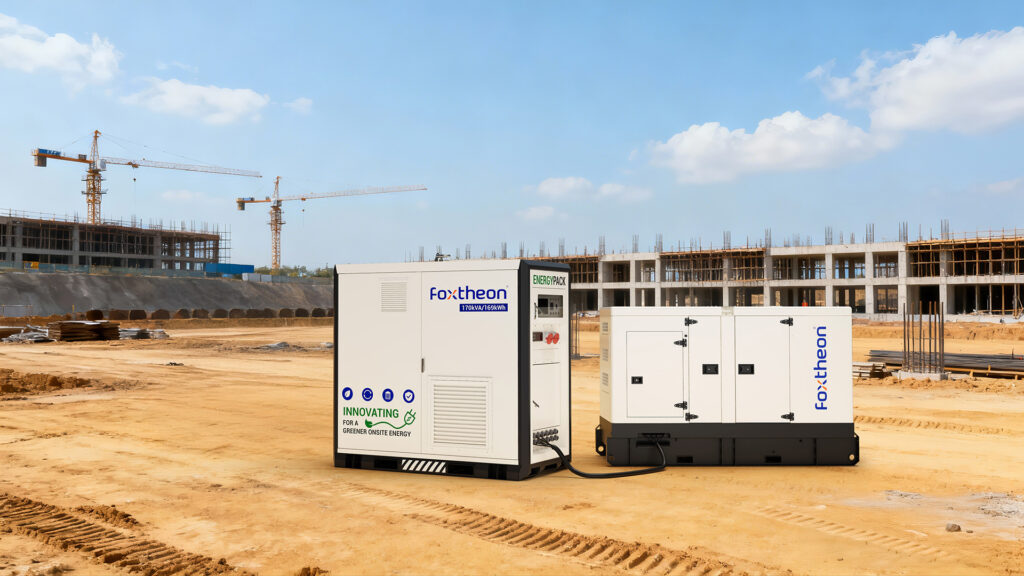
Large cranes, tower lighting, weld sets, and office containers create daily load peaks. A mobile BESS can be charged overnight from a reduced-size diesel generator or grid feed, then discharge during daytime peaks, reducing generator running hours by 40–60%. It also provides quiet power during night shifts for urban projects with noise restrictions.
2.2 Utility Grid Support & Peak Shaving
Distribution utilities face congestion during seasonal peaks. Mobile BESS units are deployed at substations for 3–6 months to shave peaks, deferring transformer upgrades. The system charges during low-demand periods (night or weekends) and discharges during high-demand windows. Advanced EMS can participate in frequency regulation or voltage support via remote SCADA signals.
2.3 Events & Temporary Microgrids
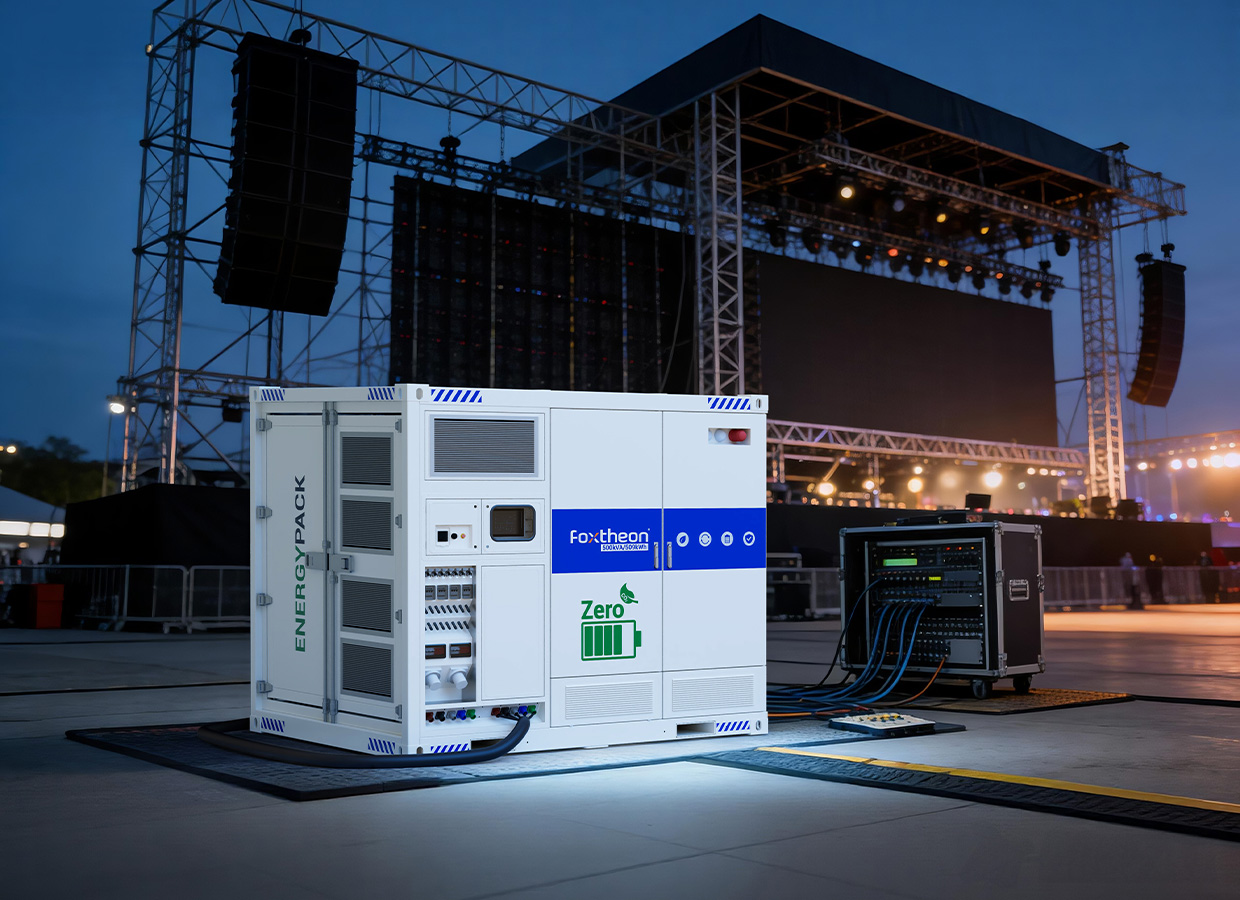
Music festivals, sports tournaments, and film productions require reliable power for sound, lighting, and video walls. Mobile BESS combined with solar PV or grid feed eliminates generator noise and emissions in sensitive areas. Systems with silent operation (below 60 dBA at 7m) are available.
2.4 Disaster Recovery & Emergency Response
After storms or grid failures, mobile BESS provides immediate power to critical facilities (shelters, communication towers, water pumping stations) while permanent repairs proceed. The ability to hot-swap units without taking the load offline is a key rental feature.
3. Technical Evaluation Checklist Before Signing a Mobile BESS Rental Agreement
Rental contracts vary widely. Engineering teams should verify the following technical parameters in the offer.
- Usable energy vs. nameplate energy – C-rate derating: a 1C system delivers full capacity in one hour, but a 0.5C system delivers half the nameplate energy per hour. For peak shaving applications requiring 2-hour discharge, a 0.5C configuration is sufficient.
- Round-trip efficiency (RTE) – measured from grid to battery to grid. Typical values are 85–92% for AC-coupled systems. Lower RTE increases recharging energy costs.
- Protection ratings – IP54 or higher for outdoor deployment. IP65 preferred for dusty or rainy sites.
- Communication interfaces – Modbus TCP, CAN, or OPC UA for integration with existing site controllers or remote monitoring dashboards.
- Transportation compliance – UN38.3 certification for lithium batteries, IMDG/ADR for road/sea transport. Ensure the rental provider includes required hazardous material documentation.
For projects requiring both hybrid power and storage, Foxtheon offers modular mobile storage units with integrated EMS, capable of parallel operation with any generator or grid source. Their rental fleet meets global transport standards and includes remote 24/7 performance monitoring.
4. Industry Pain Points Solved by Mobile BESS Rental
Fixed energy storage or generator-only solutions introduce common operational friction. Mobile BESS rental directly addresses these issues.
4.1 Capacity Underutilization in Seasonal Operations
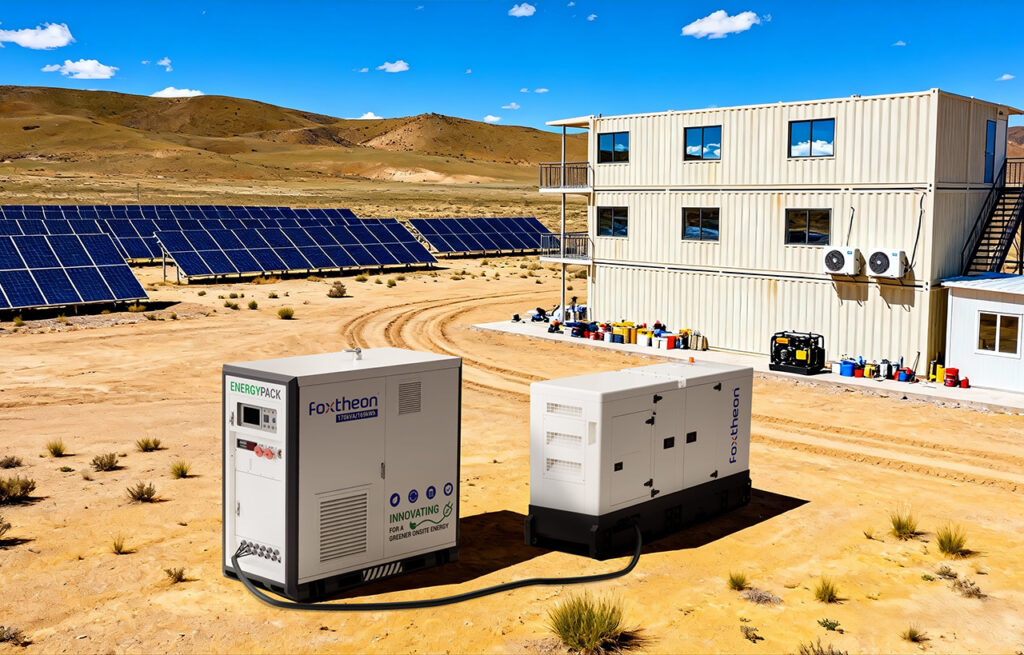
Mining exploration, agriculture processing, or summer-only resorts have high power demand for 3–6 months. Purchasing permanent equipment leads to idling assets. Rental matches capacity to duration, and units are returned when the season ends.
4.2 Noise and Emission Restrictions
Urban construction or residential events enforce strict decibel and particulate limits. A mobile BESS running in battery-only mode produces zero local emissions and negligible sound. The charging generator can be located off-site or scheduled during permitted hours.
4.3 Slow Deployment of Grid Upgrades
Utility interconnection studies take 12–24 months. While waiting, businesses face demand charges or limited power availability. A mobile BESS provides interim capacity—charged during low-tariff hours and discharged during peaks—reducing point-of-connection demand.
4.4 Rapid Load Changes Causing Transient Issues
Welding lines, compressors, or large pumps create voltage dips and flicker. The inverter in a mobile BESS responds in under 20 ms, supplying instantaneous reactive power and smoothing transients without activating slow mechanical generators.
5. Operational Workflow for Deploying a Mobile BESS Rental
A structured process ensures safety and performance from delivery to demobilization.
- Site assessment – Ground load capacity, turning radius for delivery truck, clearances for ventilation (1m front/back for container units), electrical interconnection point (MCC, ATS, or direct panel).
- Custom EMS programming – Input load profile (15‑minute intervals for one week), define SoC limits (e.g., 20% minimum reserve), set peak demand threshold, and choose operating mode: self-consumption, time-of-use arbitrage, or backup-only.
- Delivery & commissioning – Forklift or roll-off truck places the unit. Certified electrician connects to the site’s main panel via cam-lock or power cable glands. Megger testing and polarity check before closing breaker.
- Remote monitoring – Access to cloud dashboard with alarms for SoC, temperature, cell voltage deviation, and grid status. Most rental providers include this in the monthly fee.
- Periodic maintenance – Weekly cell balancing check, filter cleaning, and thermal management system inspection. Rental contracts should specify response time for replacement units.
For turnkey operation, Foxtheon provides full-service mobile BESS rental including delivery, installation, remote monitoring, and on-site technical support throughout the rental period.
6. Frequently Asked Questions About Mobile BESS Rental
Q1: Can a mobile BESS be used as a standalone power source without any generator?
Q2: What is the typical lead time for deploying a rented mobile BESS?
Q3: Can multiple mobile BESS units be paralleled for higher power or capacity?
Q4: What safety certifications must a mobile BESS rental carry?
Q5: How is energy usage measured and billed in a mobile BESS rental agreement?
Q6: Can a mobile BESS be used indoors or inside a building?
Ready to Rent a Mobile BESS for Your Next Project?
Selecting the right mobile BESS rental requires matching power ratings, autonomy hours, and EMS features to your specific load curve and site constraints. The engineering team at Foxtheon provides free load analysis, safety compliance checks, and a detailed rental proposal including delivery, commissioning, and remote monitoring. Do not rely on generic sizing tools—submit your site data for a professional assessment.
Request your custom quotation and technical datasheet: Send an inquiry – Expect a response within two business days with system specifications, EMS configuration options, and a transparent rental agreement. No pressure to purchase, only data-backed recommendations.