
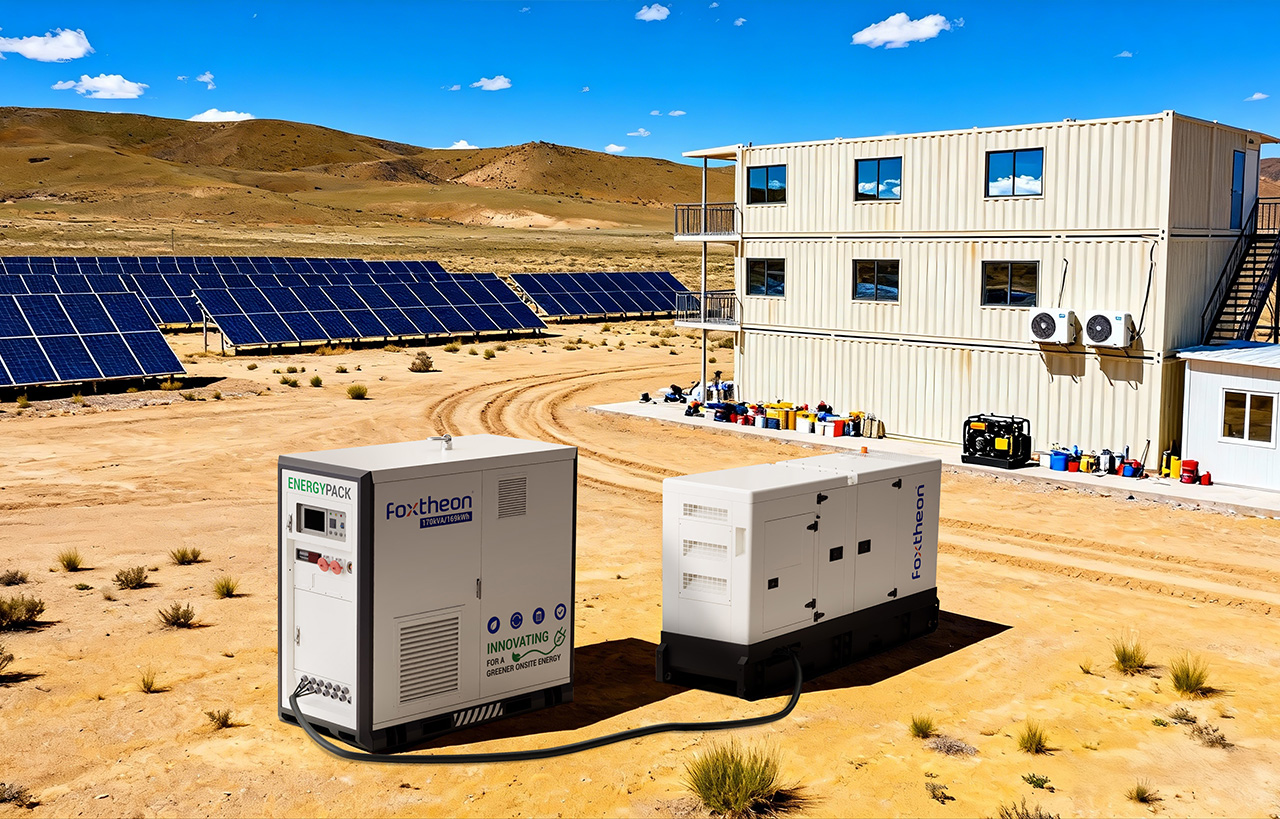
In the current industrial energy environment, the reliance on diesel-powered internal combustion engines for remote power and grid-backup remains a significant operational burden. Whether in construction, mining, or telecommunications, the inefficiencies inherent in standard generator operation lead to exorbitant fuel expenditures and accelerated mechanical degradation. The adoption of sophisticated fuel saving solutions for generators is no longer a matter of environmental choice but a mandatory requirement for fiscal viability. By shifting from standalone generation to integrated, smart energy architectures, enterprises can mitigate the financial impact of volatile fuel prices and stringent emission regulations.
The Thermodynamics of Inefficiency: Why Generators Waste Fuel
To understand the mechanics of fuel reduction, one must first analyze the Brake Specific Fuel Consumption (BSFC) curve of a typical compression-ignition engine. A diesel generator is designed to operate most efficiently between 70% and 80% of its rated capacity. When a generator operates below 30% load—a common occurrence in variable load environments—the combustion efficiency drops precipitously. This phenomenon leads to incomplete fuel combustion, increased carbon deposits, and “wet stacking,” where unburnt fuel enters the exhaust system, causing long-term damage.
Traditional setups often involve over-sizing generators to handle transient peak loads (such as motor starts), which means for the vast majority of their run-time, they are operating in this inefficient low-load zone. Addressing this discrepancy is the primary objective of modern fuel saving solutions for generators. By decoupling the power generation from the immediate load demand, operators can ensure that every drop of diesel is converted into useful work at the highest possible thermal efficiency.
The Role of Battery Energy Storage Systems (BESS) in Hybridization
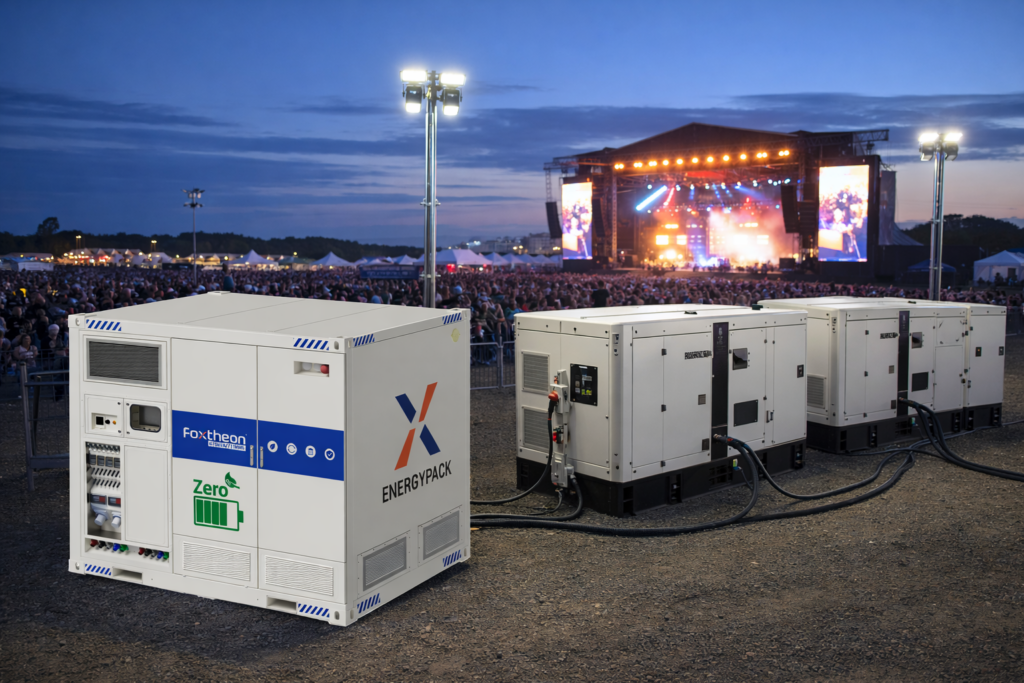
The most transformative approach to fuel reduction involves the integration of high-density battery storage. Companies like Foxtheon have pioneered the development of mobile and stationary energy storage units that act as a buffer between the generator and the load. In a hybrid configuration, the generator is no longer the sole provider of electricity; instead, it serves as a high-efficiency battery charger or a secondary power source for sustained high loads.
When implementing fuel saving solutions for generators, the BESS provides several pivotal functions:
- Load Leveling: The battery handles the minor fluctuations in demand, allowing the generator to remain turned off or run at its “sweet spot” of 80% load.
- Peak Shaving: During high-demand events, such as starting industrial crushers or hoists, the BESS injects power instantaneously. This prevents the need for a larger, less efficient generator.
- Zero-Load Silent Mode: During nighttime or low-activity periods, the generator can be shut down completely while the battery supports the baseline load, eliminating idle fuel consumption.
By utilizing the Foxtheon energy storage hardware, site managers can achieve fuel savings ranging from 30% to over 60%, depending on the load profile of the specific operation.
Load Management and Intelligent Control Systems
Hardware integration is only one half of the equation. The efficacy of fuel saving solutions for generators depends heavily on the Energy Management System (EMS). A smart EMS uses predictive algorithms to forecast load patterns and manage the state of charge (SoC) of the battery. If the system anticipates a high-load event, it can preemptively ramp up the generator to its most efficient operating point, charging the battery while simultaneously serving the load.
Spinning Reserve Displacement
In traditional multi-generator setups, several units are kept running (the spinning reserve) just in case one fails or a sudden load occurs. This is a massive waste of fuel. A battery-backed hybrid system provides “virtual spinning reserve.” Because an inverter-based system can react in milliseconds, it can replace the redundancy provided by idling engines. This allows for fewer generators to be active at any given time, directly translating to lower hourly fuel consumption and reduced maintenance intervals.
Technical Integration: AC vs. DC Coupling
When designing fuel saving solutions for generators, engineers must decide between AC-coupled and DC-coupled architectures. Each has distinct advantages for fuel optimization:
- AC-Coupled Systems: Easier to integrate into existing power grids. The generator and the BESS both feed into a common AC busbar. This is ideal for retrofitting existing sites where the infrastructure is already in place.
- DC-Coupled Systems: Often more efficient for small-scale microgrids (like telecom towers). By connecting solar PV, the battery, and the generator onto a DC bus, conversion losses are minimized. The generator only runs when the DC bus voltage drops below a specific threshold.
Advanced solutions provided by Foxtheon are designed to be compatible with both approaches, offering flexibility for varied industrial contexts. The use of high-efficiency inverters ensures that the round-trip efficiency of the stored energy remains high, preventing the “savings” from being lost in heat dissipation.
Maintenance Reduction: The Hidden Financial Benefit
While the focus of fuel saving solutions for generators is often on the direct cost of diesel, the impact on the Total Cost of Ownership (TCO) is much broader. Generators that run less frequently and at more consistent loads require fewer oil changes, filter replacements, and overhauls.
In a typical 24/7 remote operation, a generator might require servicing every 250 to 500 hours. By introducing a hybrid storage solution, the actual run-time of the engine might be reduced to just 4 or 6 hours a day. This extends the service interval from weeks to months. Furthermore, by preventing low-load operation, the internal components of the engine are spared from the glazing and carbon buildup that lead to premature engine failure.
Application Scenario: Remote Construction Sites
In the construction sector, power demand is highly intermittent. Heavy machinery creates massive spikes, while office trailers and security lighting require a low constant draw. Using a large generator to support both is inherently wasteful. Implementing fuel saving solutions for generators in this environment involves using a smaller primary generator paired with a robust BESS. The battery handles the constant low-wattage needs and the initial surge of heavy equipment, while the generator only activates to recharge the system or support sustained heavy work. This configuration can reduce the site’s carbon footprint significantly while providing a much quieter working environment.
The Impact of Inverter Technology on Power Quality
Beyond fuel, the quality of power is a significant concern for sensitive electronic equipment and modern VFDs (Variable Frequency Drives). Generators can suffer from frequency fluctuations when loads change abruptly. A core component of fuel saving solutions for generators is the use of high-quality power electronics. The BESS acts as a power conditioner, delivering a perfect sine wave regardless of the mechanical state of the generator. This stability protects downstream equipment and reduces the risk of costly electronic failures, providing an additional layer of operational security.
Decarbonization and ESG Compliance
Governments and multinational corporations are increasingly mandating strict ESG reporting. Reducing diesel consumption is the most direct way for industries like mining and logistics to lower their Scope 1 emissions. Implementing fuel saving solutions for generators allows these companies to demonstrate a measurable reduction in CO2, NOx, and particulate matter. As carbon taxes become more prevalent in various jurisdictions, the ROI for these systems becomes even more attractive, as they hedge against both fuel costs and regulatory penalties.
A New Paradigm for Industrial Power
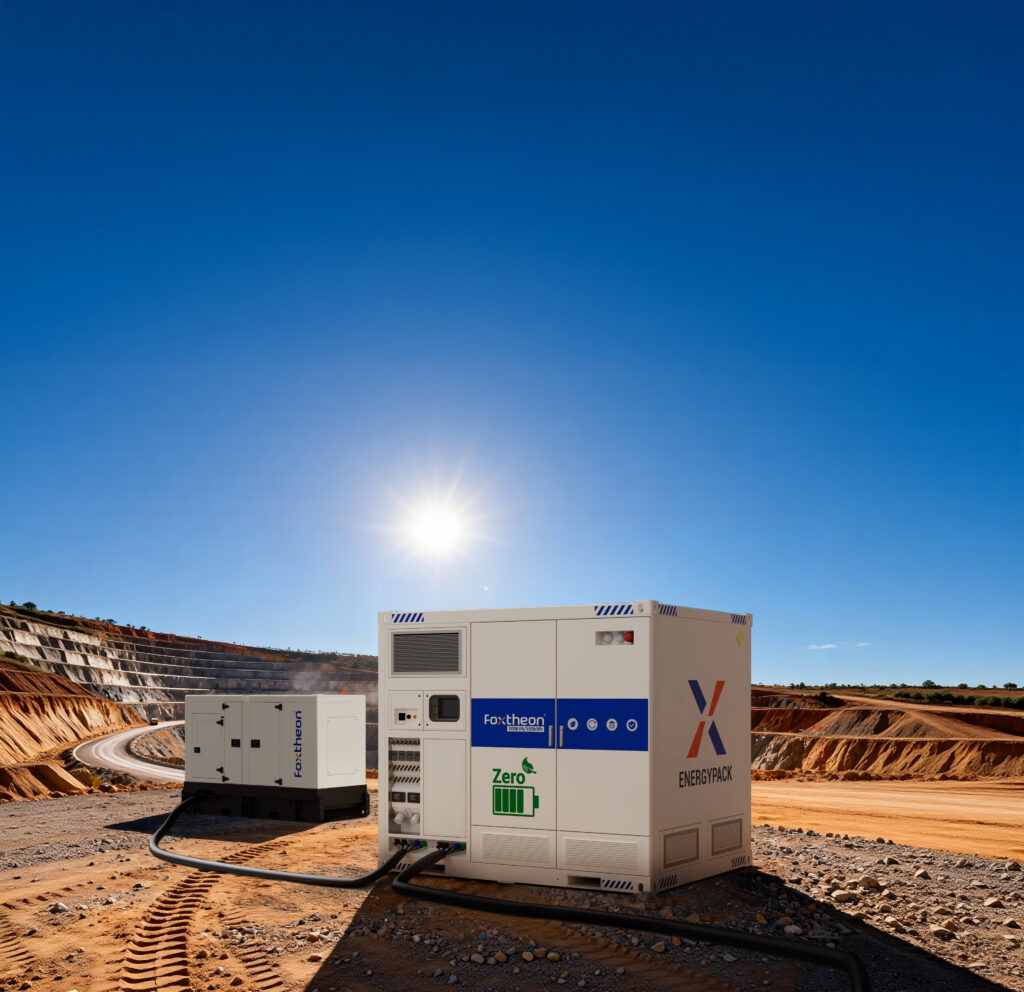
The engineering of fuel saving solutions for generators has reached a level of maturity where the technical risks are minimal compared to the immense financial rewards. By integrating sophisticated storage solutions from Foxtheon, adopting smart load management, and understanding the thermodynamic realities of engine operation, businesses can transform their energy profile. The transition from inefficient, standalone generation to resilient, hybrid microgrids is the only viable path forward for high-performance industrial operations seeking to optimize their bottom line in a resource-constrained world.
Frequently Asked Questions
Q1: How much fuel can I actually expect to save with a hybrid system?
A1: Savings typically range from 30% to 60%. The exact figure depends on your load profile; operations with highly variable loads or long periods of low-demand (like nighttime) see the highest percentage of savings.
Q2: Is “wet stacking” really that big of a problem for my generator?
A2: Yes. Operating a diesel engine at low loads prevents it from reaching its design temperature. This leads to unburnt fuel leaking into the exhaust and carbon buildup on valves. Effective fuel saving solutions for generators eliminate this by ensuring the engine only runs under high-load, high-temperature conditions.
Q3: Can I integrate solar panels with these fuel saving solutions?
A3: Absolutely. Most modern BESS units used in these systems include MPPT inputs for solar. This allows for even greater fuel savings, as the generator may not need to run at all during sunny periods, further extending the “diesel-off” time.
Q4: What is the lifespan of the batteries in these hybrid systems?
A4: Most industrial-grade BESS units use Lithium Iron Phosphate (LFP) chemistry, which is rated for 6,000 to 10,000 cycles. In a typical generator-hybrid application, this equates to 10-15 years of operational life before significant capacity degradation occurs.
Q5: Will adding a battery system make my power setup more complicated to operate?
A5: While the internal technology is complex, the user interface is typically simplified. Most systems are fully automated via an Energy Management System that handles the switching between battery and generator without requiring manual intervention from the operator.
Q6: How does the payback period for these systems look?
A6: Depending on the local cost of diesel and the intensity of the operation, most industrial users see a Return on Investment (ROI) within 18 to 36 months. This calculation includes both fuel savings and the reduction in maintenance costs.