
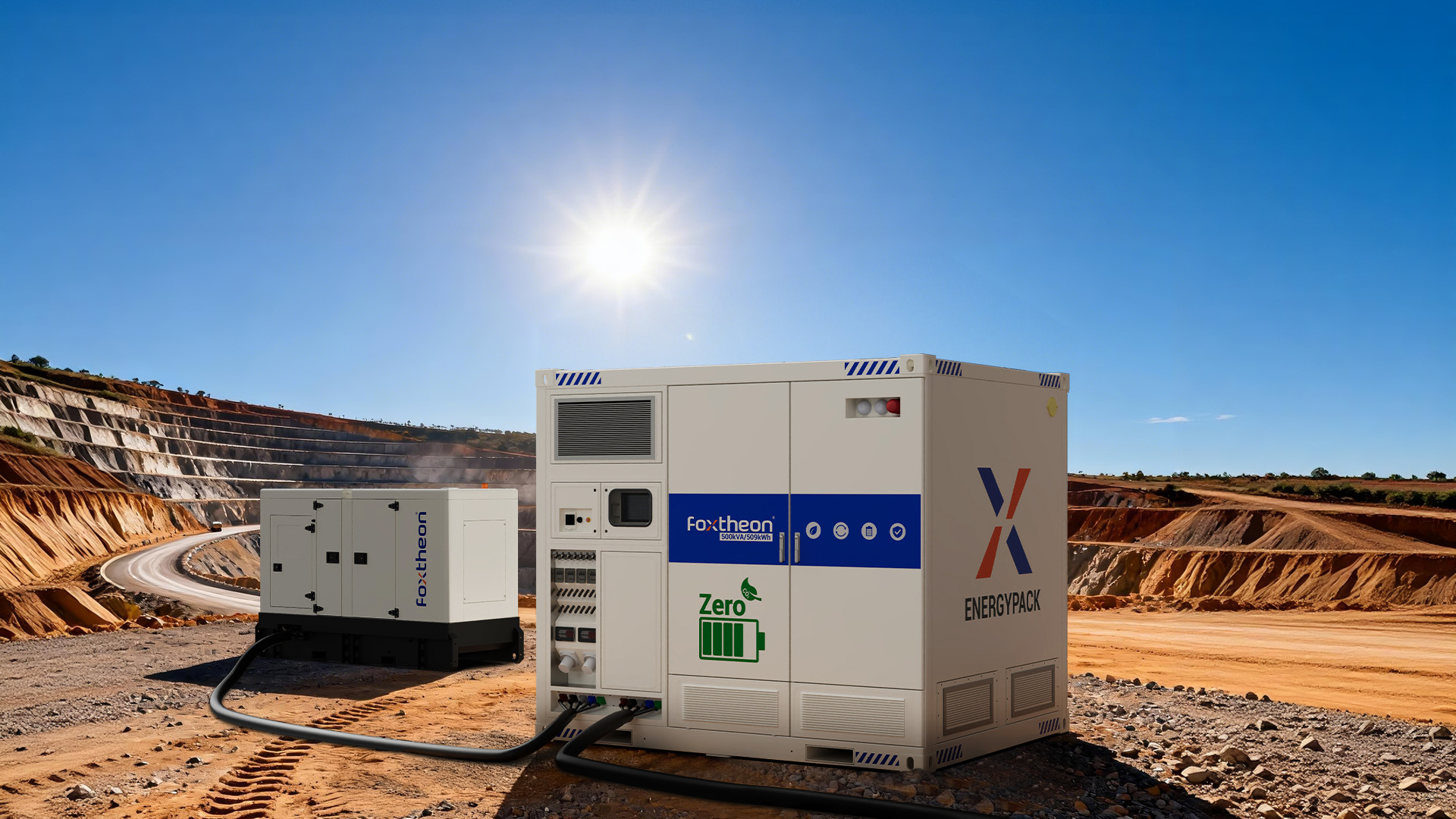
In the heavy infrastructure and civil engineering sectors, fuel consumption represents one of the most significant variable costs, often accounting for over 30% of total project operating expenses. As global environmental standards tighten and carbon taxes increase, the pressure to implement effective large scale construction fuel saving solutions has moved from a sustainability goal to a core financial necessity. Reducing diesel burn is no longer just about environmental stewardship; it is about protecting margins in an increasingly competitive bidding environment.
For project managers and fleet directors, the challenge lies in maintaining high productivity while minimizing the “Non-Productive Fuel Consumption” associated with idling, oversized machinery, and inefficient power distribution. Modern Foxtheon energy systems provide a blueprint for how technical integration can solve these systemic inefficiencies. This article provides a deep dive into the engineering and operational strategies required to optimize energy usage on massive job sites.
1. The Integration of Hybrid Battery Energy Storage Systems (BESS)
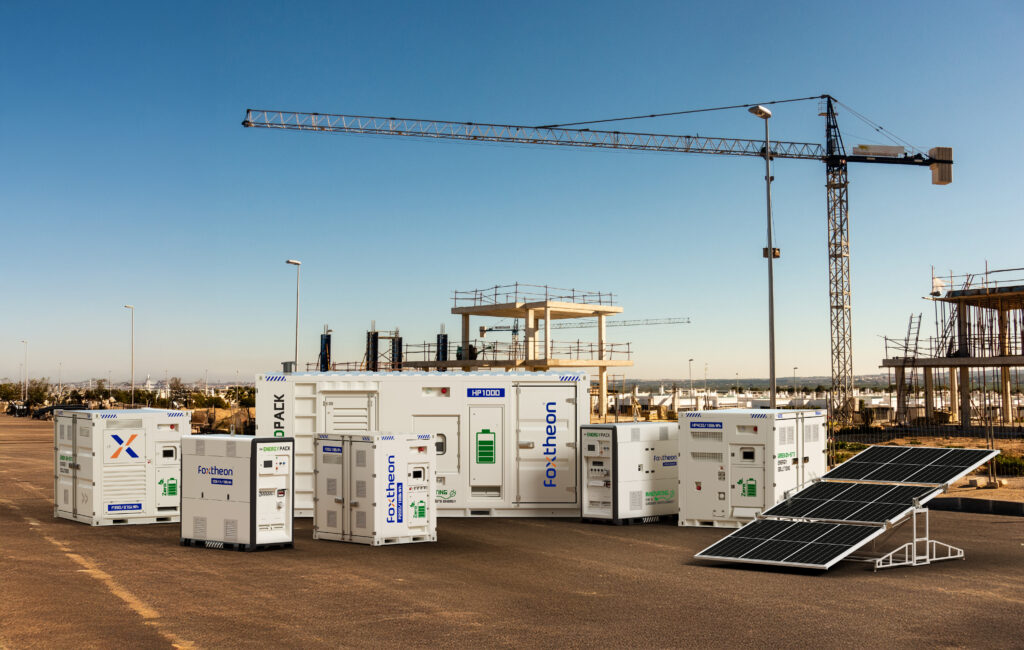
Perhaps the most transformative of all large scale construction fuel saving solutions is the move toward hybrid power. On large sites, generators are often sized to handle the peak startup currents of heavy machinery, such as tower cranes or concrete pumps. However, these peaks only last for seconds. For the rest of the day, the generator runs at 10-20% load, leading to massive fuel waste and “wet stacking” (incomplete combustion).
By integrating a high-capacity mobile energy storage unit, such as those developed by Foxtheon, the site can operate on a “Generator-to-Battery” logic. The battery handles the variable loads and provides the high-current “kick” needed for motor starts, while the generator only runs periodically at its peak efficiency to recharge the cells. This configuration can reduce fuel consumption by 40% to 70% depending on the site’s load profile.
Technical Benefits of Hybrid Systems:
- Optimal Duty Cycles: Generators run only in their most efficient Brake Specific Fuel Consumption (BSFC) range.
- Silent Operation: During night shifts or low-load periods, the generator can be turned off entirely, relying on stored energy.
- Reduced Maintenance: Fewer engine hours mean longer intervals between oil changes and overhauls.
2. Addressing the “Idle Time” Financial Leak
Data from telematics providers suggests that heavy equipment—including excavators, dozers, and haul trucks—spends between 35% and 50% of its operating life idling. For a large-scale project with dozens of machines, this represents thousands of gallons of wasted diesel every month.
Implementing automatic idle-shutdown timers is a primary step, but more advanced large scale construction fuel saving solutions involve the use of electric auxiliary power units (eAPUs). These systems allow operators to maintain cabin climate control and electronics without running the primary engine. In a B2B context, the ROI on eAPUs is often realized within the first 12 months of a multi-year project.
3. Right-Sizing Equipment Through Load Profiling
Over-speccing is a common error in large-scale construction. Using a 500kVA generator where a 200kVA unit supplemented by a battery would suffice leads to exponential fuel waste. Precision load profiling involves using data loggers to measure the actual power demand of a site over a 72-hour period before finalizing equipment rentals.
When the actual demand is understood, project engineers can deploy large scale construction fuel saving solutions that match the “base load” rather than the “peak load.” This right-sizing approach ensures that every drop of fuel burned is converted into useful work, minimizing the parasitic losses inherent in underloaded internal combustion engines.
4. Telematics and Real-Time Fuel Monitoring
You cannot manage what you do not measure. Advanced telematics systems provide a granular view of fuel burn across the entire fleet. By analyzing “Gallons per Tonne” of material moved, managers can identify which operators or machines are performing below the site average.
Modern platforms integrate with the engine’s ECU to provide data on:
- Fuel Rate at Load: Identifying engines with clogged injectors or failing turbos.
- GPS Geofencing: Reducing unnecessary travel distances for haul trucks.
- Throttle Position Analysis: Coaching operators to avoid “aggressive driving” which spikes fuel consumption without increasing cycle times.
5. Deploying On-Site Microgrids with Renewable Integration
For long-duration projects like dam construction or bridge building, establishing a temporary microgrid is one of the most effective large scale construction fuel saving solutions. Instead of having twenty small generators scattered across a site, a centralized power plant can be established.
This central plant can incorporate bifacial solar arrays and wind turbines. Even a modest 50kW solar installation on the roof of site offices and storage containers can offset the fuel needed for daytime lighting and cooling. When coupled with the energy storage expertise of Foxtheon, these microgrids can achieve “Net Zero” periods during high-irradiance hours, essentially providing free energy for site operations.
6. Advanced Lubrication and Friction Reduction
While often overlooked, the chemical efficiency of the engine contributes significantly to the overall fuel map. Switching to high-performance synthetic lubricants and low-viscosity oils specifically designed for heavy-duty cycles can reduce internal friction. Furthermore, the use of fuel catalysts and high-quality filtration systems ensures that the combustion process remains as close to the theoretical ideal as possible. This is particularly critical for Tier 4 Final and Stage V engines, where fuel quality directly impacts the frequency of DPF regenerations—a process that is notoriously fuel-intensive.
7. Strategic Load Bank Testing and Maintenance
Fuel efficiency drops as engine health declines. A generator that has been running at low loads for months will suffer from carbon buildup, which restricts airflow and reduces thermal efficiency. Regular load bank testing—running the engine at 100% capacity in a controlled environment—cleans the internal components. This proactive maintenance is a cornerstone of large scale construction fuel saving solutions because it ensures that when the machine is under heavy work, it isn’t fighting against its own internal deposits.
8. Implementation of Peak Shaving Strategies
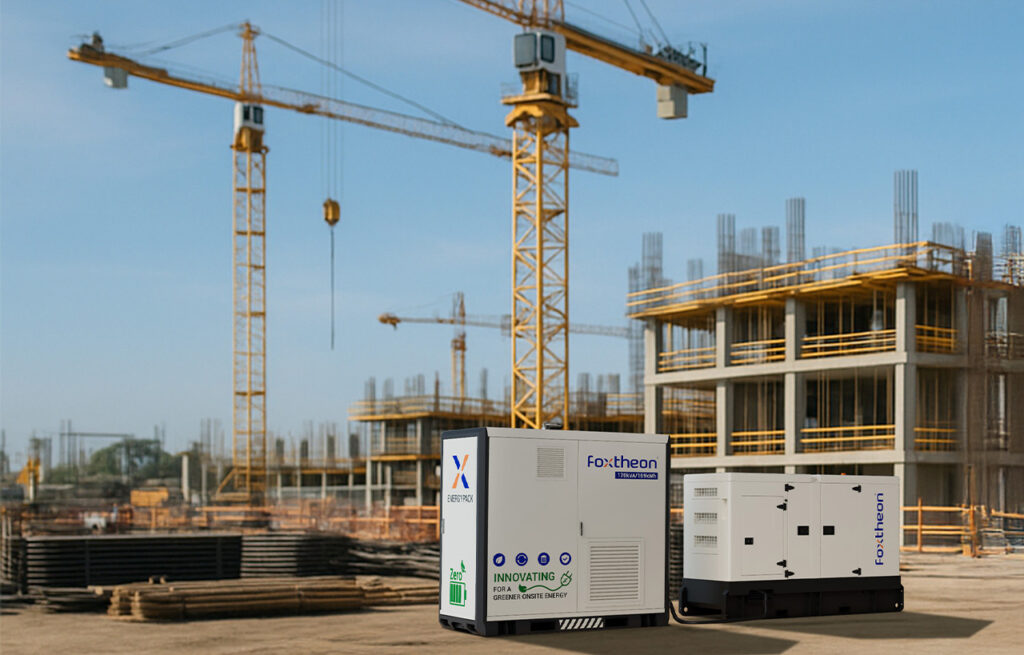
Peak shaving is an electrical management technique where a secondary power source (a battery) “shaves” off the top of the demand curve. On construction sites, the highest demand often occurs at 7:00 AM when all equipment is started simultaneously. By using large scale construction fuel saving solutions that include peak-shaving algorithms, the site can avoid the need for a massive, fuel-hungry backup generator, instead using a smaller, more efficient primary unit that works in tandem with an energy storage system.
Comparative Analysis: Traditional vs. Hybrid Construction Power
In a traditional setup, a 300kW generator might burn 20 gallons per hour during peak use and 5 gallons per hour during idle. In a hybrid setup, the generator might only run for 4 hours a day at 18 gallons per hour to charge the BESS, while the BESS handles the remaining 20 hours of site demand. The mathematical reality is a reduction of over 100 gallons of diesel per day on a single power node.
The Future of Construction Energy
The transition toward more efficient job sites is driven by both economic reality and regulatory pressure. Implementing large scale construction fuel saving solutions is no longer a peripheral activity for the “green” department; it is a fundamental engineering discipline. By combining the power of hybrid storage, telematics, and right-sized equipment, companies can achieve a dramatic reduction in fuel spend while increasing the reliability of their on-site power.
As we look toward the future, the integration of smart energy management and hardware from innovators like Foxtheon will be the deciding factor in project profitability. The path to a more efficient construction industry is paved with data, battery chemistry, and a commitment to eliminating every minute of non-productive engine runtime.
Frequently Asked Questions (FAQ)
Q1: How much fuel can a hybrid battery system actually save on a typical construction site?
A1: Depending on the load variability, a hybrid system can save between 30% and 70% of fuel. The highest savings are seen on sites with high peak loads (like cranes) but low average loads, where a generator would otherwise spend most of its time idling or underloaded.
Q2: Is it difficult to integrate solar panels into an existing construction site power grid?
A2: No, modern mobile energy storage systems are designed with “Plug-and-Play” solar inputs. This allows for easy connection of foldable or container-mounted PV arrays directly into the microgrid controller without complex electrical engineering.
Q3: Does reducing idle time affect the resale value of construction equipment?
A3: Yes, significantly. Equipment is valued based on engine hours. By using eAPUs and battery systems to handle non-productive tasks, you keep the engine hours low, which results in a higher residual value when the machine is sold or traded in.
Q4: What is “Stage V” compliance and how does it relate to fuel saving?
A4: Stage V is a European emission standard that requires very efficient combustion and exhaust gas after-treatment. Engines compliant with Stage V are highly efficient but very sensitive to low-load operation. Hybrid solutions prevent the clogging of Stage V filters, avoiding the fuel-heavy “regeneration” cycles.
Q5: Can these solutions be used in remote locations with no grid access?
A5: These solutions are specifically designed for off-grid and remote locations. In fact, the further the location is from a fuel supply line, the higher the ROI, as the “Fully Burdened Cost of Fuel” (including transport and security) is much higher in remote areas.