
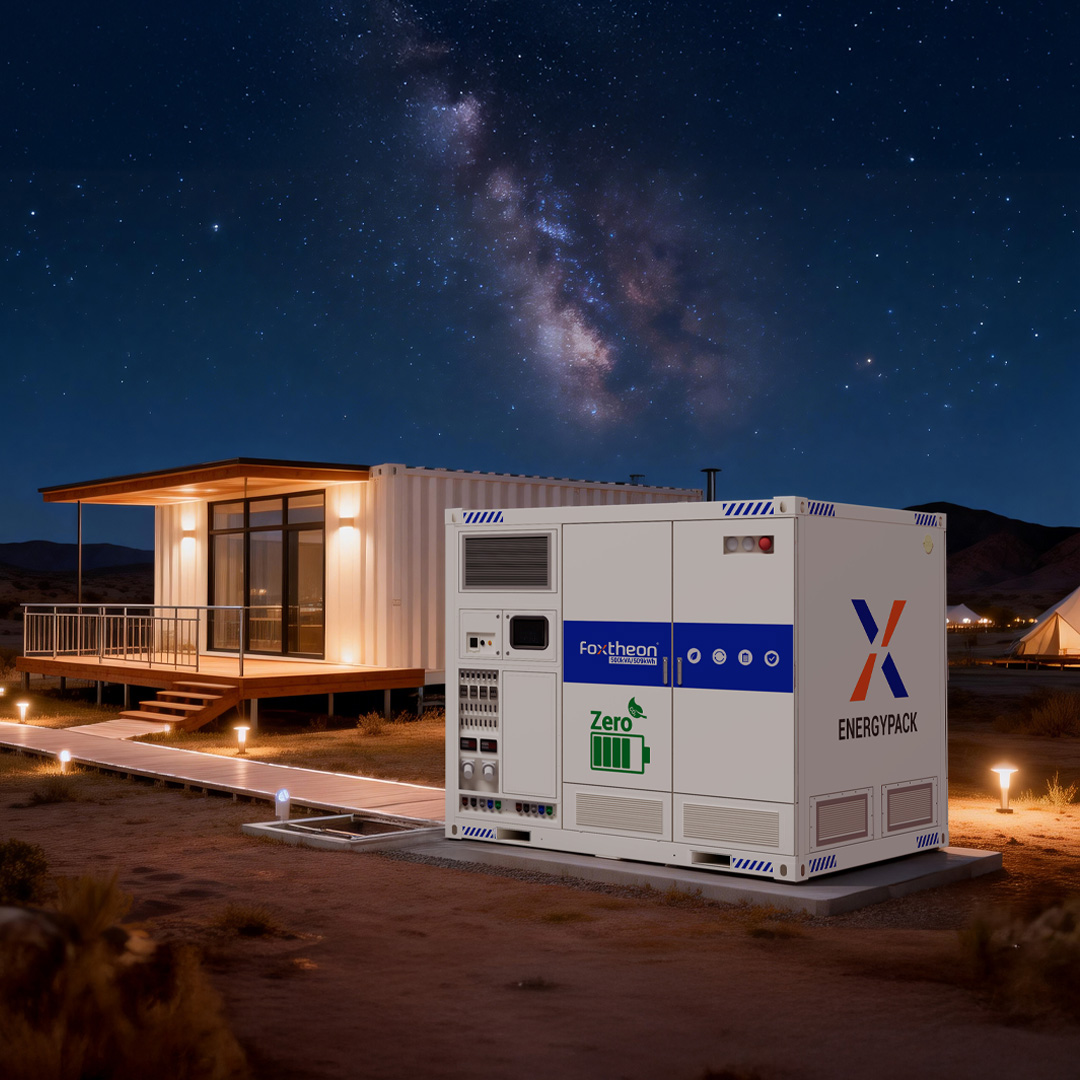
As commercial and industrial facilities face rising demand charges, grid instability, and aggressive decarbonization targets, selecting the right energy storage system solutions has become a technical priority. Unlike residential units, industrial storage must handle high C-rates, extreme temperatures, and complex integration with existing diesel gen-sets or on-site renewables. This guide provides a component-level analysis of modern storage architectures, common failure points, and data-driven methods to optimize lifetime value—without overhyping or dismissing traditional power assets.
1. Core Architecture: Beyond Battery Chemistry
A robust energy storage system solutions stack comprises four interdependent layers: battery cells, battery management system (BMS), power conversion system (PCS), and energy management system (EMS). Each layer directly impacts round-trip efficiency, safety compliance (UL 9540A, IEC 62619), and return on investment.
- Battery cells – LFP dominates stationary storage due to its lower thermal runaway risk and cycle life (>6000 cycles at 1C). NMC offers higher energy density but requires stricter thermal management.
- BMS (Distributed architecture) – Monitors cell voltage, temperature, and current with per-cell balancing. Advanced BMS also performs impedance tracking to predict remaining useful life.
- PCS (SiC-based) – Silicon carbide inverters reduce switching losses by 30–50% compared to IGBTs, critical for high-frequency grid-forming applications.
- EMS (AI-enabled) – Real-time optimization of charge/discharge schedules based on tariff prediction, weather forecast, and load profiling.
Many integrators overlook the communication protocol between BMS and PCS (CAN, Modbus TCP, or IEC 61850). Latency above 50 ms can cause protection trips. Foxtheon adopts a unified controller that synchronizes BMS-PCS handshake within 20 ms, enabling seamless islanding transitions.
2. Application-Specific Pain Points & Measurable Solutions
2.1 Peak Demand Management in Manufacturing Plants
A food processing facility with 2 MW peak load and 15-minute demand intervals typically faces demand charges of $18/kW. Without storage, partial generator run during peaks incurs fuel and maintenance costs. energy storage system solutions with peak shaving logic discharge at a pre-set power threshold, reducing grid demand by 35–40%. The key metric is demand response accuracy—a 1% overshoot can erase 80% of savings.
2.2 Renewable Firming for Hybrid Microgrids
Solar PV ramp rates often exceed grid code limits (e.g., 10% per minute). Storage smooths output via a ramp-rate control algorithm. Real-world data shows that pairing a 1 MW PV array with a 500 kW/1 MWh battery reduces frequency deviations by 74% and avoids inverter trips.
2.3 Backup Power in Unstable Grid Regions
Facilities with critical processes (cold storage, data centers) require seamless transfer during outages. Hybrid systems that parallel storage with existing generators provide no-break power while reducing generator run hours. Studies indicate a 60% reduction in diesel consumption for sites with two-hour storage buffers.
3. Technical De-Risking: Thermal Runaway, Cycle Life & Degradation Models
Industry surveys list safety and capacity fade as the top two barriers to adopting energy storage system solutions. Below is a component-level strategy to mitigate each.
- Thermal management: Liquid cooling maintains cell delta-T below 3°C even at 2C discharge. Passive air cooling is inadequate for industrial containers above 40°C ambient. Foxtheon’s chillers use variable-speed pumps, cutting auxiliary power consumption by 22%.
- Accelerated aging tests: Demand calendar life >12 years at 25°C equivalent. Check for impedance rise above 30% of initial value—this triggers end-of-life earlier than capacity loss in many LFP cells.
- State-of-health (SOH) estimators: Kalman-filter based BMS can predict remaining cycles within 5% error. For financial modeling, use piecewise degradation: first 3 years at 1% annual fade, then 2% per year after 4000 cycles.
4. Economic & Regulatory Frameworks for System Approval
Return on investment for industrial storage typically spans 3–7 years depending on local incentives. Key parameters to present to finance committees:
- Demand charge reduction potential – Analyze 12 months of interval data to size kW capacity correctly. Over-sizing increases CAPEX unnecessarily; under-sizing leaves peak charges untouched.
- Ancillary service revenues – Frequency regulation (PJM, CAISO) pays $5–15/MWh. Only storage with sub-second response (<100 ms) qualifies. Ensure EMS has built-in market dispatch algorithms.
- Tax credits & accelerated depreciation – In many jurisdictions, storage qualifies for investment tax credit (ITC) if paired with renewables. A standalone system may adopt MACRS 7-year schedule.
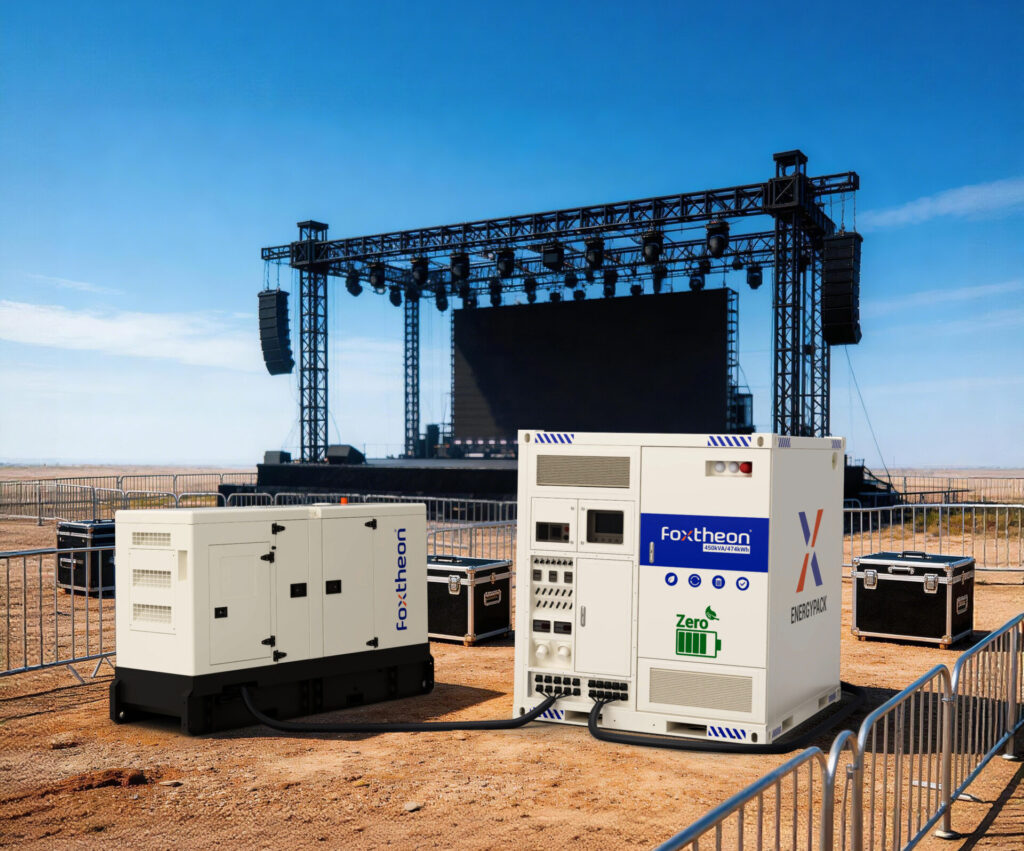
For facilities operating generators, hybrid control avoids low-load operation (below 30% load) which causes wet stacking and carbon buildup. Storage absorbs transient loads, keeping gen-sets at optimal 60–80% loading. This extends generator overhaul intervals by 40%.
5. Why Industrial Customers Are Moving to Containerized & Modular Storage
Traditional built-up battery rooms require extensive civil work, fire suppression, and zoning permits. Pre-engineered containerized energy storage system solutions—like those from Foxtheon—integrate HVAC, fire detection (gas and aerosol), and distribution panels in IP54-rated enclosures. Benefits include:
- Scalability: Parallel multiple containers from 500 kWh to 10 MWh without redesign.
- Factory testing: Reduced site commissioning time from 8 weeks to 10 days.
- Modular maintenance: Swapping a failed PCS module takes 30 minutes instead of system shutdown.
6. Evaluation Checklist: 12 Points Before Issuing a Purchase Order
Based on field failure analyses from 85 industrial storage installations, here is a technical checklist for procurement teams:
- ✔ BMS communication redundancy (dual CAN buses).
- ✔ PCS with grid-forming capability (virtual synchronous generator mode).
- ✔ EMS support for multi-site aggregation (VPP ready).
- ✔ Cybersecurity: IEC 62443-3-3 compliance for remote access.
- ✔ Degradation warranty: minimum 70% capacity at year 10 or 6000 cycles.
- ✔ Fire suppression – Novec 1230 or water mist with gas detection (H2, CO).
- ✔ Ambient temperature range -20°C to 50°C without derating.
- ✔ Independent third-party safety certification (UL 1973, UL 9540A).
- ✔ Remote firmware upgrade capability with rollback option.
- ✔ Harmonic compliance to IEEE 519-2022 at point of common coupling.
- ✔ Black-start capability for islanded microgrids.
- ✔ Data logging granularity < 1 second for forensic analysis.
Foxtheon meets all above criteria across its commercial & industrial product lines, with field-proven installations in Southeast Asia, Europe, and North America.
.jpg)
7. Frequently Asked Questions (FAQs)
Q1: Can I add battery storage to my existing diesel generator set without replacing the generator?
A1: Yes. Most modern energy storage system solutions can be paralleled via AC coupling. The storage system works as a grid-forming source during generator start-up, then the generator synchronizes to the storage island. This reduces generator size or fuel use by up to 70% in hybrid mode. Ensure your generator’s governor accepts an external speed bias signal for seamless load sharing.
Q2: What is the real-world round-trip efficiency of industrial lithium storage, and how does it degrade?
A2: At 1C discharge, fresh LFP systems achieve 91–93% DC-to-DC efficiency (including BMS and cooling auxiliary loads). After 4000 cycles, efficiency typically drops by 3–5 percentage points due to increased internal resistance. For AC efficiency (including PCS losses), expect 85–87% at start-of-life. Annual auxiliary consumption (cooling, control) adds 2–3% parasitic load.
Q3: How do I calculate the optimal storage power (kW) and energy (kWh) for peak shaving?
A3: Start with 12 months of 15-minute load data. Identify the top 5% of demand intervals. The required power capacity equals the average of those peaks minus the desired target threshold. Energy capacity (kWh) = max deficit (kW above threshold) × duration (typical 2–4 hours). Avoid over-sizing beyond 4 hours unless arbitrage is profitable—additional capacity yields diminishing returns.
Q4: Does storage require special fire protection or separation from other equipment?
A4: Yes, NFPA 855 and IFC 2021 mandate clearance for lithium-based systems exceeding 20 kWh. Indoor installations require 2-hour fire-rated barriers, while outdoor containers need a 10-foot separation from property lines. Vented battery cabinets must have hydrogen detection. Aerosol-based suppression systems are preferred over sprinklers to prevent short circuits.
Q5: What is the typical lead time for a 1 MWh industrial storage system, and how is commissioning performed?
A5: For containerized solutions, lead time ranges from 16 to 24 weeks (post-deposit) including cell procurement, assembly, and factory acceptance testing. Commissioning involves insulation testing, polarity checks, battery pre-charge, BMS-PCS handshake verification, and 72-hour endurance run. A professional third-party engineer should witness all safety trips (over-voltage, under-voltage, over-temperature).
8. Moving from Pilot to Fleet Deployment: Support & Lifecycle Management
Many enterprises make the mistake of treating storage as a commodity. In reality, a successful multi-site rollout requires centralized EMS, remote diagnostic tools, and standardized maintenance kits. Foxtheon provides a cloud-based operations platform that aggregates alarms, health metrics, and automated monthly reports—enabling asset managers to forecast maintenance before failures occur. The platform also includes a degradation-aware warranty tracker that automatically claims pro-rata credits if capacity falls below contractual thresholds.
For facilities with existing generators, our hybrid controller optimizes dispatch by comparing real-time grid price, generator fuel efficiency curve, and battery SOC. This ensures the generator never operates below 25% load (to prevent aftertreatment damage) and the battery assists in transient spikes—a symbiotic relationship, not replacement.
9. Ready to Optimize Your Site-Specific Storage Configuration?
Every industrial facility has unique load profiles, space constraints, and operational priorities. Generic one-size-fits-all quotes often lead to underperformance or safety risks. For a technical consultation and customized energy storage system solutions proposal tailored to your site’s 8760 load data, existing generator set parameters, and local utility tariff structure, contact Foxtheon’s engineering team.
Please provide your facility’s monthly energy bills, one-line diagram, and backup power requirements. Our experts will return with a full lifecycle cost analysis, safety compliance report, and projected payback period within 15 business days.
Inquiry channels:
Email: info@foxtheon.com (include “Industrial storage spec” in subject line)
Web form: https://www.foxtheon.com/contact
We respond to all B2B inquiries within 24 hours.