
Differentiating AC Coupling from DC Coupling in Standalone Networks
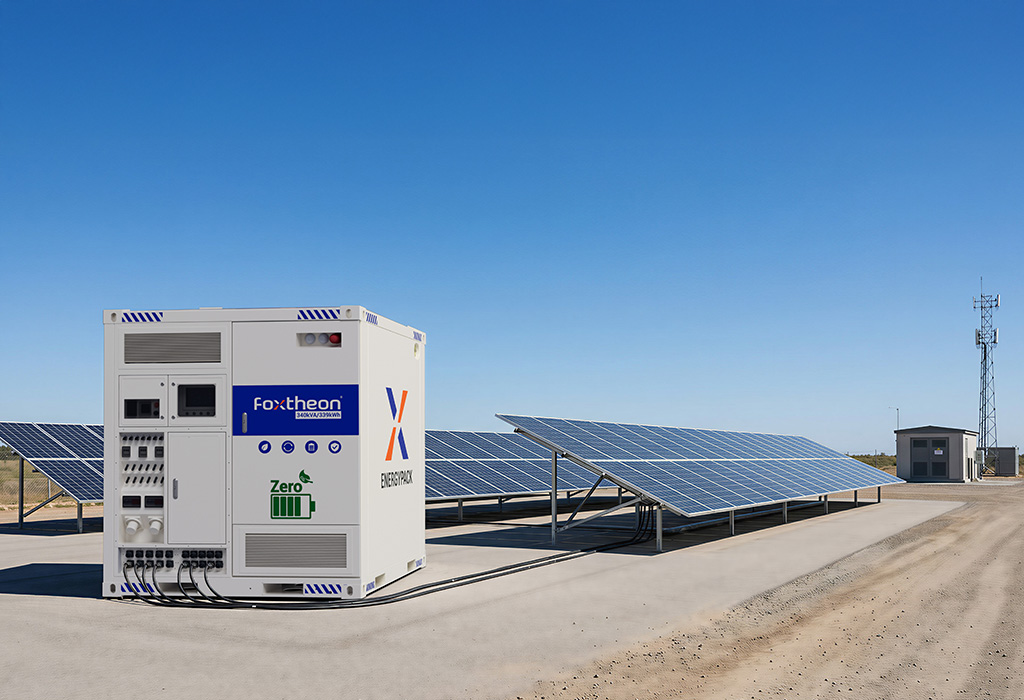
To establish a precise technical baseline, it is necessary to distinguish AC coupling from its DC counterpart. In a DC-coupled topology, photovoltaic strings feed a Maximum Power Point Tracking (MPPT) charge controller that directly services the battery bank’s direct current bus. The battery voltage then supplies a dedicated off-grid inverter to generate AC power for loads. Conversely, an ac coupled off grid system situates the battery inverter/charger on the AC bus, parallel to PV inverters and backup gensets. Energy flows from the PV inverters to the AC loads first; surplus AC power is rectified by the battery inverter and stored as chemical energy. When photovoltaic yield diminishes, the battery inverter reverses function, inverting stored DC back to AC to maintain voltage and frequency stability. This architectural divergence carries significant implications for site expansion, fault tolerance, and partial-load efficiency.
Core Components and Operational Sequencing
The reliability of an AC coupled microgrid hinges on the precise choreography between three primary assets: the grid-forming battery inverter, the grid-following PV inverters, and the backup generator set. Understanding their interaction is fundamental to avoiding voltage collapse or protective relay tripping.
Grid-Forming Battery Inverter/Charger Functionality
The battery inverter serves as the voltage and frequency reference for the entire islanded network. This device must possess robust overload capacity to handle motor inrush currents from pumps or compressors and must execute frequency-shift power curtailment (often termed “frequency-watt” control) with high precision. When the battery approaches a high state-of-charge (SoC) threshold, the inverter subtly raises the AC output frequency—e.g., from 50.0 Hz to 51.5 Hz. Compatible PV inverters detect this deviation and linearly reduce their active power output, preventing overvoltage conditions that could damage sensitive loads. This closed-loop regulation is the cornerstone of an ac coupled off grid system operating without a dump load.
Synchronization with Grid-Following PV Inverters
Standard grid-tied PV inverters rely on the presence of a stiff voltage source to synchronize their output. In an off-grid scenario, the battery inverter emulates that stiff source. It is imperative to verify that the PV inverter firmware supports frequency-watt and volt-watt response curves as defined in IEEE 1547-2018 or local grid codes. A common oversight in the field is the pairing of legacy PV inverters lacking advanced grid support functions, which can lead to nuisance tripping during low-load, high-irradiance periods. Power system studies should confirm that the aggregate rating of PV inverters does not exceed the battery inverter’s rated AC pass-through capacity minus the essential load demand.
Generator Support and Peak Shaving Logic
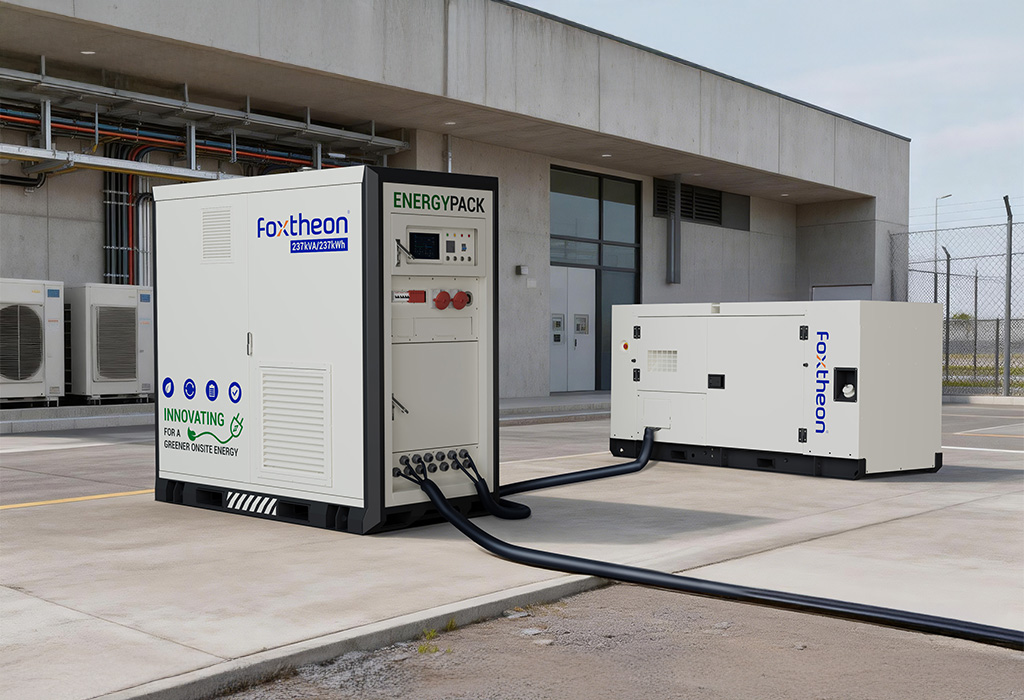
Diesel or natural gas generators remain a pragmatic component of long-duration autonomy, particularly during seasonal low irradiance. Within the ac coupled off grid system control hierarchy, the generator is treated as a dispatchable AC source. The battery inverter’s internal transfer switch and advanced generator support algorithm enable seamless synchronization. When the battery SoC falls below a programmable setpoint, the system initiates a generator start command. Critically, the battery inverter can be configured to “load shave,” wherein the generator operates at its optimal specific fuel consumption point (typically 70-80% load factor) while the inverter covers transient peaks and troughs using stored energy. This strategy significantly mitigates wet stacking in diesel engines and reduces total fuel consumption compared to a generator-only baseline.
Technical Advantages and System-Level Considerations
Adopting an AC coupled topology introduces specific engineering advantages for brownfield sites and complex load profiles.
- Legacy Asset Utilization: Existing PV inverters and AC distribution panels can be retained, minimizing rewiring costs and e-waste. This aligns with capital expenditure constraints typical in industrial retrofits.
- Scalable Power Capacity: Additional PV capacity can be integrated on the AC bus without upgrading the DC charge controller infrastructure. This modularity is advantageous for phased project rollouts.
- Reduced DC Cable Losses: In geographically dispersed arrays, transmitting power at higher AC voltage reduces I²R losses compared to low-voltage DC transmission over long distances.
- Generator Integration Flexibility: The AC bus allows multiple generator sets to be paralleled via standard switchgear, a feature less straightforward in DC-centric architectures.
Conversely, designers must account for conversion losses. Energy harvested by PV modules undergoes DC-AC inversion at the string inverter, and if surplus power is stored, a subsequent AC-DC rectification occurs at the battery inverter. While this dual conversion yields a marginal efficiency penalty at low power levels compared to DC coupling, the gains in system flexibility and site uptime often outweigh the fractional round-trip efficiency difference, especially in multi-megawatt industrial microgrids.
Application Scenarios Demanding AC Coupled Architecture
The decision matrix favoring an ac coupled off grid system typically involves one or more of the following operational profiles:
- Remote Mining and Exploration Camps: Sites with existing diesel generator infrastructure and heavy inductive motor loads (crushers, ventilation fans) benefit from the instantaneous surge capacity of a battery inverter buffering the generator.
- Agricultural Cold Storage and Irrigation: High daytime PV correlation with pumping and cooling loads reduces the need for battery cycling. AC coupling allows the PV inverters to directly service these loads while the battery provides frequency stabilization.
- Telecommunications Tower Upgrades: As operators seek to decarbonize their energy portfolio, adding solar to existing AC-powered shelter equipment is streamlined via AC coupling, avoiding a complete overhaul of the -48V DC plant.
- Island and Coastal Community Electrification: Integration of multiple distributed energy resources (DERs) from various vendors is simplified by the standardized AC interface, fostering a competitive procurement environment.
Design Best Practices for Performance Validation
Ensuring the long-term resilience of an AC coupled microgrid requires adherence to rigorous engineering validation beyond basic product datasheets.
Harmonics and Power Quality Analysis
The interaction between the PWM switching frequencies of multiple parallel inverters can occasionally excite resonance within the local distribution network. A power quality study should evaluate total harmonic distortion (THD) under various load and generation mixes. Passive harmonic filters or active front-end battery inverters with low THD specifications are recommended when non-linear loads (variable frequency drives) constitute a significant portion of the demand.
Communications and Control Topology
While the frequency-watt method provides a fail-safe analog control layer, a robust digital communication overlay (Modbus TCP, CANbus, or DNP3) enhances visibility. Remote monitoring of battery SoC, generator fuel level, and inverter status via SCADA is non-negotiable for unattended sites. Providers such as Foxtheon integrate these communication layers to facilitate proactive maintenance dispatch, reducing the need for costly site visits.
Fault Current Contribution and Protection Coordination
Battery inverters have limited short-circuit current capability compared to synchronous generators. When designing an ac coupled off grid system, protection coordination must be recalibrated. Overcurrent protective devices should be selected based on the combined fault contribution of the generator and the inverter’s limited (typically 1.1x to 2.0x rated) overcurrent capability. In some high-reliability applications, a synchronous condenser or a specialized grid-forming inverter with high fault current injection may be required to ensure downstream circuit breakers clear faults effectively.
Integrating Energy Storage with AC Coupling: The Role of Lithium-Iron Phosphate Chemistry
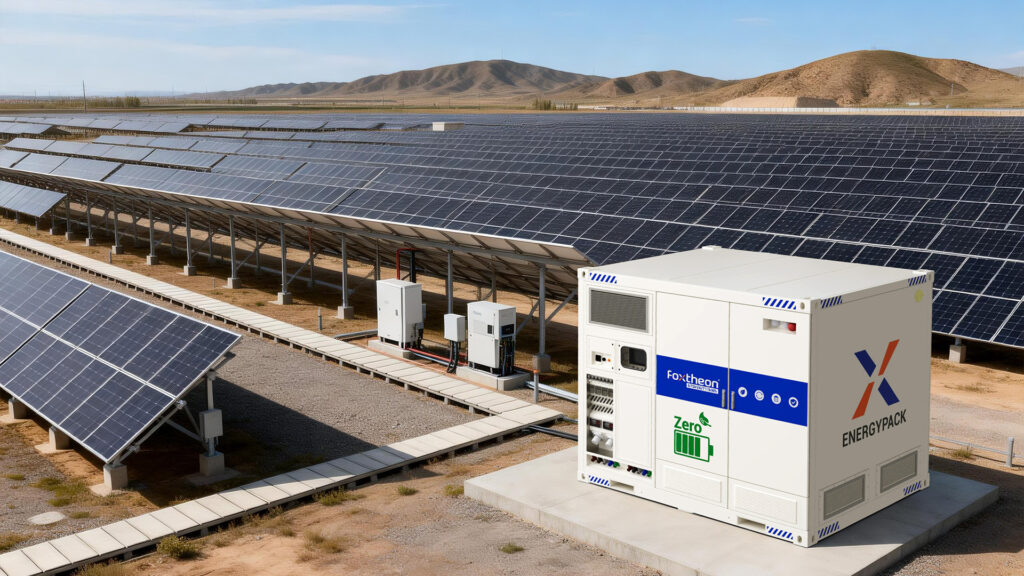
Modern ac coupled off grid system installations overwhelmingly favor Lithium-Iron Phosphate (LFP) batteries over lead-acid due to cycle life and depth-of-discharge tolerance. In an AC coupled context, the battery’s ability to accept high charge currents during midday PV peaks is essential for maximizing renewable penetration. The battery management system (BMS) must communicate effectively with the battery inverter to enforce charge current limits based on cell temperature and voltage. Foxtheon energy solutions are engineered to maintain strict protocol adherence between the BMS and inverter control loop, ensuring that the battery never enters a protection state that could destabilize the AC bus.
Future-Proofing Through Advanced Grid Code Compliance
Regulatory frameworks for off-grid power are evolving toward stricter interconnection standards. Forward-looking engineering procurement should specify inverters capable of meeting the latest grid-forming requirements (e.g., VDE-AR-N 4110 for island operation). The capacity for black start—restoring the AC bus from a completely de-energized state using only battery power—is a defining characteristic of a resilient asset. This capability allows the system to restart after a fault without manual intervention, a feature that distinguishes a true microgrid from a simple backup power arrangement.
For project developers and EPC firms navigating the complexities of hybridized remote power, the selection of a technically validated AC coupled architecture reduces execution risk. Whether retrofitting a diesel-solar hybrid at a mining concession or designing a greenfield eco-resort, the proper specification of battery inverter rating, frequency control parameters, and protection logic ensures that the system delivers both financial return and operational certainty.
For a detailed consultation on engineering an AC coupled microgrid tailored to specific site load profiles and geographic constraints, contact the energy specialists at Foxtheon to initiate a technical feasibility study and receive a customized power system configuration proposal. Inquire today to optimize your remote energy infrastructure.
Frequently Asked Questions: AC Coupled Off-Grid Systems
Q1: How does an AC coupled system manage excess solar energy when the battery is full and loads are low?
A1: The grid-forming battery inverter employs frequency shifting. As the battery reaches a high state-of-charge, the inverter increases its output frequency slightly above nominal. PV inverters compliant with frequency-watt control curves detect this increase and automatically curtail their active power output. This process is seamless and does not require a physical dump load resistor, preventing overcharging while maintaining AC bus stability.
Q2: Can I use any standard grid-tie PV inverter in an AC coupled off-grid configuration?
A2: No. The PV inverter must support advanced grid support functions, specifically frequency-watt (FW) and volt-watt (VW) response modes. Many legacy or entry-level inverters lack the firmware to reduce output in response to frequency deviations. Incompatible inverters will trip offline during high battery SOC conditions, potentially causing voltage spikes. Always verify the manufacturer’s compatibility list for off-grid AC coupling applications.
Q3: What is the maximum ratio of PV inverter power to battery inverter power allowed?
A3: The allowable AC-coupling ratio depends on the battery inverter’s pass-through and charging capacity. A typical guideline is a 1:1 ratio of PV inverter AC rating to battery inverter AC rating, but systems with a strong generator backup or advanced load management can exceed this to 1.5:1 or higher. A detailed power system simulation is required to ensure that the battery inverter can absorb the full PV output during low-load, high-irradiance conditions without overloading the charger.
Q4: How does generator start/stop automation function in an AC coupled system?
A4: The battery inverter monitors the battery voltage and state-of-charge. When the battery discharges to a pre-set “Generator Start” threshold (e.g., 40% SOC), the inverter closes a dry contact relay to command the generator auto-start controller. Once the generator is running and stable, the inverter synchronizes with it and closes an internal AC transfer relay. The generator then supplies the loads and charges the battery until a “Generator Stop” threshold (e.g., 80% SOC) is reached, at which point the inverter disconnects and issues a stop command.
Q5: Is AC coupling more efficient than DC coupling for off-grid solar?
A5: The efficiency comparison is application-specific. AC coupling involves two conversion stages (DC-AC from solar, then AC-DC into battery), which can be slightly less efficient for charging batteries directly from solar than a single-stage DC-DC MPPT charger. However, AC coupling excels in efficiency when solar power is used directly by daytime AC loads, as it bypasses the battery conversion entirely. For sites with high daytime consumption, the overall system efficiency is often comparable or better due to the elimination of DC cabling losses.
Q6: What maintenance is required for an AC coupled off-grid system compared to a generator-only site?
A6: While the solar array and battery inverter require minimal ongoing maintenance (visual inspection, firmware updates, terminal torque checks), the primary operational advantage is the significant reduction in generator runtime. This extends service intervals for oil changes, filter replacements, and engine overhauls. Remote monitoring provided by platforms like those integrated with Foxtheon hardware allows for condition-based maintenance rather than calendar-based schedules, lowering overall operational expenditure.