
Defining the AC Energy Storage Power Conversion Chain
At the heart of any ac energy storage deployment lies the power conversion system. The PCS performs two fundamental functions: rectification (converting AC grid power to DC for battery charging) and inversion (converting DC battery power to AC for discharge). This bidirectional capability is governed by high-frequency insulated-gate bipolar transistor (IGBT) or silicon carbide (SiC) switching devices, modulated by pulse-width modulation (PWM) algorithms. The sophistication of the PCS determines the system’s ability to respond to grid disturbances, manage reactive power, and execute seamless transitions between grid-connected and islanded modes. Key performance parameters include round-trip efficiency (typically 85% to 92% for modern systems), total harmonic distortion (THD) under partial loading, and dynamic reactive current injection capability during low-voltage ride-through events.
Differentiation from DC-Coupled Storage Architectures
While both AC and DC coupling serve to integrate batteries with generation assets, the operational and economic implications diverge significantly. A comparison of the two methodologies clarifies the specific suitability of ac energy storage for large-scale, standalone, or retrofitted environments.
- Interconnection Flexibility: AC storage systems connect directly to the existing low-voltage or medium-voltage switchgear, utilizing standard circuit breaker protection and transformer isolation. This modularity allows for the addition of storage capacity independent of the photovoltaic inverter fleet, a crucial advantage when retrofitting industrial facilities with established solar arrays.
- Ancillary Service Provision: Because the PCS operates on the AC bus, it can autonomously sense frequency and voltage deviations and inject or absorb both real and reactive power. This makes ac energy storage particularly effective for frequency regulation, spinning reserve replacement, and voltage support in weak grid conditions.
- Energy Shifting Efficiency for AC Loads: In behind-the-meter applications where the primary objective is to shift AC load consumption (e.g., running chillers or industrial motors) from peak tariff periods to off-peak hours, the AC storage architecture avoids an additional DC-AC conversion stage that would be present if the battery were on a DC bus serving only PV. The stored energy is delivered directly to the facility’s AC distribution panel.
Technical Capabilities of Grid-Interactive AC Energy Storage
The value of a battery asset extends beyond kilowatt-hour throughput. Modern ac energy storage systems are specified based on their response to grid operator signals and internal control setpoints.
Four-Quadrant Operation and Reactive Power Control
Advanced PCS units operate in four quadrants of the power plane, meaning they can simultaneously manage real power (watts) and reactive power (volt-amperes reactive, VARs). This capability is essential for facilities with poor power factor penalties. The storage inverter can be programmed to provide dynamic VAR compensation, injecting leading or lagging current as required to maintain a target power factor at the point of common coupling. This function reduces demand charges associated with reactive energy and alleviates stress on upstream utility transformers.
Grid-Forming Versus Grid-Following Modes
While most commercial AC storage inverters operate in grid-following mode (synchronizing to an existing voltage waveform), the shift toward grid-forming inverters is accelerating for microgrid resilience. In a grid-forming configuration, the PCS establishes the voltage and frequency reference for a local island. This enables seamless transitions during utility outages without a “blink” in power quality to sensitive manufacturing equipment. The control firmware must be rigorously validated to prevent circulating currents when multiple grid-forming sources (e.g., a generator and the storage inverter) are paralleled.
Compliance with IEEE 1547-2018 and UL 1741 SB
Interconnection of ac energy storage in North America requires adherence to IEEE 1547-2018, which mandates specific ride-through capabilities and voltage/frequency disturbance response. The system must remain connected and support the grid during defined transient events. Furthermore, certification to UL 9540 (Energy Storage System Safety) and UL 9540A (Thermal Runaway Propagation) is a non-negotiable requirement for commercial insurance and permitting. Engineering firms should verify that the proposed PCS carries these active listings before specifying the equipment.
Addressing Industry Pain Points with AC-Coupled Storage
Commercial and industrial energy managers face a series of operational and financial challenges that an appropriately sized AC storage asset can address without requiring a complete overhaul of existing electrical infrastructure.
Demand Charge Mitigation and Peak Load Shaving
For facilities on rate schedules with high demand charges (USD/kW based on the highest 15-minute or 30-minute interval consumption), the economic case for storage is compelling. The ac energy storage system monitors facility load in real-time via current transformers. When the load approaches a user-defined peak threshold, the PCS discharges precisely enough power to keep the grid import below that ceiling. This algorithm, known as peak shaving, requires sub-second response times and predictive load forecasting to avoid premature battery depletion. The return on investment is calculated by comparing the reduction in monthly demand charges against the levelized cost of storage cycling.
Integration with Existing Backup Generators
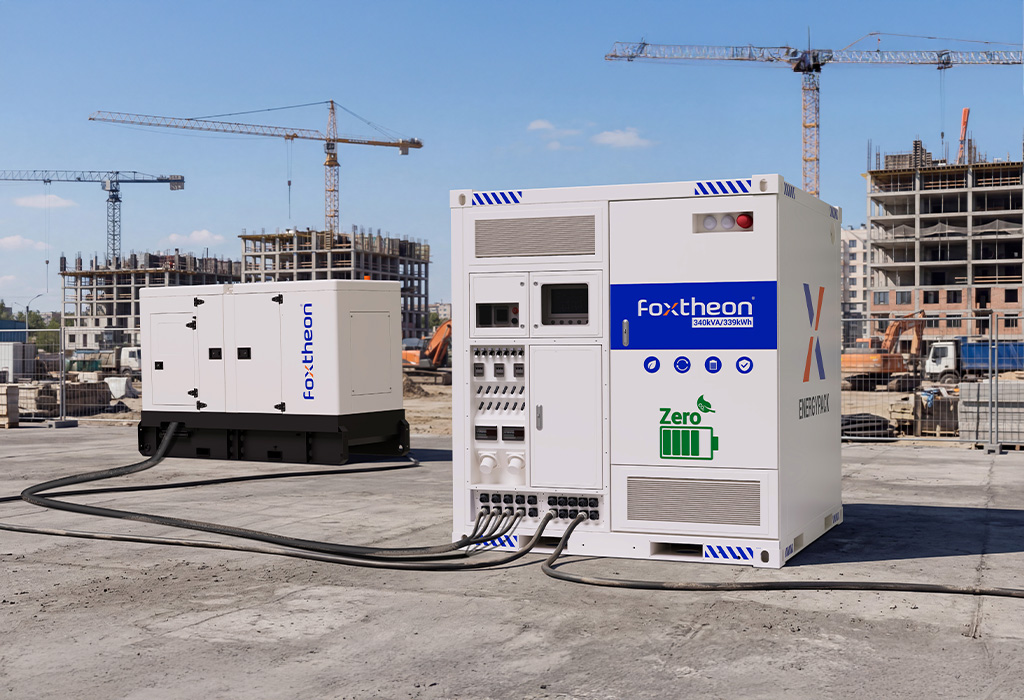
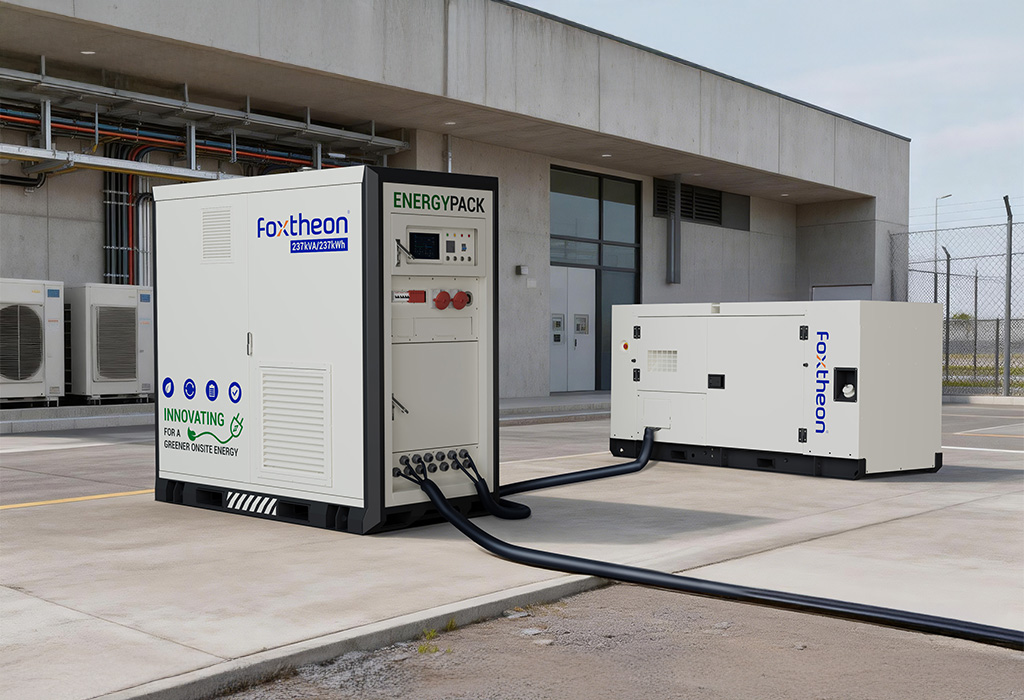
A common misconception is that battery storage and diesel gensets are mutually exclusive. In practice, an AC storage system can be paralleled with a generator to improve fuel efficiency and reduce runtime. When the generator is online, the PCS can be configured to supply only the transient power above a base load, allowing the generator to operate at a steady, high-efficiency setpoint. This reduces wet stacking and maintenance intervals. Foxtheon has deployed integrated control strategies that enable this “genset augmentation” mode, maximizing the service life of existing generator investments while lowering carbon intensity.
Enhancing Hosting Capacity for Distributed Generation
As industrial sites add solar PV capacity, they may encounter limits on reverse power flow into the utility grid. AC storage provides a mechanism to absorb excess generation locally, shifting that energy to evening or overnight periods. This increases the site’s renewable energy self-consumption ratio without requiring grid infrastructure upgrades.
Application Verticals for AC Energy Storage Deployment
The versatility of AC storage makes it applicable across a range of sectors with distinct operational requirements.
- Manufacturing and Process Industries: Continuous process lines in plastics, food and beverage, and metal fabrication benefit from voltage sag immunity and peak demand control.
- Commercial Real Estate and Data Centers: Participation in utility demand response programs and provision of temporary bridging power during generator start-up sequences.
- Electric Vehicle Charging Infrastructure: Fleet depots experience high, short-duration power spikes. AC storage buffers the grid connection, allowing higher charger density on a constrained electrical service.
- Utility Distribution Substations: Deferral of transformer upgrades by managing thermal overloads with targeted battery discharge during peak hours.
Engineering Considerations: Sizing, Cooling, and Degradation
Specifying an ac energy storage system requires a detailed power flow analysis and thermal management plan.
Augmented Reality for Capacity Fade
Lithium-ion cells degrade both calendarically and cyclically. A responsible system design includes an “augmented” capacity reserve to ensure that end-of-life performance still meets the required power and energy targets. The energy capacity should be oversized by a factor corresponding to the warranty degradation curve. Foxtheon incorporates advanced state-of-health algorithms to provide operators with a transparent view of remaining asset life, facilitating planned capacity augmentation rather than reactive replacement.
Thermal Management and Enclosure Design
AC storage inverters and battery cabinets generate heat under sustained operation. Outdoor-rated enclosures must provide adequate HVAC cooling or liquid thermal management to maintain cell temperatures within the narrow 20°C to 30°C optimal window. Elevated temperatures accelerate electrolyte decomposition, while sub-freezing charging can induce lithium plating. The enclosure’s IP rating and seismic certification are equally important for long-term reliability in harsh industrial or coastal environments.
Future Trajectory: Virtual Power Plants and Wholesale Market Participation
The aggregation of distributed ac energy storage assets into virtual power plants (VPPs) represents the next frontier of revenue stacking. Through open communication protocols (OpenADR 2.0b, IEEE 2030.5), a central aggregator can dispatch hundreds of individual systems to provide capacity or regulation services to the wholesale market. This transforms a behind-the-meter asset from a pure cost-savings tool into a revenue-generating resource. The technical prerequisite is a PCS capable of receiving and executing remote dispatch commands with low latency and high reliability.
For industrial stakeholders evaluating the feasibility of deploying battery storage to manage energy costs and enhance operational resilience, a thorough engineering analysis is the first step. The interplay of tariff structures, load profiles, and interconnection requirements demands a customized approach. Foxtheon provides comprehensive technical support, from initial site audits and power system modeling through to commissioning and remote performance monitoring. We invite qualified commercial and industrial energy users to submit an inquiry regarding their specific load data and tariff schedules to receive a preliminary sizing and economic impact assessment.
Frequently Asked Questions: AC Energy Storage Systems
Q1: What is the primary difference between AC energy storage and a DC battery connected to a solar charge controller?
A1: AC energy storage uses a bidirectional inverter that connects directly to the AC electrical panel. It can charge from the grid or solar inverters and discharge to AC loads. A DC battery with a charge controller is typically limited to charging only from a DC source (solar) and requires a separate inverter to power AC loads. AC storage offers greater flexibility for grid services and retrofitting existing buildings.
Q2: Can an AC energy storage system power my facility during a complete utility blackout?
A2: Yes, provided the system is configured with a grid-forming inverter and an automatic transfer switch or internal bypass relay. This configuration is often termed “backup” or “microgrid” mode. It is essential to verify that the system’s rated output and surge capacity exceed the critical load requirements of the facility during the outage.
Q3: How does AC energy storage help reduce my electricity bill if I already have solar panels?
A3: Solar panels generate power only during daylight. If your facility consumes the most power in the early morning or evening, solar output may not align with load. AC energy storage captures excess solar generation during midday and discharges it during high-cost peak periods, reducing both energy charges and demand charges. This process is known as load shifting or time-of-use arbitrage.
Q4: What maintenance is required for an AC energy storage PCS and battery enclosure?
A4: Routine maintenance includes visual inspection of cabinet seals and air filters (typically quarterly), thermal imaging of electrical terminations to detect hot spots (annually), and firmware updates to ensure compatibility with evolving grid codes. Unlike generators, there are no moving parts requiring lubrication, though cooling fan bearings may need replacement after several years of continuous operation.
Q5: Is a 480V three-phase service required for commercial AC energy storage?
A5: Most commercial-scale AC storage systems (30 kW and above) are designed for 480Y/277V or 208Y/120V three-phase connections. For smaller facilities with single-phase 240V service, there are specific residential and light commercial products available. The point of interconnection must be evaluated by a professional engineer to ensure compliance with local utility service entrance requirements.
Q6: How does the battery management system (BMS) communicate with the AC inverter?
A6: The BMS communicates with the inverter via CANbus or Modbus TCP protocols. The BMS provides real-time data on cell voltages, temperatures, and state-of-charge. It also enforces charge and discharge current limits based on cell conditions. If the BMS detects a critical fault, it will command the inverter to cease power flow to protect the battery asset.