
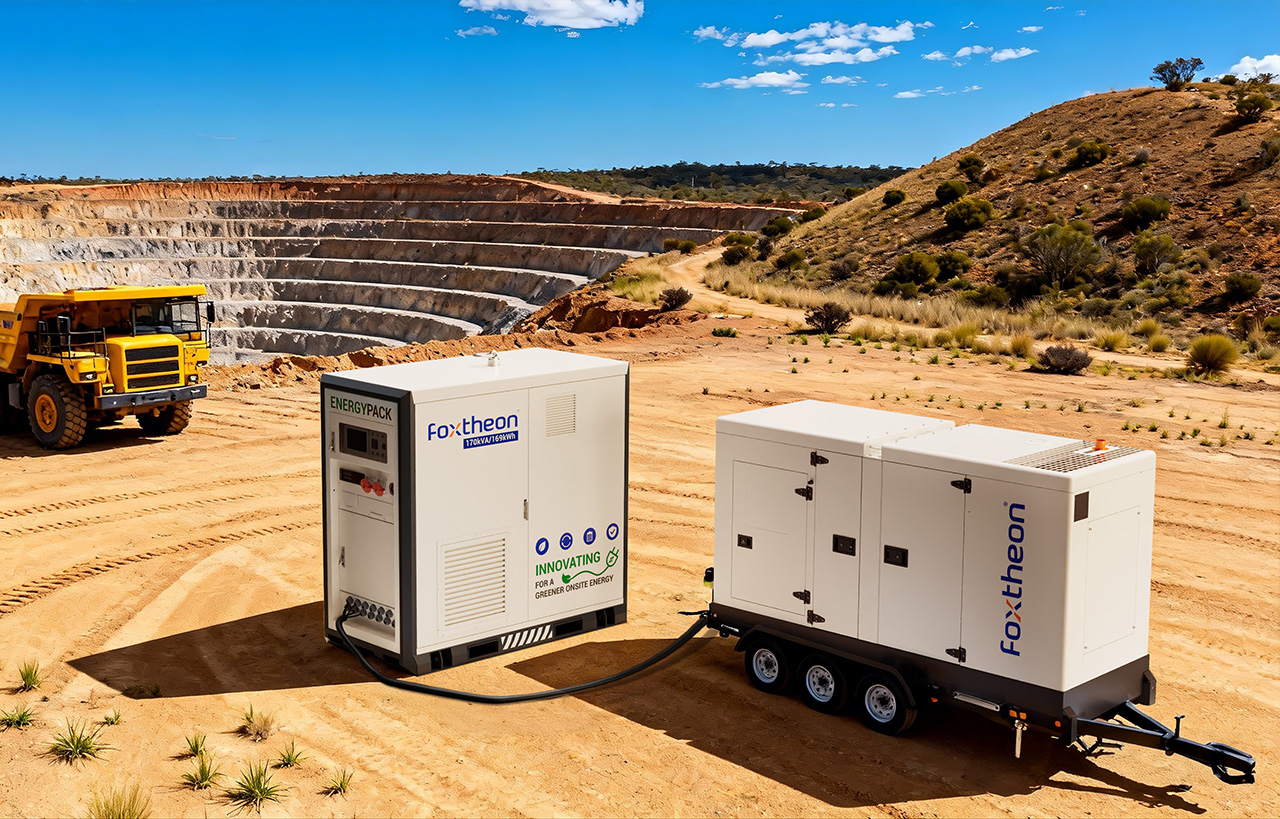
Designing temporary energy infrastructure for large-scale festivals, sports broadcasts, and corporate summits requires a precise understanding of dynamic load profiles, environmental constraints, and structural reliability. These temporary venues function as autonomous micro-cities, demanding continuous, high-quality electricity without the benefit of permanent grid connections. Achieving this stability involves deploying sophisticated outdoor event power solutions that integrate seamlessly with existing equipment fleets.
The contemporary approach to temporary power relies on intelligent system integration rather than merely increasing raw capacity. By analyzing site-specific variables, power engineers can construct hybrid topologies that maximize the efficiency of primary generation assets. As a technology integrator in this sector, Foxtheon emphasizes the importance of data-driven design, ensuring that every kilowatt deployed serves a specific operational purpose while maintaining robust redundancy protocols.
Analyzing Load Profiles and Transient Dynamics
The foundation of any reliable temporary power network is a rigorous load assessment. Unlike standard commercial facilities with predictable daily consumption patterns, outdoor events exhibit highly erratic energy demands. A comprehensive assessment must account for both base loads and sudden transient peaks to prevent voltage sags or total system failure.
Audio-Visual and Production Loads
Modern production equipment introduces complex electrical challenges. LED video walls, for instance, create massive inrush currents upon initialization and experience severe transient spikes when displaying high-brightness content. Similarly, large-scale audio line arrays draw dynamic current proportional to low-frequency audio reproduction. These fluctuations can introduce significant Total Harmonic Distortion (THD) into the temporary network, potentially interfering with sensitive broadcast equipment. Proper sizing requires calculating the True Power (kW) and Apparent Power (kVA) to determine the appropriate power factor correction mechanisms required onsite.
Catering and HVAC Requirements
Secondary operational sectors often constitute the majority of continuous power consumption. Mobile catering units utilize heavy resistive loads (fryers, ovens, and water heaters) that operate steadily but pull massive amperage. Concurrently, VIP pavilions and broadcast tents demand robust Heating, Ventilation, and Air Conditioning (HVAC) systems. These inductive loads require significant starting torque, necessitating power generation systems capable of handling temporary overloads without tripping distribution breakers.
Synergistic Integration in outdoor event power solutions
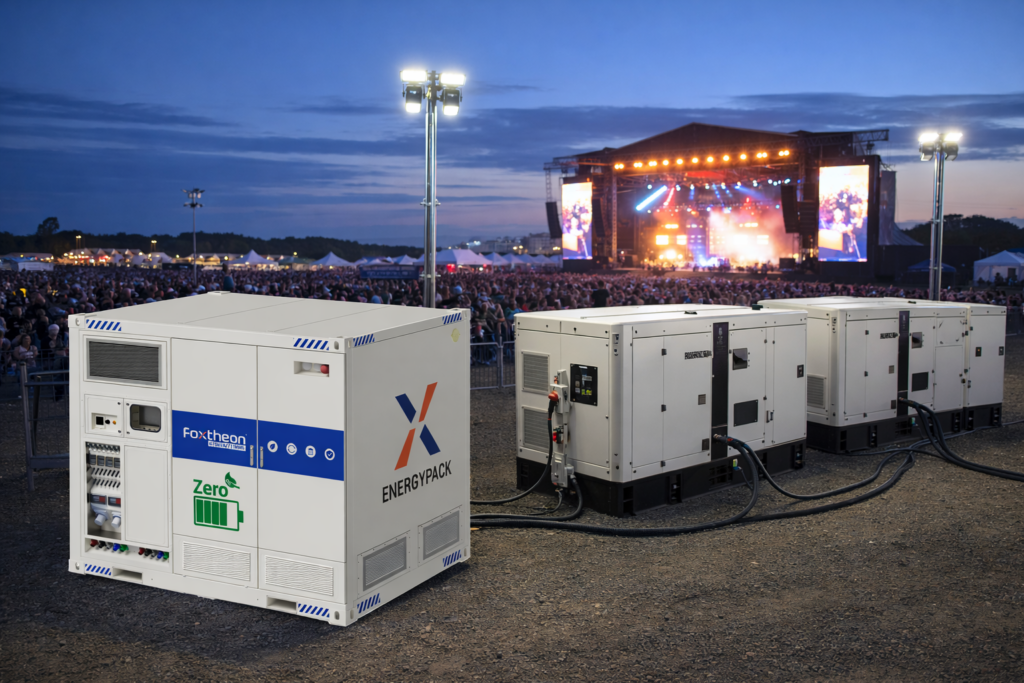
For decades, robust diesel generator sets have formed the backbone of temporary energy networks. Their durability, rapid deployment capabilities, and reliable power output remain highly valuable. Modern engineering focuses on augmenting these existing assets through hybrid integration, paring conventional generators with advanced Battery Energy Storage Systems (BESS) to optimize overall site efficiency.
Optimizing Generator Efficiency
Internal combustion engines operate at peak fuel efficiency and minimal wear when running at 70% to 80% of their rated capacity. However, event loads frequently fluctuate, often leaving generators running at 20% to 30% load during overnight hours, setup phases, or quiet periods. Prolonged low-load operation can lead to cylinder glazing and wet stacking, which increases maintenance requirements. By integrating a hybrid architecture, a BESS can absorb the low-demand periods, allowing the generator to power down entirely. When site demand increases, the generator restarts, running at its optimal load to power the venue and simultaneously recharge the battery system. This synergy maximizes the lifespan and Return on Investment (ROI) of existing generator fleets.
Peak Shaving and Load Leveling
During maximum capacity periods—such as the headline performance of a music festival—power demand can briefly exceed the optimal rating of the primary generators. Instead of paralleling an additional large generator that will only be fully utilized for a brief window, engineers can deploy battery storage systems to provide “peak shaving.” The BESS injects supplemental power into the grid during these brief spikes, ensuring continuous stability without requiring oversized generation assets.
Environmental Compliance and Operational Resilience
Operating in the field introduces numerous environmental variables. Production teams frequently face strict acoustic limitations and diverse weather conditions, requiring equipment designed for rigorous outdoor deployment.
Acoustic Management in Urban and Natural Environments
Events located in city centers or near protected wildlife areas must adhere to stringent noise ordinances, often limiting output to below 60 dB(A) at the perimeter. Hybrid outdoor event power solutions address this by utilizing silent battery discharge during sensitive nighttime hours. During the day, acoustically dampened generator enclosures manage the primary generation noise. This strategic scheduling ensures full compliance with local municipality regulations while maintaining site security and perimeter lighting power.
Ingress Protection and Thermal Management
Temporary equipment must withstand dust, heavy rain, and extreme temperature variations. Equipment deployed in these scenarios should feature high Ingress Protection ratings (such as IP54 or IP65). Furthermore, internal thermal management is paramount. BESS units and distribution panels generate significant internal heat under heavy loads. Systems engineered by Foxtheon utilize advanced liquid-cooling or active HVAC mechanisms to maintain optimal internal operating temperatures, preventing thermal derating during high-summer festivals.
Robust Distribution and Safety Topologies
Generating power is only one half of the equation; distributing it safely across acres of temporary infrastructure requires meticulous planning. The distribution network must protect both the equipment and the thousands of attendees traversing the site.
- Cable Sizing and Voltage Drop: Long cable runs across festival sites inherently suffer from voltage drop. Engineers must calculate the correct cross-sectional area for all primary and secondary cable routes to ensure that end-point voltage remains within acceptable operational tolerances (typically +/- 5%).
- Earth Fault Protection: Temporary sites lack permanent grounding infrastructure. Establishing a localized earth rod network and implementing precise Residual Current Devices (RCDs) or Ground Fault Circuit Interrupters (GFCIs) at every distribution tier is required to prevent electrical shock hazards.
- Phase Balancing: Single-phase loads (like standard catering outlets or dressing room lighting) must be distributed evenly across the three-phase supply. Severe phase imbalance can cause neutral current overloads and destabilize the generator’s alternator. Intelligent distribution boards monitor phase loads in real-time, allowing technicians to make active adjustments.
Telemetry and Data-Driven Energy Management
The modernization of temporary power heavily involves the Internet of Things (IoT) and remote telemetry. Advanced Energy Management Systems (EMS) provide site engineers with granular visibility into the microgrid’s performance.
Real-Time Monitoring and Analytics
Contemporary outdoor event power solutions feature centralized dashboards that display the exact voltage, amperage, frequency, and THD across all distribution nodes. Site managers can monitor the State of Charge (SoC) of battery units, fuel consumption rates of generators, and exact temperature metrics inside the inverters. This data flow allows for proactive adjustments before a breaker trips or an asset overheats.
Predictive Maintenance and Fleet Management
For equipment rental companies, telemetry extends the value of their fleet beyond the immediate event. By collecting long-term operational data, fleet managers can implement predictive maintenance schedules based on actual running hours and load stresses, rather than arbitrary calendar dates. This data-centric approach minimizes unexpected equipment failures and ensures that every asset deployed to a site is in optimal condition.
Constructing reliable energy infrastructure for temporary venues demands a sophisticated blend of heavy-duty generation, advanced energy storage, and precise distribution mapping. By adopting hybrid architectures, production companies and equipment rental businesses can maximize the operational efficiency of their existing fleets while adapting to stricter environmental and acoustic regulations. Implementing intelligent outdoor event power solutions guarantees that organizers can deliver spectacular experiences with unwavering technical stability.
For technical directors, fleet managers, and procurement officers looking to optimize their temporary power infrastructure, expert consultation is the first step toward a more efficient operational model. To discuss system sizing, hybrid integration, or bespoke equipment configurations, please submit an inquiry to Foxtheon to connect with our specialized engineering team.
Frequently Asked Questions (FAQ)
Q1: What are the primary components of comprehensive outdoor event power solutions?
A1: A comprehensive setup typically includes primary power generation (standard diesel or biofuel generators), a Battery Energy Storage System (BESS) for load balancing, an intelligent Energy Management System (EMS) for synchronization, and a multi-tiered distribution network comprising heavy-duty cabling, changeover panels, and RCD-protected distribution boards.
Q2: How does integrating battery storage benefit existing generator fleets?
A2: Integrating battery storage allows generators to run only during peak demand periods at their most efficient load capacities (typically 70-80%). The BESS handles low-load periods, preventing issues like wet stacking and cylinder glazing in internal combustion engines. This synergy significantly extends the maintenance intervals and operational lifespan of current generator assets.
Q3: How do engineers manage harmonic distortion from stage lighting and LED screens?
A3: Engineers mitigate Total Harmonic Distortion (THD) by utilizing alternators with specific pitch designs, implementing active power factor correction, and using robust inverters within hybrid systems. Additionally, separating sensitive broadcast equipment onto isolated circuits or dedicated UPS (Uninterruptible Power Supply) systems ensures that transient spikes from production equipment do not affect transmission quality.
Q4: Can outdoor event power solutions operate reliably in extreme weather conditions?
A4: Yes, provided the equipment is specified correctly. Professional-grade units are housed in robust enclosures with high Ingress Protection (IP54 to IP65) ratings, shielding internal components from dust and water intrusion. Furthermore, they feature active internal thermal management systems, such as liquid cooling or integrated HVAC, to maintain stable operations in severe ambient temperatures.
Q5: Why is phase balancing so important in temporary microgrids?
A5: Phase balancing ensures that the electrical load is distributed evenly across all three phases of the generator. If one phase is heavily loaded while others are underutilized, it causes a severe phase imbalance. This condition leads to excessive current on the neutral wire, inefficient fuel consumption, voltage instability, and potential damage to the generator’s alternator. Continuous monitoring allows technicians to balance the distribution safely.