
Managing dynamic electrical loads in heavy manufacturing, resource extraction, and large-scale continuous processing facilities requires highly adaptable infrastructure. Traditional monolithic power deployments—where a single, large-capacity generating unit handles the entire facility load—often struggle with efficiency when dealing with highly variable demand profiles. To address these operational inefficiencies, facility engineers and Engineering, Procurement, and Construction (EPC) firms are increasingly turning to modular industrial power. This architectural approach utilizes multiple synchronized, smaller-capacity generation units operating in parallel to meet the total site demand, offering substantial improvements in reliability, scalable capital expenditure, and asset optimization.
The Engineering Principles of Scalable Power Architecture
At its core, a scalable power framework is built upon the principles of parallel operation and dynamic dispatch. Rather than deploying a single 2-megawatt (MW) unit, an engineer might deploy four 500-kilowatt (kW) units connected through paralleling switchgear. This configuration introduces several fundamental engineering advantages.
1. Isochronous Load Sharing and Synchronization
For multiple prime or standby units to operate on a shared electrical bus, their voltage, frequency, and phase angles must align perfectly. Advanced digital controllers handle this synchronization automatically. Once paralleled, the units utilize isochronous load sharing algorithms to distribute the active (kW) and reactive (kVAR) loads proportionally across all online machines. This prevents any single unit from taking the brunt of a sudden load step, thereby stabilizing the overall voltage and frequency supplied to sensitive site equipment.
2. N+1 and N+2 Redundancy Configurations
Reliability in high-demand environments is paramount. A single-unit deployment has a single point of failure; if the machine faults or requires maintenance, the entire facility experiences downtime. Utilizing a modular industrial power architecture allows for N+1 or N+2 redundancy. In an N+1 setup, the system has one more module than is required to carry the peak load. If one unit goes offline for scheduled oil changes, filter replacements, or an unexpected fault, the remaining units seamlessly absorb the load, ensuring zero interruption to the production line.
Optimizing Existing Assets and Mitigating Low-Load Inefficiencies
One of the most persistent challenges in continuous power generation is the discrepancy between peak inrush demand and steady-state operating loads. Heavy rotating machinery, such as industrial crushers or large compressors, can draw three to six times their rated current during startup. A monolithic generator must be sized to handle this transient spike, meaning it operates at a fraction of its rated capacity during normal, steady-state operations.
Preventing Wet Stacking and Mechanical Degradation
Operating internal combustion engines at low loads (typically below 30% to 40% of their standby rating) prevents the combustion chamber from reaching optimal operating temperatures. This leads to incomplete fuel combustion, a condition known in the industry as “wet stacking,” where unburned fuel and carbon build up in the exhaust system. This degrades the asset’s lifespan and increases maintenance frequency.
A multi-unit architecture resolves this through dynamic sequencing. When the site load is low, the master controller automatically shuts down unnecessary modules, keeping the remaining active units operating at an optimal 70% to 80% load factor. When large motors are scheduled to start, the system can anticipate the demand, automatically start the standby modules, synchronize them to the bus, and provide the necessary momentary short-circuit capability to clear the inrush current. Once the load stabilizes, the supplementary units are taken offline again.
Financial Metrics: Evaluating TCO and Phased Capital Expenditure
Procurement decisions in the B2B energy sector are driven by the Total Cost of Ownership (TCO) and the Levelized Cost of Energy (LCOE). Shifting to a modular industrial power framework dramatically alters the financial modeling for greenfield projects and facility expansions.
- Deferred Capital Expenditure (CAPEX): Facilities rarely operate at their maximum projected capacity on day one. A monolithic deployment forces the investor to purchase 100% of the required generating capacity upfront. Scalable systems allow operators to purchase only the modules needed for Phase 1. As the facility expands operations in Phase 2 and Phase 3, additional modules are procured and integrated into the existing switchgear, aligning CAPEX strictly with revenue-generating expansion.
- Reduced Operational Expenditure (OPEX): By keeping active modules running at optimal Brake Specific Fuel Consumption (BSFC) curves, fuel consumption is significantly reduced. Furthermore, maintenance can be performed by in-house technicians sequentially, without incurring the exorbitant costs associated with renting temporary multi-megawatt backup units during scheduled service windows.
- Logistics and Site Preparation: Transporting a single, massive 2MW or 3MW genset requires specialized heavy-haul logistics, permits, and heavy-duty concrete foundations. In contrast, smaller 500kW containerized modules fit within standard freight dimensions, drastically reducing freight costs and simplifying civil works at remote sites.
Hybridization and Advanced Microgrid Integration
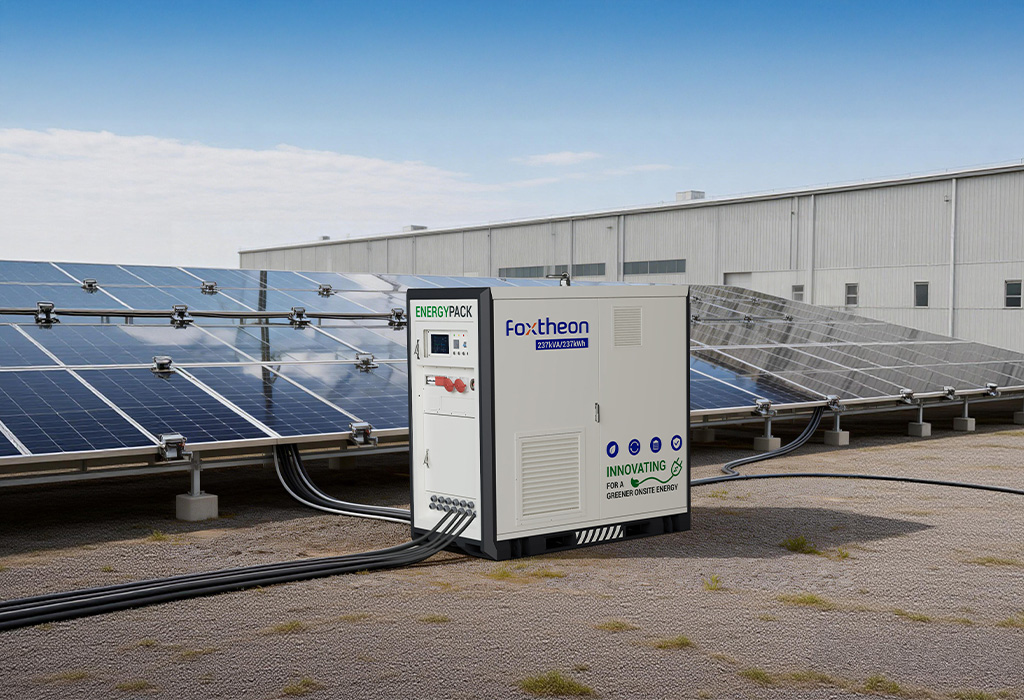
Modern power infrastructure is rarely homogeneous. Facilities are increasingly integrating renewable energy arrays and Battery Energy Storage Systems (BESS) alongside existing reciprocating engines. The flexibility of multiple synchronized generating units makes them highly compatible with hybrid microgrid environments.
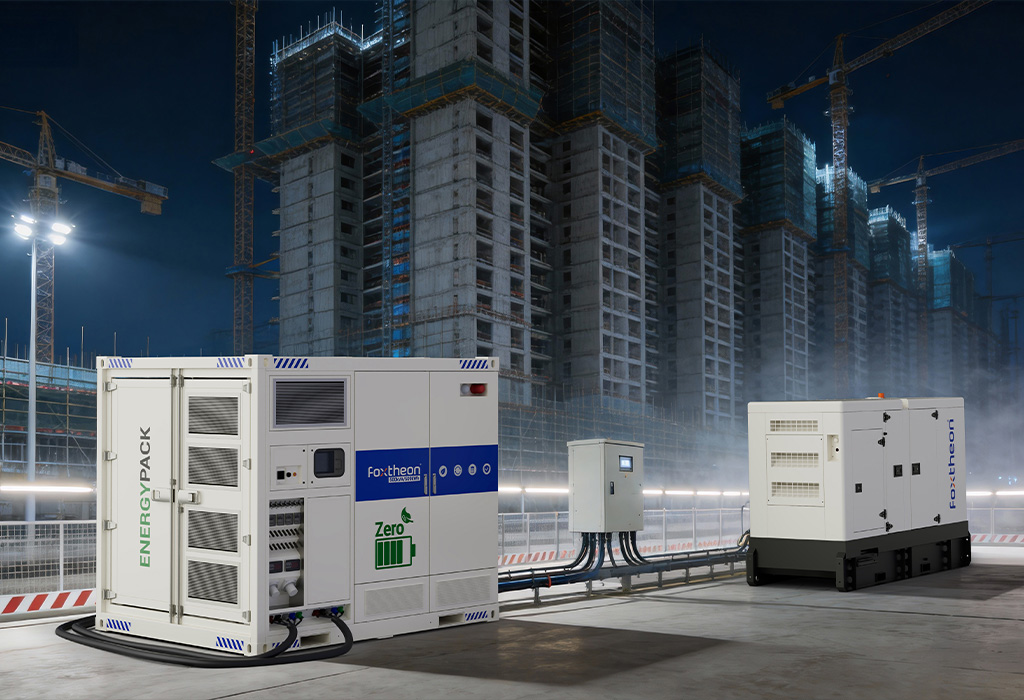
Technology providers such as Foxtheon specialize in developing the sophisticated control layers required to harmonize these diverse assets. By integrating intelligent power management systems, facilities can prioritize renewable generation or battery dispatch, using the internal combustion modules strictly as a firming resource. The controllers monitor the state of charge (SOC) of the site’s batteries; when the batteries deplete or a sudden industrial load exceeds the inverter capacity, the control system initiates a start sequence for exactly the number of modules required to cover the deficit.
This hybridized approach does not depreciate existing generating assets. Instead, it optimizes them. Existing diesel or natural gas generators can be retrofitted with paralleling controllers to become part of a larger, smarter modular industrial power network. This maximizes the return on investment of sunk capital while gradually transitioning the facility toward more flexible and automated energy management.
Addressing Harmonic Distortion and Power Quality
Industrial environments are characterized by high levels of non-linear loads, such as Variable Frequency Drives (VFDs), uninterruptible power supplies (UPS), and large rectifiers. These devices introduce Total Harmonic Distortion (THD) back into the electrical network, which can overheat alternator windings and cause erratic behavior in sensitive electronics.
Deploying multiple alternators in parallel increases the total fault current capacity and lowers the source impedance of the power system. A lower subtransient reactance (X”d) makes the generation system much more resilient to the voltage-distorting effects of harmonics. Consequently, the paralleled units deliver a stiffer, cleaner voltage waveform to the facility, protecting delicate Programmable Logic Controllers (PLCs) and IT infrastructure from power quality degradation.
Future-Proofing Industrial Operations
The regulatory environment regarding emissions and noise attenuation is becoming increasingly stringent, particularly for prime power applications in proximity to populated areas. Modular enclosures offer superior acoustic treatment compared to massive single-unit housings, often achieving tighter dB(A) ratings at shorter distances. Furthermore, upgrading a fleet to comply with new emission standards (such as Tier 4 Final or Stage V) can be done sequentially. Operators can upgrade individual modules over multiple fiscal quarters rather than facing a massive, single-event capital outlay.
By partnering with established engineering firms like Foxtheon, industrial operators can design power plants that grow organically with their production demands. This precise matching of supply to demand represents the most financially prudent approach to managing energy-intensive operations.
Frequently Asked Questions (FAQ)
Q1: How does a modular system handle the sudden starting of large industrial motors?
A1: Advanced paralleling controllers continuously monitor the power network. If a large motor start is scheduled or detected, the system can perform an anticipated start, bringing standby modules online and synchronizing them within seconds to increase the available fault current and stabilize the voltage dip during the motor’s inrush period.
Q2: Can we integrate new modular units with our existing, older generators?
A2: Yes. Existing generators can be integrated into a modular industrial power setup by retrofitting their control panels with modern digital paralleling controllers. As long as the voltage and frequency can be synchronized, units of different ages and capacities can share the load proportionally.
Q3: Does managing multiple units increase the complexity of routine maintenance?
A3: While there are more physical engines to service, the maintenance process is vastly simplified operationally. With an N+1 configuration, technicians can isolate, shut down, and service one unit at a time while the remaining units carry the site load, completely avoiding facility downtime and the need for temporary rental power.
Q4: How does dynamic dispatch reduce fuel consumption?
A4: Internal combustion engines have a specific fuel consumption curve; they burn more fuel per kilowatt produced when running at low loads (e.g., 20%). By automatically shutting down extra modules during low-demand periods, the system forces the remaining running units to operate at a highly efficient 70-80% load, lowering the overall gallons-per-hour fuel burn rate.
Q5: What are the space requirements for a paralleled system compared to a single large unit?
A5: While multiple enclosures may have a slightly larger total footprint than a single unit, they offer immense layout flexibility. Containerized modules can be positioned in L-shapes, placed on reinforced rooftops, or distributed across a site where a single massive concrete pad might be geotechnically unfeasible.
Conclusion and Next Steps
Transitioning from static, fixed-capacity generation to dynamic, scalable infrastructure is a fundamental necessity for optimizing heavy industrial operations. By leveraging parallel processing, load-dependent dispatch, and robust N+1 redundancy, a modular industrial power framework delivers unmatched reliability and tangible reductions in Total Cost of Ownership. Integrating these systems with existing assets ensures maximum utilization of capital while preparing facilities for future hybrid energy expansions.
Engineering a parallel power system requires precise load profiling, harmonic analysis, and customized switchgear design. Foxtheon provides comprehensive B2B technical consultation and customized system architecture to align your power generation infrastructure with your specific operational demands.
Submit an Inquiry:
To request a detailed site load evaluation, discuss paralleling switchgear specifications, or receive a commercial quotation tailored to your facility, please contact our engineering sales team today. We are ready to assist you in designing a highly resilient power architecture.