
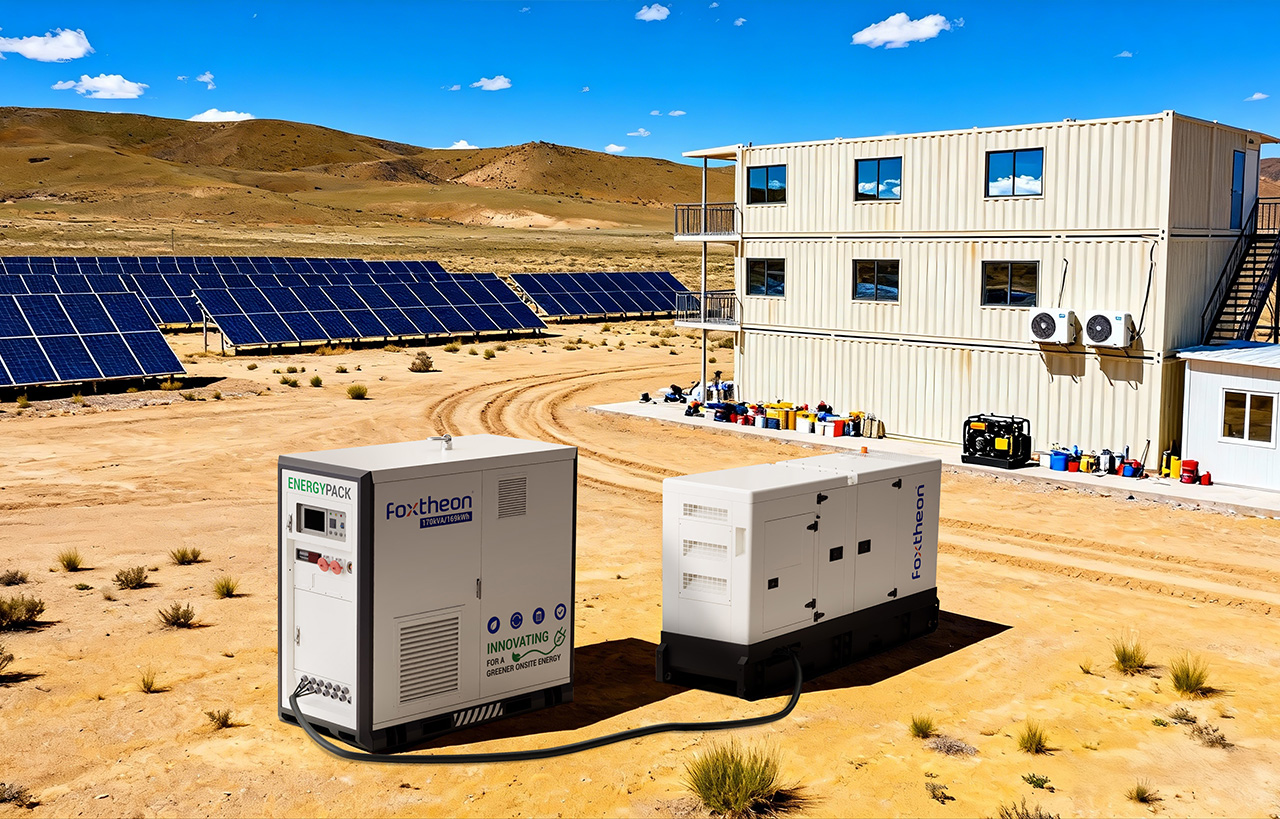
Commercial and industrial (C&I) energy consumers face a complex triad: rising demand charges, volatile grid tariffs, and internal decarbonization targets. battery storage for business has evolved from a niche backup solution to a strategic asset that actively shapes electricity costs, improves power quality, and enables participation in flexibility markets. This article provides a component-level view of lithium-ion based energy storage systems, quantifies real-world payback periods, and outlines implementation steps without overpromising or dismissing existing generation investments.
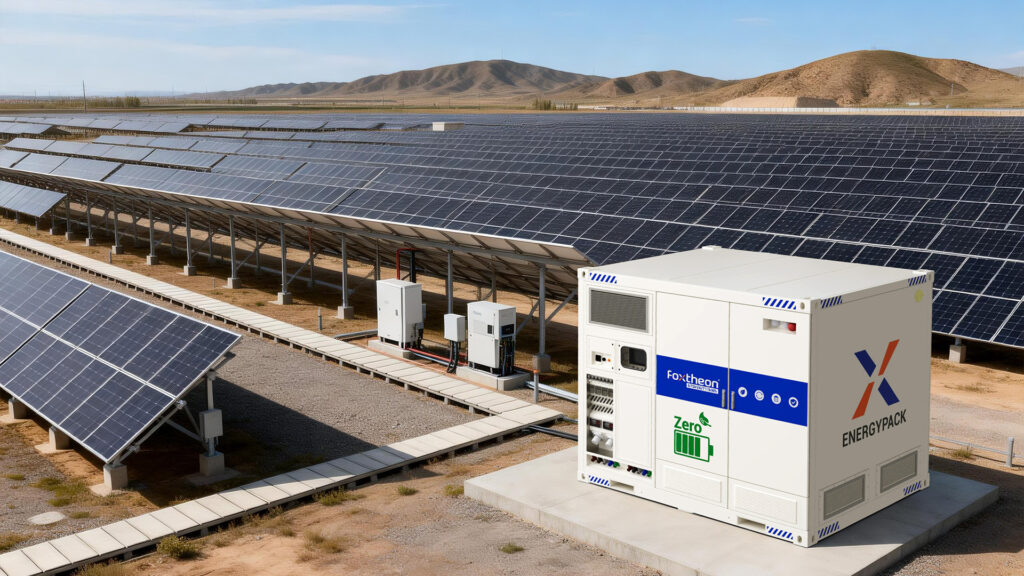
Understanding the Technical Architecture of Commercial Battery Energy Storage Systems
A robust battery storage for business application relies on four interdependent layers. Engineers evaluating these systems must examine each subcomponent’s specifications, not just nameplate capacity.
Core components and their functions
- Battery racks (LiFePO₄ / NMC): Energy capacity (kWh) and power rating (kW) determine how long and at what rate the system discharges. For most C&I sites, 2- to 4-hour duration configurations dominate because they cover peak demand windows and provide load-shifting flexibility.
- Battery management system (BMS): Monitors cell voltage, temperature, and state of charge (SoC). A high-grade BMS prevents thermal runaway, balances cells, and extends cycle life beyond 6000 cycles at 80% depth of discharge.
- Power conversion system (PCS): Bi-directional inverter converting DC to AC and vice versa. Efficiency (97–98.5%) and response time (<50 ms) directly affect ROI from frequency regulation and demand response events.
- Energy management system (EMS): The algorithmic brain that forecasts load profiles, optimizes charge/discharge schedules based on time-of-use (ToU) tariffs, and interacts with grid signals. Advanced EMS layers include predictive control using weather data and machine learning.
Critical performance metrics
When comparing proposals, request datasheets confirming:
– Round-trip efficiency (RTE) ≥ 88% at nominal power.
– Cycle life: ≥ 8000 cycles at 25°C with 90% end-of-life capacity retention.
– Depth of discharge (DoD) for daily operation: 90–95%.
– Operating temperature range: -20°C to 50°C with active thermal management.
Business Cases & Applications Where Battery Storage Delivers Tangible ROI
Several well-defined operational models make battery storage for business a financially sound decision. The most profitable application depends on local utility rate structures and grid characteristics.
- Peak shaving (demand charge management): Commercial tariffs often include demand charges based on the highest 15- or 30-minute average power draw during a billing cycle. A properly sized BESS discharges during those intervals, reducing peak demand by 30–50% and saving thousands per month.
- Load shifting (time-of-use arbitrage): Purchase electricity during low-price night hours (off-peak) to charge the battery, then discharge during expensive afternoon peaks. In markets with peak/off-peak spreads exceeding $0.15/kWh, payback periods drop below four years.
- Demand response (DR) participation: Grid operators pay commercial sites for reducing load when the grid is stressed. Batteries automate this response without interrupting production lines. Annual DR revenues can reach $40–80/kW depending on the ISO (CAISO, PJM, ERCOT).
- Backup power with improved reliability: Unlike generators that require startup time and fuel logistics, batteries provide seamless islanding within milliseconds. For data centers, cold storage warehouses, and retail chains, this avoids spoilage and operational downtime. Best practice pairs batteries with existing generators, where the battery handles short-duration outages and the generator covers extended events.
- Renewables self-consumption: Sites with rooftop solar increase on-site usage of PV generation by storing excess energy instead of exporting at low feed-in tariffs.
Solving Persistent Industry Pain Points with Intelligent Storage Solutions
Energy managers report four recurring challenges that conventional infrastructure fails to solve. battery storage for business directly addresses each, provided the system is correctly sized and controlled.
- Pain point 1: Unpredictable demand charges – Even a single monthly spike from simultaneous equipment startup distorts electricity budgets. Batteries using real-time power meters can clamp peaks within milliseconds, turning an unpredictable cost into a managed one.
- Pain point 2: Grid instability and voltage sags – Industrial areas often suffer from momentary outages or voltage dips that trip sensitive PLCs and VFDs. A battery with grid-forming inverter capability injects reactive power to stabilize voltage, preventing production stops.
- Pain point 3: Carbon compliance costs – In regions with carbon pricing or emission caps (EU ETS, UK EII, California Cap-and-Trade), reducing grid consumption during fossil-heavy peak hours lowers indirect emissions. Some batteries also qualify for carbon offset credits.
- Pain point 4: Underutilized backup assets – Many sites own diesel generators that run only for weekly tests. Adding a battery creates a hybrid microgrid: the generator operates at optimal load (avoiding wet stacking) while the battery handles transients, reducing fuel consumption and maintenance by 40–60%.
Financial and Operational Considerations for Decision Makers
Before committing capital, a rigorous total cost of ownership (TCO) analysis must include hardware, installation, software, and end-of-life handling. Below are benchmarks derived from 2025 C&I installations in North America and Europe.
Upfront investment and incentives
Turnkey project costs for a 500 kW / 2000 kWh containerized system typically range from $380–450/kWh. However, investment tax credits (ITC), accelerated depreciation (MACRS), and utility rebates reduce net expenditure by 30–50% in many jurisdictions. For example, the US ITC for standalone storage offers 30% direct reduction if capacity ≥ 3 kWh.
Operational expenses
- Energy losses: With RTE of 90%, every 100 kWh stored yields 90 kWh discharged – a 10% energy cost that must be factored into arbitrage calculations.
- Maintenance: Annual O&M contracts for commercial BESS average $4–7/kW-year, covering remote monitoring, thermal management filter cleaning, and BMS firmware updates.
- Insurance and safety compliance: UL 9540A (thermal runaway fire testing) and NFPA 855 (installation standard) are mandatory. Premium increases are minimal for certified systems.
Expected payback and internal rate of return (IRR)
For a facility with monthly demand charge of $18/kW and peak/off-peak spread of $0.12/kWh, a 4-hour storage system often achieves simple payback in 3.5–5.5 years, with IRR between 12% and 18% over 12 years. When stacking demand response revenues and ITC, payback can drop below three years.
Integrating Battery Storage with Existing Generation Assets – A Complementary Approach
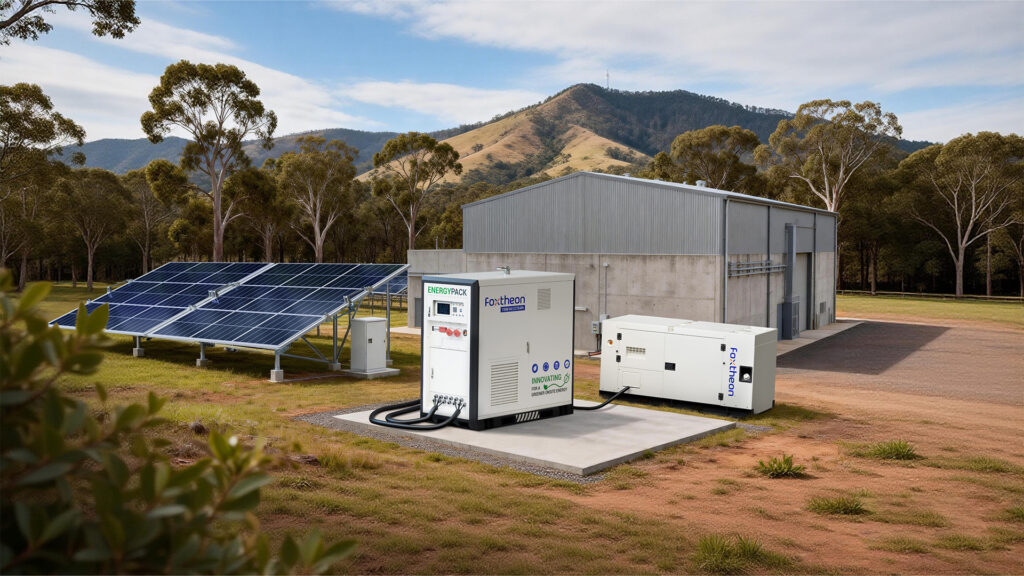
Existing diesel or gas generators remain valuable capacity assets, especially for extended outages. Intelligent battery storage for business does not replace them but creates a hybrid system superior to either alone. The battery supplies instantaneous power during the first seconds of a grid failure, covering the generator start-up and synchronization period (typically 10–30 seconds). Once the generator reaches stable operation, the battery can be recharged from it or kept as spinning reserve. Operational benefits include:
- Reduced generator runtime (less fuel consumption and carbon emissions).
- Avoidance of light-load generator operation, which causes carbon buildup and maintenance issues.
- Lower noise during nighttime partial backup (battery silent operation).
This synergy respects past capital investments while improving overall resilience. Many engineering firms now design microgrid controllers that orchestrate generators, batteries, and renewable sources via common Modbus or CAN protocols.
Why Foxtheon Focuses on Application-Specific Battery Solutions
Generic storage platforms often fail because they lack domain adaptation for commercial environments. Foxtheon develops intelligent energy storage tailored to industries such as cold storage, manufacturing, EV charging hubs, and hospitality. Their systems integrate natively with existing building management systems (BMS/SCADA) and provide granular analytics on state-of-health, cycle aging, and revenue stacking. Engineering teams at Foxtheon assist with site audits, utility tariff analysis, and grant applications, reducing deployment friction. The company’s commercial product line – from 30 kW rack-mount units to 2 MW containerized plants – complies with UL 1973, IEC 62619, and VDE-AR-E 2510-50, ensuring bankability and insurance acceptance. For decision makers seeking a partner rather than a component vendor, Foxtheon provides 10-year performance guarantees and remote 24/7 monitoring.
Implementation Roadmap: From Feasibility to Commercial Operation
Successful battery storage for business projects follow a disciplined five-phase approach, avoiding common pitfalls like undersized inverters or ignored degradation curves.
- Data collection and load analysis: Record 12 months of 15-minute interval meter data. Identify peak demand periods, average baseload, and variance. Use load duration curves to size both power (kW) and energy (kWh).
- Tariff and incentive mapping: Extract ToU rates, demand charges, and any standby charges. Contact local utility for interconnection rules and available storage rebates. Apply for incentive reservations early.
- Technology selection & procurement: Issue an RFQ specifying required RTE, cycle life, operating temperature range, and communication protocols (IEC 61850, Modbus TCP). Request factory acceptance test (FAT) reports.
- Installation and interconnection: Engage a licensed electrical contractor experienced with battery systems. Ensure compliance with NFPA 855 separation distances and local fire marshal requirements. Complete utility interconnection agreement (often a simplified process for behind-the-meter non-export systems).
- Commissioning and optimization: Perform 2 weeks of supervised operation while tuning the EMS peak prediction algorithm. Validate demand reduction claims against baseline data.
Frequently Asked Questions (FAQ)
Q1: What is the typical lifespan of a commercial battery storage system, and how does degradation affect ROI?
A1: High-quality LiFePO₄ systems provide 10–15 years of useful life with 80% remaining capacity after 6000–8000 cycles at 1C rate. Degradation is linear initially but accelerates after 70% state-of-health. Financial models should incorporate capacity fade by assuming 0.5–1% annual throughput reduction and re-evaluating peak shaving ability after year 8. Many operators oversize the system by 15–20% to maintain performance through the warranty period.
Q2: Can battery storage completely remove my facility’s demand charges?
A2: No system can guarantee zero demand charges because unpredictable simultaneous starts (e.g., compressors plus conveyor lines) may exceed the inverter’s maximum power. However, properly sized battery storage for business routinely reduces demand charges by 40–70%, targeting the top 5–10 peaks per month. For extreme loads above 2 MW, combining batteries with load shedding of non-critical equipment is more cost-effective than oversizing storage.
Q3: How does cold weather or high ambient temperature affect battery performance?
A3: Lithium-ion batteries lose reversible capacity at sub-zero temperatures unless equipped with self-heating functions. Commercial systems include liquid thermal management or insulated enclosures with heaters. For outdoor installations in climate zones with -20°C, expect a 5–8% reduction in usable energy during the coldest week, which should be included in sizing. High temperatures (>40°C) accelerate degradation, so forced-air or chiller-based cooling is mandatory. Always request temperature de-rating curves from the manufacturer.
Q4: What safety certifications should I require from a battery storage vendor?
A4: For C&I projects in North America, require UL 9540 (system level), UL 1973 (cell/module), and UL 9540A (thermal runaway propagation test). In Europe, IEC 62619 and IEC 62477-1 are essential. Additionally, verify that the system meets NFPA 855 requirements for spacing, ventilation, and explosion control. Third-party certification by TÜV, Intertek, or DNV provides added confidence.
Q5: Can I add battery storage incrementally as my energy needs grow?
A5: Yes, many vendors offer modular architectures where additional battery cabinets or inverter modules are paralleled. Start with a core 100 kW / 300 kWh unit, then add second cabinets in 100–200 kWh increments. Ensure the initial inverter and EMS can support parallel expansion (most modern PCS have 2–6 expansion ports). However, verify utility transformer capacity; large expansions may require a new service connection.
Q6: What is the typical payback period for a 500 kW / 2 MWh system in a manufacturing facility?
A6: Based on 2025 data from facilities with demand charges > $15/kW and ToU spread > $0.10/kWh, payback ranges from 3.8 to 5.2 years before incentives. With a 30% ITC and accelerated depreciation (bonus depreciation in the US), after-tax payback can drop to 2.5–3.5 years. The exact figure depends on how many revenue streams are stacked (demand response, arbitrage, backup value).
Move from Energy Cost Management to Energy Asset Optimization
Modern battery storage for business delivers verifiable financial returns while improving operational resilience. The technology has matured: cycle life guarantees exceed 10 years, safety standards are codified, and the economics work in most deregulated markets. Whether your goal is to reduce peak demand charges, integrate solar, or build a microgrid that coordinates with existing generators, a properly engineered storage system provides a faster payback than many efficiency measures.
For facility managers and financial controllers ready to move past generic proposals, the next step is a site-specific feasibility study.
Request a commercial battery storage assessment that includes 15-minute interval load analysis, tariff simulation, and incentive identification. Contact our engineering team to benchmark your facility against thousands of C&I installations.
Start your inquiry: Send your latest 12-month utility bills and a single-line electrical diagram to info@foxtheon.com – our energy storage specialists will return a preliminary ROI model within five business days, without obligation.