
Owners and facility managers of office towers, retail centers, hotels, and medical office buildings face a common problem: electricity bills are rising faster than any other operational expense, and demand charges now represent 30–60% of monthly utility costs. battery storage for commercial buildings has matured into a predictable asset class, providing measurable peak reduction, load shifting, and backup resilience without interfering with existing generator investments. This guide offers a component-level view, real-world performance data, and a phased deployment approach suitable for multi-tenant and single-owner commercial properties.
1. Core Architecture of Battery Storage for Commercial Buildings
Unlike residential units, commercial systems require modularity, three-phase inverter compatibility, and integration with building energy management systems (BEMS). A complete battery storage for commercial buildings solution consists of four tightly coupled subsystems.
1.1 Battery Racks – Chemistry and Form Factor
- Lithium Iron Phosphate (LFP): Dominates commercial projects due to 6000–10000 cycle life, thermal stability (no active thermal runaway below 270°C), and lower cobalt dependency. Energy density (150–180 Wh/kg) is sufficient for most commercial footprints.
- Nickel Manganese Cobalt (NMC): Higher energy density (200–250 Wh/kg) but shorter cycle life (4000–6000 cycles). Preferred where floor space is extremely constrained (e.g., high-rise retrofit).
- Form factor: Rack-mounted 19-inch modules (5–15 kWh per rack) allow incremental scaling. For buildings above 500 kWh capacity, pre-assembled outdoor enclosures with integrated HVAC reduce installation labor.
1.2 Power Conversion System (PCS) – Sizing and Grid Functions
Commercial inverters must support three-phase 208V, 480V (North America) or 400V (Europe). Key specifications:
- Continuous power rating: 30 kW to 2 MW in parallel configurations.
- Grid-interactive modes: Peak shaving, export limitation (zero-export for sites without interconnection agreements), and islanding for backup.
- Reactive power capability (PF ±0.8) to support voltage regulation – a feature often overlooked but valuable for buildings with large induction motors (HVAC, elevators).
1.3 Battery Management & Energy Management Systems (BMS/EMS)
The BMS monitors cell voltages, temperatures, and state of charge (SoC) with millisecond granularity. The EMS layer adds predictive algorithms:
- Load forecasting based on day-of-week, weather, and building occupancy patterns.
- Real-time arbitrage between time-of-use (ToU) rates and demand response signals (OpenADR 2.0b).
- Generator coordination logic for hybrid microgrids (see section 4).
2. High-Value Applications Tailored to Commercial Building Profiles
Different commercial segments generate distinct load shapes. Matching battery storage for commercial buildings to specific use cases maximizes ROI.
- Office buildings (9-to-5 profile): High midday cooling and lighting loads. Batteries charge overnight (off-peak) and discharge from 1 PM to 5 PM when demand charges are measured. Typical peak reduction: 35–45%.
- Retail and grocery: Refrigeration and HVAC create constant baseload with short spikes from door openings. Batteries perform peak smoothing – responding to 5- to 15-second transients that trigger demand ratchets. Payback often under 3.5 years due to high demand rates ($18–28/kW).
- Hotels and hospitality: Load varies with occupancy and events. Battery storage for commercial buildings in hotels also provides uninterruptible power for front desk, elevators, and kitchen cold storage – a hidden value stream that reduces spoilage during brief outages.
- Medical office buildings (MOBs): Sensitive imaging equipment (MRI, CT) suffers from voltage sags. A battery with grid-forming inverter can inject reactive power within 20 ms, preventing equipment resets and rescan costs. Additionally, MOBs can enroll in utility demand response programs without disrupting patient care.
3. Solving Persistent Commercial Energy Pain Points
Facility managers report three recurring problems that conventional electrical infrastructure cannot address efficiently.
- Pain point: Non-coincident demand peaks – A single 15-minute interval where elevators, chillers, and kitchen hoods run simultaneously sets the entire month’s demand charge. Batteries provide real-time power limiting by discharging exactly during those intervals, keeping peak demand below a programmed threshold (e.g., 250 kW).
- Pain point: Time-of-use rate complexity – Many commercial tariffs have seasonal and daily ToU periods (summer on-peak vs winter partial-peak). An EMS with tariff tables automatically adjusts charge/discharge schedules each month without operator intervention.
- Pain point: Underutilized backup generators – Existing diesel generators often run monthly tests but provide no daily value. Adding battery storage for commercial buildings creates a hybrid system where the battery handles short outages (0–30 minutes) and provides peak shaving, while the generator serves extended blackouts. This reduces generator runtime by 70–80%, lowering fuel and maintenance costs while preserving the generator as a capacity asset.
4. Financial Models and Incentives for Commercial Storage Projects
A thorough total cost of ownership (TCO) analysis for battery storage for commercial buildings must include hardware, installation, software, and degradation. Below are 2025 benchmarks from projects in the US and EU.
4.1 Upfront costs and available incentives
Turnkey installed costs for a 200 kW / 600 kWh system range from $380 to $450 per kWh. However, net cost after incentives is substantially lower:
- US Federal Investment Tax Credit (ITC): 30% for standalone storage (≥3 kWh) under Section 48. Applies to commercial buildings directly.
- Accelerated depreciation (MACRS) with 5-year schedule – can deduct 100% bonus depreciation through 2025 in many cases.
- State and utility rebates: California SGIP (up to $0.25/Wh), NY‑SUN, Massachusetts SMART, and various utility demand response incentives.
- Property Assessed Clean Energy (PACE) financing: Long-term (15–20 years) fixed-rate loans repaid via property tax assessments.
4.2 Operational revenue streams and payback periods
Commercial buildings can stack up to four revenue sources:
- Demand charge reduction – typical savings $8,000–25,000 per year depending on tariff.
- ToU arbitrage – additional $2,000–6,000 per year when peak/off-peak spread > $0.12/kWh.
- Demand response payments – $40–70/kW-year in ISO-NE, PJM, or CAISO.
- Backup power value – quantified as avoided spoilage or lost revenue (often $5,000–15,000 per outage event).
For a 200 kW / 600 kWh system in a retail building with $22/kW demand charge and $0.14/kWh spread, simple payback typically lands between 3.5 and 5 years. After ITC and depreciation, after-tax payback can fall to 2.5–3.2 years.
5. Integrating Battery Storage with Existing Generator Assets – A Complementary Hybrid Approach
Many commercial buildings already own diesel or natural gas generators for life safety systems (fire pumps, egress lighting). Adding battery storage for commercial buildings does not replace these generators but instead makes them more efficient and responsive. In a hybrid microgrid configuration:
- The battery provides instantaneous response during grid failure (sub-20 ms transfer), covering the generator’s start and synchronization time (typically 15–30 seconds).
- Once the generator reaches stable speed and voltage, the battery can be recharged from the generator at a controlled rate, ensuring the generator operates at its optimal load (above 40% nameplate) to avoid wet stacking and carbon buildup.
- For short outages (<30 minutes), the battery handles the entire event without starting the generator – saving fuel, reducing emissions, and extending generator service intervals.
This hybrid arrangement respects the original capital investment in backup generation while improving overall resilience. It also simplifies compliance with local codes that require emergency power; batteries meet the instantaneous requirement, and generators satisfy the extended runtime requirement.
6. Why Foxtheon Focuses on Commercial Building Energy Intelligence
Generic storage platforms often fail because they lack building-specific load profiling and tariff optimization. Foxtheon designs its systems specifically for commercial building applications, with features such as:
- Native integration with common BEMS protocols (BACnet, Modbus, KNX).
- Load disaggregation algorithms that separate HVAC, lighting, and plug loads to identify the best peak shaving targets.
- Pre-configured tariff libraries for over 200 utility territories (PG&E, SCE, ConEd, ComEd, and European DSOs).
- Remote firmware updates and performance guarantees (90% round-trip efficiency after 10 years).
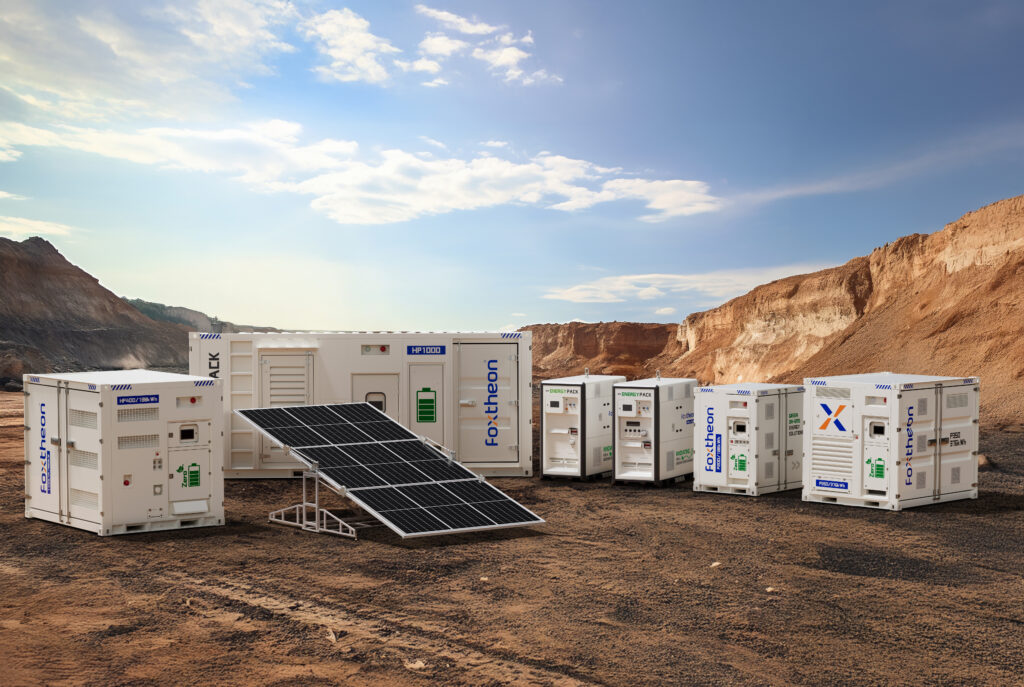
Foxtheon’s commercial product line – from 30 kW rack units to 2 MW containerized systems – holds UL 9540, UL 1973, and IEC 62619 certifications, satisfying fire marshal and insurance underwriter requirements. Their team provides end-to-end service: site audit, interconnection application assistance, incentive filing, and commissioning.
7. Implementation Roadmap for Facility Owners
Follow these five phases to deploy battery storage for commercial buildings with minimal disruption to tenants.
- Data collection (4–6 weeks): Collect 12 months of 15-minute interval meter data. Identify peak demand days, load factor, and existing generator test logs.
- Tariff and incentive mapping (2 weeks): Verify applicable demand charges, ToU periods, and standby rates. Submit incentive pre-application if available.
- System sizing and vendor selection (3–4 weeks): Size power (kW) based on the top 5–10 peak intervals. Size energy (kWh) based on 2–4 hours of peak coverage. Issue RFQ to 2–3 vendors including Foxtheon.
- Installation and interconnection (6–8 weeks): Engage licensed electrical contractor. Install battery in mechanical room, parking garage, or outdoor pad. Execute utility agreement (simplified for behind-the-meter non-export systems).
- Commissioning and training (1 week): Perform 100-hour validation test, tune EMS peak prediction parameters, and train facility staff on monitoring dashboards.
Frequently Asked Questions (FAQ)
Q1: Can battery storage for commercial buildings completely remove demand charges?
A1: No system can guarantee zero demand charges because occasional simultaneous starting of multiple compressors or elevators may exceed inverter peak power. However, properly sized systems typically reduce demand charges by 50–75% by targeting the 5–10 highest intervals per month. For extreme spikes above 1 MW, pairing storage with load shedding of non-critical rooftop units is more cost-effective.
Q2: What is the typical usable life of a commercial battery system, and how does degradation affect savings?
A2: Quality LFP systems provide 10–15 years of useful life, retaining 80% of original capacity after 6000–8000 cycles at 1C rate. Financial models should include a degradation factor of 0.5–1% capacity loss per year. Many commercial projects oversize the battery by 15% to maintain peak shaving performance through year 10. End-of-life batteries can be repurposed for less demanding stationary applications or recycled (95% material recovery now available).
Q3: How does cold weather affect battery performance in outdoor enclosures?
A3: Commercial systems include active thermal management (heating and cooling). For climates with winter lows below -10°C, specify a battery with self-heating function (using grid or generator power to maintain cells above 5°C). Expect a 5–10% reduction in usable energy during extreme cold weeks, which should be included in sizing calculations. In hot climates (above 40°C), liquid cooling or forced-air with chiller is mandatory to prevent accelerated aging.
Q4: What safety certifications should I require to satisfy fire code and insurance?
A4: For commercial buildings in North America, require UL 9540 (system-level), UL 1973 (battery modules), and UL 9540A (thermal runaway propagation test). In Europe, IEC 62619 and IEC 62477-1. Also confirm compliance with NFPA 855 for spacing, ventilation, and explosion control. Third-party certification by TÜV or DNV provides additional bankability. Most insurers accept these certifications without premium increases.
Q5: Can I add battery storage incrementally as my building’s load grows (e.g., adding EV chargers)?
A5: Yes, modular architecture is standard. Start with a 100 kW / 300 kWh core system, then add extra battery cabinets in 50–200 kWh increments. Ensure the initial inverter and EMS support parallel expansion (most modern units have 2–6 expansion ports). However, check main service transformer capacity; adding more than 200 kW may require a utility transformer upgrade. Plan for that in the master electric vehicle charging plan.
Q6: How does battery storage interact with existing solar PV on the commercial building?
A6: Batteries can increase solar self-consumption by storing excess PV generation that would otherwise be exported at low feed-in rates. The EMS optimizes charging from solar during midday and discharging during evening peak periods. This is particularly valuable for buildings with net billing (California NBT, New York VDER) where export credits are lower than retail rates. The battery also enables peak shaving using solar – if the solar array is producing, the battery reduces its discharge to avoid backfeeding the grid beyond a set limit (zero-export).
From Energy Cost Center to Grid-Interactive Asset
Modern battery storage for commercial buildings delivers verified financial returns, improved power quality, and seamless integration with existing backup generators. With 10-year warranties, UL9540 safety listings, and stacked revenue streams (demand savings + arbitrage + demand response), the business case has never been stronger. Whether you manage a 50,000 sq. ft. office or a 500,000 sq. ft. mixed-use property, a properly engineered storage system provides payback in 3–5 years while future-proofing against rising utility tariffs.
For building owners and facility directors ready to move beyond generic proposals: request a commercial building battery feasibility study. Our team analyzes your 15-minute interval data, simulates five different sizing scenarios, and identifies all available incentives – delivered within 10 business days.
Start your inquiry: Email your last 12 months of utility bills (interval data preferred) and a single-line riser diagram to info@foxtheon.com. A Foxtheon energy storage specialist will respond with a preliminary ROI model, system layout sketch, and incentive estimate – no obligation.