
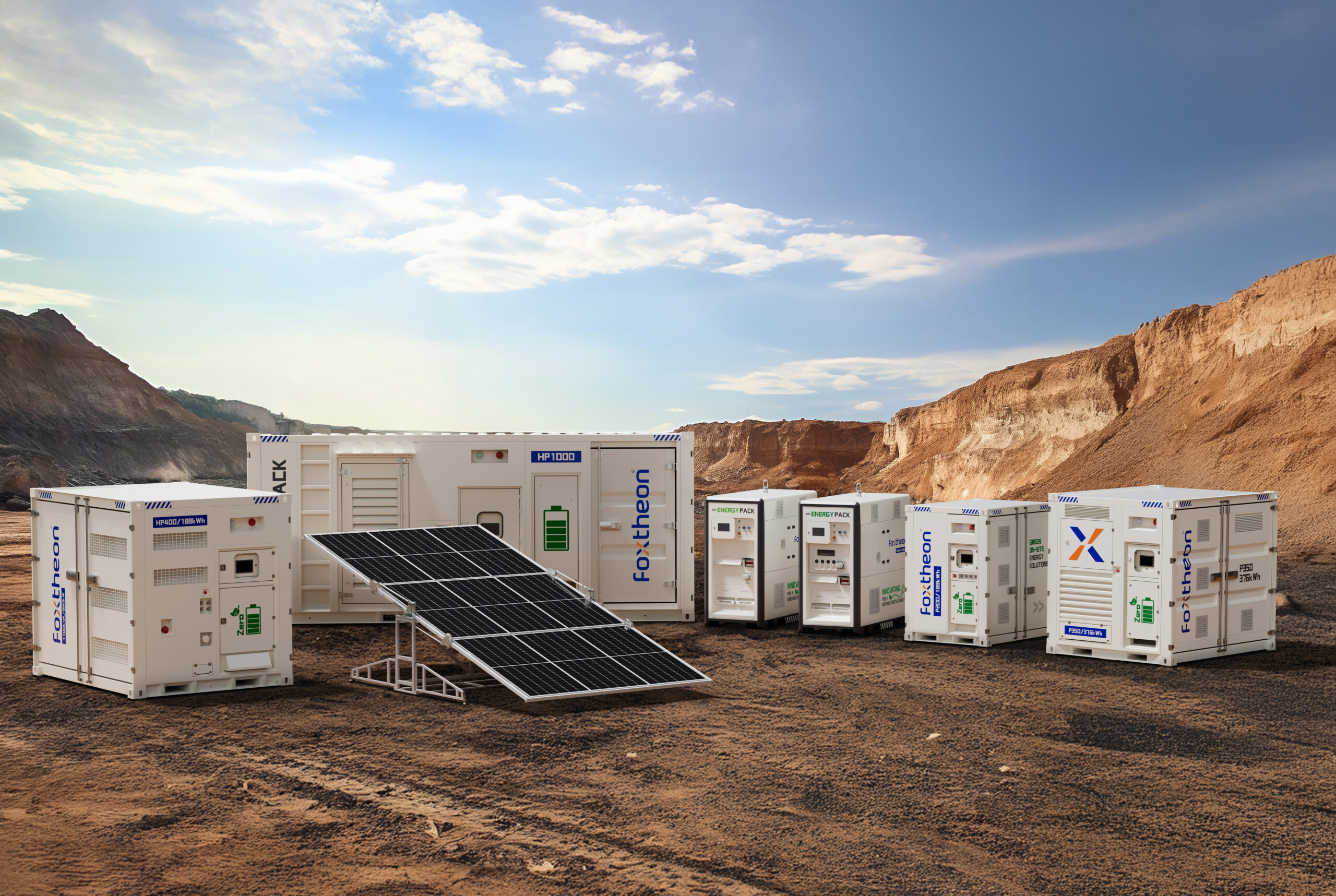
As commercial and industrial facilities face rising grid instability, demand charge volatility, and renewable integration complexity, the bess power system (Battery Energy Storage System) has evolved from a niche backup asset to a strategic core of modern energy infrastructure. Unlike conventional generators that provide only emergency response, a well-engineered bess power system delivers daily economic optimization, peak load shaving, frequency regulation, and seamless renewable self-consumption. This article provides a granular, data-driven examination of BESS technology—from cell chemistry trade-offs to EMS logic, from degradation modeling to return-on-investment (ROI) frameworks—while outlining deployment strategies for manufacturing sites, data centers, microgrids, and EV charging hubs. All analysis adheres to field-proven engineering standards, avoiding market hyperbole and respecting existing generator assets as complementary components of a hybrid energy ecosystem.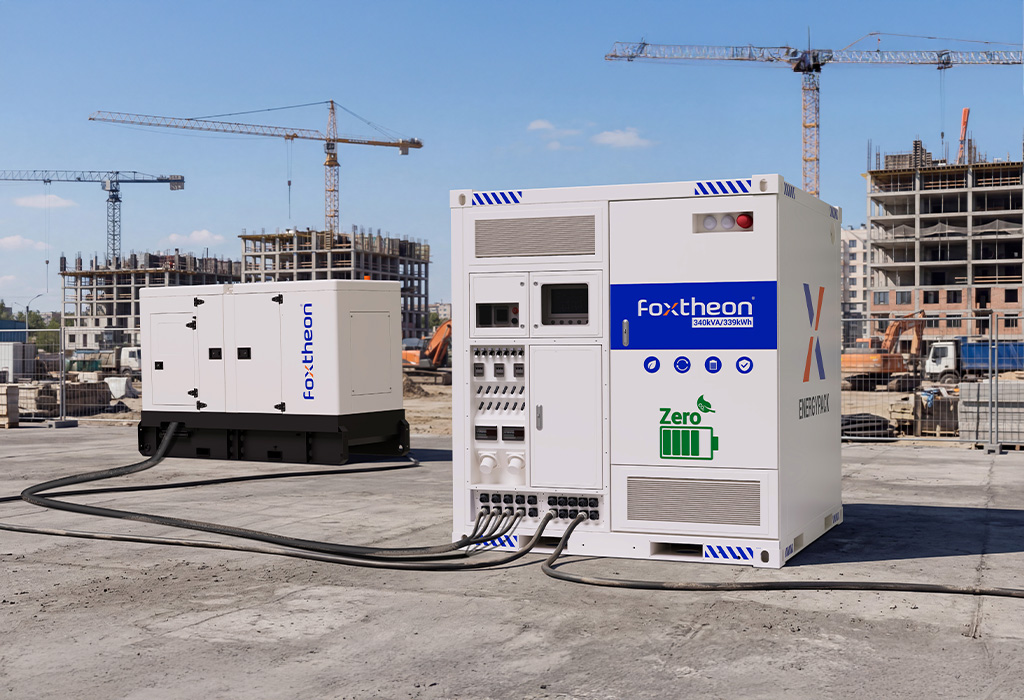
Core Components and Technical Architecture of a BESS Power System
Understanding the hardware-software stack of a bess power system is essential for procurement and integration decisions. Each subsystem directly impacts round-trip efficiency (RTE), response time, safety, and lifecycle cost.
Battery Racks & Cell Chemistry Selection
- Lithium Iron Phosphate (LFP): Dominant in stationary storage due to high thermal runaway threshold (>270°C), 6,000–10,000 cycle life at 80% depth of discharge (DoD), and no cobalt dependency. Energy density (140-160 Wh/kg) is sufficient for most C&I footprints.
- Nickel Manganese Cobalt (NMC): Higher energy density (200-250 Wh/kg) but lower cycle life (3,000–5,000 cycles) and earlier thermal runaway onset (~150°C). Preferred where space is extremely constrained, though requiring more robust thermal management.
- Cell-to-pack (CTP) designs reduce passive components, raising volumetric efficiency by 15-20% compared to traditional module-based configurations.
Power Conversion System (PCS) & Bi-Directional Inverters
- Modern PCS units achieve peak efficiency of 98–99% at nominal load. Key specifications include overload capability (110% for 10 minutes), harmonic distortion (THD <3%), and grid-forming vs. grid-following modes.
- SiC (silicon carbide) semiconductors enable higher switching frequencies, reducing passive filter size and improving partial-load efficiency by 1.5-2% compared to IGBT-based designs.
Battery Management System (BMS) & Energy Management System (EMS)
- BMS: Monitors cell voltage (accuracy ±5mV), temperature, and current; performs passive/active balancing; calculates state of charge (SoC) and state of health (SoH) using Kalman filtering algorithms. Redundant BMS architecture (dual-canbus) ensures fail-operational behavior.
- EMS: Executes site-specific optimization logic – peak shaving thresholds, time-of-use (TOU) arbitrage, demand response signals, or PV smoothing. Advanced EMS integrates weather forecasting and real-time energy pricing APIs.
These subsystems must communicate via standardized protocols (Modbus TCP, IEC 61850, CAN 2.0). The quality of EMS logic often distinguishes a commoditized battery pack from a high-performance bess power system that adapts to load patterns over multi-year cycles.
Addressing Key Industry Pain Points with Advanced BESS Solutions
Energy managers across manufacturing, logistics, and digital infrastructure face four recurring challenges. A properly sized bess power system mitigates each without requiring replacement of existing generation assets.
Pain Point 1: Demand Charge Management
Commercial tariffs in many regions impose demand charges based on the highest 15- or 30-minute average power draw during a billing cycle. These can constitute 30-70% of electricity bills for facilities with intermittent high-power equipment (e.g., cold stores, injection molding machines). BESS discharges during peak load intervals, capping grid draw at a predefined threshold. Case study: A 1.5 MW cold storage facility reduced monthly demand charges from $8,200 to $2,900 using a 2 MWh BESS with predictive peak detection algorithm.
Pain Point 2: Renewable Intermittency & Grid Feed-in Limits
Solar overgeneration during midday often forces PV curtailment or negative pricing. BESS captures surplus solar energy and shifts it to evening peak periods, increasing self-consumption from 40% to 85%+ for typical C&I rooftop arrays. This also avoids utility export penalties in regions with feed-in restrictions.
Pain Point 3: Power Quality & Voltage Regulation
Fluctuating loads (arc furnaces, large motors) cause voltage sags, harmonics, and flicker – risking sensitive equipment failure. Grid-forming BESS can inject reactive power (VARs) within 20ms, stabilizing voltage without upstream infrastructure upgrades.
Pain Point 4: Backup Power without Idle Asset Costs
Diesel generators provide reliable backup but incur high maintenance costs and fuel degradation during extended idle periods. A BESS provides instantaneous (sub-cycle) response for short-duration outages (up to 2-4 hours), allowing generators to start and synchronize without interruption. This hybrid approach extends generator service life and reduces wet stacking issues. Note: the goal is complementary operation, not elimination of proven backup technologies.
Application Scenarios Across Commercial and Industrial Segments
The economic justification of a bess power system depends heavily on load profile, local tariff structures, and available incentives. Below are three high-ROI deployment archetypes.
Data Centers & Critical IT Infrastructure
- Requirement: Uninterruptible power quality and 10-15 minutes of bridge power to generator start.
- BESS function: Provides UPS-grade response (sub-10ms) while participating in frequency regulation markets during normal operation. Lithium-titanate (LTO) or high-power LFP configurations deliver 10C discharge rates.
- ROI drivers: Capacity market payments, avoided UPS battery replacement (VRLA vs. Li-ion), and reduced diesel run-time for monthly exercise cycles.
Manufacturing Facilities with Multi-Shift Operations
- Load shape: Two 8-hour shifts with midday peak from HVAC and process cooling.
- BESS sizing: 4-hour duration (e.g., 2 MW / 8 MWh) to cover afternoon peak and participate in evening peak shaving.
- Additional value: Black-start capability and islanding mode for critical production lines during grid faults.
EV Fast-Charging Hubs
- Challenge: 350 kW chargers cause sudden load spikes exceeding site transformer capacity (e.g., 1 MVA limit).
- Solution: BESS buffers grid connection, discharging at up to 1 MW during simultaneous charging events, recharging during low-traffic periods. This defers transformer upgrades (saving $150k–$300k) and reduces demand charges by 60%.
Economic and Performance Metrics: ROI, Round-Trip Efficiency, Degradation Curves
Quantifying a BESS investment requires modelling three interlinked parameters: cycle life, efficiency, and tariff arbitrage margins.
Round-Trip Efficiency (RTE) & Auxiliary Losses
Nameplate RTE (AC-to-AC) for modern LFP systems ranges 85-92%, but real-world performance includes thermal management (HVAC) and idle losses. For a 1 MW/2 MWh system operating two full cycles daily, 2% additional auxiliary power consumption adds ~40 MWh annual loss – equivalent to $4,000-$6,000 at commercial rates. Specify integrated HVAC control algorithms that modulate cooling based on real-time C-rate rather than fixed schedules.
Capacity Degradation & End-of-Life Definitions
Manufacturers typically guarantee 70-80% remaining capacity after 6,000 cycles or 10 years. Calendar aging (time-dependent) and cyclic aging (throughput-dependent) follow Arrhenius behavior: every 10°C increase in average cell temperature doubles degradation rate. Therefore, liquid thermal management (chilled water or refrigerant) provides superior long-term ROI compared to air cooling in hot climates.
Revenue Stacking & Payback Periods
Single-use cases (only peak shaving or only backup) yield paybacks of 5-8 years. Revenue stacking – combining TOU arbitrage, demand charge reduction, grid frequency regulation, and demand response – shortens payback to 3-5 years for well-optimized systems. For example, a 500 kW/1 MWh BESS in California’s CAISO market can earn $45-$70/kW-year from frequency regulation while still performing daily peak shaving. However, dual-use scheduling requires advanced EMS with priority logic to reserve capacity for backup events.
Integrating BESS with Existing Power Assets: Hybrid Energy Strategies
Legacy facilities often rely on diesel or gas generators for backup and some peak management. Rather than displacing these assets, a bess power system works in parallel to increase overall efficiency, reduce emissions, and lower operational expenditure. Key integration models:
- Generator-BESS hybrid microgrid: BESS handles short-duration transients and partial-load conditions; generators run at optimal 70-85% load only when needed, improving fuel efficiency by 12-18% and reducing carbon deposits.
- Grid-charging with generator assist: During extended grid outages, BESS provides first-response power while generator starts asynchronously – the two sources then share load via droop control, preventing generator oversizing for peak block loads.
- Smart transfer switch coordination: EMS monitors generator fuel level, maintenance intervals, and BESS SoC, automatically adjusting dispatch priorities. This extends generator service intervals by 40-60% according to field data from hybrid telecom towers.
Foxtheon has engineered pre-validated hybrid control panels that integrate with major generator brands (Caterpillar, Cummins, Kohler) without voiding warranties. These panels enable seamless islanding and load sharing while maintaining generator exercise schedules – respecting the existing investment while adding BESS capabilities.
Future-Proofing Your Energy Infrastructure with Foxtheon’s BESS Solutions
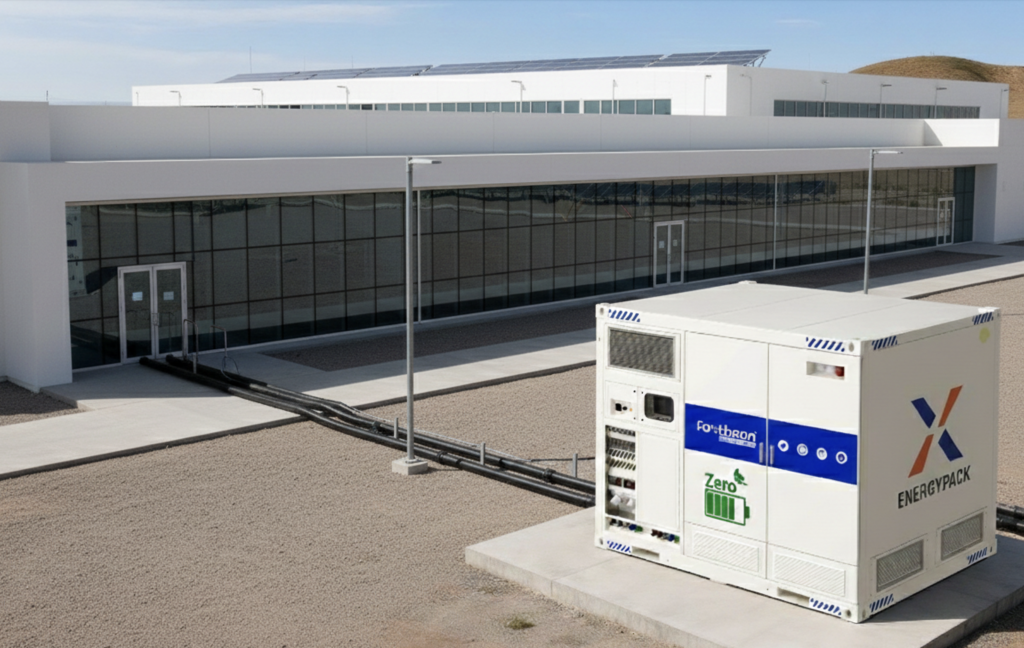
Selecting a BESS provider requires evaluation of long-term support, battery supply chain transparency, and software upgradeability. Foxtheon delivers containerized and cabinet-style bess power system configurations ranging from 100 kW/250 kWh to 5 MW/20 MWh. Key engineering differentiators include:
- Adaptive degradation-aware EMS: Uses real-time SoH data to adjust charge/discharge depths, extending usable life by up to 2 years compared to static algorithms.
- N+1 redundant PCS architecture: Allows continued operation during single-inverter failure – critical for facilities with no-outage tolerance.
- On-site commissioning with power quality auditing: Provides baseline harmonics, power factor, and load variability analysis before BESS activation.
All systems include remote monitoring via IEC 62443-3-3 compliant cloud platform, with optional on-premise SCADA integration. For project-specific modeling, Foxtheon engineering team provides 10-year P50/P90 cash flow simulations incorporating local utility tariffs, incentive programs (SGIP, LCFS, or EU ETS), and degradation curves.
Common Questions about BESS Power Systems
Q2: How does a BESS coordinate with existing diesel generators without causing compatibility issues?A2: Modern hybrid controllers use voltage and frequency droop curves to share load proportionally. The BESS responds first to load steps (within 20ms), allowing the generator to ramp smoothly. When grid power returns, the BESS recharges from the grid or generator excess capacity. No hardware modifications to the generator are required beyond connection to a common bus via a hybrid switchgear. The approach extends generator life by reducing thermal cycling and part-load operation.
Q3: What safety certifications should a commercial BESS power system have?A3: For global deployment, look for UL 9540 (system-level), UL 1973 (battery packs), and UL 9540A (thermal runaway propagation test). For EU, compliance with IEC 62619 and VDE-AR-E 2510-50 is mandatory. Additionally, NFPA 855 provides installation spacing and ventilation requirements. A bankable BESS should include third-party field labeling from Intertek or TÜV SÜD.
Q4: Can a BESS power system be expanded incrementally as my facility grows?A4: Yes, through modular architecture. Most containerized systems support parallel connection of additional battery containers (up to 10 units) with a shared central PCS. Cabinet-style units often use a master-slave configuration where new units are added via a common DC bus. However, the EMS must be reprogrammed to manage heterogeneous cells if different vintages are mixed. Foxtheon’s EnergyPack series supports incremental capacity additions without replacing existing hardware, using decentralized EMS nodes that synchronize automatically.
Q5: What maintenance is required over a 10-year BESS lifecycle?A5: Minimal compared to rotating machines. Typical maintenance includes: annual thermal management system inspection (coolant levels, radiator cleaning), BMS firmware updates (every 6-12 months), contactor wear monitoring (after 5,000 cycles), and infrared scanning of high-current connections. LFP cells require no electrolyte refilling. Battery replacement is expected after 8-12 years depending on throughput. Many service contracts include remote diagnostics and predictive alerting for cell imbalance.
Ready to evaluate a bess power system for your facility? Submit your site’s 12-month interval load data (15-minute resolution preferred) and latest utility tariff sheet to our engineering team. We will return a customized techno-economic assessment including:
- Optimal system sizing (kW power / kWh capacity) based on peak load analysis and growth projections.
- Revenue stacking simulation using local grid service market data (e.g., FERC Order 2222 compliant programs).
- 10-year cash flow model with Monte Carlo sensitivity for energy price volatility.
- Hybrid control logic blueprint showing coordination with existing generators or UPS systems.
Contact Foxtheon directly for a no-obligation technical consultation and a detailed proposal that respects your current infrastructure while adding future-ready energy flexibility. Our team specializes in bridging conventional power assets with intelligent battery storage – delivering measurable operational savings without forced technology replacement.