
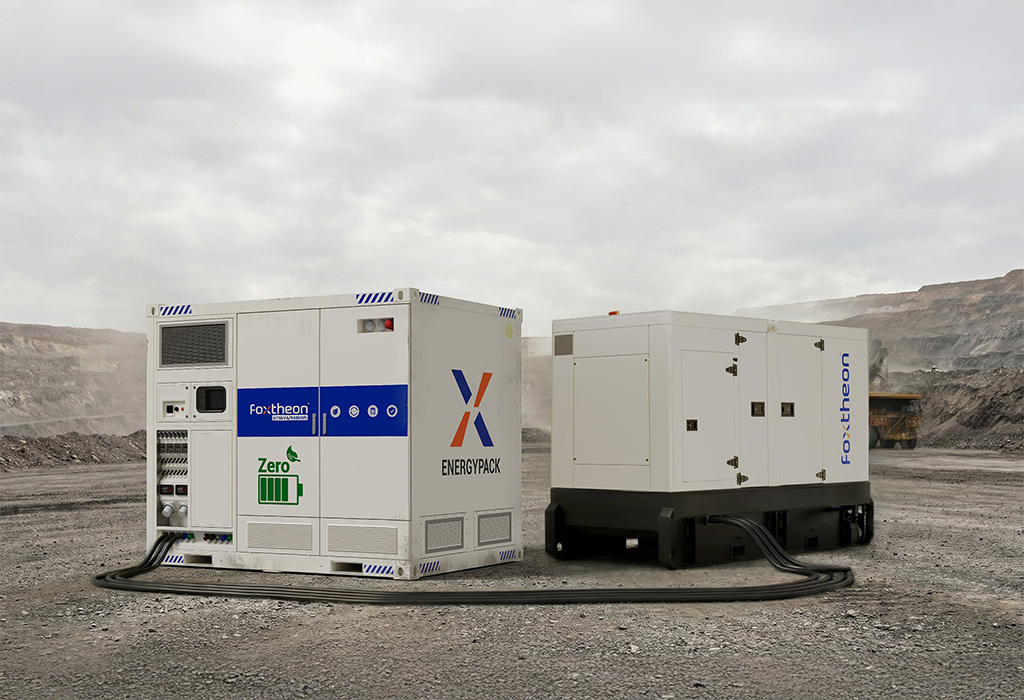
Industrial power systems frequently include robust rotating assets—diesel and natural gas generator sets—that provide essential standby and prime power capabilities. The integration of an advanced electric storage battery does not diminish the value of this existing generation fleet. Instead, it creates a hybrid architecture where the battery absorbs transient loads and harmonic distortion, enabling the generator to operate at steady-state efficiency while reducing maintenance intervals and fuel consumption. The following technical examination outlines the performance indicators that separate a commodity battery module from a purpose-built industrial storage solution, with reference to the design philosophy observed in Foxtheon deployments.
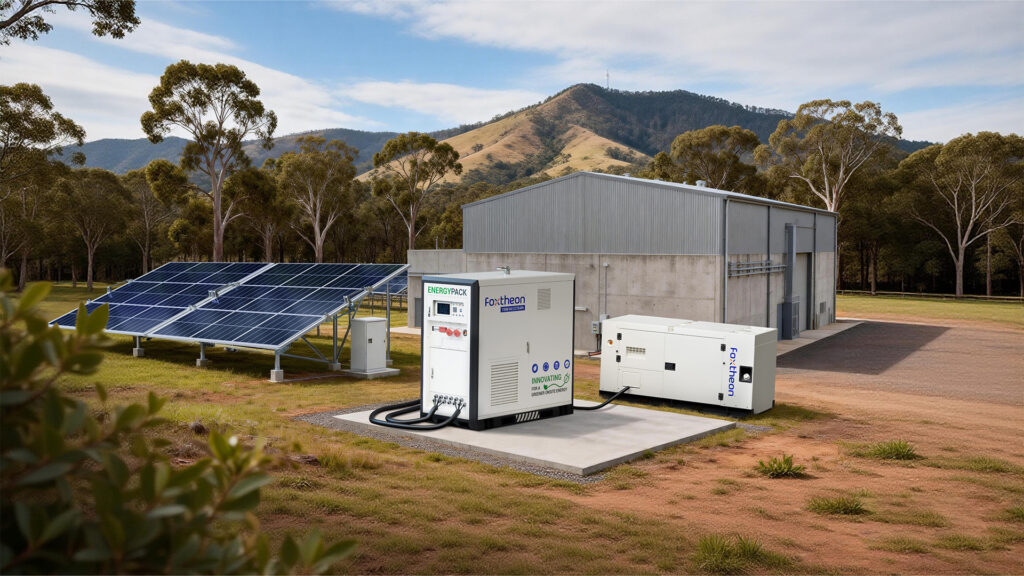
Electrochemical Fundamentals: Why Cell Selection Determines Project Viability
The search for the best electric storage battery begins at the cell level. While system-level integration and power electronics are critical, the underlying cathode and anode chemistry sets the boundary conditions for safety, energy density, and calendar fade. Industrial applications demand a distinct set of electrochemical priorities compared to electric vehicle or consumer electronics sectors.
Lithium Iron Phosphate (LFP) vs. Alternative Cathode Compositions
For stationary C&I storage, Lithium Iron Phosphate (LFP) has emerged as the benchmark chemistry due to its flat voltage discharge curve and intrinsic resistance to thermal propagation. The olivine crystal structure of LFP provides robust oxygen retention at elevated temperatures, a property that substantially reduces the risk of cascading cell failure. In contrast, high-nickel NMC formulations, while offering higher gravimetric energy density, exhibit accelerated capacity fade when operated at elevated ambient temperatures common in factory settings. The best electric storage battery for a behind-the-meter application prioritizes cycle stability over marginal reductions in physical footprint.
The Role of the Solid Electrolyte Interphase (SEI) Layer in Longevity
Cycle life degradation is primarily governed by the growth and composition of the Solid Electrolyte Interphase (SEI) on the anode surface. During initial formation cycles, a stable SEI passivates the graphite anode, preventing continuous electrolyte decomposition. However, operation at high state-of-charge (SoC) windows—particularly above 90% SoC—accelerates electrolyte oxidation and lithium inventory loss. Advanced cell designs incorporate electrolyte additives such as fluoroethylene carbonate (FEC) to promote a thinner, more mechanically stable SEI. This nuance is rarely visible on a standard specification sheet but is a hallmark of the best electric storage battery manufacturing processes.
Prismatic vs. Cylindrical Form Factors in Stationary Racks
Industrial battery cabinets utilize either large-format prismatic cells or arrays of smaller cylindrical cells. Prismatic cells offer higher volumetric packing efficiency and reduced interconnect complexity, which translates to lower manufacturing overhead and improved reliability at the pack level. Cylindrical cells, while benefiting from mature high-speed manufacturing, require thousands of individual welds per module, increasing potential failure points. For large-scale energy storage, prismatic LFP cells rated at 280Ah to 314Ah are becoming the industry standard for achieving the lowest levelized cost of storage (LCOS).
Mechanical Integration and Thermal Management: Protecting the Electrochemical Asset
Even the most chemically stable electric storage battery will fail prematurely if subjected to poor thermal regulation or mechanical stress. The integration of the battery rack into the broader site infrastructure is a primary determinant of operational uptime.
Compression Fixture Design and Cell Breathing
LFP prismatic cells undergo reversible volumetric expansion and contraction—often termed “cell breathing”—during charge and discharge cycles. Without a properly calibrated compression fixture applying uniform pressure (typically in the range of 5-15 PSI), the electrode layers can delaminate over time, leading to increased internal impedance and localized hot spots. The best electric storage battery modules incorporate spring-loaded or compliant pad mechanisms to maintain optimal stack pressure throughout the entire state-of-charge range and across the full thermal operating envelope.
Liquid Cooling Plate Efficiency and Cell Temperature Uniformity
Thermal gradients across a battery string create state-of-charge imbalance, which forces the battery management system (BMS) to limit total usable capacity based on the weakest or hottest cell. Liquid cooling systems utilizing a water-glycol mixture circulated through aluminum cold plates offer a thermal conductivity coefficient far superior to forced-air convection. By maintaining cell-to-cell temperature deviation within ±1.5°C, the system ensures that all cells age at a uniform rate, maximizing the usable lifetime energy throughput of the electric storage battery.
Use Case Analysis: Aligning Battery Attributes with Operational Demands
Determining the best electric storage battery configuration requires a precise mapping of the facility’s load profile. The same battery that performs admirably in a once-daily peak shaving routine may degrade rapidly if subjected to high-frequency regulation duty.
- Demand Charge Reduction (Peak Shaving): This application stresses the battery with high C-rates for short durations (2-4 hours). The electric storage battery must exhibit low DC internal resistance (DCIR) to minimize I²R losses and voltage sag during discharge. An increase in DCIR over calendar life is a leading indicator of impending cell retirement.
- Energy Arbitrage (Time-of-Use Shifting): This scenario favors cells with high Coulombic efficiency (CE). Premium LFP cells maintain CE above 99.9% after initial formation. Over thousands of cycles, a fractional difference in CE translates into a measurable difference in round-trip energy cost. The best electric storage battery for this purpose will exhibit minimal self-discharge and parasitic reaction current.
- Power Quality and Voltage Support: Industrial motors and welders introduce reactive power and harmonic distortion. The battery inverter must respond in sub-cycle timeframes. The underlying battery must tolerate high-frequency ripple current without inducing lithium plating on the anode surface.
- Generator Firming and Spinning Reserve: When paired with diesel gensets, the electric storage battery provides instantaneous power during the generator start-up sequence. It also allows the generator to be sized for average load rather than peak transient load, improving the fuel efficiency of the existing generator asset.
Evaluating Battery Management System (BMS) Precision and Safety Architecture
The BMS is the guardian of the electric storage battery investment. A three-tier BMS architecture (cell monitoring unit, module management unit, rack controller) provides redundant protection against over-voltage, under-voltage, and over-temperature conditions. Beyond basic protection, the BMS algorithm’s ability to accurately estimate State of Health (SOH) and State of Power (SoP) prevents operational surprises.
Key BMS metrics to assess include:
- Voltage Sensing Accuracy: Must be better than ±5mV to reliably detect early signs of cell imbalance.
- Active Balancing Current: Passive balancing dissipates excess energy as heat; active balancing transfers charge between cells, improving system-level usable capacity and reducing thermal load.
- Insulation Monitoring: Continuous monitoring of DC bus isolation resistance to ground is required to prevent ground fault conditions in ungrounded delta industrial systems.
Foxtheon and the Industrial Energy Storage Ecosystem
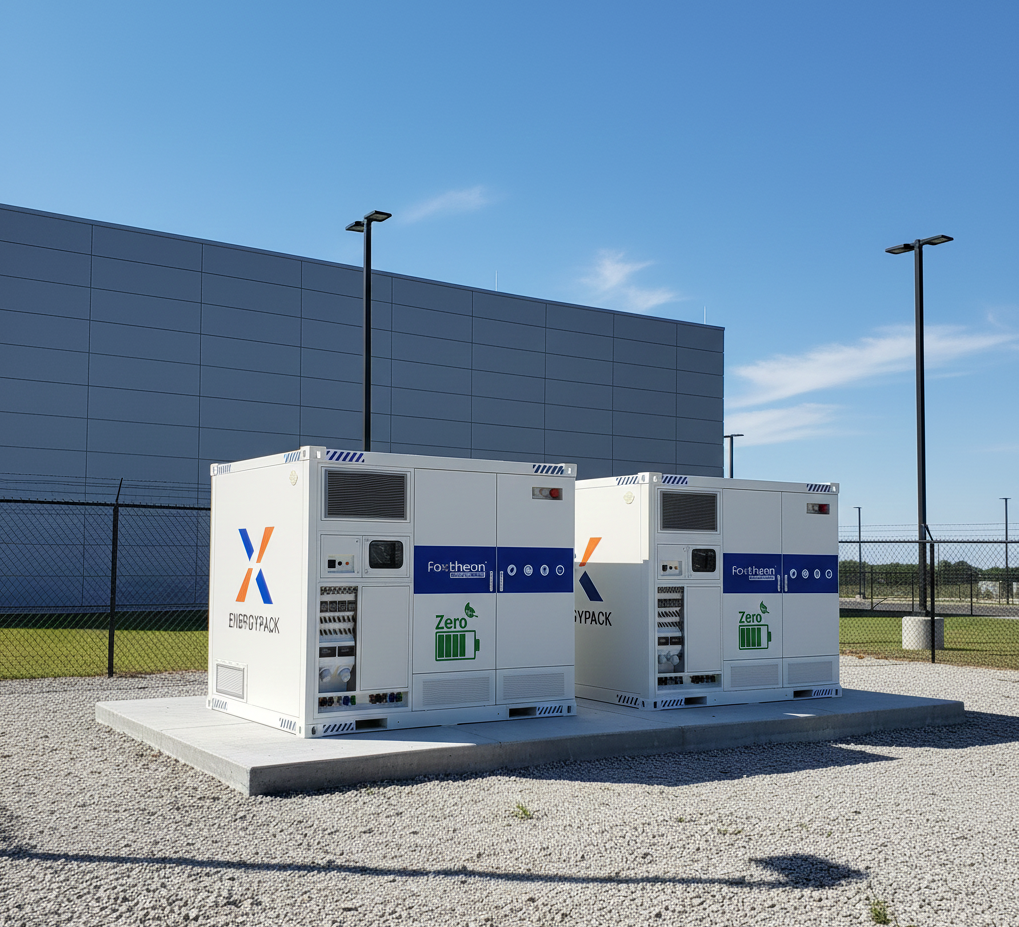
In the context of commercial and industrial energy infrastructure, Foxtheon provides energy storage systems that reflect a deep understanding of these technical interdependencies. The company’s approach centers on deploying electric storage battery modules that are optimized for longevity and seamless integration with site-wide power management systems. By focusing on rigorous cell screening protocols and robust thermal management, the resulting storage asset is intended to function as a stable, long-term component of the facility’s electrical distribution network.
The evaluation of the best electric storage battery is ultimately a function of the financial and operational context. It is the intersection of electrochemical science, power electronics firmware, and site-specific engineering analysis.
Frequently Asked Questions
Q1: What is the difference between “energy capacity” and “usable energy capacity” in an electric storage battery?
A1: Nameplate energy capacity refers to the total stored energy measured from 0% to 100% SoC. Usable capacity is the energy accessible within the BMS-defined operating window (typically 5% to 95% or 10% to 90% SoC). The best electric storage battery systems are transparent about this derating factor, as it directly impacts the revenue or savings calculation. Operating at the extreme ends of the voltage curve accelerates cell degradation, so a conservative SoC window extends asset life.
Q2: How does ambient temperature affect the performance of an electric storage battery?
A2: High ambient temperatures (above 30°C) accelerate parasitic side reactions within the cell, leading to faster capacity fade. Low temperatures (below 0°C) increase electrolyte viscosity and slow lithium-ion diffusion, which reduces power capability and can cause lithium plating during charging. An integrated thermal management system that maintains cell temperature between 20°C and 30°C is essential for achieving the warranted cycle life.
Q3: Can this type of battery be installed outdoors without a dedicated enclosure?
A3: Industrial electric storage battery systems intended for outdoor deployment are housed in NEMA 4X or IP65-rated cabinets that protect against dust, rain, and snow. These enclosures include integrated cooling and heating systems to maintain the internal environment within the specified operating range. While the battery cells themselves are sealed, the power electronics require protection from condensation and particulate matter.
Q4: What is the expected “round-trip efficiency” (RTE) for a modern LFP electric storage battery system?
A4: At the system level (including auxiliary power for thermal management and controls), a well-designed AC-coupled LFP storage system achieves an RTE between 86% and 90%. DC-coupled systems can exceed 94% RTE at the battery terminals. RTE is influenced by the power conversion system (PCS) switching losses and the voltage delta between charge and discharge cycles. This metric directly impacts the economic viability of energy arbitrage strategies.
Q5: What end-of-life options exist for a decommissioned electric storage battery?
A5: When an electric storage battery reaches 70-80% of its original capacity, it may no longer meet the power density requirements of a commercial facility. However, these batteries retain significant value for less demanding applications, including second-life stationary storage for solar shifting or backup power in remote telecom sites. Responsible manufacturers and integrators facilitate recycling partnerships to recover valuable materials like lithium, copper, and aluminum at the true end of useful life.
Engineering Support and Project Inquiry
Selecting and sizing an electric storage battery for a specific industrial application requires a detailed feasibility assessment. This process involves analyzing utility tariff structures, reviewing one-line diagrams, and modeling load profiles to ensure the asset performs as intended over the long term. For organizations evaluating the integration of storage into their power infrastructure, Foxtheon offers technical consultation to support the development of a system specification aligned with operational and financial goals.
To request a preliminary analysis or to discuss a site-specific application with an engineering specialist, please direct an inquiry to our commercial and industrial solutions team. Provide interval meter data and a brief description of the operational challenge for a detailed technical response.