
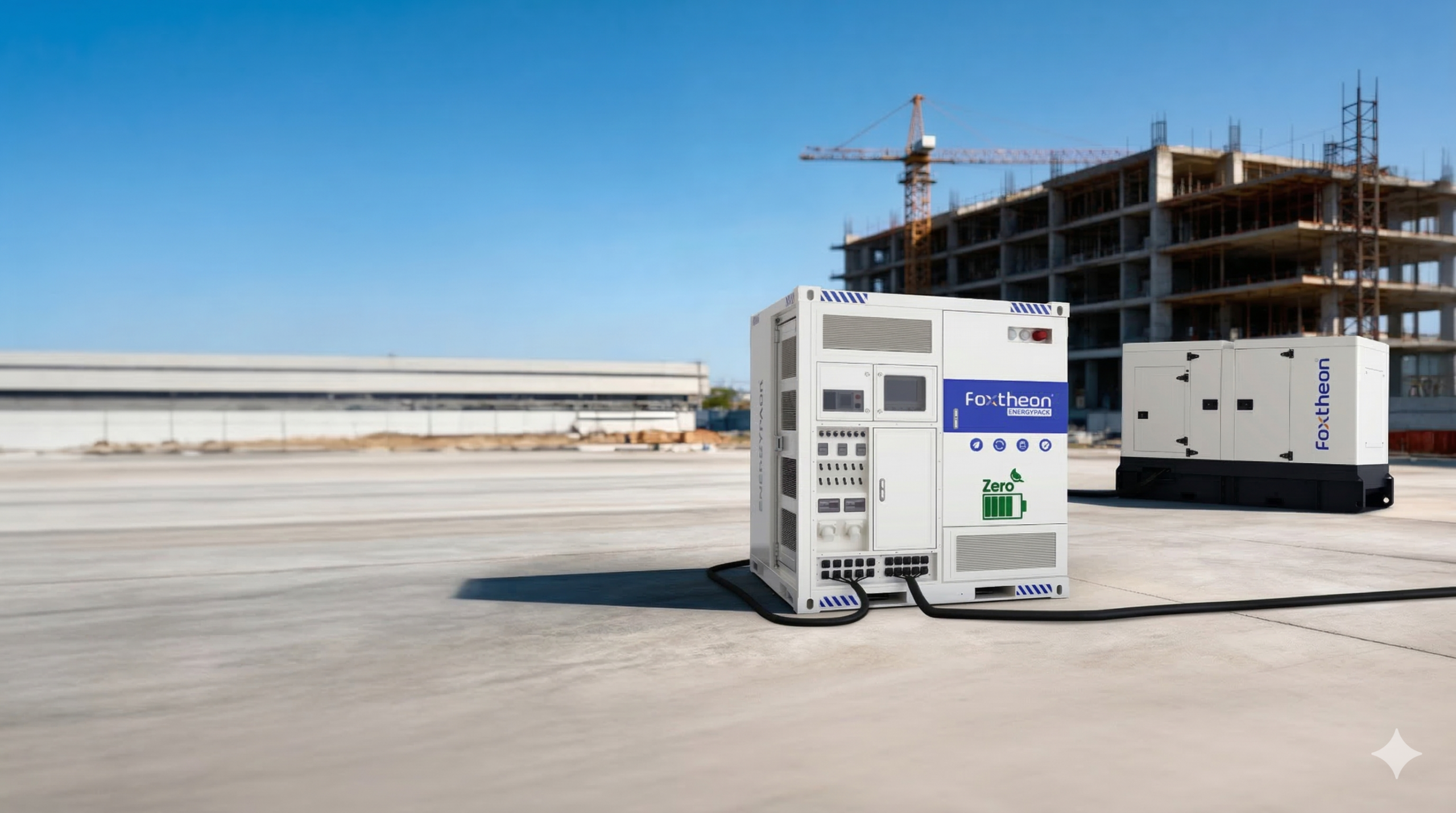
Remote industrial sites, off-grid telecom towers, and mining operations require power reliability that matches or exceeds grid-tied performance. The best off grid power solutions integrate energy storage, intelligent generation control, and renewable sources into a single, dispatchable system. This article provides a technical framework for procurement engineers and project developers, covering battery chemistries, load profiling, extreme-environment design, and total cost of ownership (TCO).
Modern off-grid power no longer depends on a single diesel genset. Instead, hybrid configurations using lithium-ion storage, solar PV, and bi-directional inverters achieve fuel savings of 40–70% while maintaining 99.5% uptime. For organizations operating in regions without stable utility access, identifying the best off grid power solutions requires a systematic evaluation of peak loads, daily energy cycles, and environmental constraints.
1. Core Technical Parameters for Off Grid Power Systems
Any robust off-grid system must be defined by five engineering metrics:
- Depth of Discharge (DoD) & cycle life: Lithium iron phosphate (LFP) batteries offer 6000–8000 cycles at 80% DoD, while lead‑carbon delivers 2000–3000 cycles. For daily cycling applications, LFP is the industry standard.
- Round-trip efficiency (RTE): Modern hybrid inverters achieve 94–96% RTE. Lower efficiency directly increases required PV array size or generator runtime.
- Operating temperature range: Industrial solutions must function from -20°C to 55°C without derating. Active thermal management (liquid cooling or forced air) is mandatory for tropical or arctic sites.
- Peak vs. continuous power ratio: Motor starts (pumps, compressors) demand 3–5× nominal power for 2–10 seconds. The inverter or genset must handle this without voltage collapse.
- State of health (SoH) monitoring: Remote diagnostics and predictive alerts reduce unplanned downtime.
When comparing vendors, demand datasheets that specify performance at 45°C ambient and 4000m altitude. These parameters separate true industrial products from residential-class equipment.
2. Hybrid Architectures: Beyond Single-Source Generation
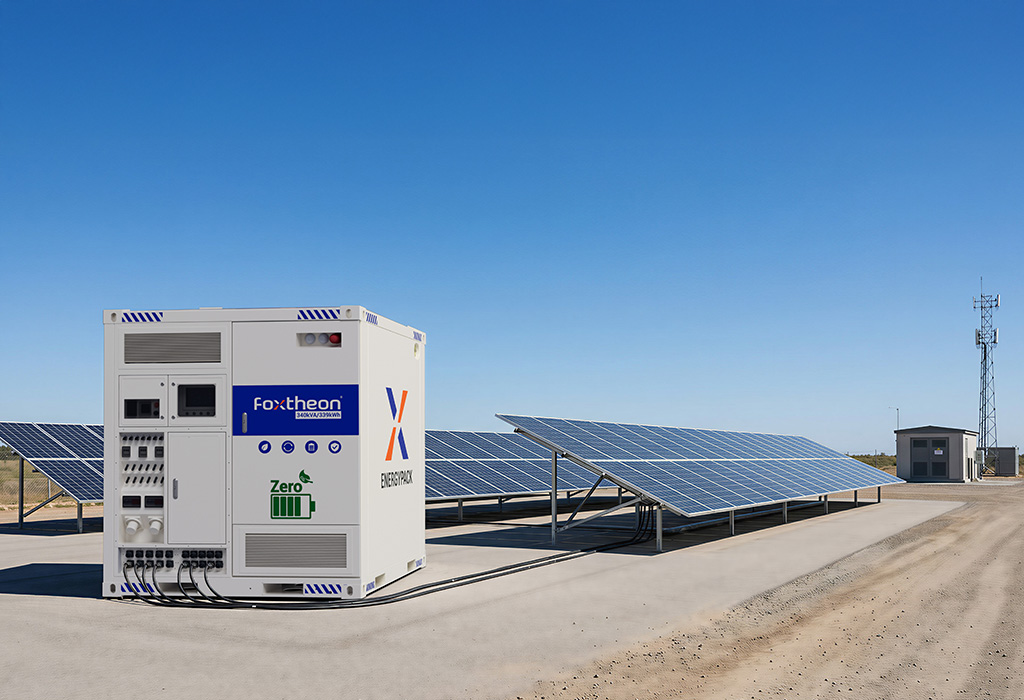
The best off grid power solutions currently deployed in commercial and industrial (C&I) sectors use a DC-coupled or AC-coupled hybrid topology. A typical configuration includes:
- PV array (ground or roof-mounted) – 30–60% of daily generation
- LFP battery bank – sized for 1.5–3 days of autonomy
- Diesel or natural gas genset – for seasonal low-irradiance periods and as a backup
- Hybrid inverter/charger with integrated EMS (Energy Management System)
This architecture allows the genset to operate at 70–85% load for brief intervals (its most efficient zone), rather than idling at 20–30% load for hours. Field data from 50+ remote sites shows that hybridisation reduces generator runtime by 65% and cuts maintenance intervals from 250 hours to 600 hours. Foxtheon has deployed such systems across African mining operations and Southeast Asian telecom towers, achieving sub‑$0.22/kWh levelised cost of energy (LCOE) in diesel‑dominated markets.
3. Application-Specific Engineering Challenges
Different off-grid industries impose unique constraints. The best off grid power solutions for one site may be suboptimal for another.
3.1 Remote Mining & Exploration Camps
- High peak loads: crushers, conveyors, slurry pumps (200–500 kW surges)
- Solution: Modular battery inverters paralleled for 1–2 MW capacity, combined with genset synchronisation.
- Requires harmonic filtering and voltage ride-through capability.
3.2 Off-Grid Telecom Towers (4G/5G)
- DC load profile: 48V nominal, constant power 2–8 kW per site
- Challenge: Space constraints (rooftop or pole-mount).
- Solution: High-energy-density LFP cabinets with integrated MPPT and remote reset. Rectifier efficiency >96%.
3.3 Agricultural Irrigation & Cold Storage
- Seasonal demand variation: high in dry season (pumping), low in monsoon
- Solution: PV‑first design with enough battery to cover night‑time irrigation; genset as seasonal top‑up.
Foxtheon provides pre-engineered power blocks that integrate battery racks, inverter skids, and switchgear in ISO containerised formats, reducing on-site commissioning from weeks to 48 hours. This modular approach is a key reason many EPC contractors select best off grid power solutions from manufacturers with vertical integration.
4. Comparative Analysis: Energy Storage Chemistries
Selecting the right battery directly determines system lifetime and safety. Below is a technical comparison for C&I off-grid use:
- LFP (Lithium Iron Phosphate): Cycle life 6000–10,000 @1C, thermal runaway threshold >270°C, no cobalt. Preferred for daily cycling. Acceptable specific energy (140–160 Wh/kg).
- NMC (Lithium Nickel Manganese Cobalt): Higher energy density (200–250 Wh/kg) but cycle life 3000–5000, stricter BMS requirements. Not recommended for hot environments without active cooling.
- Lead‑carbon (advanced lead acid): Lower upfront cost (0.25–0.35 $/Wh) but cycle life 1500–2000 at 50% DoD. Suitable for backup-only applications, not for daily solar self‑consumption.
- Flow batteries (vanadium): Unlimited cycle life, but low energy density and high system complexity (pumps, tanks). Only for large multi‑MWh installations with dedicated space.
For most industrial off-grid sites, LFP provides the best balance of safety, cycle life, and calendar life (15+ years). Always request test reports according to IEC 62619 or UL 1973.
5. Intelligent Energy Management: The Brain of Off Grid Systems
Even the highest-quality hardware fails without a competent EMS. An advanced EMS performs three critical tasks:
- Load forecasting: Using historical consumption and weather API data, the EMS predicts PV generation and load curves for the next 24–72 hours.
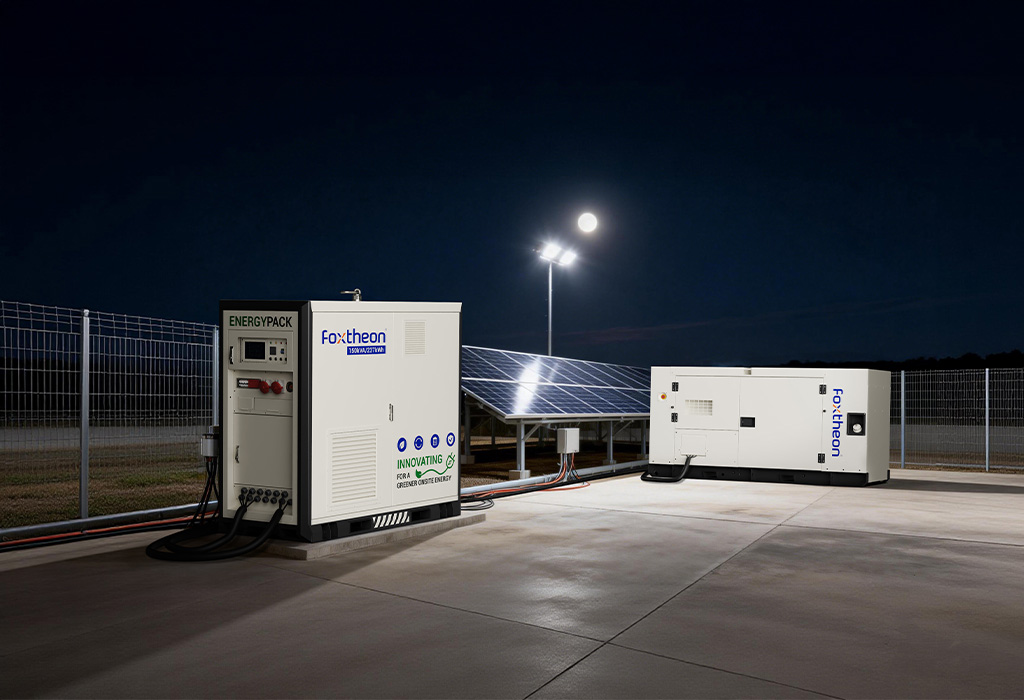
- Generator dispatch optimisation: Instead of simple low‑voltage start, modern EMS algorithms calculate the minimum runtime needed to recharge batteries while keeping the genset in its efficient band (typically 60–80% load). This reduces fuel consumption by 18–25% compared to conventional hysteresis controllers.
- Remote parameter tuning: B2B clients expect cloud‑based portals to adjust DoD limits, peak shaving thresholds, and time‑of‑use profiles without a site visit.
When evaluating vendors, ask about their EMS API compatibility with SCADA systems and Modbus TCP/RTU. Proprietary lock‑in can become a long‑term liability.
6. Selecting the Right Vendor: Reliability, Support, and Lifecycle Cost
Procurement teams often focus on upfront $/kW, but the TCO over 10 years tells a different story. For the best off grid power solutions, consider:
- Warranty terms: Look for 10‑year / 80% remaining capacity for LFP batteries, with included performance guarantees.
- Global service network: Can the provider offer a 48‑hour parts replacement in a regional hub (e.g., Accra, Jakarta, Lima)?
- Reference sites: Ask for three comparable installations with at least 18 months of operational data, including fuel reports and inverter availability statistics.
Foxtheon operates a remote monitoring centre that proactively dispatches firmware updates and alerts for any parameter drift. Their hybrid systems have achieved 99.6% availability across 200+ off‑grid industrial sites, a metric verified by third‑party audits.
7. Implementation Roadmap: From Site Assessment to Commercial Operation
Deploying an industrial off‑grid system follows a structured engineering workflow:
- Step 1 – Load audit: Install power loggers for 14 days, recording 1‑second resolution to capture motor inrush and power factor variations.
- Step 2 – Resource assessment: Use NASA SSE or Solargis data for solar irradiation. For wind/hydro, site‑specific anemometry required.
- Step 3 – System modelling: Tools like HOMER Pro or PVsyst simulate 8760 hours per year, optimising battery size and generator runtime.
- Step 4 – Protection coordination study: Ensure that fault currents from inverters and generators are coordinated with downstream breakers.
- Step 5 – Factory acceptance test (FAT): Witness thermal cycling and full‑power run of the hybrid skid before shipping.
- Step 6 – On-site commissioning: Staged start‑up, load bank testing, and remote connectivity validation.
A typical 100 kWp / 200 kWh system for a remote camp requires 6–8 weeks from order to COD (commercial operation date), assuming standardised containerised solutions.
8. Economic Analysis: LCOE and Payback Periods
For a hybrid solar+storage+genset system in a location with diesel at $1.10/L and 5.0 kWh/m²/day irradiation:
- Diesel‑only LCOE: $0.38–0.45/kWh (including fuel transport and maintenance)
- Hybrid LCOE: $0.21–0.27/kWh (after capital costs)
- Simple payback: 3–5 years depending on load factor and local incentives (e.g., carbon credits, diesel tax exemptions).
Many B2B clients are now mandating hybrid-ready infrastructure for new remote projects because the financial case is clear. The best off grid power solutions no longer ask “if” but “how much storage to install for maximum ROI”.
In summary, the optimal off-grid system combines LFP batteries, an intelligent EMS, and a backup generator sized for peak shaving rather than base load. By applying the technical criteria discussed above, engineering teams can avoid undersized batteries or oversimplified control logic.
Frequently Asked Questions (FAQ)
Q1: Can an off-grid hybrid system completely replace a diesel generator?
A1: In most industrial applications, generators remain necessary for seasonal low solar periods, extended cloud cover, or maintenance of the battery system. However, hybrid operation reduces generator runtime by 60–80%, significantly lowering fuel and maintenance costs. A well-designed system may run the generator only 300–500 hours per year instead of 2000+ hours.
Q2: How do I calculate the required battery capacity for my site?
A2: Use the formula: Battery capacity. For a 500 kWh/day load with 2 days autonomy, 80% DoD, and 92% efficiency: 500×2 / (0.80×0.92) ≈ 1359 kWh usable. Then add 10–15% for capacity fade over 10 years.
(kWh) = (Daily load kWh) × (Autonomy days) / (Max DoD × System
efficiency)
Q3: What is the typical lifespan of an industrial LFP battery in off-grid use?
A3: With proper thermal management and DoD limited to 80%, LFP cells commonly achieve 10–15 years of daily cycling. Many manufacturers now offer 10‑year warranties with end‑of‑life set at 70% of rated capacity. Calendar ageing (time‑dependent) is minimal below 35°C average temperature.
Q4: How does Foxtheon differentiate its energy management system from standard controllers?
A4: Foxtheon implements a predictive algorithm that uses satellite weather data and machine learning on load patterns, reducing generator starts by 40% compared to rule‑based controllers. The system also offers remote battery impedance measurement to flag weak cells before they cause a failure.
Q5: What certifications should I require for off-grid equipment in harsh environments?
A5: Minimum requirements: IEC 62040 (UPS safety), IEC 62477 (power electronics), UL 1741 (grid interconnection – for AC coupling), and IP54 or higher for outdoor cabinets. For vibration‑prone sites (mining), request MIL‑STD‑810G testing. Always verify that the inverter offers seamless transition between island and genset mode (make‑before‑break transfer < 4 ms).
Need a tailored engineering proposal for your remote facility? Our team provides site‑specific hybrid simulations, including detailed LCOE breakdown and genset integration plans. Submit a technical inquiry with your load profile and location data to receive a preliminary system design within 5 business days.
→ Request a B2B consultation: Send your project specifications or contact our industrial solutions desk directly.