
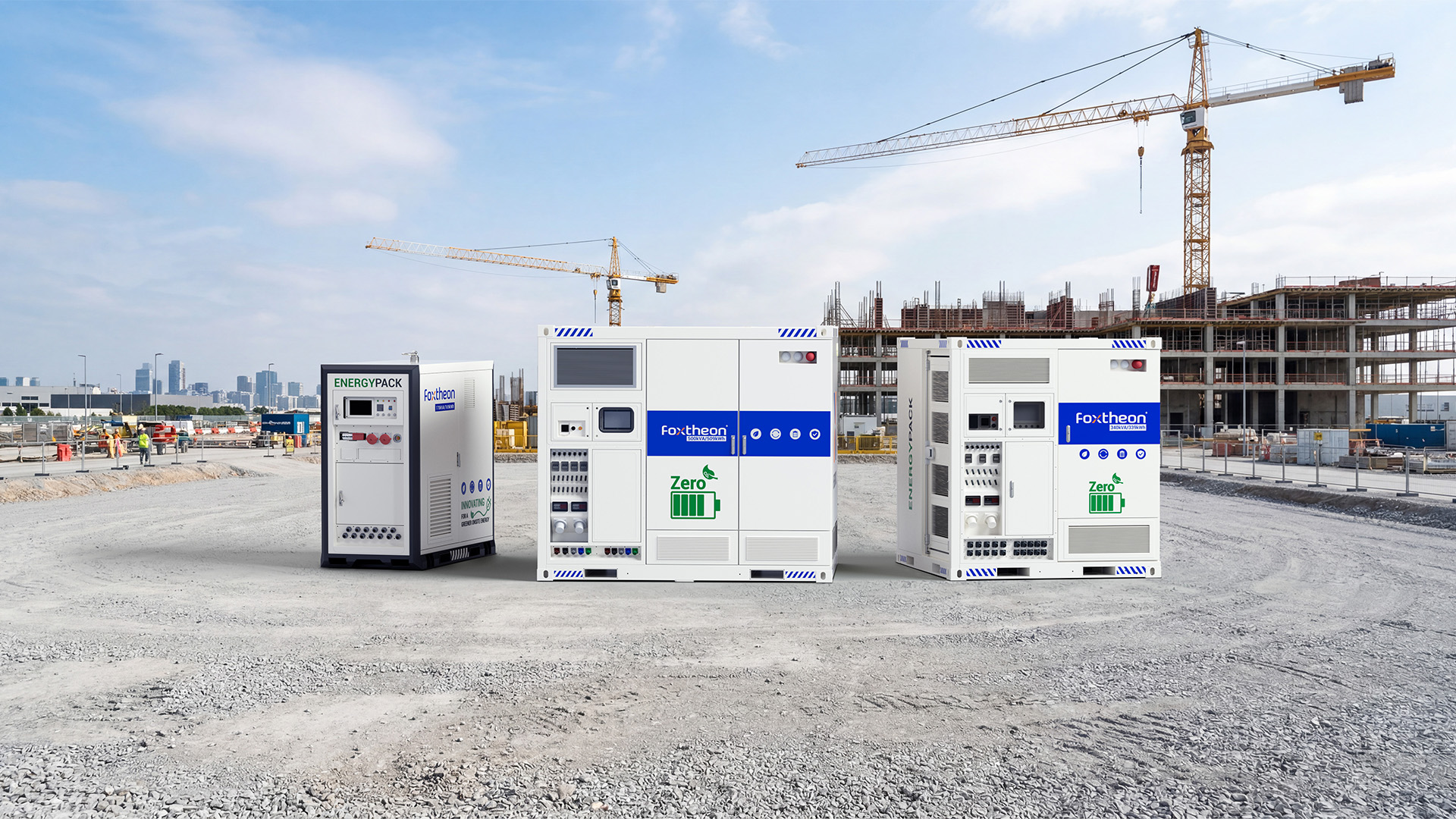
Industrial facilities beyond utility reach — mining camps, telecom repeaters, remote pumping stations — require deterministic power availability. A professionally engineered energy off grid system must guarantee voltage regulation within ±5%, handle motor starting currents, and withstand seasonal solar variation. This article examines technical specifications, dispatch strategies, and safety standards. Foxtheon provides hybrid energy storage solutions that integrate with existing generator fleets, preserving capital investments while improving fuel efficiency.
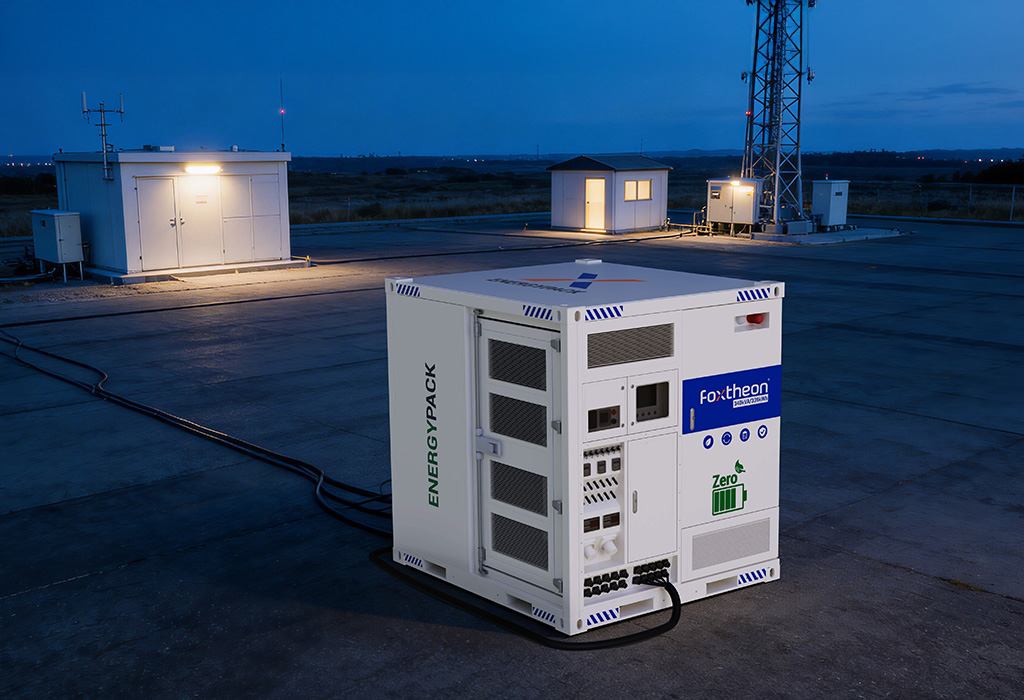
1. Core Architecture of a Professional Energy Off Grid System
Unlike grid-tied solar systems, a standalone microgrid must handle all load transients internally. Six subsystems form the foundation:
- Generation sources – Typically solar PV (monocrystalline, bifacial) and/or a gas/diesel genset. Wind or small hydro where site permits.
- Battery bank – Lithium iron phosphate (LFP) dominates for cycle life (4000–6000 cycles at 80% DoD). For cold climates (–20°C), self-heating cells are mandatory.
- Hybrid inverter/charger – Bi-directional, with grid-forming capability (droop or V-f control). Minimum 200% peak current for 3 seconds to start inductive loads.
- Energy management system (EMS) – Real-time load forecasting, generator start/stop logic, and battery state-of-charge (SoC) limits.
- Dump load / diversion controller – Protects batteries from overcharge when PV production exceeds consumption and batteries are full.
- Remote monitoring gateway – 4G or satellite backhaul for alarms, data logging, and firmware updates.
When procuring an energy off grid package, request a short-circuit current declaration (kA for 1ms) and inverter overload curve. These determine compatibility with downstream motor control centers and UPS devices.
2. B2B Applications Where Energy Off Grid Prevents Production Halts
Different industries impose distinct reliability requirements. Below are four high-demand environments where standalone power directly impacts operational continuity.
2.1 Off-Grid Telecommunications Towers
Remote cell sites (4G/5G) draw 800W–3kW depending on backhaul equipment. A diesel-only solution requires refueling every 2–4 weeks. Modern energy off grid designs combine 8–15kWp PV with 30–60kWh LFP storage. The genset runs only during prolonged cloudy periods (typically 50–100 hours per year). Result: fuel reduction by 85–90% and near elimination of site visits for refueling.
2.2 Mining Exploration Camps
Portable accommodation modules with lighting, kitchen equipment, water pumps, and ventilation. Peak loads can reach 40–60kW. Hybrid energy off grid containers (20ft or 40ft) integrate diesel gensets, battery racks, and solar-ready input. The EMS optimizes genset loading to avoid low-load operation (<30% of rated power) which causes wet stacking and carbon buildup. Battery absorbs load fluctuations, allowing genset to run at 70–80% efficiency band.
2.3 Agricultural Irrigation and Livestock Watering
Pumping stations in remote pastures require 3–15kW for 4–6 hours daily during growing seasons. A solar-plus-storage energy off grid system eliminates the need to transport diesel to muddy tracks. Key technical requirement: variable frequency drive (VFD) compatibility – not all inverters can handle VFD input distortion. Choose inverter with wide input frequency tolerance (45–55 Hz) and high surge current (300% for 1 second).
2.4 Remote Monitoring Stations (Environmental / Seismic)
Low-power (50–200W) but 100% uptime required. These sites often have no local operator. Energy off grid systems with lithium batteries and MPPT charge controllers provide 5–7 days autonomy. Critical feature: low-temperature charge cut-off (prevents lithium plating below 0°C) and remote restart capability via SMS or TCP command.
3. Seven Technical Challenges Solved by Modern Energy Off Grid Controllers
Traditional off-grid setups (batteries + generator) suffer from inefficiencies and shortened equipment life. Advanced controllers with embedded logic address these pain points directly:
- Generator low-load cycling – Small loads force a large genset to run at 10-15% load, causing incomplete combustion and wet stacking. Hybrid controller accumulates energy in battery until a minimum load threshold (e.g., 30% of genset rating) is reached, then starts generator to run efficiently for a full batch charge.
- PV curtailment losses – When batteries are full and load is low, solar production is wasted. A professional EMS diverts excess PV to water heating, pre-cooling, or desalination (opportunistic loads).
- Voltage and frequency instability – High inverter impedance can cause voltage rise with inductive loads. Solution: virtual synchronous generator (VSG) control mode, which emulates rotating inertia using battery power.
- Battery SoC estimation error – Coulomb counting drifts over time. Modern systems incorporate periodic full-charge synchronization (generator-assisted equalisation) and cell voltage calibration.
- Hot switching of generator – Bridging the gap between generator stopping and inverter taking over requires anti-islanding detection and synchronisation check. Quality energy off grid inverters include a backfeed protection relay with <50ms transfer time.
- Seasonal solar mismatch – Winter solar production can drop to 30% of summer output. Sizing must rely on worst-month insolation data (e.g., December in northern latitudes). Hybrid systems automatically increase generator runtime during low-solar months.
- Remote parameter updates – Firmware changes or load shedding thresholds often require site visits. Cellular-connected controllers (e.g., Foxtheon’s cloud EMS) allow secure OTA updates and remote load prioritization.
4. Hybrid Operation: Pairing Battery Storage with Existing Generators
Many remote sites already own diesel generator assets. Replacing them entirely is rarely economical. Instead, a hybrid energy off grid controller (installed between generator and loads) enables three efficiency modes:
- Peak shaving – Generator supplies base load; battery supplies transient spikes above a preset threshold (e.g., 70% of generator rating). This prevents generator overload and reduces fuel consumption by 12-18%.
- Smart charge scheduling – Generator runs only when battery SoC falls below 20% and stops when SoC reaches 90%. For sites with daytime PV, generator runtime is further limited to night hours or low-irradiance periods.
- Spinning reserve elimination – Without hybrid control, some operators keep generator idling 24/7 for instantaneous response. With battery buffer, generator can be turned off during low-demand periods (e.g., overnight for telecom sites), saving 1.5–2.5 L/h of idle fuel.
Foxtheon hybrid controllers include a dry contact interface that works with any genset’s auto-start terminals (two-wire start). Existing generators retain their original control panels; the EMS simply sends run/stop commands based on battery status and load forecast. This approach respects prior capital expenditure while improving overall system efficiency.
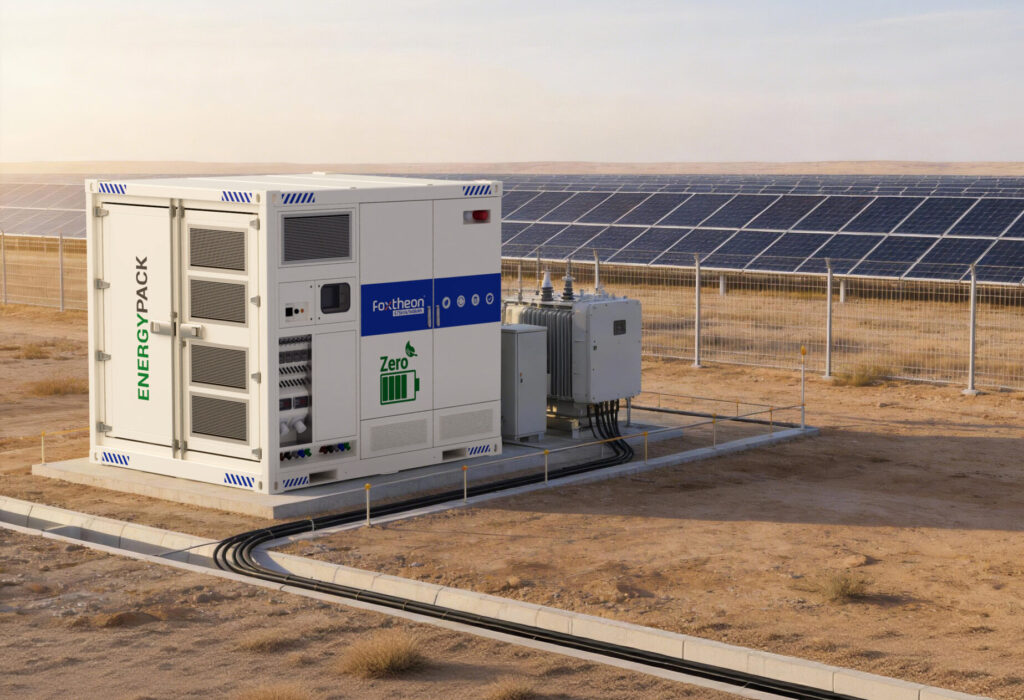
5. Lifecycle Cost Analysis: Diesel-Only versus Hybrid Energy Off Grid
Financial comparisons must include fuel logistics, generator refurbishment, and battery replacement. Example: a remote mining camp with 30kWh daily energy requirement.
Scenario A: Diesel generator only (15kVA unit)
Fuel consumption: 4.2 L/h at average 60% load → ~15,300 L/year. At $1.30/L delivered = $19,890/year fuel cost. Maintenance (oil, filters, injectors): $2,500/year. Generator overhaul every 8,000 hours (approx. 2.5 years) = $3,500/year averaged. Total annual = $25,890.
Scenario B: Hybrid energy off grid – 12kWp PV + 28kWh LFP + existing 15kVA genset
PV generation: ~16,500 kWh/year (site dependent). Battery cycle life: 4,000 cycles, replaced every 8 years. Hybrid operation reduces generator runtime to 1,500 hours/year → fuel 6,300 L ($8,190). Generator maintenance reduced by 60% ($1,000). Battery annualised cost (28kWh × $400/kWh ÷ 8 years) = $1,400. Additional EMS and inverter cost amortised: $1,200/year. Total annual = $11,790. Savings: 54% year one, with higher savings if fuel delivery distance increases.
For sites with existing generators, the payback period for adding storage and PV to create an energy off grid hybrid system typically ranges 2.8 to 4.5 years, depending on local diesel price and solar resource.
6. Safety and Compliance Standards for Industrial Off-Grid Systems
Any commercial energy off grid installation must meet electrical codes and component-level certifications. Request documentation for:
- IEC 62477-1 – Safety requirements for power electronic converter systems.
- UL 1741 (or IEEE 1547) – Grid-interactive inverters, but for off-grid, ensure UL 1741 SA for islanding detection if any future grid connection possible.
- UN38.3 – Transportation of lithium batteries (required for mobile off-grid containers).
- ISO 8528-12 – Emergency power systems; applies to generator start reliability.
- NEC Article 710 (US) / AS/NZS 5033 (Australia) for stand-alone systems.
Fire safety: LFP batteries are preferred for their low thermal runaway risk. Install battery enclosures with smoke detection and remote disconnect. Foxtheon energy storage units meet IEC 62619 and include a built-in aerosol fire suppression system, triggered by cell-level thermal sensors.
7. Sizing Methodology: Avoiding Oversizing and Undersizing
Errors in energy off grid sizing lead to either premature generator runtime or wasted capital. Follow this four-step B2B process:
- Load audit – 7-day power logger on each critical circuit. Record peaks, inrush currents, and power factor. Separate must-run loads from deferrable loads (e.g., water heating).
- Solar resource analysis – Use PVWatts or Solargis with site coordinates. Use lowest monthly irradiation (not annual average).
- Battery autonomy – Industry standard: 2–3 days for telecom, 1–2 days for mining camps (with generator backup). Multiply daily kWh by autonomy, then divide by max DoD (80% for LFP).
- Inverter sizing – Largest motor load × 3 (for starting current) + sum of all other continuous loads.
Example: a water pump (5kW running, 15kW starting) plus 2kW lighting/controls. Inverter continuous rating: 5kW + 2kW = 7kW; surge rating must exceed 15kW for at least 3 seconds. Many specifiers undersize inverters, causing nuisance overload trips.
Frequently Asked Questions (Industrial Energy Off Grid)
Q1: How many days of battery autonomy is recommended for a remote industrial site?
A1: For sites with generator backup, 1–2 days autonomy is typical (based on average daily load). For weather-sensitive regions (frequent fog or monsoon), increase to 3 days. For sites with no generator at all (100% solar+storage), autonomy should be 5–7 days, but this rarely economical – a small backup generator is more cost-effective than oversizing battery banks for worst-case weather events.
Q2: Can an energy off grid system be expanded later as load grows?
A2: Yes, if the inverter/charger is designed for parallel operation. Select inverters that allow up to six units in parallel (both AC and DC coupling). Battery banks should use modular racks (e.g., 5kWh per module) with common communication bus (CAN/RS485). Ensure the EMS software can accept additional battery parameters. Foxtheon hybrid controllers support dynamic reconfiguration without full system replacement.
Q3: What is the typical efficiency loss from inverter to load in off-grid mode?
A3: High-quality transformerless inverters achieve 93–96% peak efficiency (CEC weighted). However, at light loads (<10% of rating), efficiency can drop to 80-85%. To avoid this, right-size inverter – not oversized more than 2x typical load. Also, select inverters with ‘standby mode’ that powers down when load <50W and wakes periodically to check for demand.
Q4: How do we prevent battery sulfation or lithium degradation in seasonal sites?
A4: For seasonal operation (e.g., summer-only camp), store batteries at 50% SoC in a dry, temperature-controlled space (15–25°C). Disconnect all loads and leave the battery management system active (trickle charge from a small PV panel if possible). Lithium batteries degrade fastest at 100% SoC and high temperature. For systems left unattended for months, include a remote battery disconnect relay controlled via satellite message.
Q5: Can an energy off grid system feed power back to a utility grid if it becomes available later?
A5: Only if the inverter is certified for grid interconnection (e.g., UL 1741, VDE-AR-N 4105). Many off-grid inverters are not grid-tie certified and lack anti-islanding protection. If future grid connection is likely, purchase a bi-directional hybrid inverter that supports both off-grid and grid-tied modes (with export limitation). Firmware can be switched between modes by a licensed electrician.
Q6: What maintenance is required for a hybrid energy off grid system with batteries and PV?
A6: Quarterly: inspect PV array for soiling or shading; clean with soft brush. Check battery terminal torque (follow manufacturer spec). Test generator auto-start sequence under simulated low SoC. Annually: perform a controlled full discharge test (to 20% SoC) to verify capacity; calibrate SoC by completely charging until battery stops accepting current. Replace air filters on generator. Most LFP batteries require no cell balancing maintenance – BMS handles equalisation.
Request a Site-Specific Energy Off Grid Proposal
Each remote operation has unique load profiles, environmental constraints, and existing generator assets. The energy off grid solution that works for a mountain telecom site will fail for a humid tropical pumping station. Foxtheon engineering team produces a custom simulation report including:
- 30-minute load profile projection
- PVSyst simulation with site-specific shading and temperature coefficients
- Generator runtime reduction forecast (hours/year)
- 10-year cost comparison with your current diesel or propane expenses
- Battery enclosure layout and required ventilation
Submit your site’s GPS coordinates, a 7-day load log (CSV or Excel), and generator make/model. We will reply with a preliminary compatibility evaluation within 5 working days. Contact our B2B desk via the official website for a non-binding quotation and technical reference list from similar industries.
👉 Request an off-grid energy assessment →
© 2026 Foxtheon – Industrial microgrid solutions. Data subject to validation with on-site measurements.