
When your project is situated hundreds of miles from the nearest utility grid, reliability isn’t just a luxury; it is the backbone of your entire business. Whether managing a mining site in the Andes, a telecom tower in the desert, or an island resort, the stakes are high. An outage doesn’t just mean the lights go out. It means halted production, compromised safety data, and significant financial loss.
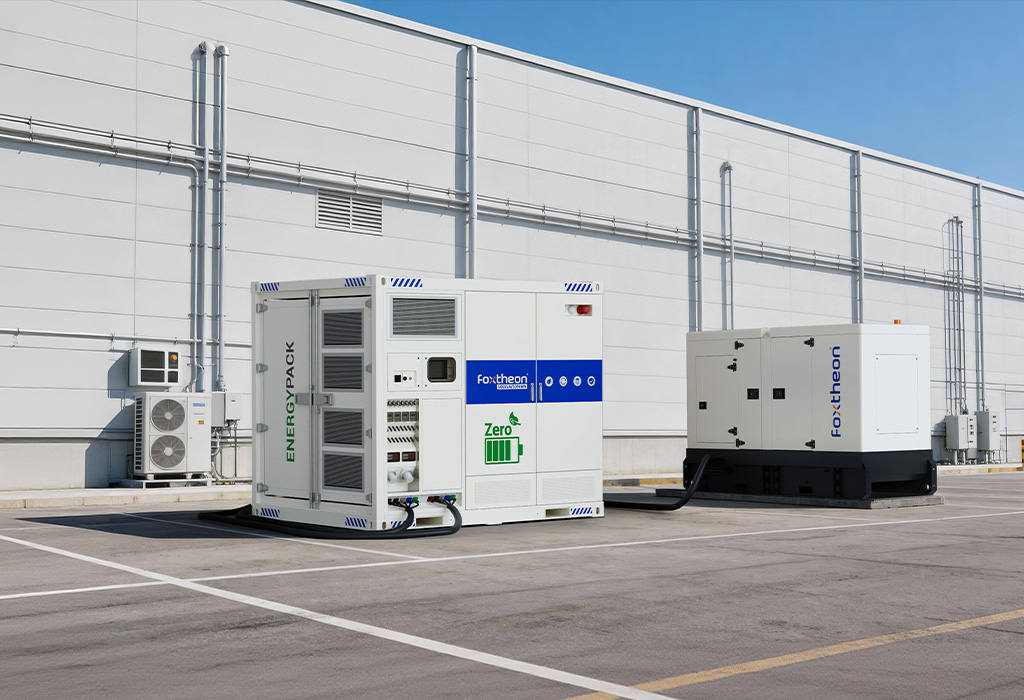
For decades, the standard answer to off-grid energy was simple: bring in more diesel generators. However, as fuel costs rise and logistics become more complex, the industry is shifting. Today, achieving true power security for remote operations requires a more intelligent approach. It involves hybridizing energy sources, integrating smart battery storage, and utilizing advanced monitoring software. Companies like Foxtheon are at the forefront of this shift, creating smart energy solutions designed to withstand the harsh realities of isolated environments.
This article looks at the challenges of off-grid power and how modern technology is reshaping reliability for remote industries.
The High Cost of Unreliable Energy
To understand why we need better systems, we first have to look at the consequences of failure. In remote sectors like construction, mining, and oil and gas, energy is the heartbeat of the site.
Downtime and Financial Impact
The most immediate impact of a power failure is financial. For a mining operation, an hour of downtime can cost tens of thousands of dollars in lost productivity. Machinery stops, processing plants shut down, and workers are left idle.
If the site relies solely on diesel generators, a mechanical failure or a delayed fuel shipment can bring operations to a standstill. This lack of redundancy is a major vulnerability. True security means having a backup plan that activates instantly, ensuring that critical loads never lose power.
Safety and Operational Integrity
Beyond money, there is the issue of safety. Remote sites often rely on power for ventilation systems, communications, and security monitoring. If the power cuts out, safety protocols are compromised.
In extreme climates, heating or cooling systems are vital for worker welfare. A reliable energy system ensures that these life-critical systems remain operational, regardless of the weather or fuel supply issues.
Modern Challenges in Off-Grid Energy
Achieving stability is not as easy as plugging into the city grid. Remote operators face a unique set of hurdles that make energy management difficult.
The Logistics of Fuel Supply
Reliance on fossil fuels is the traditional weak point of remote power. Transporting diesel to hard-to-reach locations is expensive and dangerous. Roads may be washed out by rain, or supply chains may be disrupted by geopolitical events.
Every liter of fuel burnt on-site has a “landed cost” that is often triple the market price due to transport fees. Reducing dependence on continuous fuel delivery is one of the most effective ways to enhance power security for remote operations.
Harsh Environmental Conditions
Remote usually means extreme. Equipment must survive in scorching heat, freezing cold, high humidity, or dust-filled air. Standard commercial generators often fail under these conditions.
Hardware must be ruggedized. This applies to everything from the solar panels to the battery management systems. If the equipment cannot handle the environment, the power supply will never be secure.
Hybrid Systems: The New Standard
The industry is moving away from “diesel-only” toward hybrid microgrids. This is where the landscape of international smart energy solutions is changing most rapidly.
Integrating Solar and Wind
Renewable energy is no longer just a “green” initiative; it is a pragmatic one. By installing solar PV arrays or wind turbines, operators can offset a massive portion of their fuel consumption.
During the day, the site runs on free energy from the sun. This reduces engine runtime for generators, extending their lifespan and reducing maintenance intervals. However, renewables are intermittent. The sun doesn’t always shine, and the wind doesn’t always blow. This is why storage is the critical link.
The Role of Battery Energy Storage Systems (BESS)
Batteries are the game-changer for stability. A Battery Energy Storage System (BESS) acts as a buffer. It absorbs excess energy from renewables or the generator and releases it when demand spikes or when the sun goes down.
With a BESS in place, if a generator fails, the battery takes over the load instantly. There is no blackout. This seamless transition is the definition of power security. Solutions provided by innovative manufacturers like Foxtheon focus heavily on this integration, using high-density lithium batteries to ensure that energy is available on demand, 24/7.
Intelligent Energy Management
Hardware alone is not enough. You need a brain to control the muscle. This comes in the form of an Energy Management System (EMS).
Real-Time Monitoring
In the past, you wouldn’t know a generator had a problem until it started smoking. Modern systems utilize IoT (Internet of Things) to monitor the health of every asset in real-time.
Operators can see fuel levels, battery temperatures, and load consumption from a dashboard located thousands of miles away. This visibility allows for predictive maintenance. If a voltage irregularity is detected, a technician can be alerted before the system fails.
Automated Load Balancing
An EMS automatically decides where the power should come from. If the load is low, it might shut off the noisy diesel generator and run silently on batteries. If the load spikes effectively, it brings the generator back online.
This automation removes human error from the equation. It optimizes fuel use and ensures that the system is never overloaded, which is a common cause of blackouts in manual systems.
Implementing a Robust Strategy
How does a site manager move from a vulnerable system to a secure one? It requires a strategic assessment of needs.
Assessing Load Profiles
The first step is understanding your energy consumption. Do you have high startup currents from heavy motors? Is your usage consistent, or does it peak at specific times?
Sizing the system correctly is vital. Undersizing leads to tripping and outages. Oversizing leads to “wet stacking” in diesel engines (running them at too low a load), which damages the engine. A tailored approach ensures the equipment matches the actual demand.
Scalability and Modularity
Remote operations change over time. A mining exploration camp might start with ten people and grow to accommodate three hundred. The power system must grow with it.
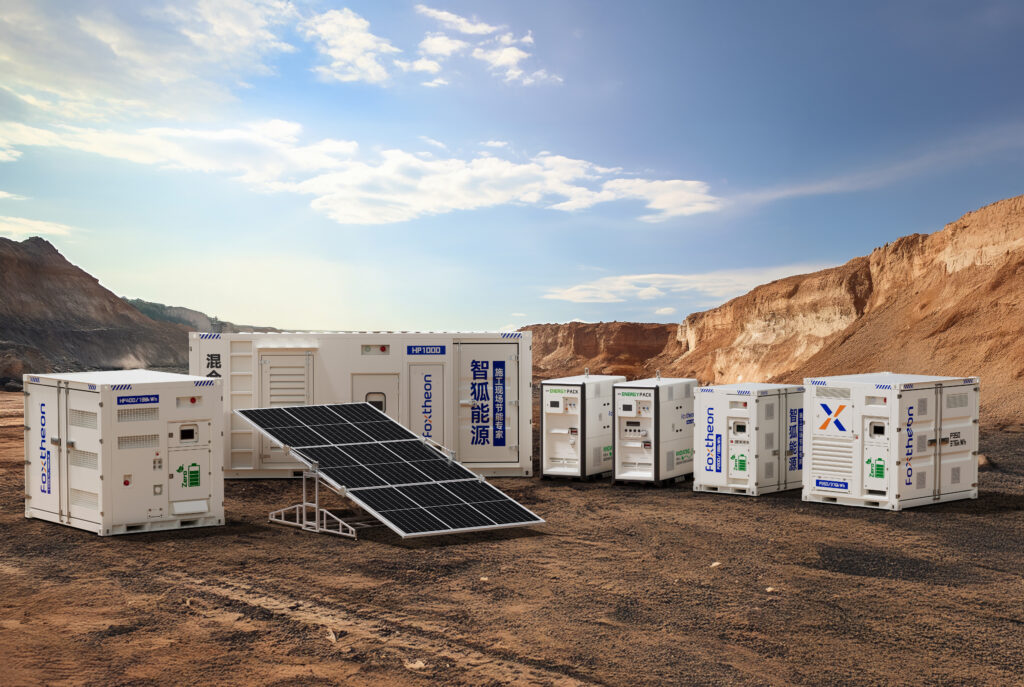
Modular systems allow you to add more battery capacity or solar panels without overhauling the entire infrastructure. This flexibility protects the initial investment and maintains power security for remote operations as the site expands. Foxtheon’s modular designs are particularly noted for this, allowing users to stack units based on current needs while leaving room for future growth.
Reducing Carbon Footprint and Theft
Security also involves securing your assets against theft and securing your future against regulatory pressure.
Mitigating Fuel Theft
Fuel theft is a rampant issue in many remote regions. By reducing the volume of fuel needed through hybridization, you reduce the target size. Furthermore, smart sensors can detect rapid drops in fuel tank levels, triggering alarms to prevent theft.
Meeting Sustainability Goals
Investors and governments are pressuring industries to decarbonize. A hybrid system drastically reduces CO2 emissions. This acts as a form of “regulatory security,” ensuring that the project remains compliant with environmental laws and eligible for green financing.
The Future of Remote Energy
The technology driving off-grid power is advancing quickly. We are seeing higher density batteries, more efficient solar panels, and smarter AI-driven management software.
The days of relying solely on a chugging diesel engine are fading. The future belongs to integrated, smart microgrids that offer resilience, efficiency, and peace of mind. By adopting these technologies, operators can guarantee that their projects continue to run smoothly, no matter how isolated the location.
Operating in remote locations will always be challenging, but power availability shouldn’t be a gamble. By shifting focus from simple fuel delivery to comprehensive energy management, businesses can protect their bottom line and their workers.
The key lies in diversity. Mixing solar, diesel, and storage creates a safety net that single-source systems cannot match. When you combine this with the robust engineering found in Foxtheon products and advanced digital monitoring, you achieve a level of reliability that was previously impossible.
Investing in power security for remote operations is not just an operational expense; it is a strategic advantage. It ensures that when the rest of the world stops, your site keeps running.
Frequently Asked Questions (FAQ)
Q1: What exactly does “power security” mean in the context of remote operations?
A1: In this context, power security refers to the reliability and availability of electricity in off-grid locations. It involves having redundant systems (like backup batteries and generators) to ensure that power is never lost, protecting equipment, production timelines, and personnel safety.
Q2: How do hybrid energy systems reduce costs for remote sites?
A2: Hybrid systems significantly lower costs by reducing diesel fuel consumption. By using solar power during the day and stored battery energy during low-load periods, generators run less frequently. This saves money on fuel, logistics, and engine maintenance.
Q3: Can a remote site run 100% on renewable energy?
A3: While possible, it is often not practical for industrial sites with high power demands 24/7. A 100% renewable system would require massive battery storage to cover weeks of bad weather. A hybrid approach (Renewables + Battery + Backup Generator) is usually the most cost-effective and secure solution.
Q4: How does a Battery Energy Storage System (BESS) improve generator lifespan?
A4: Generators are most efficient when running at a high load (e.g., 70-80%). Running them at low loads causes damage and wastes fuel. A BESS allows the generator to run at optimal capacity to charge the batteries and then shut off, reducing run hours and wear and tear.
Q5: Is it difficult to install smart energy systems in extremely remote areas?
A5: Modern solutions are designed with this in mind. Companies like Foxtheon utilize containerized, modular designs that are “plug-and-play.” They are pre-assembled and tested in the factory, making on-site installation fast and requiring minimal civil engineering work.