
You know the sound. The power goes out, and your generator kicks in. Everything seems fine until the air conditioner tries to start. The lights dim, the generator engine groans, and the breaker trips.
This is a common frustration for homeowners and off-grid enthusiasts. The culprit is not the running wattage of your HVAC system but the massive surge of energy required to get the motor spinning.
Solving this requires understanding generator assist for HVAC inrush current.
Rather than buying a massive, fuel-guzzling generator just for those few seconds of startup time, modern smart energy solutions offer a better way. Companies like Foxtheon are leading the charge in creating hybrid power ecosystems that manage these surges intelligently.
This article explores the mechanics of inrush current, how generator assist technology works, and why it is the most efficient way to keep your home cool during an outage.

Understanding the Surge: Why HVAC Systems Struggle on Backup Power
To solve the problem, we must first look at the physics of an electric motor. An air conditioner compressor sits at a dead stop when it is off. To get that heavy mechanical load moving, the motor requires a massive jolt of magnetic force.
This initial draw is called Locked Rotor Amps (LRA). It can be five to eight times higher than the power the unit uses while running.
A standard 3-ton AC unit might run on 3,500 watts. However, to start, it might briefly demand 15,000 watts. Most residential generators cannot handle this instantaneous spike.
When the generator detects this demand, the voltage drops significantly. If the voltage drops too low, the AC compressor stalls. This creates a cycle where the generator tries to recover, the AC tries to start again, and the system fails.
Implementing generator assist for HVAC inrush current breaks this cycle. It provides the extra push needed to overcome inertia without crashing your primary power source.
What Is Generator Assist for HVAC Inrush Current?
At its core, generator assist for HVAC inrush current is a method of supplementing your generator’s power output during peak demand moments.
Think of it like a hybrid car. The gas engine does the steady driving, but the electric battery kicks in when you slam on the accelerator.
In a power system, the generator provides the steady voltage. When the AC compressor engages, the assist technology detects the sudden spike in current.
It immediately injects stored energy—usually from a battery bank via a hybrid inverter—into the line. This prevents the generator from seeing the full load.
The generator continues to run smoothly, maintaining voltage stability for your sensitive electronics. Once the AC motor is spinning and the amperage drops to normal levels, the assist function creates a seamless transition back to generator-only power.
This approach is a cornerstone of the international smart energy solutions field. It prioritizes efficiency over raw size.
The Problem with Oversizing Generators
In the past, the only solution to inrush current was “bigger is better.” Installers would recommend a 20kW generator for a home that only uses 5kW on average, just to handle the AC startup.
This is inefficient for several reasons:
Fuel Consumption: A massive generator burns significantly more fuel, even when carrying a light load.
Wet Stacking: Diesel generators running at low capacity can suffer from unburned fuel building up in the exhaust system, leading to damage.
Noise and Cost: Larger units are louder and much more expensive to purchase and maintain.
Using generator assist for HVAC inrush current allows you to size your generator based on your average running load, not your momentary peak load.
You save money on the hardware. You extend the runtime of your fuel supply. You reduce the physical footprint of your backup power system.
Technologies That Enable Generator Assist
Several technologies exist to manage high startup loads. A complete smart energy strategy often employs a mix of these.
Hybrid Inverters with Power Assist
This is the most advanced solution. Modern hybrid inverters connect to a battery bank and your generator.
You program the inverter with the maximum amperage your generator can handle. If the house load exceeds this limit—such as when the AC starts—the inverter instantly draws power from the batteries to make up the difference.
This is true generator assist for HVAC inrush current. It bridges the gap seamlessly.
Soft Starters
A soft starter is a device installed directly on the HVAC unit. It modifies the flow of electricity to the compressor.
Instead of hitting the motor with full voltage instantly, it ramps up the voltage over a fraction of a second. This reduces the LRA by up to 70%.
While a soft starter reduces the demand, it does not add power. Combining a soft starter with a hybrid inverter system offers the highest level of reliability.
Smart Load Management
Another aspect of assistance is shedding other loads. Smart panels can automatically cut power to the water heater or EV charger the moment the AC kicks on. This frees up generator capacity for the inrush current.
The Foxtheon Approach: Smart Energy Solutions for Heavy Loads
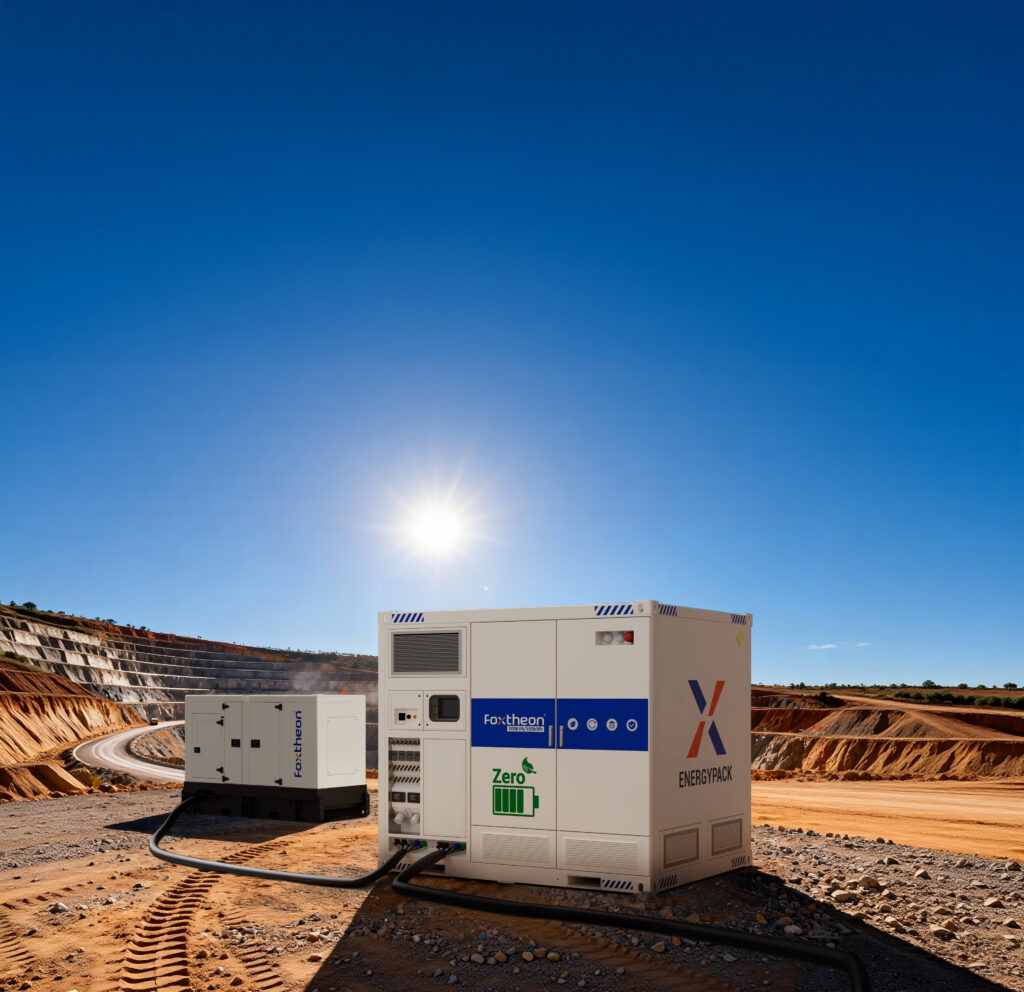
In the realm of international intelligent energy, Foxtheon stands out by integrating these technologies into cohesive units.
Their approach to hybrid power systems directly addresses the challenges of inductive loads like air conditioners. Foxtheon designs systems that understand the relationship between storage and generation.
By utilizing high-density battery storage, Foxtheon systems can deliver high discharge rates for short bursts. This is exactly what is needed for effective generator assist for HVAC inrush current.
Their inverters are capable of synchronizing with a generator’s AC waveform. This ensures that when the assist kicks in, the power quality remains clean.
For commercial and residential users, this means reliable climate control without the logistical nightmare of oversized generators. It represents a shift toward smarter, density-focused energy management.
Sizing Your System for Success
Implementing generator assist for HVAC inrush current requires math. You cannot guess.
First, locate the data plate on your HVAC condenser. Look for the “LRA” (Locked Rotor Amps) and “RLA” (Running Load Amps) ratings.
Next, check your generator’s continuous and surge wattage ratings.
If you are using a hybrid inverter for assist, check its “pass-through” capability and its “surge” capability.
For example, if your generator produces 30 amps, but your AC needs 80 amps to start:
The generator provides 30 amps.
The battery/inverter must provide the remaining 50 amps for those few seconds.
Ensure your battery bank is sized to handle this high discharge current. Lead-acid batteries may struggle with voltage sag under such high loads. Lithium iron phosphate (LFP) batteries are far superior for this application due to their stable voltage discharge.
Installation and Safety Considerations
Working with high-voltage systems and generators carries risks. Proper installation is vital for safety and equipment longevity.
Wiring Gauge: Ensure the wiring between the generator, inverter, and HVAC unit is thick enough to handle the peak surge without overheating.
Transfer Switches: You must use an appropriate transfer switch to isolate your system from the utility grid. This protects utility workers and your equipment.
Firmware Updates: Modern hybrid inverters rely on software. Keep your firmware updated to ensure the generator assist for HVAC inrush current algorithms are functioning correctly.
Consult a certified electrician who understands hybrid solar or off-grid systems. A standard residential electrician may not be familiar with programming power assist features on an inverter.
Economic Benefits of Generator Assist
While the initial setup of a hybrid system might seem higher than a standard portable generator, the long-term economics are compelling.
By downsizing the generator, you lower the upfront cost of the engine. You also reduce fuel storage requirements.
If you are already installing solar or batteries for backup, adding the generator assist for HVAC inrush current capability is often just a matter of programming and proper sizing. You are leveraging assets you already have.
Furthermore, this protects your expensive HVAC equipment. Low voltage starts (brownouts) are a primary cause of compressor failure. By ensuring the voltage stays high during startup, you extend the life of your air conditioner.
Future Trends in Smart Energy Management
The future of backup power is not about burning more fossil fuels. It is about intelligence.
We are seeing the rise of “Virtual Power Plants” and V2H (Vehicle to Home) technology. Imagine your electric truck providing the generator assist for HVAC inrush current.
AI-driven energy managers will predict when your AC is about to start based on temperature trends. They will pre-charge batteries or spin up generators in anticipation.
Brands like Foxtheon are constantly refining these predictive algorithms. The goal is a silent, seamless power experience where the user is unaware of the complex switching happening in the background.
This evolution moves us away from brute force energy toward precision energy application.
Troubleshooting Common Issues
Even with a good system, issues can arise. Here is how to troubleshoot generator assist for HVAC inrush current failures.
The Generator Still Stalls
Check the settings on your inverter. The “AC Input Limit” might be set too high, allowing the load to crash the generator before the battery helps. Lower the input limit so the battery assists sooner.
The AC Compressor Hums but Won’t Start
This usually indicates insufficient voltage. Check your battery state of charge. If batteries are low, they cannot provide the necessary current surge.
Inverter Overload Fault
If the inverter trips, the combined load of the house plus the startup surge is exceeding the inverter’s total capacity. You may need a larger inverter or a soft starter on the AC unit to lower the demand.
Managing heavy inductive loads is one of the toughest challenges in off-grid and backup power scenarios. However, relying on massive engines is no longer the only answer.
Utilizing generator assist for HVAC inrush current allows for smaller, more efficient, and quieter systems. It combines the reliability of a generator with the speed and power density of battery storage.
Whether you are protecting a remote telecom site or a suburban home, the principles remain the same. You need smart management of the startup surge.
By integrating technologies from forward-thinking companies like Foxtheon, users can achieve a stable power environment. This ensures comfort during outages without the inefficiency of legacy solutions.
Embrace the hybrid approach. It saves fuel, protects equipment, and guarantees that when the heat rises, your cooling system stays running.
Frequently Asked Questions
Q1: What is the difference between running watts and starting watts regarding generator assist?
A1: Running watts refer to the continuous power an appliance needs to operate. Starting watts (or surge watts) are the brief, high amount of power needed to start the motor. Generator assist for HVAC inrush current specifically targets that high starting peak, using battery power to help the generator handle the momentary load that exceeds its rated capacity.
Q2: Can I use a soft starter instead of a hybrid inverter for generator assist?
A2: A soft starter and a hybrid inverter do different things. A soft starter reduces the amount of power the AC needs to start (lowering the demand). A hybrid inverter adds power from batteries (increasing the supply). While a soft starter is effective, true generator assist for HVAC inrush current usually refers to the inverter’s ability to inject power. Using both together provides the best results.
Q3: Will using generator assist damage my air conditioner?
A3: No, if set up correctly, it actually protects your air conditioner. Without assist, a small generator might cause a voltage drop (brownout) during startup, which overheats the compressor windings. By maintaining proper voltage through generator assist for HVAC inrush current, the motor starts cleanly and runs cooler, extending its lifespan.
Q4: Does Foxtheon offer specific products for this application?
A4: Yes, Foxtheon specializes in hybrid energy solutions and smart power storage. Their systems are designed to integrate renewable sources, batteries, and generators. Their inverters and battery systems are engineered to handle the high discharge rates necessary to provide effective assist functionality for heavy inductive loads like HVAC systems.
Q5: How do I know if my current inverter supports generator assist?
A5: You need to check your inverter’s manual for features listed as “Power Assist,” “Generator Support,” “Grid Support,” or “Hybrid Boost.” Not all inverters have this capability. Standard off-grid inverters simply switch between sources. To perform generator assist for HVAC inrush current, the inverter must be able to synchronize with the generator’s AC waveform and add current to it simultaneously.