
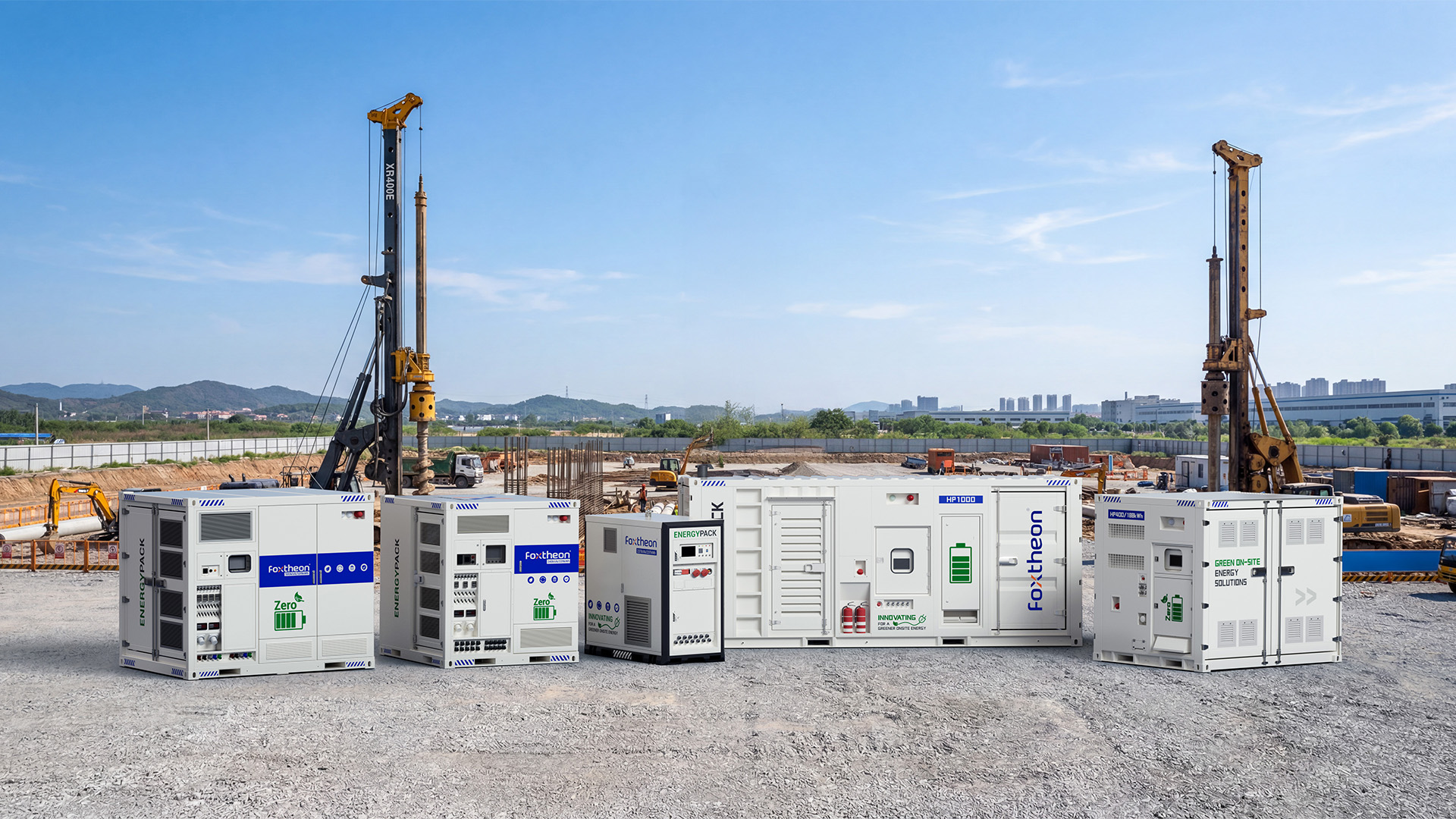
Industrial power reliability depends on balancing instantaneous demand against generation capacity. For remote sites, temporary infrastructure, and critical facilities, the traditional diesel or gas generator set operates alone—resulting in low-load inefficiencies, frequent maintenance intervals, and volatile operating expenses. Integrating a genset hybrid system changes this dynamic by adding energy storage, intelligent control, and renewable-ready ports. This article examines technical architectures, real-world performance data, and lifecycle economics without dismissing existing generator assets. Instead, we focus on retrofitting, upgrading, and co-optimizing what already works.
Across sectors such as mining land operations, telecommunications, construction camps, and utility grid support, the hybrid approach delivers measurable gains: 25–40% fuel reduction, 50% fewer service events, and sub-second load step response. Foxtheon engineers field-proven hybrid controllers that integrate with major genset brands, preserving capital investments while adding adaptive energy management. This article is structured for technical leads, procurement managers, and system integrators seeking actionable specifications rather than marketing claims.
Core Architecture of a Genset Hybrid System
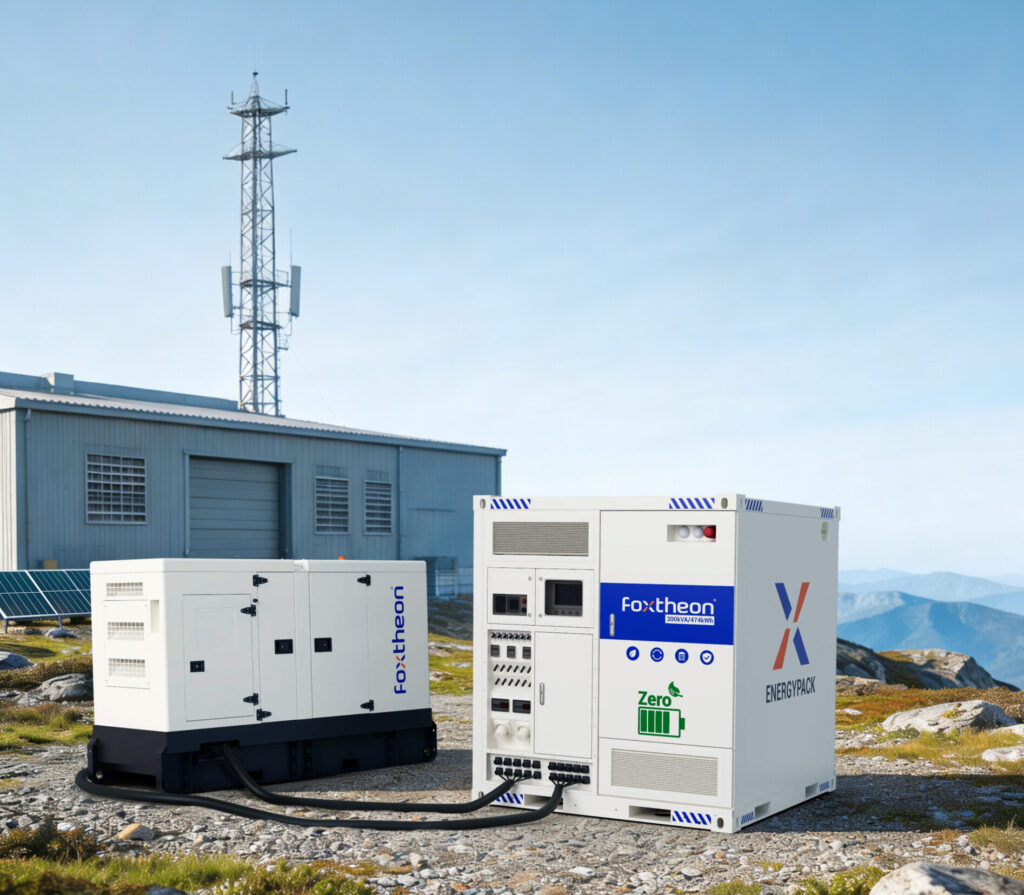
Every genset hybrid system consists of three interdependent layers: the generator set (existing or new), an energy storage unit (lithium-ion battery or supercapacitor bank), and a bi-directional power converter with energy management software. The topology can be DC-coupled (common for solar integration) or AC-coupled (flexible for retrofits). The controller continuously monitors bus voltage, frequency, load ramp rates, and state of charge (SoC).
Key Components & Their Functions
- Battery Energy Storage (BESS) – Provides spinning reserves without fuel consumption. Handles peak shaving, load following, and grid-forming capability during genset start/stop cycles.
- Hybrid Controller (EMS) – Uses predictive algorithms (load history, time-of-use patterns) to decide when to start, stop, or modulate the genset. Enables seamless islanding and “genset sleep” mode during light load hours.
- Power Conversion System (PCS) – Bi-directional inverter/charger with voltage source mode for microgrid operation. Protects batteries from ripple currents and harmonics generated by non-linear loads.
- Remote Monitoring Interface – Cloud or on-prem SCADA enabling real-time adjustments, firmware updates, and performance analytics (fuel per kWh, CO2 offset, battery degradation trend).
A properly sized genset hybrid system matches battery power rating (kW) to the site’s peak transient demand, while the energy capacity (kWh) covers the average load during generator-off periods. For example, a telecom tower with 8 kW base load and 25 kW peak for HVAC may pair a 30 kW / 45 kWh lithium battery with a 20 kVA genset. The genset runs only 6–8 hours each day instead of 24 hours, achieving 65% maintenance cost reduction.
Technical Deep Dive: Control Algorithms and Operating Modes
Industrial hybrid systems operate in multiple modes based on site priority (minimize runtime, maximize renewable harvest, or grid-support). The EMS switches seamlessly between:
- Peak shaving – Battery discharges during load spikes above a defined threshold, keeping genset within optimal fuel consumption curve (typically 70–80% of rated power).
- Load following with spinning reserve – Genset runs at fixed efficient setpoint (e.g., 75% load), battery absorbs or supplies the difference. No throttling losses.
- Genset start/stop cycling – Battery supports entire base load for 2–6 hours; EMS starts genset only when SoC reaches low limit, then runs at full power to recharge battery and serve load simultaneously.
- Grid-assist (hybrid island + weak grid) – In sites with unreliable utility, the hybrid system stabilizes voltage and frequency while switching to genset during blackouts.
Advanced features include cold-ironing compatibility (shore power for vessels) and renewable smoothing. When solar PV is added, the hybrid controller prioritizes solar energy, uses battery to absorb excess production, and only activates the genset as a final reserve. This reduces runtime below 4 hours/day in tropical sites. Foxtheon controllers support IEC 61850 and Modbus TCP, allowing integration with existing site automation systems without replacing the primary genset.
Application-Specific Engineering & Case References
While generic hybrid benefits are well documented, field performance depends on load profile, ambient conditions, and operational discipline. Below are three high-impact industrial segments where a genset hybrid system addresses distinct pain points.
1. Remote Construction Camps & Temporary Mining Facilities
Loads vary significantly between daytime heavy equipment (workshops, crushers, pumps) and nighttime lighting and accommodation (dorms, kitchen, clinic). A single fixed-speed genset must be oversized for peak daytime loads, leading to 20–30% load factor overnight. That causes wet stacking (unburned deposits in diesel engines), carbon fouling, and oil dilution. A hybrid system with 4–6 hour battery autonomy allows the genset to shut down completely overnight. During the day, peak shaving keeps the genset at 65–85% load, eliminating wet stacking and extending overhaul intervals from 1,000 to over 4,000 hours. One Australian iron ore camp reduced annual diesel consumption by 83,000 liters using a 100 kW genset + 210 kWh battery configuration.
2. Telecom Tower Off-Grid & Weak Grid Sites
Base transceiver stations (BTS) require stable DC voltage (typically -48V) with frequent transient spikes from air conditioners and RF power amplifiers. Genset-only sites suffer from high starting current forced oversizing (e.g., 30 kVA genset for 5 kW average load). A genset hybrid system with bi-directional rectifier handles 5C surge currents from the battery while the genset operates at optimum efficiency. Additionally, many telecom operators use VRLA batteries for backup, which cannot sustain frequent deep cycles. Replacing with LFP batteries in a hybrid configuration yields 10-year lifespan and enables virtual power plant (VPP) aggregation — operators get paid for grid balancing services during low traffic hours.
3. Data Center Standby and Prime Power
Although most data centers depend on utility + UPS + diesel generators for N+1 redundancy, sites in regions with unstable grids use “genset continuous mode” to avoid utility transients. Running generators 24/7 for “clean power” is expensive and noisy. A genset hybrid system acts as a rotary UPS: the genset runs at constant speed (1500/1800 rpm), but the battery handles voltage dips and harmonics. This improves power quality (THD < 3%) and allows the genset to be downsized by 30–40%. Moreover, during low IT load periods (nighttime), the battery can supply all power with genset off, saving thousands in fuel and particulate filter regeneration.
Foxtheon has commissioned over 200 hybrid installations globally, including for a Southeast Asian cement plant with an existing fleet of 1.2 MW gensets. Adding 800 kWh storage and smart controllers reduced specific fuel oil consumption from 285 g/kWh to 209 g/kWh without retiring any of the customer’s generators.
Lifecycle Cost Modeling: Beyond Fuel Savings
Professional B2B evaluation of any genset hybrid system must consider total cost of ownership (TCO) components: capital expenditure (battery + inverter + controller), operational savings (fuel, oil, filters, technician travel), and extended genset lifespan. A simplified 5-year model for a 50 kVA telecom site:
- Pure genset baseline: 24h/day, 8,760 h/year, fuel burn 12 L/h → 105,120 L/year; oil & filters $0.12/L; major overhaul every 1,500 h (3 times/year). Annual O&M ~ $95,000.
- Hybrid (8 h daily runtime): 2,920 h/year genset operation, fuel burn 9.5 L/h (higher efficiency due to optimal load) → 27,740 L/year; oil & filters reduced 70%; overhaul interval 8,000 h (once in 2.7 years). Annual O&M ~ $28,200.
- Annual savings: $66,800. Battery system cost (50 kWh LFP, 15-year design life) ~$22,000 + controller ~$5,800. Payback period under 6 months. After 5 years, cumulative net savings exceed $300,000.
These calculations do not include carbon credits, reduced noise violation fines, or avoided fuel logistics (transportation to remote sites often doubles the pump price). Furthermore, hybrid configurations with solar PV can reach zero genset daytime operation, achieving 3,000–4,000 genset hours per year, corresponding to 80% less CO2 per kWh.
Operational Best Practices and Thermal Management
To maximize reliability of a genset hybrid system, engineering teams must address battery thermal regulation, charge/discharge rates relative to ambient temperature, and generator starting algorithm. Lithium batteries below 0°C require internal heating before accepting charge; the EMS must manage that via pre-heat from genset waste heat or resistive elements. In high ambient (>45°C), active cooling (liquid or forced air) prevents capacity fade. Additionally, the hybrid controller should implement state-of-health (SoH) diagnostics, automatically derating peak power when internal resistance increases by 30%.
Another critical parameter is the minimum run time for the genset. For diesel engines, runs shorter than 20 minutes risk incomplete combustion and injector coking. The hybrid controller should enforce a minimum runtime when started, using the battery to continue supplying load after the genset stops, smoothing the transition. Foxtheon hybrid panels include adaptive learning: after 50 cycles, the system predicts the optimal start/stop threshold based on crankcase temperature and fuel viscosity.
Integrating Hybridization Without Stranding Assets
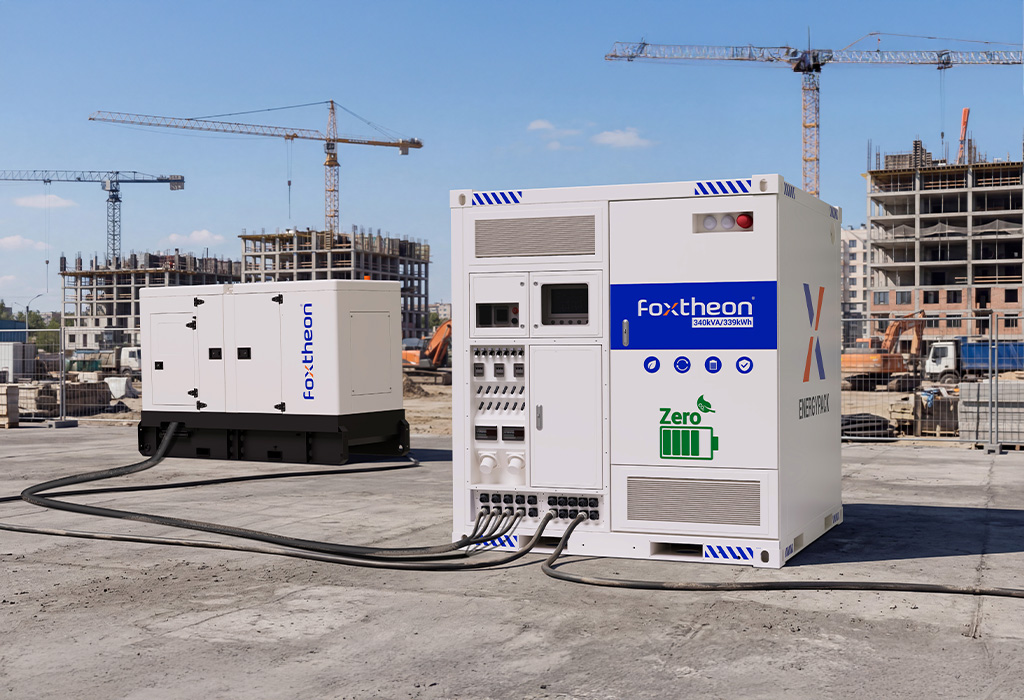
No energy transition strategy should compel operators to discard functional generators. Instead, adding a genset hybrid system transforms existing fossil assets into flexible, low-emission microgrid nodes. The technology respects current maintenance contracts, familiar diesel supply chains, and spark spread hedging. For B2B buyers, the decision centers on selecting a control platform that supports open protocols, backward compatibility with any genset brand (Caterpillar, Cummins, MTU, Kohler, etc.), and modular battery sizing that can expand as lithium prices fall.
Field data from hundreds of sites confirms that hybrid generators operate with fewer faults, produce cleaner exhaust (due to sustained high-load running), and significantly reduce the carbon intensity of off-grid power. Integrating renewable sources becomes plug-and-play, yet the genset remains ready for 100% backup. This presents an upgrade path, not a replacement model.
Request a technical assessment by Foxtheon engineering: send your site’s load profile (15-minute interval data for one week), generator nameplate specs, and current fuel price. Our team returns a hybrid sizing proposal, payback simulation, and measured fuel curves for your specific altitude and temperature range. All inquiries receive a confidential techno-economic model without obligation.
Frequently Asked Questions (FAQ)
Q1: Can a genset hybrid system be added to my existing diesel generators without replacing the generator controller or switchgear?
A1: Yes. Most hybrid controllers operate in parallel with the existing generator controller via voltage and frequency droop or a bi-directional AC coupling breaker. The installation does not require modification of the generator’s internal governor or AVR. For generators with older mechanical controls, an interface module maps the battery dispatcher’s commands to start/stop and load setpoint signals. Retrofits typically take 3–5 days on-site.
Q2: How does a genset hybrid system behave when the battery reaches end-of-life after 8–10 years? Can I keep using the genset alone?
A2: The hybrid system is designed to fail gracefully. If the battery management system detects unsafe conditions (voltage divergence, excessive temperature, capacity below 60%), the controller automatically isolates the battery via a contactor and reverts to genset-only operation. No site downtime occurs. The owner can then replace the battery module (LFP cells are standardized) or choose to continue running the genset as before. The original generator set remains unchanged.
Q3: What is the typical round-trip efficiency of the battery plus inverter in a commercial genset hybrid?
A3: For a modern lithium iron phosphate (LFP) system combined with a SiC-based inverter, round-trip AC-to-AC efficiency ranges from 88% to 92%. The 8–12% loss is offset by the 25–35% gain in genset fuel efficiency resulting from load optimization and reduced idle hours. In applications with daily deep discharge cycles (e.g., 70% DoD), net energy savings remain strongly positive.
Q4: Does the hybrid system work in sub-zero climates, for example oil & gas sites in Northern Canada?
A4: Yes, with appropriate thermal management. The battery enclosure is equipped with DC heaters that draw power from the generator’s initial warm-up phase. Once the battery reaches +10°C, normal operation begins. Some hybrid controllers also allow the genset to run continuously below -20°C but with dynamic load sharing – battery provides transients while genset carries the bulk. Foxtheon offers arctic-rated kits down to -40°C.
Q5: How do I size the battery storage to avoid overworking the genset or causing frequent start/stop cycles?
A5: Sizing requires three parameters: the maximum expected load step (kW) you want to cover without starting the genset; the average nighttime or low-load duration (hours); and the minimum desired genset run time (typically ≥ 90 minutes for diesel). A well-tuned EMS uses a deadband algorithm: only start the genset when SoC falls below 30% and average load exceeds 1.2× the genset’s most efficient output. Foxtheon’s configuration tool runs monte carlo simulations on your historical data to output the exact kWh rating, preventing micro-cycling.
For a complete commercial proposal and technical datasheet for your specific genset model and site conditions, contact our B2B energy solutions desk. Provide your load profile and we will return a dimensional drawing, ROI analysis, and references from similar industries within 48 hours.