
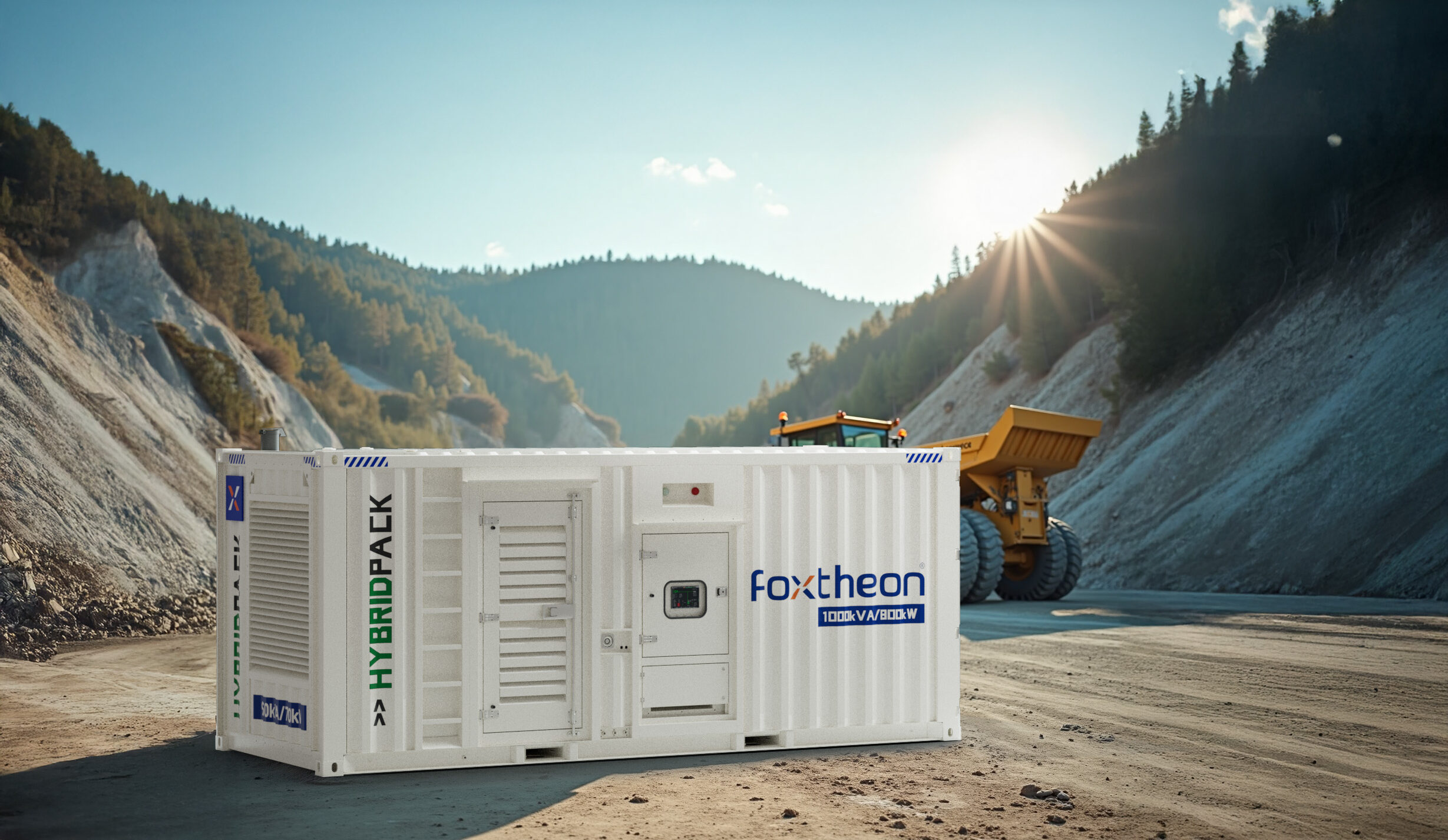
In modern power systems, grid connected battery storage has moved from experimental projects to mainstream infrastructure. For commercial and industrial (C&I) energy managers, independent power producers, and engineering consultancies, understanding the technical intricacies and financial models of these systems is no longer optional. This article provides a rigorous, data-driven examination of grid connected battery storage architectures, control strategies, and practical synergies with existing generator fleets — without overpromising or dismissing proven technologies.
As a B2B energy solutions specialist, Foxtheon has deployed intelligent hybrid systems across diverse industrial environments. Our approach respects the value of existing assets while introducing the flexibility of battery integration. The following sections break down key engineering parameters, economic drivers, and operational best practices for grid connected battery storage in behind-the-meter and front-of-meter applications.
1. Technical Architecture of a Grid-Connected Battery System
A robust grid connected battery storage installation comprises five interdependent subsystems. Each directly impacts performance, safety, and return on investment.
1.1 Battery Cells and Racks
Lithium iron phosphate (LFP) chemistry currently dominates C&I projects due to its thermal stability and cycle life (6,000–10,000 cycles at 80% DoD). Nickel manganese cobalt (NMC) offers higher energy density but requires more conservative thermal management. For applications with daily deep cycling, LFP reduces total cost of ownership. Liquid cooling maintains cell temperature differentials below 3°C, prolonging calendar life.
1.2 Battery Management System (BMS)
BMS functions include cell voltage balancing, temperature monitoring, overcurrent protection, and state-of-charge (SoC) estimation. Distributed BMS architectures enable modular scaling. Communications to the EMS rely on CAN or Modbus TCP. Redundant safety contactors ensure disconnection under fault conditions, complying with UL 1973 and IEC 62619.
1.3 Power Conversion System (PCS)
The PCS (bidirectional inverter) converts DC battery power to AC grid-synchronized power and vice versa. Critical parameters include overload capacity (110–150% for 10 seconds), harmonic distortion (<3% THD), and islanding detection. For medium-voltage interconnection, step-up transformers are integrated. Advanced PCS provide grid-forming capability, enabling black start and virtual inertia support.
1.4 Energy Management System (EMS)
EMS software executes optimization algorithms based on tariff signals, load forecasts, weather data, and grid service dispatch. On-premise controllers (e.g., PLC-based or industrial edge computers) ensure sub-second response for frequency regulation. Cloud-based analytics provide long-term performance benchmarking and predictive maintenance scheduling. Foxtheon deploys hybrid EMS that coordinates battery dispatch alongside existing generator sets without disrupting primary power functions.
1.5 Grid Interconnection & Protection
Interconnection point equipment includes revenue-grade meters (ANSI C12.20), utility-grade disconnect switch, and protective relays (IEEE 1547-2018 compliant). Anti-islanding protection must trip within 2 seconds after abnormal voltage/frequency. For facilities with combined heat and power or backup generators, transfer switches are coordinated to prevent parallel operation conflicts or to enable intentional islanding with battery support.
2. Core Technical Capabilities and Operational Modes
Understanding the distinct modes of grid connected battery storage is essential for matching system behavior to facility needs.
- Peak Shaving (Demand Charge Reduction): The battery discharges during brief periods when facility load exceeds a preset threshold (e.g., 80% of transformer capacity), reducing 15-minute peak demand. Typical savings reach $8–$18 per kW-month depending on utility tariff.
- Load Shifting (Energy Arbitrage): Charging during low-cost off-peak hours (e.g., midnight to 6 AM) and discharging during high-price on-peak periods. For time-of-use rates with a 3:1 peak/off-peak ratio, round-trip efficiency losses (87–92%) are economically justified.
- Grid Frequency Regulation: Participating in ancillary service markets (PJM, CAISO, ERCOT) requires response times under 1 second. Batteries outperform gas turbines significantly, capturing higher performance scores.
- Renewables Firming & Ramp Control: Co-located with PV or wind, batteries absorb ramping volatility, preventing utility penalties for exceedance of ramp rate limits (e.g., 10% of capacity per minute).
- Backup & Islanded Operation: When paired with a transfer switch, the system can island critical loads during grid faults. Unlike rotating generators, batteries provide instantaneous response, but duration is limited by energy capacity. Hybrid solutions combine battery for first seconds/minutes and diesel/gas generator for longer outages — a complementary approach that respects existing generator assets.
3. Industry Pain Points and Targeted Resolution
3.1 High Demand Charges Induced by Short Process Peaks
Manufacturing plants often consume 300–500 kW for 15-minute welding or compressor startups. Those peaks may represent only 2% of monthly energy but 30% of the electric bill. A properly sized grid connected battery storage with real-time load forecasting can eliminate those peaks. Using predictive algorithms based on production schedules, the battery pre-charges before anticipated load events.
3.2 Integration Difficulty with Existing Generators
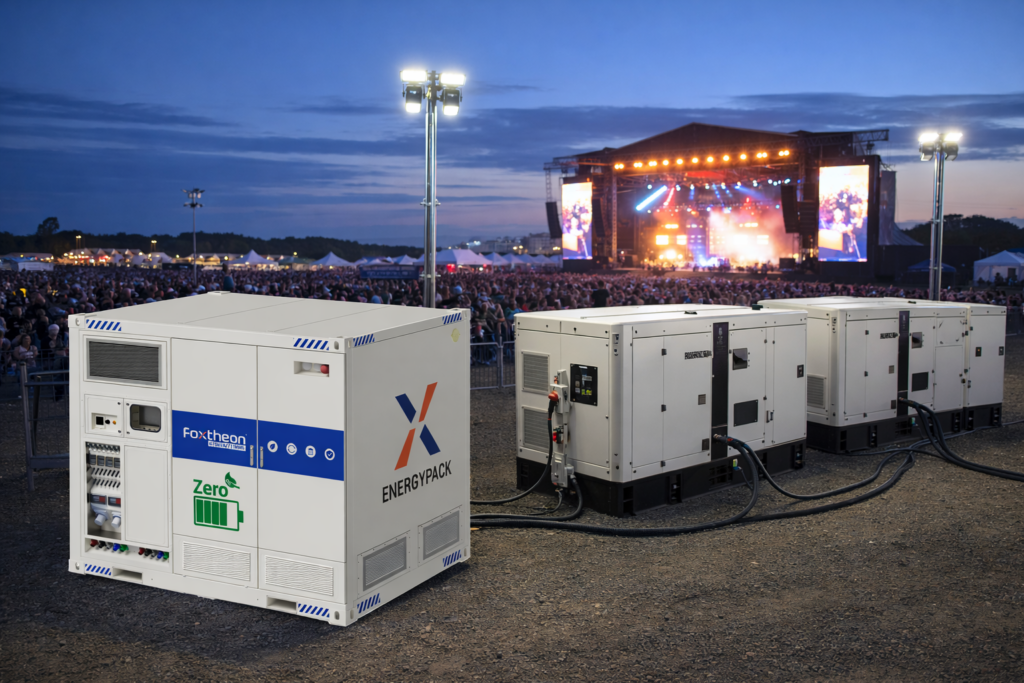
Many facilities already own diesel or natural gas generators for emergency backup. Standard practice prevents running generators for peak shaving due to emissions and maintenance costs. However, a hybrid controller from Foxtheon allows generators to remain as standby assets while the battery handles daily load management. During extended outages, the generator starts and shares load with the battery (reducing generator fuel consumption by 30–40% because the battery smoothes low-power periods). No asset replacement is required.
3.3 Uncertain Value from Utility Ancillary Services
Market signals change frequently. Smaller C&I customers (< 5 MW) struggle to aggregate capacity. Solutions include virtual power plant (VPP) platforms where multiple battery sites are aggregated by a third-party or Foxtheon’s cloud-based dispatch engine, which bids stored capacity into frequency regulation markets without requiring on-site market expertise.
3.4 Degradation and Warranty Complexity
Cycle life varies with depth of discharge and temperature. Industrial operators need performance guarantees. Leading suppliers provide capacity retention warranties (>70% after 10 years) but require specific operational profiles (max 1C rate, ambient temp 15–30°C). Smart EMS with adaptive algorithms can enforce warranty-compliant charge/discharge strategies automatically.
4. Key Application Scenarios for C&I and Infrastructure
4.1 Data Centers – Reducing UPS Diesel Dependency
Data centers require N+1 redundant power. Short-duration grid disturbances (sub-5 seconds) are typically handled by flywheels or batteries inside UPS. Adding a larger grid connected battery storage outside the UPS can provide 15–60 minutes of backup, deferring generator starts and reducing run hours on generator fleets. This cuts fuel storage requirements and maintenance overhead.
4.2 Cold Storage & Refrigeration Facilities
Refrigeration loads respond to thermal inertia. During peak demand hours, a battery can power compressors while the facility operates slightly higher suction pressure within safe product limits (e.g., -18°C to -15°C). This coordinated strategy reduces demand charges without affecting food safety.
4.3 EV Fleets Depots – Mitigating High Charging Spikes
With multiple 150 kW fast chargers, depot power demand can jump from 200 kW to 1.2 MW within minutes. A battery system buffers these spikes, effectively increasing the utilization of existing transformers (avoiding costly utility upgrades). The battery recharges slowly overnight at lower tariff rates.
4.4 Manufacturing with Combined Heat and Power (CHP)
CHP systems provide stable baseload power. However, when a CHP unit trips suddenly, the facility faces a large step increase in grid draw. Batteries react within 40 milliseconds to fill the gap, preventing demand spikes. In parallel, the battery can store excess CHP generation during low-load periods, increasing overall CHP utilization.
5. Economic Modeling and Return Indicators
A thorough business case for grid connected battery storage must incorporate avoided demand charges, energy arbitrage, ancillary service revenue, and potential carbon credits. Typical figures for a 1 MW / 2 MWh system (US Midwest, 2025):
- Capital cost: $450–$550 per kWh (installed, including BMS, PCS, and interconnection).
- Annual demand charge reduction: $35,000–$70,000 (depending on tariff).
- Annual energy arbitrage net benefit: $12,000–$22,000 (assuming $0.12/kWh peak vs $0.045/kWh off-peak).
- Frequency regulation revenue (if accessible): $25,000–$45,000 per year.
- Simple payback period: 4–7 years. Project lifetime: 12–15 years (with one battery replacement cycle for deep-cycle applications).
Hybrid operation with existing generators adds resilience value that is harder to quantify but often doubles the project’s internal rate of return (IRR) when outage costs are considered.
6. Integration with Existing Generator Assets – A Complementary Approach
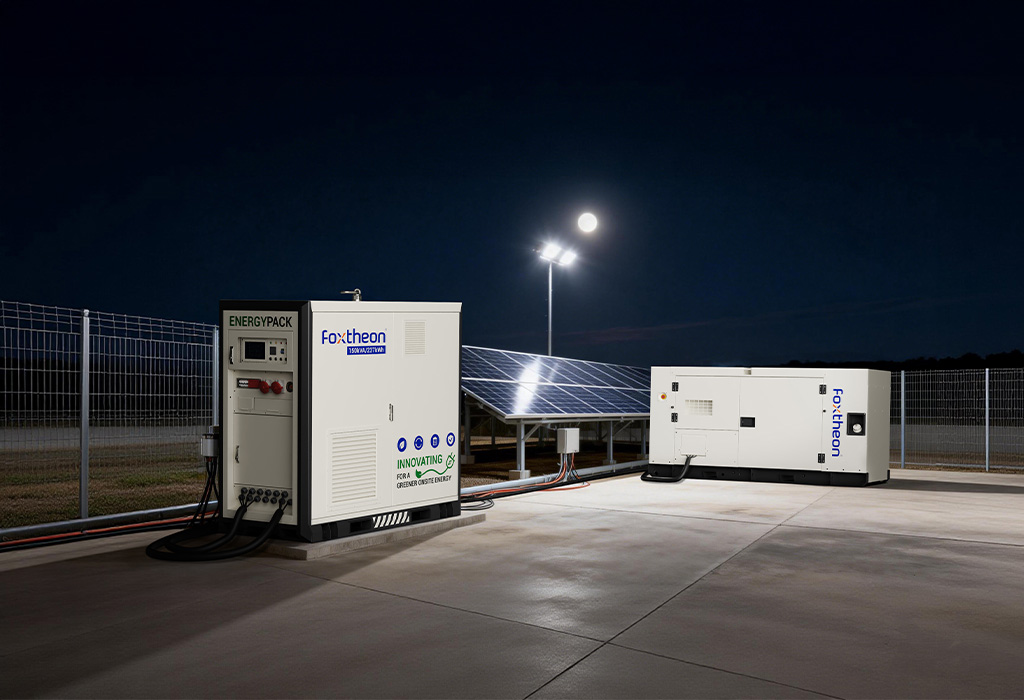
Field experience shows that replacing functional generator fleets is rarely cost-effective nor environmentally justified (embedded carbon in existing engines). Instead, modern intelligent controllers enable a symbiotic relationship:
- Generator Starting Load Reduction: Batteries provide cranking assist and initial load pickup, allowing generators to start without step load stress — reducing maintenance events by 20–30%.
- Emission-free low-load operation: For situations requiring only small power (10–30 kW) for hours, the battery handles the load while generators remain off. When SOC drops below threshold, generator starts and runs at optimal 70–80% load, recharging the battery and serving facility loads simultaneously.
- Black start support: A fully charged battery can initiate a partial facility restart and then start the prime generator without needing an external grid.
This non-disruptive integration respects the capital already invested and extends the life of rotating machinery. Foxtheon has executed dozens of such hybrid retrofits without any “rip and replace” activities — verifying that storage and generators are partners, not competitors.
7. Standards, Safety, and Site Planning Considerations
Engineering due diligence for any grid connected battery storage includes:
- UL 9540 (system safety) and UL 9540A (fire propagation testing).
- NFPA 855 installation requirements: spacing, ventilation, and maximum energy limits per cluster.
- IEEE 1547-2018 for grid interconnection, including voltage/frequency ride-through curves.
- Telemetry and cyber security: IEC 62443-3-3 for controllers, encrypted communication to utility SCADA.
Site surveys must assess existing transformer capacity, available space for battery enclosures (temperature-controlled if outdoors), and accessibility for fire services. A pre-application report to the local utility should specify export limits, metering points, and intended operating schedule (e.g., no export to grid for behind-the-meter projects).
8. Frequently Asked Questions (FAQ)
Q1: Is a grid connected battery storage system compatible with my existing diesel generator without replacing it?
A1: Yes. Hybrid controllers from specialist integrators like Foxtheon allow parallel operation via AC coupling. The generator and battery share the load according to a programmable logic: the battery handles fast transients and low loads, while the generator runs only at efficient high loads. No generator replacement is needed.
Q2: How does grid connected battery storage handle utility power outages differently from a backup generator?
A2: Batteries respond in milliseconds but have limited duration (usually 1–4 hours). A generator can run for days but takes 10–30 seconds to start and stabilize. A combined system provides seamless transition: battery covers the first seconds/minutes, then generator starts and assumes load. This hybrid approach offers the best of both technologies without one replacing the other.
Q3: What is the typical degradation rate of LFP battery systems in daily peak shaving applications?
A3: For one full cycle per day (discharge 70% DoD), LFP cells typically retain 70–75% of nameplate capacity after 8,000 cycles, which exceeds 10 years of daily operation. Calendar aging (temperature and state-of-charge stress) contributes an additional 0.5–1% annual loss. Use of partial cycles and limiting average SoC to 60% can extend lifetime beyond 15 years.
Q4: Can I monetize my battery system on wholesale energy markets even with a small facility (under 2 MW)?
A4: Direct participation may be impractical due to market entry costs. However, aggregation through a virtual power plant (VPP) platform — offered by several energy service providers — consolidates multiple small batteries to meet 1 MW+ bid sizes. Alternatively, some utilities offer demand response programs that pay for load reduction during grid stress events; batteries are well suited for that simpler revenue stream.
Q5: What is the ROI difference between a standalone battery and a hybrid battery-generator system?
A5: Standalone batteries rely only on grid arbitrage and demand charge reduction, typically achieving 4–8 year payback. A hybrid system adds fuel savings (when generator would otherwise run inefficiently), deferred generator overhauls, and outage resilience value. For facilities with existing generators over 200 kW, hybrid controllers often improve IRR by 3–5 percentage points, reducing payback to 3–6 years.
9. Next Steps – Professional Assessment for Your Facility
Every industrial grid connection has unique load profiles, tariff structures, and existing infrastructure. A generic battery sizing without on-site harmonic analysis or generator coordination study often leads to underperformance. Foxtheon provides a full-cycle engineering service: from power quality measurement and 12-month load data analysis to turnkey installation and cloud EMS management. Our team does not push “replacement” of your valid assets; instead we maximize the whole system’s efficiency and flexibility.
To receive a preliminary technical feasibility report for your site, including estimated payback period for grid connected battery storage, please reach out with your latest 12 months of 15-minute interval load data and one-line diagram. Our experts will model three scenarios: battery-only, generator-only (baseline), and hybrid-optimized.
Request an inquiry: Send your project specifications and load profile to sales@foxtheon.com or use the contact form on our website. All inquiries receive a detailed technical questionnaire and a follow-up call with a senior energy storage engineer within five business days.
© 2026 Foxtheon – Intelligent hybrid energy solutions for industrial and commercial clients. Focus on engineering accuracy, asset respect, and measurable ROI.