
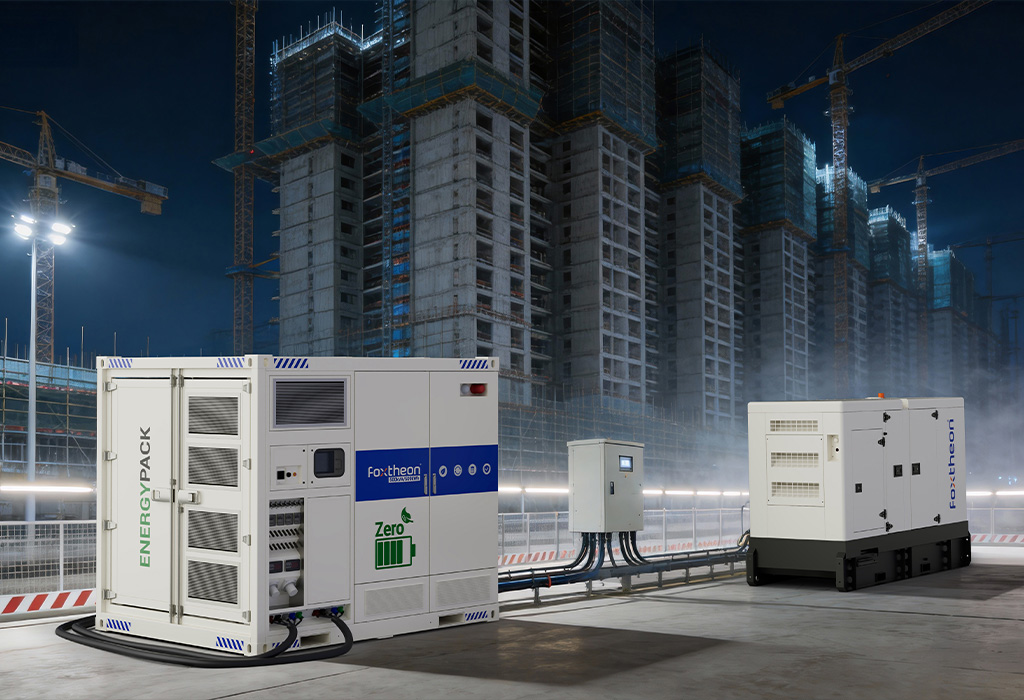
Modern industrial and commercial facilities face a complex energy environment: volatile time-of-use tariffs, increasing demand charges, intermittent renewable generation, and the need for backup power without discarding existing generator assets. A grid tie hybrid system addresses all these challenges through a single intelligent interface. Unlike conventional grid-tied inverters that disconnect during outages, or off-grid systems that ignore utility benefits, a grid tie hybrid continuously optimizes between solar, battery, generator, and utility power — providing economic dispatch, seamless islanding, and extended asset life.
Foxtheon has engineered such hybrid controllers for over 200 industrial sites, focusing on non-intrusive integration with existing diesel or gas generators. This article presents technical specifications, operational scenarios, and financial benchmarks for grid tie hybrid deployments, based on field data from manufacturing, data centers, and agricultural processing.
1. Defining the Grid Tie Hybrid Architecture
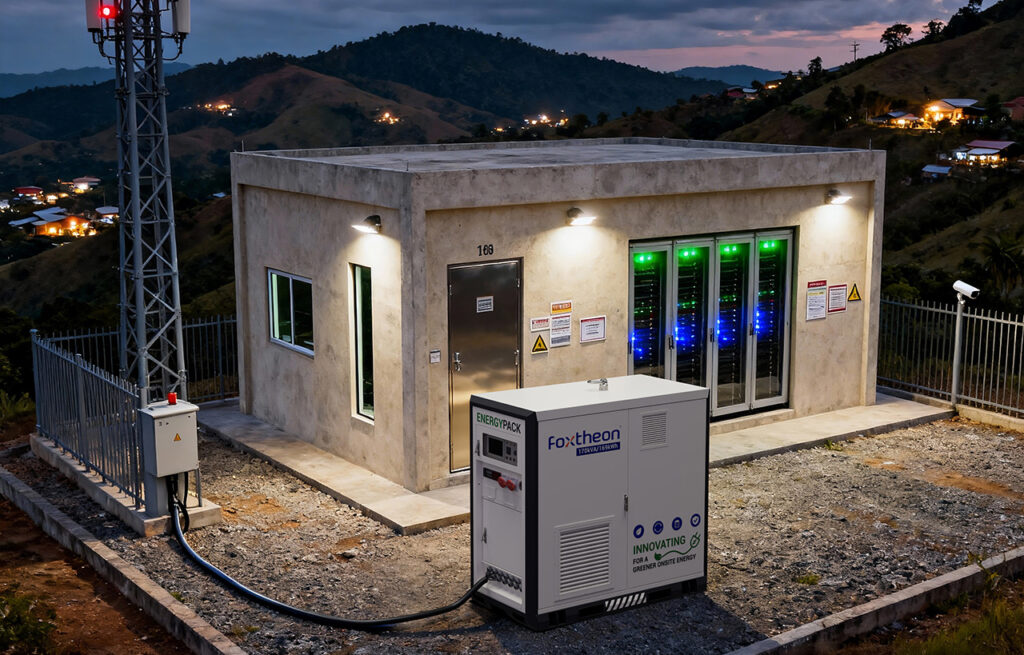
An authentic grid tie hybrid system contains five core elements working under a unified energy management system (EMS):
- Bi-directional hybrid inverter (PCS): Provides grid-forming capability, able to synchronize with the utility or create an independent microgrid.
- Energy storage (Li-ion, typically LFP): Managed by a battery management system (BMS) with state-of-charge (SoC) limits configurable for peak shaving or backup reserve.
- Renewable generation (PV or wind): DC-coupled via MPPT channels or AC-coupled on the output side.
- Generator interface: Digital/analog controls (start, stop, load share) using Modbus or CAN. Permits parallel operation with the battery.
- Smart meter/grid relay: Measures import/export power, voltage, frequency; triggers islanding within 100 ms per IEEE 1547-2018.
Contrary to simple solar-plus-storage, the grid tie hybrid uses predictive algorithms: forecasting next-day load curves, solar generation, and utility tariff periods. The EMS then decides hourly battery charging/discharging, generator start/stop, and allowable grid export.
2. Core Operational Modes and Technical Implementation
2.1 Self-consumption Optimization with Time-of-Use Arbitrage
For facilities with on-site solar, the hybrid system first supplies loads from PV. Any excess charges the battery. When solar is insufficient, battery discharges. Only when battery SoC falls below a minimum threshold (e.g., 20%) does the system import from the grid. In parallel, the EMS can intentionally charge the battery during cheap night tariffs (off-peak) and discharge during high-price peak periods. This dual optimization frequently reduces annual energy spend by 18–27% without touching existing generators.
2.2 Peak Demand Management (Dynamic Capacity Limiter)
Industrial sites often pay demand charges of $15–$30 per kW per month. A grid tie hybrid controller continuously monitors 15‑minute rolling average import power. When the load approaches a preset threshold (e.g., 85% of transformer rating), the battery injects power to shave the peak. Advanced algorithms use load forecasting based on past days and machine learning to pre-charge the battery before expected peaks. Typical results: reduction of peak demand by 30–40%, saving $25,000–$80,000 per year for a 1 MW facility.
2.3 Islanding and Backup – Seamless Transition
During a utility outage, a standard grid-tied inverter shuts down. A grid tie hybrid disconnects from the grid via a fast transfer switch (opening the grid relay) and establishes an isolated microgrid. Critical loads (e.g., control systems, refrigeration, servers) are powered by the battery and solar. If the outage extends beyond battery duration (usually 1‑3 hours), the hybrid controller starts the existing backup generator. The generator synchronizes with the battery through the hybrid inverter, sharing load and recharging the battery at optimal efficiency. This approach respects the customer’s generator investment — no replacement needed — while providing fuel savings of up to 35% because the generator never runs at low partial load.
2.4 Grid Support Services (Frequency/Voltage Regulation)
When permitted by local utility rules, the hybrid system can provide fast frequency response (droop control) and reactive power support. The inverter varies real power output within milliseconds based on grid frequency deviation, earning ancillary service revenues. For most C&I customers, aggregating multiple hybrid systems through a virtual power plant (VPP) platform is the practical path. Foxtheon offers turnkey VPP integration with regional grid operators.
3. Addressing Five Real-World Industrial Pain Points
Pain Point #1: Underutilized On‑site Diesel Generators
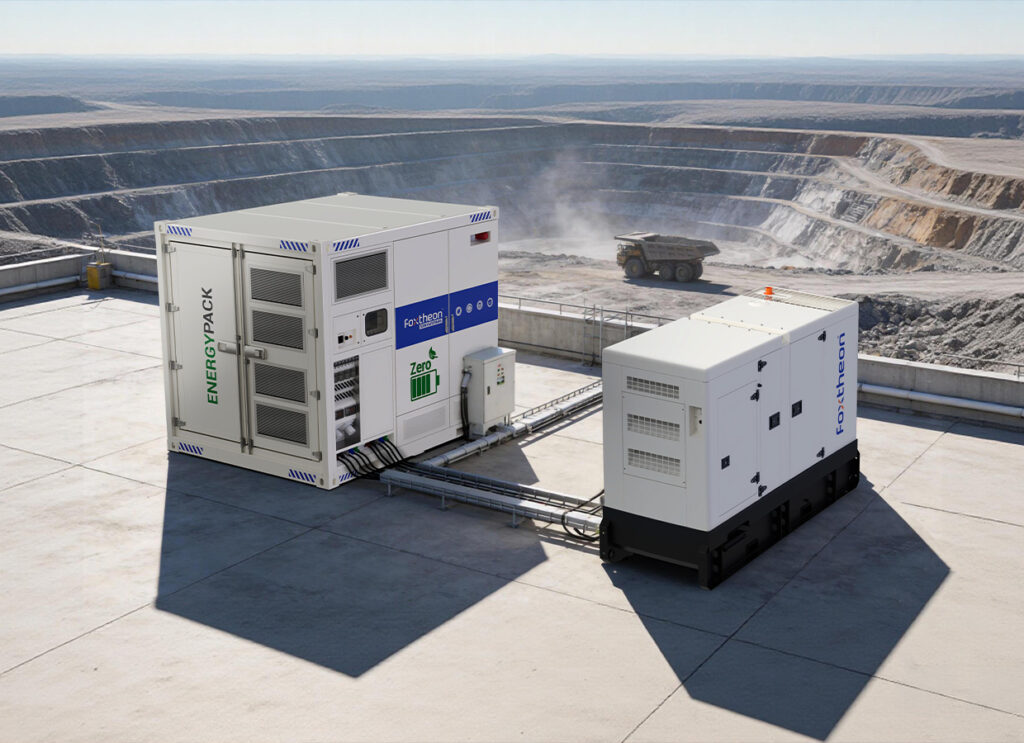
Many factories own generators that run only 20–50 hours per year for emergency tests and actual outages. The rest of the time, the asset sits idle. A grid tie hybrid converts that generator into a daily-use resource: during utility peak hours, the generator can be started briefly (at >70% load) to recharge the battery while the battery shaves demand. Alternatively, the generator runs for 2 hours at optimal load, then shuts off for 8 hours while the battery handles base loads. This increases generator utilization without extra wear (running at low loads would cause wet stacking). Annual maintenance costs per kVA actually decrease when a generator runs regularly at rated load.
Pain Point #2: Transformer Overload Risk from EV Fleets or Process Additions
Adding fast chargers or new production lines often requires a costly transformer upgrade ($150,000–$400,000). A grid tie hybrid with a 500 kW / 1,000 kWh battery can cap import power to the existing transformer’s rating. The battery absorbs load spikes above the threshold. The upgrade is deferred indefinitely. The battery also reduces iron losses during low-load periods by improving power factor via reactive control.
Pain Point #3: Renewable Generation Curtailment
Solar farms or rooftop arrays are sometimes curtailed because feed-in tariffs are low or grid export limits apply. With a hybrid system, curtailed energy is diverted to battery charging. When export limits are binding (e.g., maximum 100 kW export), the controller precisely modulates inverter output so that export stays within limit, while surplus charges storage. This captures 98% of available solar energy instead of losing 15–30% to curtailment.
Pain Point #4: High Energy Costs During Grid Instability
In regions with frequent voltage sags or short interruptions (sub‑2 seconds), many industrial processes trip. Power quality problems cause product waste and restart delays. A grid tie hybrid operates in continuous grid-tied mode but can instantly bridge voltage dips: the inverter injects reactive current to support voltage (ride‑through) or disconnects and supplies the load from battery within 4 milliseconds. No PLC downtime.
Pain Point #5: Complexity of Managing Multiple Energy Assets
Operating a PV system, battery, generator, and grid contract manually is unfeasible. The hybrid EMS automates everything: weather forecast integration, generator start/stop logic, battery SoC band control, and real-time grid price responses. Foxtheon’s cloud platform provides a single dashboard for performance monitoring, predictive maintenance alerts, and automated reporting to utility incentive programs.
4. Application Case Studies: C&I Grid Tie Hybrid in Action
4.1 Food Processing Plant – 1.2 MW Hybrid
A cold storage facility in California faced $9,200/month demand charges due to compressor cycling. They installed a 1 MW / 2 MWh grid tie hybrid with existing 800 kW diesel generator (kept as backup). Results over 14 months: peak demand reduced from 1,050 kW to 680 kW (35% reduction). Generator started only twice during long grid outages; during normal days, the battery handled all peak shaving and solar firming. Payback period: 5.1 years. After adding California Self-Generation Incentive Program (SGIP) rebate, payback reduced to 3.2 years.
4.2 Rural Manufacturing Microgrid – High Grid Vulnerability
A factory in Texas experienced 7–9 grid interruptions per year, each costing $35,000 in downtime. A 500 kW / 1,000 kWh hybrid with a grid-tie inverter and the existing 600 kW natural gas generator was deployed. The system isolates within 50 ms and runs indefinitely (generator + battery cycling). In the first year, zero unplanned downtime. Additionally, the plant participates in ERCOT’s demand response program, earning $18,000 annually.
5. Sizing and Economic Indicators: A Technical Framework
Proper sizing of a grid tie hybrid requires analyzing 12 months of 15‑minute interval load data, utility tariff sheets, and existing generator start/cycle constraints. Typical steps:
- Identify peak demand periods (duration, magnitude, frequency).
- Simulate battery power rating (kW) to cover 70–90% of peak reduction target.
- Set battery energy capacity (kWh) to 1‑2 hours of peak load reduction or backup autonomy.
- For generator integration, ensure hybrid inverter can accept generator power and perform load transfer without backfeed.
Current capital costs (USA, 2026): $420–$520 per kWh for a fully installed LFP system with hybrid inverter and EMS. Generator interface module adds $8,000–$15,000. Simple payback ranges from 3 to 7 years, depending on local demand charge rates and ancillary service revenue. Levelized cost of storage (LCOS) for daily cycling is $0.09–$0.13 per kWh, well below typical peak tariffs of $0.22–$0.35 per kWh.
6. Integration with Generators: Technical Compatibility Notes
No generator replacement is required for a grid tie hybrid upgrade. The installation adds a transfer switch and current/voltage sensors at the generator output. The hybrid inverter’s AC input/output terminals are wired in parallel with the generator via the transfer mechanism. Control signals (start/stop) connect to the generator’s automatic mains failure (AMF) panel. The EMS issues start commands based on battery SoC or grid outage detection. For synchronization, the inverter measures generator voltage and phase, then gradually closes its relay when parameters match. This process is automated and failsafe, with redundant hardware interlocks to prevent utility backfeed. Foxtheon provides pre‑configured interface kits for all major generator brands (Caterpillar, Cummins, Kohler, MTU).
7. Frequently Asked Questions (FAQ)
Q1: Can a grid tie hybrid system work if my facility has an old generator (20+ years) with basic controls?
A1: Yes. The hybrid controller interacts with the generator through simple relay commands (start/stop) and analog load share signals, which most older generators support. If the generator lacks an electronic governor, Foxtheon can retrofit a cost-effective actuator for speed control. The generator does not need modern digital communications.
Q2: Does a grid tie hybrid qualify for utility incentives or tax credits?
A2: In many jurisdictions, energy storage combined with grid-interactive inverters qualifies for investment tax credits (ITC) and local storage incentives (e.g., SGIP, NY-Sun). The hybrid system’s ability to provide backup power does not disqualify it, as long as it remains grid-connected most of the time. Consult a local incentives specialist; Foxtheon provides a free incentives mapping service with each proposal.
Q3: What happens when the battery is fully discharged and the utility grid fails simultaneously?
A3: The system can start the generator (if fuel is available) using residual battery voltage (or a small starter battery inside the hybrid inverter). The generator provides power to critical loads and simultaneously recharges the main battery. Once the battery reaches 15% SoC, the system resumes full hybrid operation. Without generator, the system would stay offline until grid returns — but most hybrid installations keep a minimum reserve (10-20%) specifically for black start capability.
Q4: How much additional maintenance does a grid tie hybrid require compared to solar-only?
A4: Very little. The battery system requires an annual capacity test and thermographic inspection of connections (similar to UPS maintenance). Air filters on inverter cooling fans should be cleaned every 6 months in dusty environments. The EMS software updates are automatic. Generator maintenance follows the original schedule (oil, filters, coolant). The hybrid operation may reduce generator maintenance due to fewer start cycles and more consistent loading.
Q5: Can I operate a grid tie hybrid in off-grid mode permanently without utility connection?
A5: Although the system is designed for grid connection, it can function as a permanent off-grid microgrid by disconnecting the utility breaker. In that mode, the battery and generator manage all loads. However, typical “grid tie hybrid” inverters require an external reference (grid or generator) for initial synchronization. For fully off-grid applications, a different inverter mode is used. Most customers install the hybrid for grid benefits but retain the ability to switch to island mode during extended outages.
8. Request a Technical Assessment (B2B Inquiry)
Every industrial site has unique load profiles, generation assets, and tariff structures. A generic grid tie hybrid configuration without detailed modeling risks suboptimal savings or unstable islanding behavior. Foxtheon offers a professional engineering assessment covering:
- 12‑month 15‑minute load data analysis and peak demand histogram.
- Generator capability study (kW rating, voltage regulation, starting current).
- Utility tariff simulation with battery dispatch optimization.
- One‑line diagram update and protection coordination review.
- Projected IRR, payback, and incentives roadmap.
To initiate a free preliminary feasibility review, please email your site’s load data (Excel or CSV) and utility rate schedule to hybrid@foxtheon.com. A senior applications engineer will respond within 5 business days with a customized system proposal and budget estimate. For urgent inquiries, use the contact form on our website.
© 2026 Foxtheon — Intelligent grid tie hybrid solutions for commercial and industrial clients. Engineering, procurement, and commissioning worldwide.