
For facility managers and energy directors, power reliability is not an abstract metric—it defines production uptime, equipment lifespan, and operational safety. Traditional grid supply, while generally stable, cannot always absorb sudden load spikes or isolate plants from harmonic distortion. This is where industrial electricity storage transitions from a supplementary asset to a core infrastructure component. Modern systems combine lithium iron phosphate (LFP) cells, modular power conversion, and hierarchical energy management software to deliver sub‑second response, voltage conditioning, and peak load shifting. Unlike smaller commercial units, industrial‑grade solutions must operate under high ambient temperatures, high cyclic throughput, and rigorous safety certifications (UL 9540, IEC 62619). This article examines the technical anatomy, application‑specific engineering, and integration strategies that define reliable industrial electricity storage deployments.
Defining the Core Requirements of Industrial Electricity Storage
Industrial environments impose distinct performance boundaries. A data center’s backup window differs from a mining shovel’s regenerative braking duty. Before selecting any industrial electricity storage architecture, engineers must quantify three essential parameters: continuous power rating (kW/MW), energy capacity (kWh/MWh), and discharge duration at rated power. Typical industrial profiles fall into three categories:
- Power quality & UPS bridging: 5–30 seconds of high‑power support to cover grid sags or switchgear transfer.
- Peak shaving & load leveling: 1–4 hours of discharge to flatten daily demand peaks, reducing capacity charges.
- Renewable firming & islanding: 4–8 hours of storage to shift solar/wind generation or enable intentional island operation.
Thermal management separates industrial from commercial designs. Forced‑air cooling suffices for small cabinets, but megawatt‑scale industrial electricity storage enclosures require liquid cooling or refrigerant‑based systems to maintain cell temperature within a 15–35 °C window. Battery lifetime doubles with every 10 °C reduction in average operating temperature – a direct economic driver for active cooling. Furthermore, industrial systems must accept high‑rate charging from regenerative sources (crane lowering, conveyor braking) without triggering overvoltage protection. Hence, the DC/DC converter stage must feature bidirectional, wide‑voltage‑range capability, typically 800–1500 V DC.
Technical Architecture and Performance Metrics
Behind every robust industrial electricity storage system lies a layered hierarchy: battery cells → modules → racks → DC bus → power conversion system (PCS) → transformer → grid/load connection. LFP chemistry dominates industrial applications because of its intrinsic thermal stability, flat voltage curve, and cycle life exceeding 6,000 cycles at 80% depth of discharge. Nickel‑manganese‑cobalt (NMC) appears only where energy density outweighs safety concerns, such as mobile industrial equipment.
Key performance indicators engineers should audit:
- Round‑trip efficiency (RTE): AC‑to‑AC ≥86% for new systems (including auxiliary loads). Degradation <5% after 5 years.
- Response time: From idle to full power <40 ms for grid‑forming mode; <20 ms for grid‑following active power injection.
- Scalability: Parallelable up to tens of MW through common AC bus or DC‑coupled architecture.
- Communication protocols: IEC 61850, Modbus TCP, DNP3, and OPC UA for seamless integration with industrial PLCs and SCADA.
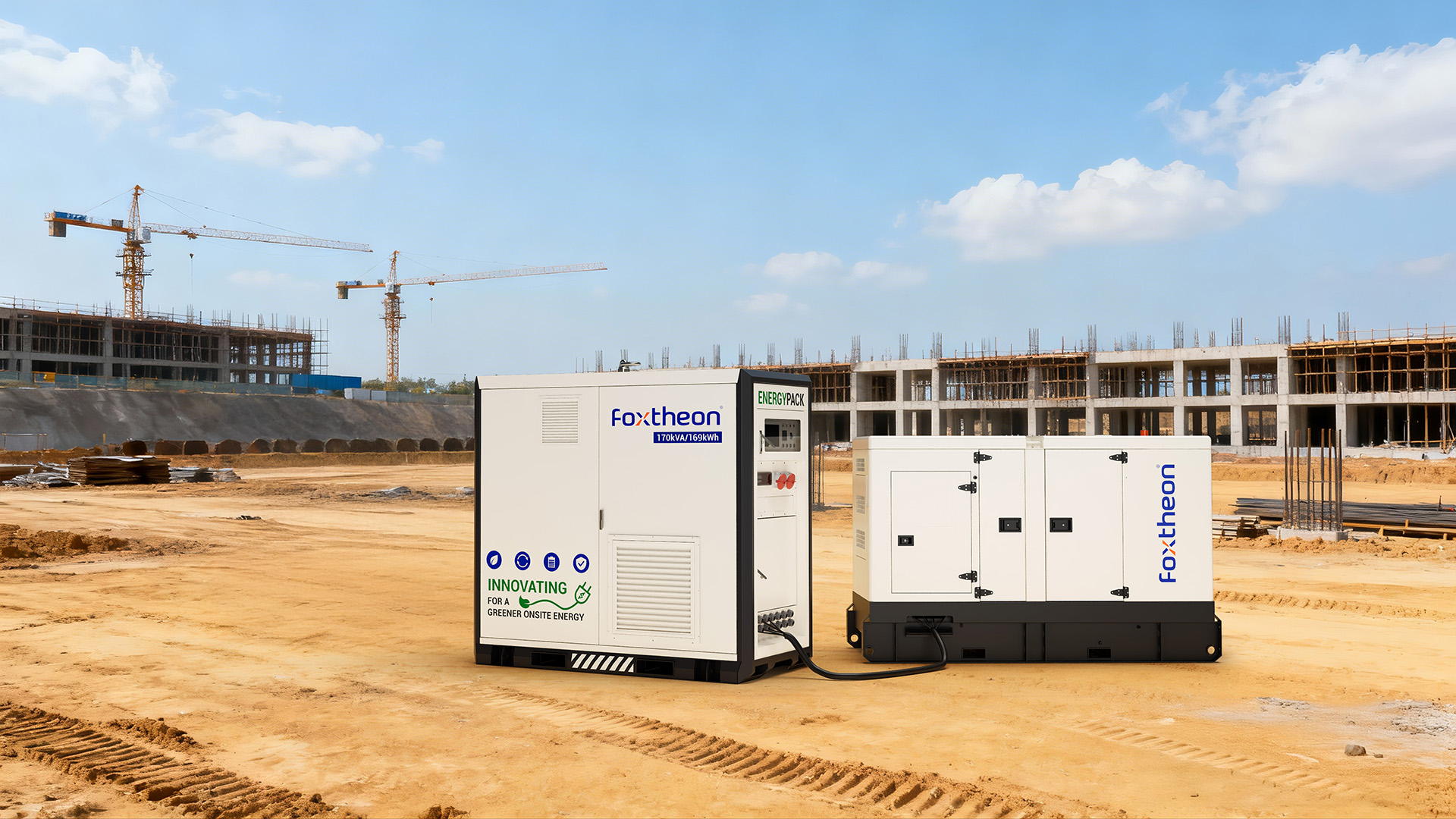
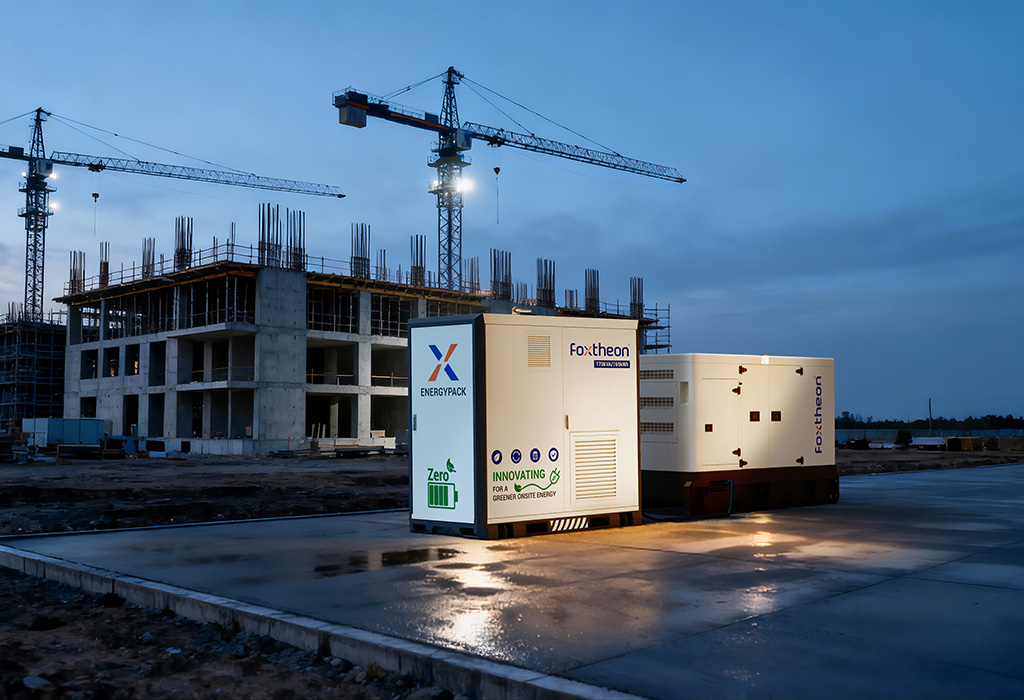
Advanced battery management systems (BMS) perform cell balancing, insulation monitoring, and early fault detection using electrochemical impedance spectroscopy. A well‑tuned BMS reduces unplanned downtime by predicting cell dry‑out or internal shorts 90 days in advance. For sites with existing generator fleets, the industrial electricity storage controller must execute hybrid logic: starting gensets only when state‑of‑charge drops below 20% or during extended outages, thereby conserving fuel and cutting maintenance intervals. Foxtheon implements such hybrid control algorithms in its EnergyPack series, allowing legacy generators to operate at optimal load points while the storage system absorbs transient demands.
Critical Application Domains for Industrial Storage
Each industrial vertical presents unique load profiles. Understanding these differences enables precise system sizing and ROI modeling.
1. Heavy manufacturing (steel, cement, petrochemical)
Arc furnaces, large mills, and crushers create short‑duration, high‑current spikes that cause voltage sags and flicker. Industrial electricity storage connected to the medium‑voltage bus compensates reactive power instantaneously, flattening the point of common coupling. An additional benefit: the storage system can recover braking energy from downhill conveyors or fans, achieving up to 12% reduction in net energy consumption.
2. Data centers and telecom hubs
While UPS systems provide ride‑through, modern hyperscale facilities integrate industrial electricity storage with emergency diesel generators to downsize generator capacity. Instead of two large gensets, one smaller set plus a 15‑minute storage buffer handles the first transient step load. This hybrid approach reduces capital expenditure without compromising Tier‑IV availability.
3. Ports and container terminals
Rubber‑tyred gantry (RTG) cranes and ship‑to‑shore cranes generate regenerative energy during load lowering. Without storage, that energy burns in resistor banks as heat. A DC‑coupled storage module captures regenerated power and reuses it for the next lifting cycle, slashing net energy draw by 25–35 %.
4. Mining operations (off‑grid or weak grid)
Open‑pit mines often rely on long overhead lines or isolated diesel networks. Voltage dips from shovel starts can trip downstream processing equipment. A strategically placed industrial electricity storage system at the shovel feed point acts as a synchronous condenser, providing both voltage support and spinning reserve. The storage also allows the diesel gensets to operate at constant, fuel‑efficient loads instead of chasing highly variable shovel demands.
Addressing Operational Pain Points with Advanced Storage
Industrial facilities commonly face four pain points that industrial electricity storage directly resolves:
- Demand charge penalties: Utility rates for peak 15‑ to 30‑minute intervals can exceed $15/kW. Storage performs predictive peak shaving, discharging during forecasted peaks and recharging during off‑peak periods.
- Power factor penalties: Inductive loads (motors, transformers) lower power factor below 0.9, incurring surcharges. Advanced storage inverters provide reactive power compensation without needing separate capacitor banks.
- Unplanned voltage sags: External grid faults or internal motor starts cause sags that reset PLCs or stop precision tooling. Storage with fast‑acting voltage‑source mode injects real power to hold voltage within ±5%.
- Renewable intermittency: On‑site solar or wind without storage forces reverse power flows that protection relays may block. Battery integration stores excess renewable energy and smoothens ramp rates to below utility ramp limits (e.g., 10% of capacity per minute).
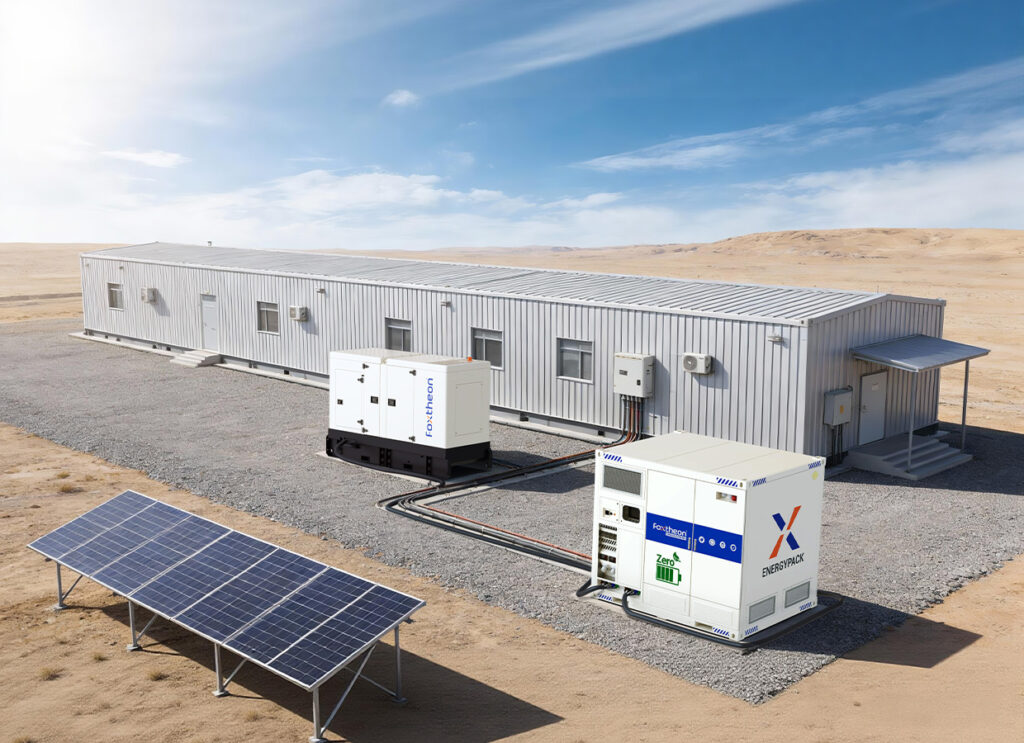
For sites already operating diesel or gas generator sets, the industrial electricity storage system works in parallel without requiring generator replacement. The storage handles short‑duration load steps below 30 seconds, allowing the generator to start and ramp up without mechanical shock. When the generator reaches stable output, the storage recharges at a controlled rate. This synergy extends generator lifetimes, reduces fuel consumption, and lowers exhaust emissions—all while preserving the original generator asset.
Integrating Foxtheon Expertise: Hybrid Energy Solutions for Industrial Clients
Designing a field‑ready industrial electricity storage system demands more than component selection. It requires control co‑engineering, protection coordination studies, and site acceptance testing under worst‑case grid conditions. Foxtheon delivers fully integrated solutions covering the entire stack: LFP battery racks, liquid‑cooled PCS, cloud‑based energy management system (EMS), and on‑site commissioning. The EMS includes pre‑built algorithms for peak shaving, demand response, frequency regulation, and black‑start islanding. All communication modules support legacy industrial protocols, enabling retrofits without replacing main switchgear.
A notable engineering feature in Foxtheon’s industrial storage portfolio is the adaptive virtual inertia control. When the main grid is weak (low short‑circuit ratio), the storage emulates synchronous generator behavior, injecting synthetic inertia during frequency events. This prevents load shedding and maintains compliance with grid codes such as IEEE 1547-2018. For industrial parks with multiple distributed generators, the storage system becomes the grid‑forming master, synchronizing all sources and maintaining voltage stability autonomously.
Safety, Compliance, and System Lifespan
Industrial installations operate under stringent safety regulations. Any industrial electricity storage system must hold third‑party certifications:
- UL 9540A: Thermal runaway propagation test for LFP modules.
- IEC 62477-1: Safety requirements for power electronic converter systems.
- NFPA 855: Installation standard for stationary energy storage (spacing, ventilation, fire suppression).
Fire suppression often employs water mist or Novec 1230, coupled with early gas detection (CO, H₂) and module‑level temperature sensors. A multilayered protection strategy prevents cell‑to‑cell propagation: ceramic separators, pressure relief vents, and intumescent barriers between racks. Regarding lifespan, industrial storage is normally warranted for 10 years or 6,000 cycles, with annual capacity degradation below 1.2%. End‑of‑life does not mean disposal; LFP cells are fully recyclable, and second‑life applications in stationary buffer storage are well‑established.
Routine maintenance includes quarterly infrared inspection of busbars and contactors, annual BMS firmware validation, and replacement of cooling fluid filters every 24 months. Most industrial systems are designed for “lights‑out” operation—remote monitoring via 4G or fiber, with automated alarms for cell voltage anomalies, temperature drift, or insulation resistance drop.
Frequently Asked Questions (FAQ)
Q1: Can industrial electricity storage be added to an existing diesel generator system without replacing the generator?
A1: Absolutely. Modern storage controllers are designed for parallel operation with any generator brand. The storage handles transient load steps and peak shaving, while the generator provides bulk long‑duration backup. Neither asset is replaced; the generator sees a smoother load profile, which reduces thermal stress and service intervals. This hybrid approach maximizes the value of existing capital equipment.
Q2: What is the typical response time for an industrial storage system to a grid disturbance?
A2: In grid‑following mode, full active power injection occurs within 40 milliseconds (two cycles at 50 Hz). In grid‑forming mode (islanded operation), the system establishes a voltage reference in less than 20 ms. This performance surpasses traditional uninterruptible power supply (UPS) rotary systems and matches or exceeds static UPS specifications.
Q3: How do you size an industrial electricity storage system for peak shaving?
A3: First, analyze 12 months of 15‑minute interval demand data. Identify the top 20 peak events and their durations. The storage power rating (kW) should cover the difference between the peak and the target demand threshold. Energy capacity (kWh) is determined by the longest sustained peak above threshold, plus 15% margin. For most manufacturing sites, 1–4 hours of storage capacity covers 85% of peak shaving opportunities.
Q4: What safety certifications should an industrial battery storage system carry for EU and North American sites?
A4: For North America: UL 1973 (batteries), UL 9540 (system), UL 9540A (fire propagation). For EU: IEC 62619 (industrial batteries), IEC 62477 (power converters), and CE marking. Additionally, compliance with local fire codes such as NFPA 855 or VdS 3473 is mandatory. Always request test reports from an accredited laboratory (e.g., TÜV, Intertek, UL).
Q5: Can the storage system operate completely off‑grid, without any utility connection?
A5: Yes. When equipped with a grid‑forming inverter and a small genset for black‑start, an industrial electricity storage system can form its own microgrid. The storage provides voltage and frequency reference, while the genset acts as a longer‑duration energy source. Many remote mining sites and island factories operate in exactly this configuration, achieving 99.9% availability without utility power.
Engineer Your Next Storage Integration with Expert Support
Selecting, specifying, and commissioning an industrial electricity storage solution requires deep domain knowledge—from protection relay coordination to battery cell selection. Foxtheon provides engineering support at every stage: site audit, power flow modeling, custom PCS programming, and remote performance monitoring. To receive a technical datasheet, a preliminary system sizing, or a consultation on retrofitting storage into your existing power architecture, please submit an inquiry through the official channel. Our team of power system engineers will respond within one business day with a feasibility analysis and solution outline tailored to your facility’s load profile.
Request your personalized industrial storage assessment now → Send an inquiry to Foxtheon’s engineering team (include your average monthly demand, peak load data, and available electrical room footprint).