
Modern commercial and industrial (C&I) facilities face mounting pressure to maintain operational continuity while managing variable electricity tariffs and integrating renewable generation. Traditional grid-tied inverters offer only unidirectional power flow and cannot provide backup during outages. At the intersection of photovoltaic (PV) generation, energy storage, and intelligent grid interaction lies the hybrid grid tie architecture — a bidirectional energy management platform that redefines how C&I sites interact with utility grids, local storage, and existing generation assets.
Unlike conventional solar inverters that cease operation during blackouts, hybrid grid tie systems maintain islanding capability, seamlessly disconnecting from the grid to power critical loads through stored battery energy or PV generation. For engineering managers and facility operators, this dual-mode functionality addresses three persistent pain points: exposure to demand charges, underutilized on-site renewable generation, and vulnerability to grid anomalies.
Technical Architecture of a Modern Hybrid Grid Tie Solution
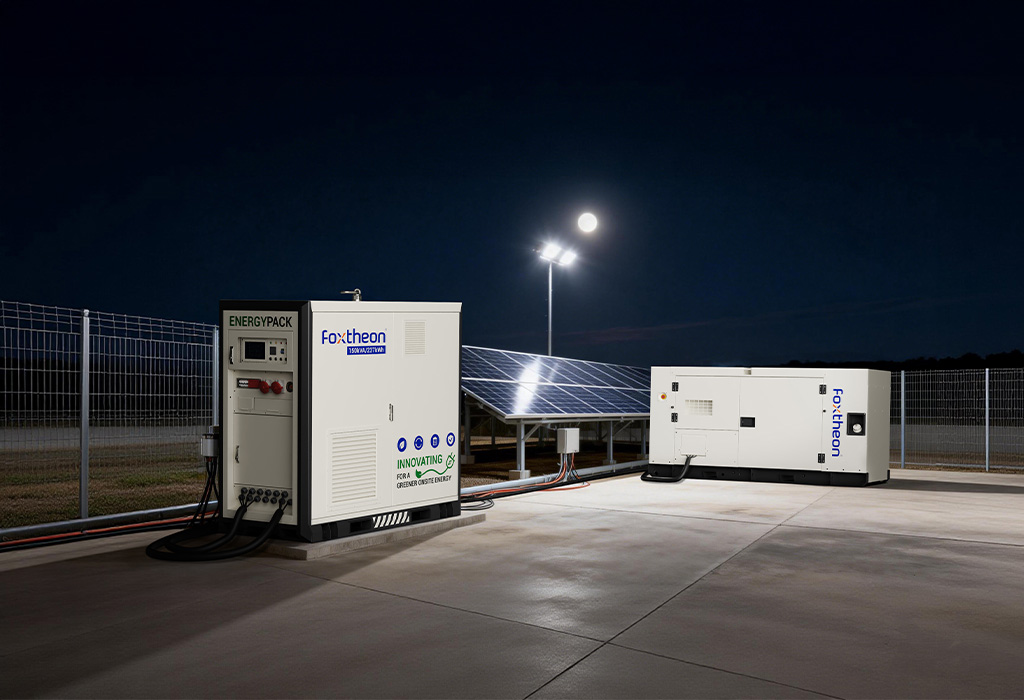
A resilient hybrid grid tie system integrates four core layers:
- Bidirectional hybrid inverter – The central power conversion unit (PCU) that manages DC-to-AC conversion from batteries/PV and AC-to-DC for charging. Key specifications include wide input voltage range (150V–900V DC for battery banks) and seamless transition time (<20ms for islanding).
- Energy storage system (ESS) – Lithium iron phosphate (LFP) battery banks sized according to load criticality and desired backup autonomy (typically 2–8 hours for C&I applications). Thermal management and cell balancing circuits maintain cycle life above 6,000 cycles at 80% DoD.
- Energy management system (EMS) – Cloud-edge controller implementing predictive algorithms based on load forecasting, weather data, time-of-use (TOU) tariffs, and grid import/export limits. The EMS coordinates with on-site meters (revenue-grade) to execute control logic.
- Grid connection & anti-islanding protection – UL 1741 SA / IEEE 1547-compliant interface with automatic transfer switch (ATS) for physical separation during grid disturbances. Frequency-watt and volt-var functions maintain power quality when grid-connected.
AC-coupled and DC-coupled topologies each offer distinct advantages. DC-coupled configurations (PV → charge controller → battery → inverter) achieve higher round-trip efficiency (92–95%) for solar self-consumption, while AC-coupled designs allow retrofitting storage onto existing grid-tie PV systems. Hybrid grid tie inverters from Foxtheon are engineered to support both architectures, offering modular expansion from 30kW to 2MW+ for campus-scale projects.
Core Operational Strategies – Beyond Simple Grid Interaction
Value extraction from any hybrid grid tie deployment hinges on the EMS’s ability to execute multi-objective optimization. The four primary operating modes:
- Peak shaving (demand charge management): During monthly peak demand intervals (e.g., 2–4 PM in summer), the hybrid inverter discharges batteries to flatten the 15- or 30-minute average import power, reducing utility demand charges that often constitute 30–60% of commercial bills.
- Load shifting / TOU arbitrage: Store energy during low-cost off-peak periods (often overnight) and discharge during high-price peak windows. The EMS uses day-ahead price signals to optimize charge/discharge cycles daily.
- Islanding / backup power: Upon grid failure (voltage dip below 88% or frequency deviation beyond 59.3Hz for 60Hz grids), the ATS opens within 150ms and the inverter forms a local microgrid. Critical loads receive uninterrupted power from batteries/PV while non-critical loads remain shed until grid returns.
- Grid support / export management: For sites with net metering or feed-in tariffs, the system caps export power to avoid contractual penalties. In regions with demand response programs, the EMS can respond to utility curtailment signals within seconds.
Advanced hybrid grid tie controllers incorporate state-of-charge (SoC) hysteresis and battery health-aware scheduling, preventing deep discharges that accelerate capacity fade. Foxtheon’s EMS platform adds a layer of predictive analytics: it self-learns load patterns and weather-driven PV generation to pre-charge batteries before forecasted cloud cover or storm events.
Addressing Critical Industrial & Commercial Energy Pain Points with Hybrid Grid Tie
Energy managers consistently report four operational inefficiencies that a well-designed hybrid grid tie system resolves without requiring complete infrastructure replacement:
- Grid supply instability: Manufacturing lines, data centers, and cold storage facilities suffer from voltage sags, harmonics, and brief interruptions. A hybrid inverter with line-interactive topology corrects undervoltage events within 10ms, protecting sensitive variable frequency drives (VFDs) and PLCs.
- Renewable generation curtailment: Standard grid-tie PV inverters must reduce output when grid export limits are reached. Hybrid systems divert excess solar energy to charge batteries instead of curtailing — improving self-consumption from typical 30–40% to 80–90%.
- Transformer capacity constraints: Facilities with aging distribution transformers often cannot add EV chargers or new machinery without costly upgrades. A hybrid grid tie storage system “shaves” peaks seen by the transformer, effectively increasing usable capacity by 25–40% without physical replacement.
- Demand charge unpredictability: With real-time power monitoring, the EMS maintains import power below a user-defined threshold (e.g., 500kW). This provides budget certainty for facilities with volatile production schedules.
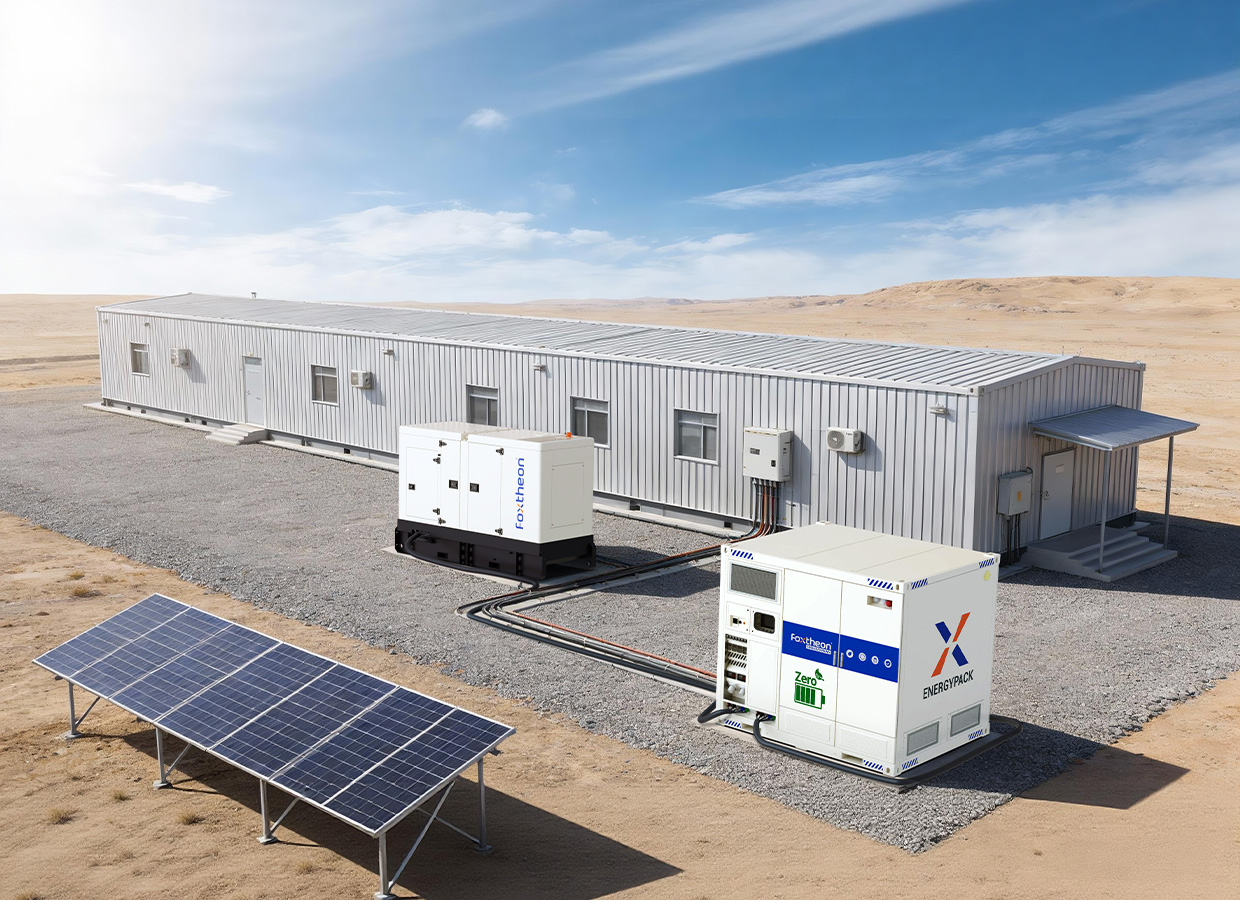
Importantly, these solutions work alongside existing diesel or gas generators. Hybrid grid tie systems can coordinate with generator automatic transfer switches: when an extended grid outage depletes batteries, the EMS signals generator start and synchronizes transfer, then recharges batteries once grid returns. This hybrid approach preserves generator assets while reducing runtime and fuel consumption.
Deployment Scenarios – From Manufacturing Sites to Commercial Real Estate
Industrial manufacturing (automotive, food processing)
Factories with welding robots, extrusion lines, or refrigeration units present high inrush currents and non-linear loads. A hybrid grid tie inverter with active power filtering (APF) capability not only provides backup and peak shaving but also injects harmonic currents to cancel distortion from six-pulse drives. For a 5MW plant, this can reduce THD from 15% to under 5%, avoiding nuisance tripping and transformer overheating.
Commercial office buildings & retail centers
Heating, ventilation, and air conditioning (HVAC) loads account for 40–60% of energy use. The EMS can shed non-critical HVAC zones during peak demand events without occupant comfort loss, using battery power to offset the remaining load. Parking garage EV charging infrastructure integrates directly with the hybrid system’s DC bus, allowing direct solar-to-vehicle charging without double conversion losses.
Remote industrial sites & microgrids
Mining camps, logistics hubs, and water treatment plants often operate on weak grids or high-cost diesel. A hybrid grid tie configuration with 50–80% renewable fraction reduces diesel consumption by 60–80% while maintaining grid interconnection for redundancy. The system automatically performs black start capability if the upstream grid collapses.
Foxtheon has engineered its hybrid inverters with ruggedized enclosures (IP54/NEMA 3R) and wide operating temperature ranges (-20°C to 55°C), making them suitable for outdoor substations and rooftop installations without climate-controlled rooms.
Engineering Considerations for Optimal Hybrid Grid Tie Integration
Properly implementing a hybrid grid tie system requires three pre-engineering audits:
- Load profile analysis: Collect 15-minute interval data over 12 months to identify peak demand periods, load factor, and renewable generation correlation. This determines battery power rating (kW) and energy capacity (kWh). The rule of thumb: power rating = 20–30% of facility peak load for effective peak shaving.
- Grid interconnection agreement review: Utility terms around standby charges, export limits, and demand response incentives directly impact EMS programming. Some jurisdictions require external disconnect switches and revenue-grade meters.
- Battery safety & lifecycle planning: LFP chemistry offers thermal runaway prevention and 6,000+ cycles. The EMS must maintain battery temperature between 15–35°C for calendar life beyond 15 years. Forced air cooling or liquid thermal management is required for systems above 200kWh.
For facilities with existing generator sets, install a secondary ATS position or integrate with the generator controller via dry contacts. The hybrid inverter should not attempt to back-feed generator output — the EMS must enforce “generator-islanding” protocol: when generator runs, battery charging is capped and discharge disabled to avoid power circulation.
Operational Benefits Summary
- Reduced peak demand charges by 25–45% through automated shaving
- Zero-loss renewable self-consumption via PV + storage integration
- Sub-cycle transfer to islanding mode for critical process continuity
- Lower maintenance overhead compared to generator-only backup (no fuel degradation or wet stacking)
- Real-time visibility and remote control through cloud-based EMS dashboards
Ready to evaluate a hybrid grid tie solution for your commercial or industrial facility? The engineering team at Foxtheon provides site-specific modeling, feasibility studies, and turnkey deployment support. Submit an inquiry to receive a technical assessment and preliminary system sizing — no obligation, just data-driven recommendations.
Frequently Asked Questions (FAQs)
Q1: Can a hybrid grid tie system operate without solar PV panels?
A1: Yes. The system functions as a standalone battery energy storage system (BESS) connected to the grid. It can perform peak shaving, load shifting, and backup functions using grid charging during off-peak hours. PV integration is optional and can be added later via AC or DC coupling.
Q2: How does hybrid grid tie differ from a standard grid-tie inverter?
A2: A standard grid-tie inverter shuts down during grid outages (anti-islanding) and cannot manage battery energy. A hybrid grid tie inverter includes a transfer switch and battery charger, enabling backup power, self-consumption optimization, and bidirectional power flow control.
Q3: Can hybrid grid tie systems work alongside my existing diesel generators?
A3: Absolutely. The hybrid inverter and generator controller can be coordinated through dry contacts or Modbus. Typical operation: during an extended outage, the batteries supply power first; if SoC drops below 15%, the generator starts and assumes load while the hybrid system recharges batteries. The generator runs efficiently at 70–80% load rather than light-load conditions, reducing maintenance frequency.
Q4: What is the typical transition time when switching to islanding (backup) mode?
A4: For UL 1741-compliant hybrid inverters, the grid disconnection and transfer switch operation complete typically within 20–100 milliseconds. Critical loads may experience a brief voltage dip but <1 cycle interruption for 60Hz systems (16.7ms). For loads intolerant to any dip (e.g., some medical imaging equipment), an online UPS can be placed downstream.
Q5: Is hybrid grid tie suitable for three-phase commercial applications above 200kW?
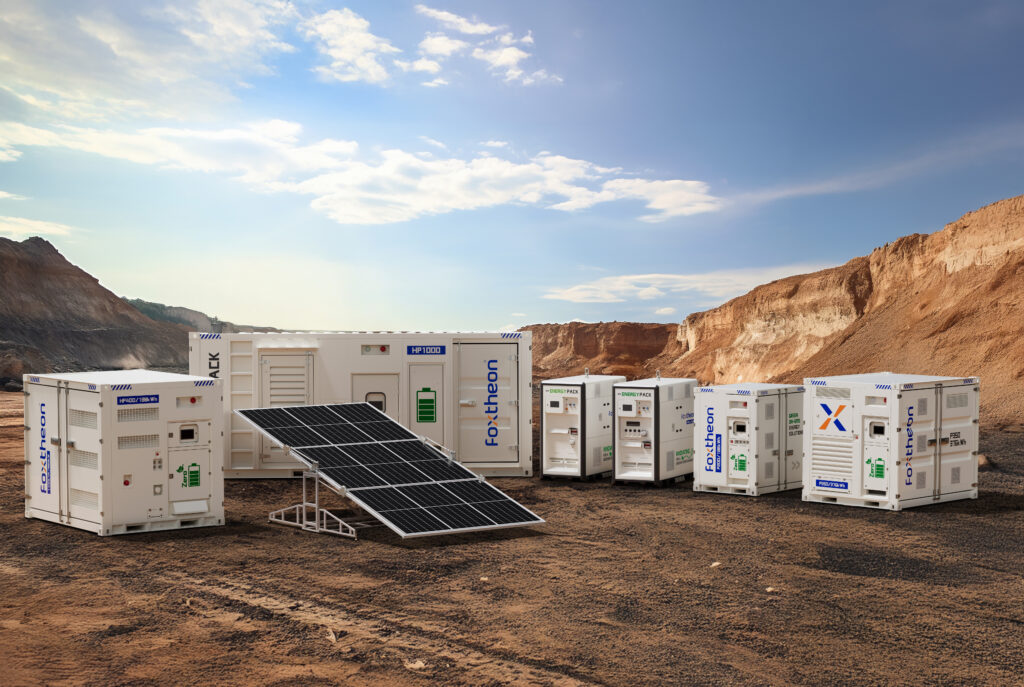
A5: Yes. Modular hybrid grid tie systems can be paralleled to reach 2MW+ in three-phase 208V, 480V, or 600V configurations. Foxtheon offers cabinetized units with integrated switchgear, EMS, and battery racks for turnkey installations at manufacturing plants, data centers, and university campuses.