
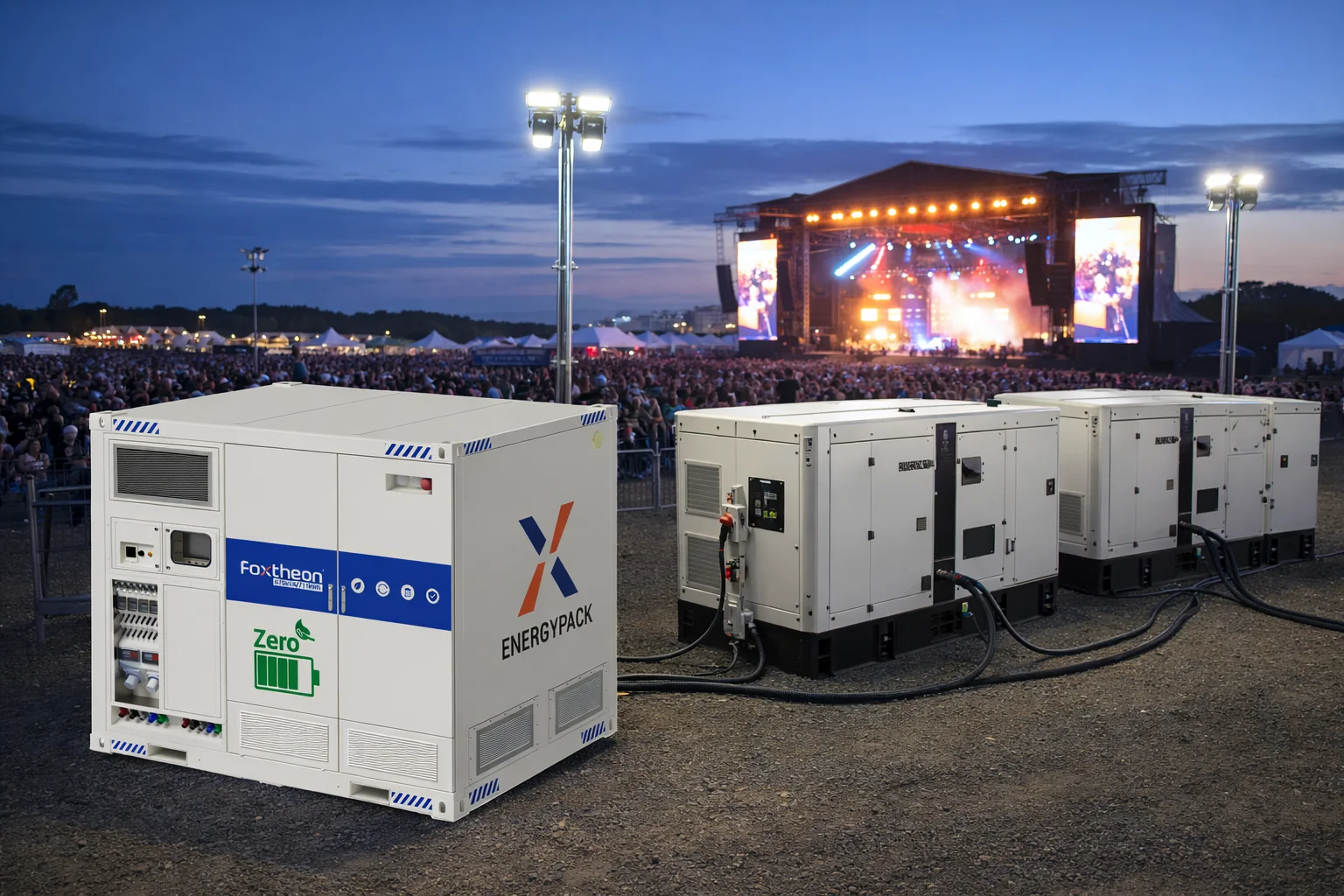
Safety remains the single most critical factor in the adoption of lithium-ion technology for industrial applications. As industries move toward greener power sources, the demand for reliable battery systems has surged. However, this growth brings potential risks regarding thermal runaway and system failures. This is where the IEC 62619 energy storage standard becomes vital.
International standards provide a baseline for safety and performance. Among these, IEC 62619 specifically targets secondary lithium cells and batteries used in industrial settings. It sets rigorous criteria to ensure that these powerful energy sources operate safely under various conditions.
For businesses investing in smart energy solutions, understanding this standard is not optional. It is a necessity. Companies like Foxtheon recognize this imperative, integrating strict compliance into their design philosophy to deliver secure and efficient power systems.

Understanding the Scope of IEC 62619 Energy Storage Standards
The International Electrotechnical Commission (IEC) developed this standard to address the unique needs of industrial applications. Unlike consumer electronics, industrial batteries face harsher environments and higher power demands. The IEC 62619 energy storage guideline covers a specific range of applications.
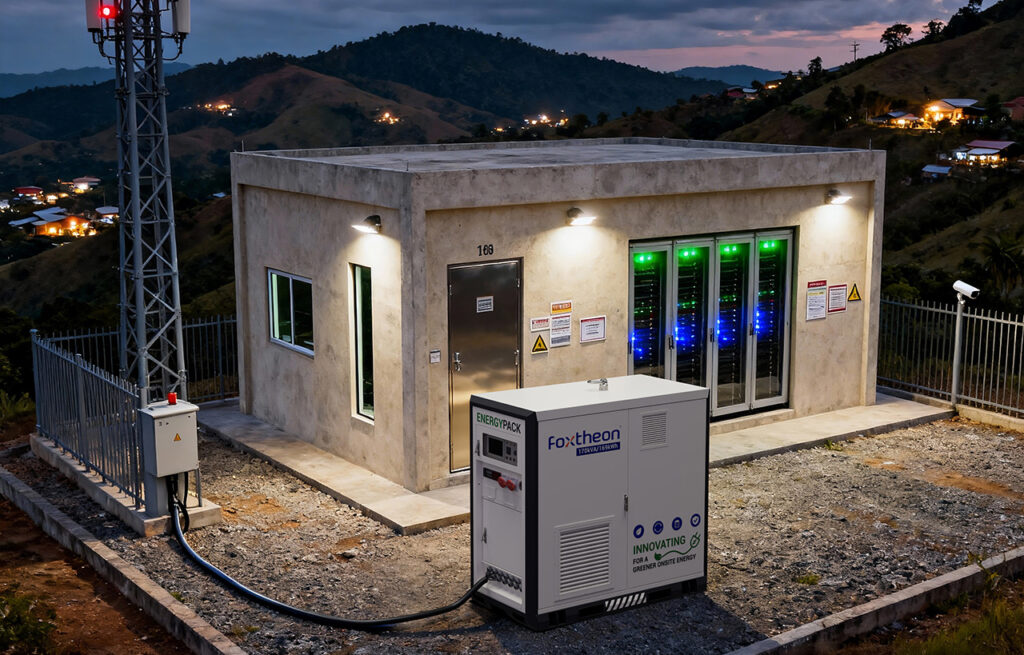
It applies to stationary applications such as telecom base stations, uninterruptible power supplies (UPS), and electrical energy storage systems. It also covers motive applications, including forklift trucks, golf carts, and automated guided vehicles (AGVs).
The standard focuses on the safety of both the cell and the battery system. It acknowledges that a safe cell does not automatically guarantee a safe battery pack. Therefore, the testing protocols examine how cells interact within a module and how the Battery Management System (BMS) governs the entire unit.
Why Industrial Applications Need Specific Regulation
Industrial batteries operate differently than the battery in a smartphone. They often sit in remote locations or power heavy machinery. A failure in these settings causes significant financial loss or physical danger. The IEC 62619 energy storage standard addresses these high-stakes scenarios.
Manufacturers must prove that their products can withstand mechanical abuse and thermal stress. Without this specific certification, a battery system poses an unverified risk to personnel and infrastructure.
Key Testing Requirements for IEC 62619 Energy Storage Compliance
Achieving compliance involves passing a series of stringent tests. These tests simulate real-world hazards to ensure the battery remains safe even when things go wrong. The IEC 62619 energy storage testing procedures divide into two main categories: product safety and functional safety.
Product safety tests focus on physical durability. Engineers subject the batteries to extreme conditions to verify they do not catch fire or explode. Common tests include:
- External Short Circuit Test: This simulates a short across the terminals. The battery must handle the current surge without catastrophic failure.
- Impact and Drop Tests: Industrial equipment often faces rough handling. The battery must remain intact after significant physical impact.
- Thermal Abuse: The battery is exposed to high temperatures to ensure the materials remain stable.
- Forced Discharge: This tests the battery’s behavior when discharged beyond its safe capacity.
The Importance of the Internal Short Circuit Test
One specific test defines the rigor of the IEC 62619 energy storage standard: the internal short circuit test. Internal shorts are a common cause of thermal runaway in lithium batteries. This usually happens due to manufacturing defects or dendrite growth.
The standard requires a forced internal short circuit test for cells. This ensures that even if a defect occurs inside the cell, it will not propagate to neighboring cells and cause a system-wide fire. This containment strategy is essential for large-scale energy storage systems.
Functional Safety and the Role of the BMS
Hardware durability is only half the battle. The intelligence managing the battery is equally important. The IEC 62619 energy storage standard places heavy emphasis on functional safety. This refers to the Battery Management System (BMS) and its ability to prevent hazardous conditions.
The BMS must actively monitor voltage, current, and temperature. If any parameter exceeds safe limits, the BMS must disconnect the battery or limit power flow. The standard requires manufacturers to demonstrate that their software and electronics are fail-safe.
For example, if the charging unit fails and continues to push current into a full battery, the BMS must intervene. IEC 62619 energy storage compliance dictates that the overcharge protection must work independently and reliably. This ensures that a single electronic failure does not lead to a fire.
Foxtheon and the Commitment to Safety Standards
In the competitive landscape of international smart energy solutions, compliance serves as a mark of quality. Foxtheon has positioned itself as a leader by adhering to these rigorous global standards. By prioritizing IEC 62619 energy storage requirements, they ensure their products meet the highest safety benchmarks.
This commitment goes beyond mere paperwork. It influences the selection of raw materials, the design of the cooling systems, and the programming of the BMS. When a manufacturer builds to this standard, they build for longevity and reliability.
Clients seeking energy storage solutions for critical infrastructure prefer partners who understand these nuances. A compliant system reduces liability and lowers insurance premiums for the end-user.
Comparing IEC 62619 Energy Storage with Other Standards
Many industry professionals confuse various battery standards. It is important to distinguish IEC 62619 energy storage from others like IEC 62133 or UL 1973. IEC 62133 focuses primarily on portable electronics, such as laptops and phones.
While there is some overlap, the stress levels and durability requirements in IEC 62619 are much higher due to the industrial nature of the applications. Similarly, UL 1973 is a North American standard for stationary batteries. While similar in intent, the testing protocols differ slightly.
However, IEC standards enjoy broader global recognition. For companies operating in Europe, Asia, and international waters, IEC 62619 energy storage certification is often the primary requirement for market entry.
Risk Mitigation Strategies for Business Owners
Implementing compliant systems is a strategic business decision. Using non-certified batteries introduces operational risks that can halt production. If a battery fails in a telecom tower, the network goes down. If an AGV catches fire in a warehouse, operations stop.
By specifying IEC 62619 energy storage certified products in procurement contracts, facility managers mitigate these risks. It provides a documented assurance that the equipment has passed third-party verification.
- Insurance Compliance: Many industrial insurers now require proof of safety certification before covering facilities with large battery installations.
- Regulatory Approval: Local building codes and fire regulations increasingly reference IEC standards.
- Asset Protection: Certified batteries protect valuable inverter and load equipment from power surges or faults.
The Future of IEC 62619 Energy Storage Regulations
Standards do not remain static. As battery chemistry evolves, so do the safety guidelines. The IEC 62619 energy storage standard undergoes periodic reviews to address new technologies like solid-state batteries or sodium-ion variants.
Future iterations will likely focus even more on software security and thermal propagation. As systems get larger, preventing a fire from spreading between modules becomes critical. The industry is moving toward “propagation testing,” where a fire is forced in one module to prove it does not spread to the next.
Manufacturers must stay agile to keep up with these changes. This constant evolution pushes the industry toward safer, more robust solutions.
Selecting the Right Supplier
Choosing a vendor requires due diligence. Buyers should ask for test reports, not just a declaration of conformity. A reputable supplier will provide detailed documentation regarding their IEC 62619 energy storage compliance.
Look for transparency in their testing methods. Ask about the BMS redundancy. Check if they perform in-house testing before sending products to third-party labs. These details reveal the supplier’s dedication to quality.
Reliable providers understand that safety is a continuous process. They monitor field data and update their firmware to address emerging issues. This lifecycle approach to safety distinguishes top-tier manufacturers from budget assemblers.
The transition to smart energy relies heavily on trust. Users must trust that the energy stored in their systems will remain stable and secure. The IEC 62619 energy storage standard provides the technical foundation for this trust.
It bridges the gap between raw chemical potential and safe industrial application. By enforcing strict testing on both cells and management systems, it eliminates common failure points. For businesses, adhering to this standard is the smartest way to future-proof their infrastructure.
Companies like Foxtheon continue to drive the industry forward by embracing these standards. Whether for backup power or motive applications, selecting IEC 62619 energy storage compliant systems ensures that efficiency never comes at the cost of safety.
Common Questions About IEC 62619 Energy Storage
Q1: What is the primary purpose of the IEC 62619 energy storage standard?
A1: The primary purpose is to establish safety requirements for secondary lithium cells and batteries used in industrial applications. It focuses on ensuring the safe operation of batteries in stationary and motive settings through rigorous testing of both the hardware and the Battery Management System (BMS).
Q2: Is IEC 62619 energy storage certification mandatory for all battery manufacturers?
A2: While not legally mandatory in every single country, it is a de facto requirement for entering most global markets. Many international buyers, insurers, and regulatory bodies demand compliance with IEC 62619 energy storage standards to ensure the safety and reliability of the equipment installed in industrial facilities.
Q3: How does IEC 62619 differ from IEC 62133?
A3: IEC 62133 is designed for portable consumer electronics like smartphones and laptops. In contrast, IEC 62619 energy storage standards are specifically tailored for industrial applications, covering larger battery systems used in telecom, UPS, and forklifts, which require more stringent testing for thermal abuse and functional safety.
Q4: Does the IEC 62619 standard cover the Battery Management System (BMS)?
A4: Yes, a significant portion of the standard is dedicated to functional safety. It requires the BMS to be tested for its ability to monitor voltage, current, and temperature, and to successfully prevent hazards like overcharging or overheating. The BMS is considered a critical safety component.
Q5: Can I use a battery without IEC 62619 certification in an industrial setting?
A5: Using a non-certified battery is highly risky. It may violate local fire codes, void insurance policies, and endanger personnel. Most reputable industrial equipment manufacturers and facility managers will not accept battery systems that do not meet IEC 62619 energy storage safety criteria.