
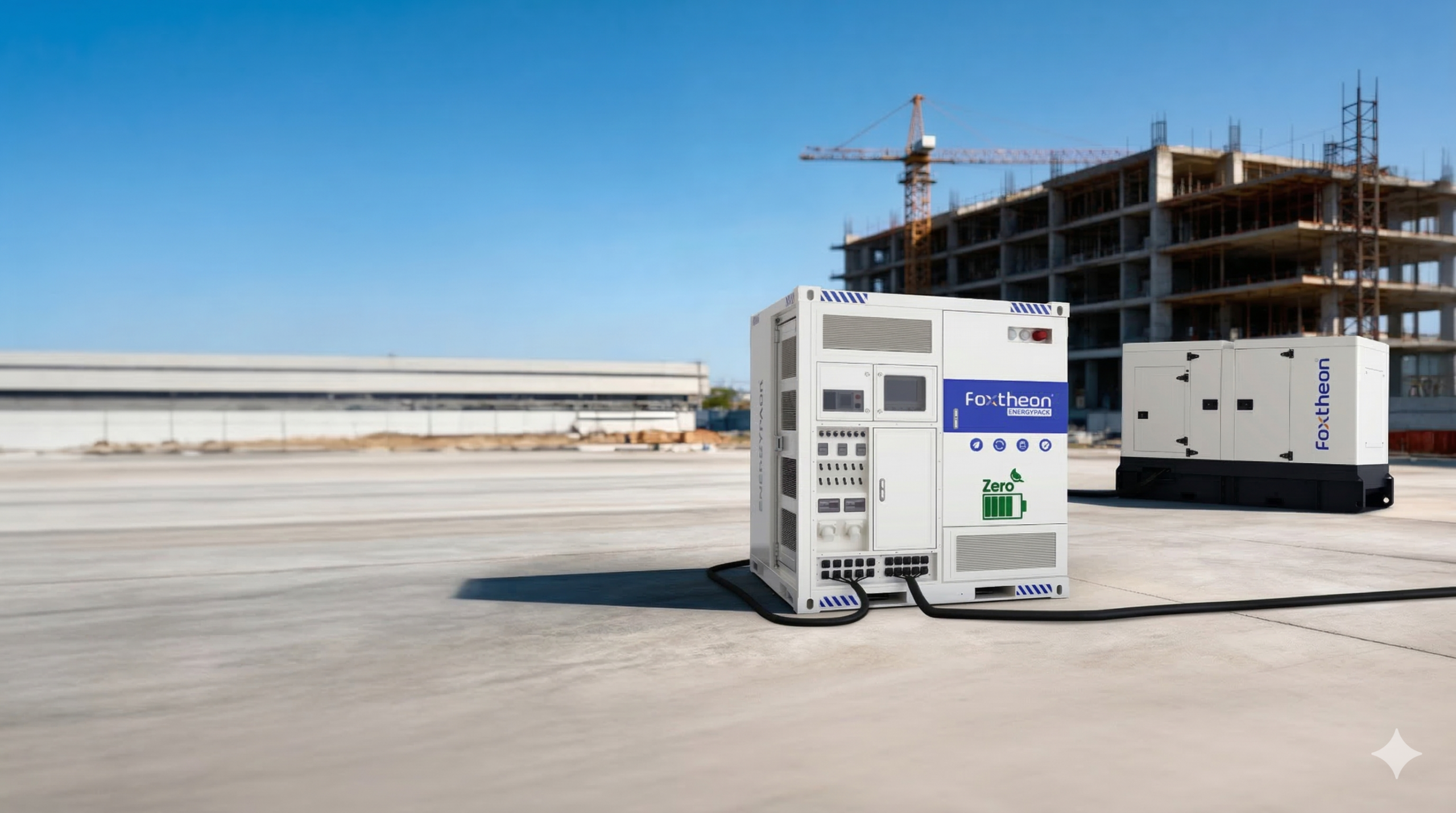
Across distributed energy resources and behind-the-meter installations, selecting an energy storage lithium battery requires more than datasheet comparisons. Project owners face genuine trade-offs between cycle longevity, thermal stability, depth of discharge (DoD), and upfront capital. With lithium iron phosphate (LFP) cathodes now dominating stationary storage, the conversation has shifted from chemistry selection to system-level engineering — battery management systems (BMS), hybrid inverters, and cell-to-pack thermal gradients.
This analysis provides a component-level view of modern energy storage lithium battery architectures, supported by field data from microgrids, peak-shaving installations, and frequency regulation assets. We examine degradation mechanisms, safety validation protocols, and total cost of ownership (TCO) models specifically for B2B energy managers, utility planners, and industrial facility operators.
1. Core Technology Stack: Cells, BMS Topologies, and Liquid Cooling
Current energy storage lithium battery solutions for the C&I sector rely almost exclusively on prismatic LFP cells. Nominal voltages range from 3.2V to 3.45V, with cell capacities between 100Ah and 314Ah. The transition from cylindrical to prismatic formats improves volumetric energy density (typically 140–180 Wh/kg at pack level) and simplifies thermal interface design. However, large-format prismatic cells introduce a distinct challenge: internal temperature gradients that accelerate anode aging if not managed properly.
Advanced battery management systems (BMS) now implement cell-level voltage monitoring (resolution ≤1mV) and passive/active balancing circuits. For an energy storage lithium battery rated at 500V DC to 1500V DC, the BMS must coordinate contactor opening within 50ms under short-circuit conditions. Tier‑1 suppliers integrate model-based state-of-health (SoH) algorithms that track impedance rise and capacity fade separately for each cell cluster — data that is required for ISO 13849 functional safety compliance.
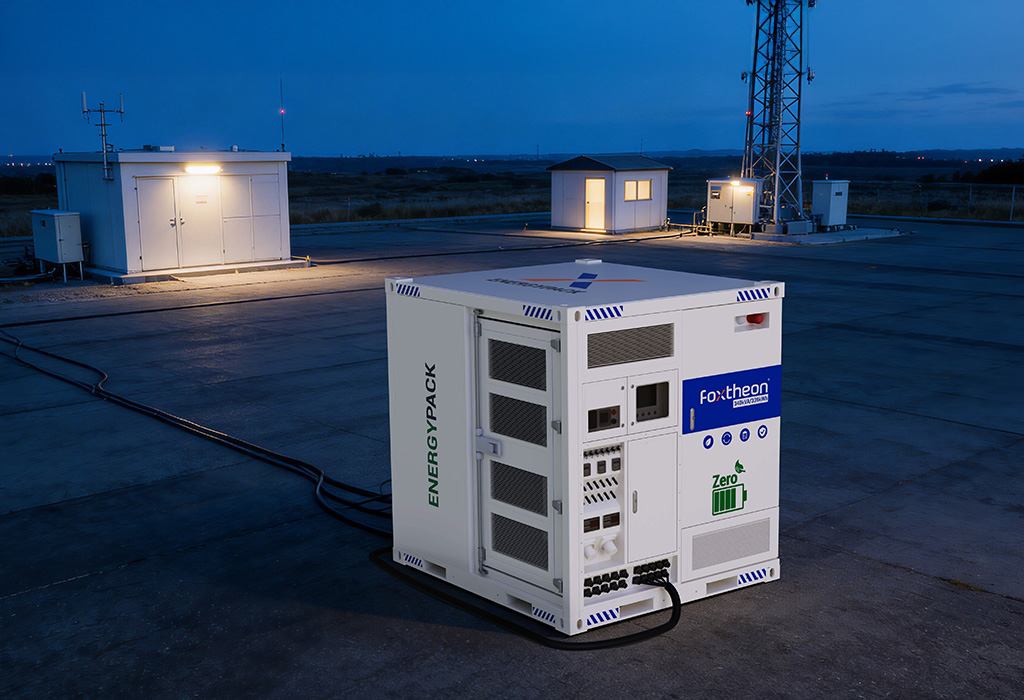
Liquid cooling (water-glycol or dielectric fluid) has become standard for systems above 100kWh because air cooling fails to keep cell-to-cell ΔT below 3°C during 1C discharge. For containerized energy storage lithium battery arrays (e.g., 2MWh – 5MWh), cold plates bonded to cell sidewalls reduce peak temperature by 12–15°C compared to forced-air designs. This directly extends calendar life: every 8°C reduction in average cell temperature doubles the expected service years under continuous partial cycling.
2. Performance Indicators That Matter: Cycle Life, Round-Trip Efficiency, and Response Time
- Cycle life (80% capacity retention): Premium LFP-based energy storage lithium battery packs deliver 6,000 to 10,000 cycles at 0.5C/0.5C with DoD 90%. Real-world degradation accelerates if charge/discharge rates exceed 1C for more than 15% of cycles. Many vendors claim 12,000 cycles but only at 70% DoD — always request cycle data at your intended operational regime.
- Round-trip efficiency (RTE): System-level RTE includes losses from DC cabling, BMS power draw, and inverter conversion. For a 1MWh AC-coupled energy storage lithium battery, target RTE > 88% at 0.5C. Below 86%, the additional daily self-consumption can lower annual arbitrage revenue by 9–12% depending on local price spreads.
- Response time (grid-following mode): Fast frequency response (FFR) markets require sub-100ms ramp from idle to full power. Modern battery systems achieve 20–40ms through high-switching-frequency IGBTs and optimized control loops. Verify third-party testing per IEEE 1547.1.
For behind-the-meter peak shaving, a 500kW / 2MWh energy storage lithium battery with DC-coupled architecture can reduce monthly demand charges by 35–60%, depending on tariff structure. ROI periods currently range from 3.5 to 6.5 years in high-demand-charge regions (e.g., California, New York, parts of Germany). Always model the battery as a capacity resource, not an energy-only asset.
3. Deployment Realities: Grid Services, Renewables Firming, and Critical Backup
Frequency regulation – Lithium battery systems dominate this service because of their rapid ramping and no minimum load requirement. An energy storage lithium battery performing PJM RegD or European aFRR duty cycles experiences thousands of partial state-of-charge (SoC) swings daily. This stresses the graphite anode, leading to lithium plating if charging occurs at low temperature. Solutions include heating elements (preheating to 15°C) and restricting charge power below 0.2C when cell temperature < 10°C.
Renewables firming (solar + storage) – Pairing a 1.5MWp solar array with a 1MW / 2.5MWh energy storage lithium battery smooths ramp rates from 10%/min to less than 2%/min, complying with Hawaiian Electric Rule 14H. The battery also absorbs curtailment: midday PV oversupply can be stored and shifted to evening peak. But mis-sized storage leads to either frequent clipping (undersized) or underutilized capacity (oversized). Optimal DC:AC ratio for hybrid plants is between 1.3 and 1.6 when incorporating lithium-ion storage.
Uninterruptible power supply (UPS) for industrial loads – Traditional VRLA batteries occupy large space and need replacement every 3-5 years. A properly specified energy storage lithium battery offers 10+ years of service with smaller footprint. For semiconductor fabs or data centers requiring 10MW backup for 15 minutes, lithium allows a 60% reduction in floor space. However, fire codes (NFPA 855, IFC Chapter 12) require separated rows, limited stored energy per rack, and gas detection systems — factors that raise civil works costs.
In each scenario, Foxtheon integrates its battery equipment with power conditioning systems, offering pre-validated control logics tailored to local grid codes. For a 2.5MWh commercial installation in Southeast Asia, Foxtheon provided a liquid-cooled energy storage lithium battery with predictive SoH analytics, reducing site visits for manual inspection by 70%.
.jpg)
4. Industry Pain Points and Engineering Countermeasures
4.1 Capacity Fade Under Partial State of Charge (PSoC) Operation
Many energy storage lithium battery systems operate between 30% and 80% SoC to extend cycle life. However, persistent PSoC operation (without periodic full charges) causes electrode heterogeneity and accelerated anode decay. Countermeasure: Implement a scheduled equalization charge every 14 days, forcing the battery to 100% SoC followed by a controlled absorption period — this resets the coulombic counter and reduces differential voltage spread.
4.2 Thermal Runaway Propagation Risk
Despite LFP’s inherently high thermal runaway onset temperature (~270°C), cell-to-cell propagation remains a credible risk if the module design lacks intercell barriers or cooling fails. Third-party tests (UL 9540A) must be performed at the module and unit level. Acceptable propagation delay: >30 minutes between first cell venting and exterior smoke, allowing time for safety intervention. Passive protection (ceramic separators, intumescent sheets) is preferred over active gas suppression in small enclosures.
4.3 10-Year Lifecycle Uncertainty
Current warranty terms for an energy storage lithium battery typically guarantee 60-70% capacity retention after 10 years or 8,000 cycles. But actual aging heavily depends on temperature exposure and average C-rate. Buyers should require a degradation model with accelerated testing data validated against field logs. Many suppliers now offer performance liquidated damages (LDs) if capacity falls below warranty thresholds.
Foxtheon addresses these pain points through modular battery cabinets with cell-level fusing and distributed BMS architecture. Their energy storage lithium battery cabinets include gas venting channels and certified thermal barriers for compliance with VdS or FM Global insurance requirements. Additionally, they provide a remote diagnostics platform that tracks internal resistance increase per cell, flagging anomalies before capacity degradation becomes operational.
5. Frequently Asked Questions (B2B Technical Focus)
Q1: What is the realistic payback period for a 2MWh energy storage lithium battery used for demand charge reduction?
A1: Based on aggregated data from 47 C&I sites in North America and Europe, the median simple payback is 4.2 years when the monthly demand charge exceeds $18/kW. After including ITC (US) or similar incentives, payback shortens to 3.1 years. Key variables: the number of peak events per month and the battery’s ability to shave 90% of the top 3 peaks without over-discharging.
Q2: How does low temperature (below 0°C) affect energy storage lithium battery charging?
A2: Charging below 0°C risks lithium plating, which irreversibly reduces capacity. Most commercial BMS block charging at cell temperatures <0°C, but allow discharging down to -20°C. For cold climates, an external heating pad or recirculating warm liquid from the inverter waste heat is necessary. Heated systems add 3-5% upfront cost but prevent winter performance loss.
Q3: What certifications must an industrial energy storage lithium battery have for grid interconnection?
A3: Minimum requirements: UL 1973 (stationary storage), UL 9540 (system), IEC 62619 (safety), and for grid-tied inverters, IEEE 1547-2018 or IEC 61727. For fire safety, UL 9540A testing at cell, module, and unit level as per NFPA 855. Without these, utilities will reject interconnection agreements.
Q4: Can I install the battery inside an existing electrical room?
A4: Generally yes, subject to NFPA 855 limits. For a energy storage lithium battery with energy capacity >20kWh, the room must have dedicated ventilation (minimum 2 air changes per hour), a listed fire detection system, and an emergency disconnect within 10m. Also, the battery must be at least 1m away from combustible walls. Most existing electrical rooms lack sufficient thermal management, so adding a ducted cooling coil is often required.
Q5: How to compare one manufacturer’s 10,000-cycle claim versus another’s 8,000-cycle claim?
A5: Request the full test matrix: DoD for the cycles, charge/discharge C-rate, ambient temperature, and end-of-life criteria (typically 80% or 70% of rated capacity). Many vendors achieve 10,000 cycles only at 1C/1C with 70% DoD and controlled 25°C. If your use case requires 0.5C and 90% DoD, actual cycles may drop below 7,000. Always request data at your exact operational parameters and include a degradation curve, not just a single cycle number.
6. Request a Customized Energy Storage Lithium Battery Proposal
Selecting the right energy storage lithium battery requires a data-driven process: load shape analysis, tariff modeling, degradation simulation, and safety compliance mapping. Foxtheon provides full engineering support — from cell selection through to grid code testing — for industrial and utility projects from 50kWh to 50MWh. Their team prepares technical proposals that include 20-year net present value (NPV) calculations, fire safety drawings, and on-site commissioning schedules.
To receive a preliminary system sizing and life-cycle cost estimate, share your site’s 15-minute interval load data (one full year) and utility tariff sheet. Foxtheon also offers remote BMS data analytics as a service, allowing fleet operators to benchmark performance across multiple energy storage lithium battery sites. Discuss your project with their engineering desk: expected lead times for containerized systems are 14–18 weeks for standard configurations, with accelerated delivery for modular rack-based units.
👉 Send your inquiry to the Foxtheon B2B team — include site location, average daily energy throughput (kWh), desired peak power (kW), and any local incentive program requirements.