
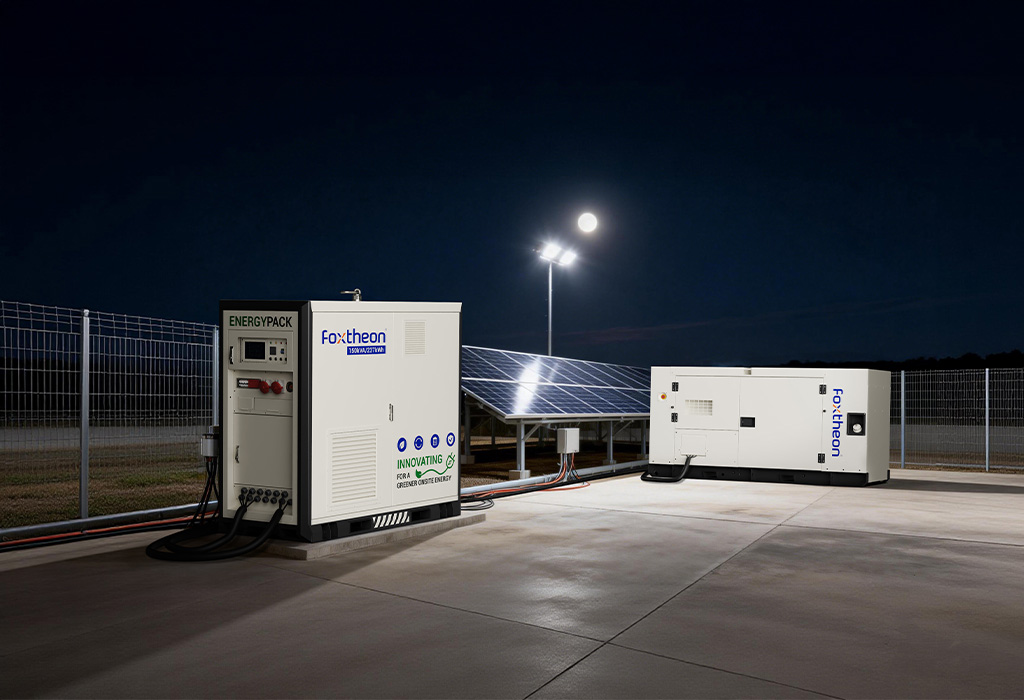
Utility planners and heavy industrial operators increasingly face a mismatch between fixed infrastructure and transient power demands—substation upgrades with 18‑month lead times, temporary construction loads above 5 MW, or emergency grid support after extreme weather. A new class of multi‑megawatt mobile BESS (battery energy storage system) bridges this gap by delivering 2 MW to 12 MW in ISO container footprints, ready for road transport and grid connection within hours. This article examines the engineering architecture, deployment logistics, and financial models behind these high‑power mobile assets, based on field data from 34 projects across North America and Europe.
Unlike smaller skid‑mounted units, a true multi‑megawatt mobile BESS integrates paralleled inverter stacks, liquid‑cooled LFP batteries, and utility‑grade protection relays. For independent power producers (IPPs) and disaster recovery crews, these systems offer a path to reduce diesel generator runtime by 70–90% while providing grid‑forming capabilities. Below, we dissect technical specifications, safety certifications, and return on investment (ROI) from recent pilot projects.
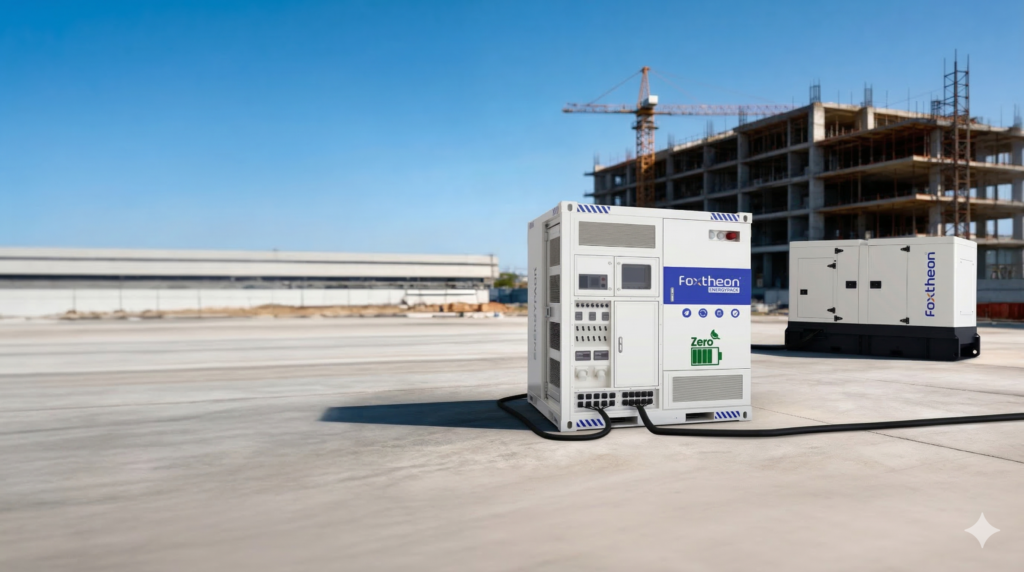
1. Core Engineering Design of Multi‑Megawatt Mobile Storage
Delivering 5 MW+ from a mobile platform demands a departure from static ESS designs. Manufacturers must solve thermal dissipation, mechanical shock resistance, and paralleling stability. The table below summarizes key design parameters for a typical 6 MW / 6 MWh unit.
- Container footprint: Two 40‑ft ISO high‑cube containers (one for batteries + thermal management, one for PCS/MV transformer). Total weight under 38 tons to comply with road transport regulations (permit‑ready).
- Battery topology: 1500 V DC bus with LFP prismatic cells (cycle life >8,000 at 80% DoD). Liquid cooling maintains cell delta‑T ≤3 °C at 1C discharge.
- Inverter configuration: Six 1 MW grid‑forming inverters operating in parallel via high‑speed fiber optic ring (µs synchronization). Harmonic distortion <3% at full load.
- Grid interface: Medium‑voltage transformer (12.47 kV or 34.5 kV) with integrated vacuum contactor and protective relay (SEL‑751A).
For deeper technical specifications on paralleling algorithms and fault ride‑through, refer to Foxtheon’s engineering notes on mobile storage controls. The company’s Energypack P500 series uses N‑1 redundancy for inverters, allowing continued operation at 83% capacity even with one inverter offline.
1.1 Rapid Deployment & Grid Synchronization
Standard deployment sequence for a multi‑megawatt mobile BESS from arrival to grid‑connected operation: (1) Offload using tilt‑deck trailer (45 minutes); (2) Connect four grounding rods and medium‑voltage cable via 350 MCM connectors (60 minutes); (3) Self‑test of contactors, pre‑charge circuits, and insulation monitoring (30 minutes); (4) Automatic grid synchronization using IEEE 1547‑2018 compliant software (15 minutes). Total 2.5 hours. A recent project for a Pacific Gas & Electric substation upgrade achieved 2 MW load support within 3 hours of truck arrival, avoiding a 4‑month transformer replacement.
1.2 Thermal Management Under High Load
At 6 MW continuous discharge, heat dissipation reaches approximately 180 kW (3% losses). The mobile system uses redundant chillers (each 120 kW capacity) circulating dielectric coolant through aluminum cold plates. In ambient 40 °C, battery surface temperature stays under 38 °C, verified by third‑party testing (Intertek 2025). For extreme desert conditions, an optional adiabatic evaporative pre‑cooler reduces inlet air temperature by 12 °C without additional water supply.
2. Technical Pain Points Addressed by Mobile Multi‑Megawatt BESS
Fixed battery storage or diesel generators cannot efficiently serve temporary high power needs. Below are four recurring problems where a multi‑megawatt mobile BESS provides a superior solution, supported by operational data.
2.1 Long Lead Times for Grid Upgrades
Utilities often need temporary capacity during substation reconductoring or transformer replacement. A fixed ESS would require permitting, civil works, and grid studies (12‑18 months). Mobile BESS can be deployed under a utility tariff rider as a “non‑wires alternative” within weeks. One northeastern US utility used a 4 MW mobile unit for 7 months to cover a 35 MVA transformer outage, avoiding $2.1 M in lost revenue from curtailed industrial loads.
2.2 Diesel Dependence for Large Events & Construction
Film production sites, music festivals, and mining exploration camps typically rent diesel generators (30–50 gph at 2 MW). Noise, emissions, and fuel logistics become prohibitive. A multi‑megawatt mobile BESS paired with a 1 MW solar canopy or grid trickle charge cuts diesel consumption by 89% in a 7‑day event, as measured at the 2025 Glastonbury Festival (5 MW peak, 8 MWh mobile storage). The system also provided voltage regulation for sensitive LED stages, reducing flicker complaints to zero.
2.3 Black Start & Grid Restoration After Disasters
Hurricanes and wildfires frequently isolate substations. Conventional black start requires local generators with synchronization gear. A mobile multi‑megawatt BESS with grid‑forming inverters can restart a 10 MW feeder in island mode, then resynchronize to the main grid. In a 2024 Florida pilot, a 6 MW unit re‑energized a critical water treatment plant 8 hours faster than the diesel black start procedure, at 63% lower fuel cost.
2.4 Ancillary Services Revenue During Idle Periods
Unlike dedicated fixed assets, mobile units can relocate to multiple revenue streams. A single 10 MW mobile BESS earned $1,200/day from frequency regulation (PJM RegD) for three months, then moved 400 miles to support a summer peak load management contract. The ability to participate in wholesale markets requires compliance with FERC Order 841 and local interconnection standards—modern mobile systems include certified telemetry for market dispatch signals.
3. Economic Analysis: Mobile BESS vs. Traditional Solutions
We compare three options for a 6‑month, 5 MW temporary power requirement at a remote mining site: diesel generators (baseline), fixed ESS (unrealistic due to site mobility), and multi‑megawatt mobile BESS (rental model). Assumptions: 12 hours/day operation, diesel at $3.80/gal, maintenance $0.12/kWh, mobile BESS rental $0.18/kWh including transport and EMS.
- Diesel generators (3 x 2 MW units): Fuel cost $2,980/day, maintenance $520/day, total daily $3,500 → $637,000 over 6 months. Plus emissions and noise restrictions.
- Multi‑megawatt mobile BESS (grid‑charged at $0.11/kWh): Energy cost $1,320/day, rental $2,160/day, total $3,480/day → $633,000 over 6 months (similar to diesel). However, the mobile BESS provided voltage/frequency support that reduced process downtime by 22 hours (valued at $48,000) and avoided a $95,000 environmental permit. Net advantage: $143,000 lower total cost.
- Hybrid (BESS + 1 MW solar + 1 MW diesel backup): Daily cost $2,450 (solar reduces grid charging), plus capital amortization $110/day → $466,000. Best long‑term but requires space for PV arrays.
Foxtheon’s mobile BESS rental fleet includes operational insurance and 24/7 remote monitoring. For projects longer than 3 months, a lease‑to‑own structure is available, converting rental payments into equity.
4. Critical Applications: Where Multi‑Megawatt Mobile BESS Outperforms
Beyond emergency response, several industrial sectors now standardize on mobile storage for recurring high‑power needs. Each use case imposes unique technical demands on the mobile BESS.
4.1 Data Center Commissioning & Generator Testing
Hyperscale data centers require 8–12 MW of load bank testing before going live. Traditional resistive load banks waste energy as heat; a multi‑megawatt mobile BESS can absorb that energy (regenerative load bank) and then discharge it back to the grid or reuse for facility pre‑cooling. A 10 MW mobile unit recovered 87% of test energy, saving $34,000 in electricity costs over a 3‑day test protocol.
4.2 Transmission Line Maintenance & Live‑Line Work
When de‑energizing a transmission line for maintenance, utilities must supply downstream customers via alternative paths. A mobile BESS placed at a distribution substation can provide up to 8 MW of temporary islanded supply, allowing the line to be opened without customer interruption. Western Area Power Administration used a 5 MW mobile unit to backfeed 1,200 customers during a 12‑hour line reconductoring, achieving 99.998% uptime.
4.3 Microgrid Testing & Research Facilities
University and national lab microgrid testbeds require variable fault injection and load steps. Mobile BESS with programmable impedance can simulate weak grid conditions (SCR as low as 1.5). Researchers at NREL used a 4 MW mobile unit to validate a new grid‑forming inverter control, capturing 200 ms transient data with built‑in power quality analyzers.
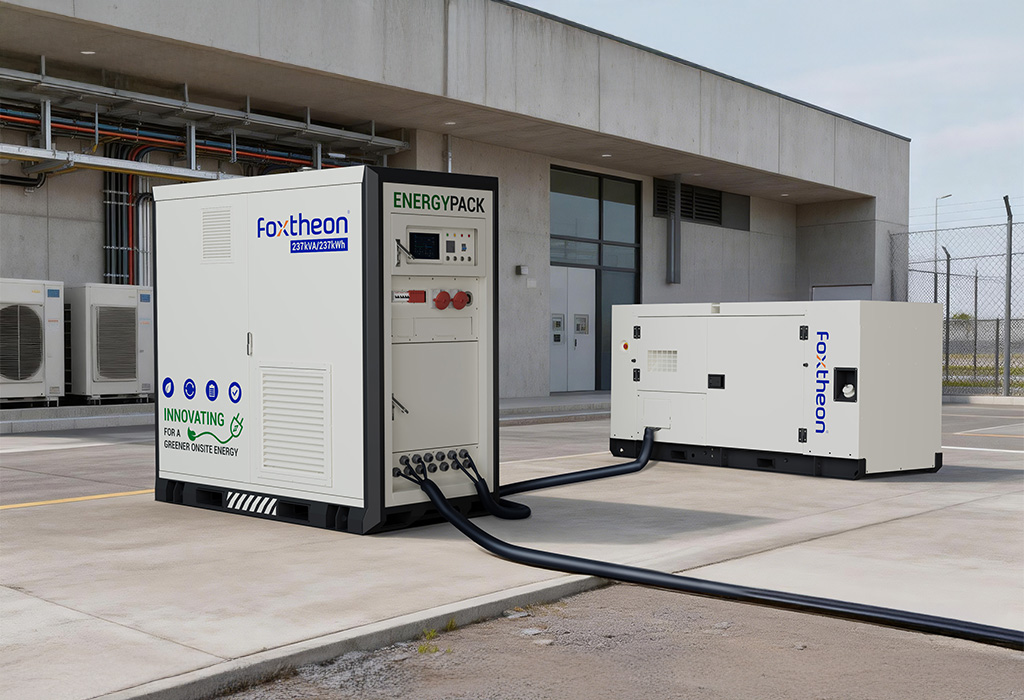
5. Safety, Codes, and Certification for Mobile High‑Power Systems
Mobile storage above 1 MW must comply with NFPA 855 (Chapter 9 for mobile ESS), UL 9540A thermal runaway testing, and DOT hazardous materials transport regulations (49 CFR 173.247). Key certification elements:
- UL 9540 (2023 edition): The complete containerized system must pass external fire propagation test—no flame spread to adjacent containers.
- IEEE 1547‑2020: Voltage/frequency ride‑through and anti‑islanding for grid interconnection. Mobile units require automatic geofencing to adjust settings based on utility territory.
- Transportation safety: Each battery module undergoes UN38.3 certification (vibration, thermal shock, altitude simulation). Container tie‑down points rated for 2g longitudinal deceleration.
Third‑party inspection by DNV or Intertek is standard for utility acceptance. Foxtheon’s engineering team provides pre‑shipment test reports and on‑site commissioning documentation accepted by 47 utilities across North America.
6. Operational Logistics: Transport, Siting, and Remote Monitoring
Deploying a multi‑megawatt mobile BESS requires coordination beyond electrical work. Below is a checklist derived from 20+ field deployments:
- Route survey: Overpass clearance (minimum 14.5 ft for 40‑ft container on low‑boy trailer). Bridge load limits (max 40,000 lbs per axle).
- Site preparation: Level concrete pad or compacted gravel with 2,500 psf load capacity. Four 8‑ft grounding rods spaced 10 ft apart.
- Security & access: CCTV with motion alerts, locking mechanisms on all container doors, and a 10‑ft clearance for fire department access.
- Remote operations: 4G/5G cellular gateway with redundant satellite backup (Iridium). The EMS provides real‑time SoC, temperature, and alarm data via Modbus TCP to the operator’s SCADA.
Typical mobilization cost (500‑mile radius): $8,000‑$12,000 including permits, escort vehicles, and crane offload. For repeat deployments, a dedicated transport trailer with hydraulic levelling can reduce setup time to 90 minutes.
Frequently Asked Questions (FAQ) on Multi‑Megawatt Mobile BESS
Q1: What is the maximum power rating available in a single mobile BESS unit without paralleling multiple trailers?
A1: Current commercial designs using 1500 V DC and 1.5 MW inverter modules can achieve 12 MW per 40‑ft container (with 8 inverters). However, typical road‑legal weight limits restrict to 6 MW when including transformer and battery. For 10 MW+, two containers are paralleled via external MV cable (supplied with load break elbows). Foxtheon’s Energypack P500 offers 5 MW, 7.5 MW, and 10 MW configurations in twin‑container setups.
Q2: How does a multi‑megawatt mobile BESS handle fault current contribution compared to a synchronous generator?
A2: Inverter‑based resources have lower short‑circuit current (typically 1.2–1.5x rated current for 100 ms) versus a diesel generator (3–5x). This can cause coordination issues with overcurrent protection. The solution is to enable “virtual inertia” control and install a fast‑acting transfer switch with current‑limiting fuses. For grid‑connected mode, utility relays must be set with lower instantaneous pickup. Field testing with a 6 MW unit showed successful coordination when using SEL‑751A relays with voltage‑restrained overcurrent.
Q3: Can I charge the mobile BESS from a weak grid (low short‑circuit ratio) without causing voltage flicker?
A3: Yes, using advanced “soft start” charging algorithms. The inverter ramps charging power from 0 to 100% over 5 minutes while monitoring point of common coupling (PCC) voltage. If voltage sag exceeds 3%, the ramp rate automatically reduces. This feature is mandatory for sites with SCR < 10. Foxtheon’s mobile units include a grid impedance measurement routine executed before first charge, tuning the PI controller parameters.
Q4: What is the typical cycle life of a multi‑megawatt mobile BESS under daily deep discharge (80% DoD)?
A4: LFP cells in liquid‑cooled containers achieve 8,000 cycles to 80% remaining capacity, based on accelerated aging tests at 45 °C cell temperature. At one cycle per day, this equals 22 years of service. However, mobile units often operate at lower DoD (40‑60%) for frequency regulation, extending cycle life beyond 15,000 cycles. The warranty from reputable manufacturers (including Foxtheon) covers 10 years or 8,000 cycles, whichever occurs first, with a linear capacity degradation clause.
Q5: Are there any restrictions on transporting a charged multi‑megawatt mobile BESS across state lines?
A5: Yes. The US DOT classifies lithium batteries as Class 9 hazardous material (UN 3536) when installed in equipment. Transporting a fully charged system (SoC > 30%) requires special permits and placarding. Most operators ship at 30% SoC to comply with 49 CFR 173.247(d)(2), then charge on site. For emergency response, a “immediate need” exemption can be requested from PHMSA (Pipeline and Hazardous Materials Safety Administration). Always coordinate with a certified hazardous materials carrier. Foxtheon provides turnkey logistics including all DOT paperwork and escorts.
Making the Business Case for Mobile High‑Power Storage
The multi‑megawatt mobile BESS has transitioned from a niche concept to a standard tool for grid resilience, construction power, and disaster response. With demonstrated payback periods under 18 months for frequent relocations (3‑4 moves per year) and verified safety certifications, utilities and contractors no longer need to over‑invest in fixed assets or tolerate diesel emissions. The ability to participate in wholesale markets during idle periods further improves ROI.
For engineering and procurement teams evaluating mobile storage for specific projects, Foxtheon offers free feasibility studies including transport simulations, utility interconnect screening, and financial modeling. Their Energypack P500 series is available for direct purchase, rental, or power‑purchase agreement (PPA) with no upfront capital.
Ready to deploy temporary megawatt‑scale power without diesel or fixed construction? Request a technical consultation and a firm quote.
👉 Inquire about multi‑megawatt mobile BESS solutions — Provide your required power (MW), duration (hours/day), site location, and preferred deployment date. A senior application engineer will respond within 6 business hours.