
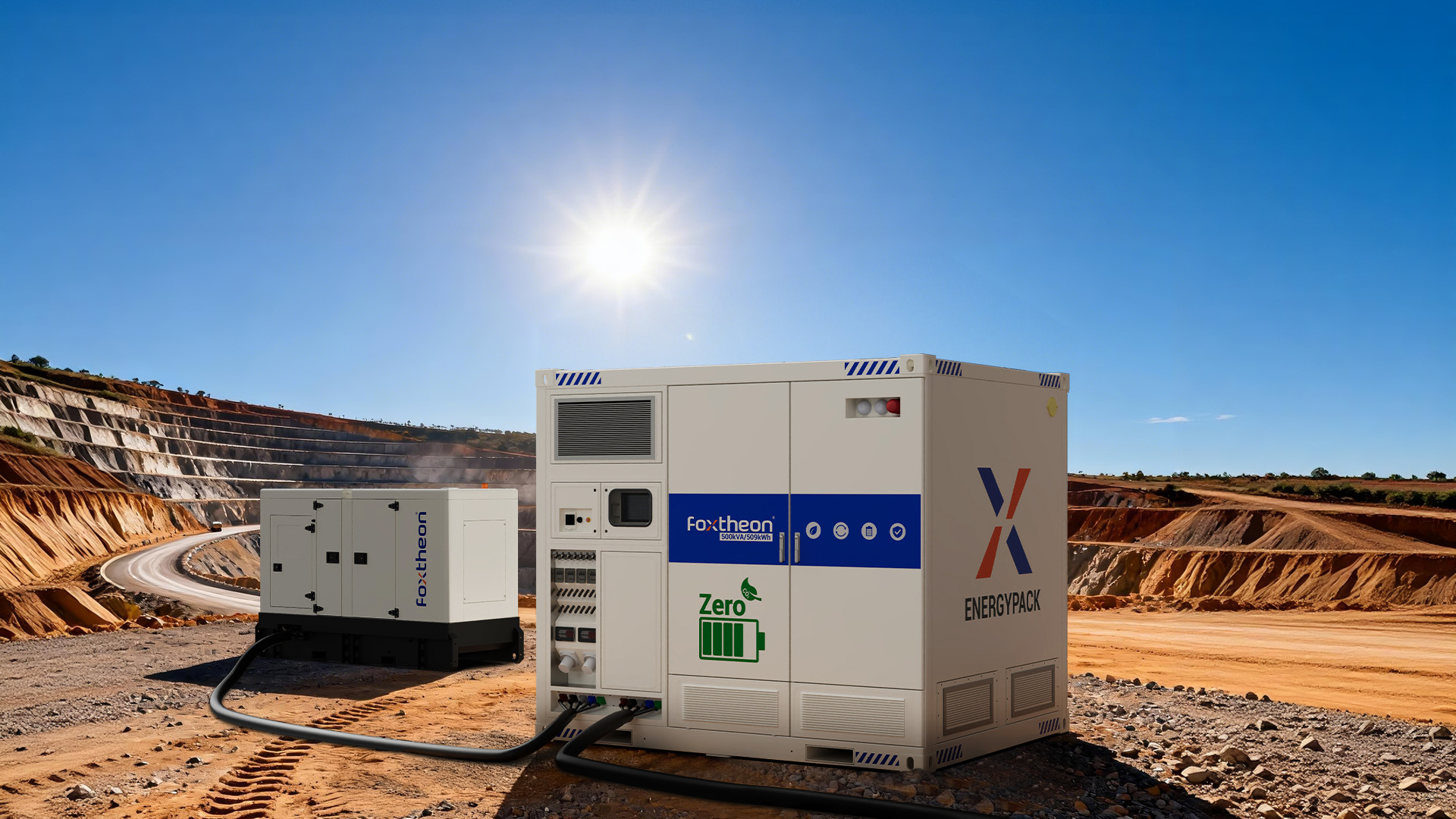
For engineering teams designing remote power networks—whether for a mining exploration camp, an island telecom hub, or an agricultural cold store—the specification of off grid energy storage systems directly determines system uptime, diesel efficiency, and maintenance intervals. Unlike grid-connected battery banks that mainly perform peak shaving, isolated storage must manage 100% of short-term load variability, provide black-start capability, and withstand years of deep cycling without active grid support. This article examines the engineering criteria for selecting and controlling these storage assets, focusing on real-world operational constraints.
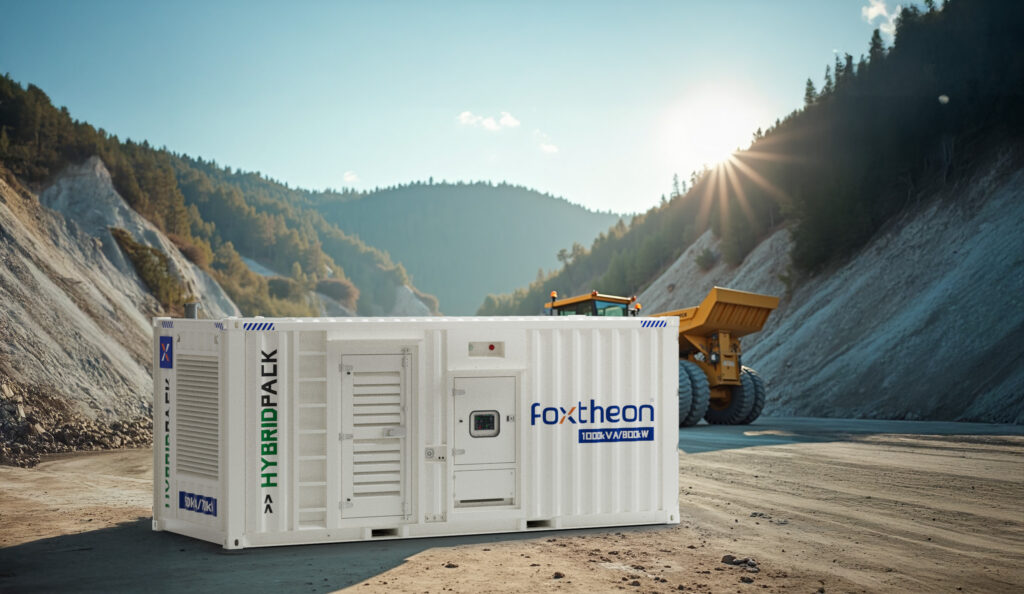
1. Core Characteristics of Robust Off-Grid Storage
Any off grid energy storage systems installation must satisfy four performance vectors simultaneously: cycle life at partial state of charge, round-trip efficiency under fluctuating loads, thermal stability in harsh enclosures, and compatibility with existing generator controls. Below we break down each parameter with quantifiable thresholds.
1.1 Cycle Life and Depth of Discharge (DoD)
- Lithium Iron Phosphate (LFP): Delivers 6000–8000 cycles at 80% DoD with end-of-life capacity at 70%. The flat voltage plateau (3.2V nominal) simplifies cell balancing. LFP is the reference chemistry for daily cycling applications.
- Lead-carbon hybrid: An evolution of VRLA, adding carbon to the negative plate to reduce sulfation during partial state-of-charge operation. Achieves 2000–3000 cycles at 50% DoD. Suitable for sites with low renewable penetration and moderate cycling.
- Vanadium redox flow batteries (VRFB): Decouple energy and power rating (tanks size vs. stack). Unlimited cycles with no capacity fade, but lower round-trip efficiency (70–75%) and higher parasitic pump loads. Used where 10+ hours of discharge duration is required (e.g., remote research stations).
For most industrial off-grid sites with daily solar cycles, LFP currently offers the best balance. However, in extremely hot climates (ambient >40°C), VRB or lead-carbon with active cooling may be preferable due to LFP calendar aging acceleration above 45°C.
1.2 Power Electronics Interface and DC Bus Voltage
Modern off grid energy storage systems connect via a bi-directional DC/DC converter to a common DC bus (typically 600V to 1500V). This topology allows simultaneous charging from PV arrays and discharging to a hybrid inverter. Key specifications to verify:
- Converter efficiency at 20% and 80% load – many units drop below 92% at light load, wasting energy.
- Ramp rate capability: the DC/DC should change power from 0 to 100% in <100 ms to support generator start/stop transitions.
- Galvanic isolation (high-frequency transformer) to break ground loops, especially for sites with distributed earthing.
2. Battery Management Systems (BMS) for Remote Reliability
The BMS is the central nervous system of any off-grid storage asset. For sites where a technician may arrive only once per quarter, the BMS must handle fault recovery autonomously. Fundamental BMS functions include:
- Cell voltage balancing: Passive balancing (bleed resistors) is acceptable for small packs (<100 kWh). For larger banks, active balancing (capacitive or transformer-based) reduces energy loss and extends string life by 20%.
- Temperature sensing per module: At least three sensors per rack – top, middle, bottom – to detect stratification. If ΔT >5°C between modules, the BMS should reduce charge current by 30% and alert the remote monitoring platform.
- State-of-charge (SoC) correction: Coulomb counting drifts over time. The BMS must perform a periodic full-charge reset (when the battery reaches absorption voltage and current tapers below 0.05C) or use a Kalman filter that incorporates voltage relaxation curves during idle periods.
- Pre-charge circuitry: Prevents inrush current when connecting to inverter DC link. Without pre-charge, contactor welding occurs after 200–500 cycles.
Advanced BMS platforms also offer predictive diagnostics: tracking internal resistance trends to forecast cell dry-out or lithium plating. A rise of >25% over 60 days indicates an impending failure, allowing scheduled replacement before a site outage.
3. Sizing Methodology for Industrial Off-Grid Storage
Incorrect storage sizing leads to either premature battery wear (too small) or excessive capital locked in unused capacity (too large). The standard IEC 61427-2 provides a framework, but field engineers apply a three-step process tailored to renewable resource variability.
3.1 Step 1: Load Profile and Autonomy Days
Define the worst-case energy demand (kWh/day) during the month with lowest renewable generation. For solar+battery sites, autonomy days usually range from 2 to 5 days depending on local climate data. A telecom tower in a monsoon region (7 consecutive cloudy days) may require 5 days autonomy; a mining camp with backup diesel may use only 1.5 days.
3.2 Step 2: Peak Power and C-Rate
The off grid energy storage systems must deliver the highest instantaneous load (e.g., motor starting, crane operation). For a 100 kW induction motor with locked rotor current 6× nominal, the storage must provide 600 kW for 3–5 seconds. Convert that to C-rate: if battery size is 500 kWh, a 600 kW peak equals 1.2C. LFP handles 2C for 10 seconds, but lead-carbon struggles above 0.5C. Always size the inverter and BMS for at least 125% of the worst-case peak.
3.3 Step 3: Round-Trip Efficiency and Auxiliary Losses
Account for power conversion losses (DC/DC + inverter) and battery self-discharge plus thermal management. For a 500 kWh/day site, losses can add 70–100 kWh/day, which must be covered by additional PV or generator runtime. Use system efficiency curves provided by the manufacturer, not nameplate values.
4. Integration with Diesel Generators: A Collaborative Control Strategy
Many remote sites will retain diesel gensets for extended bad weather or maintenance windows. Professional hybridisation does not remove the generator but optimizes its usage. Recommended control modes for off grid energy storage systems working alongside diesel:
- Generator deferral: The storage supplies all loads until SoC drops to a defined threshold (e.g., 30%). Then the generator starts and runs at its most fuel-efficient load (typically 70–85% of rated power), while the battery charges. This reduces generator runtime by 50–70% compared to floating operation.
- Peak shaving with predictive logic: The energy management system (EMS) forecasts load spikes based on historical patterns and pre-discharges the battery to keep generator load below its inefficient high-power zone (e.g., >90% rating).
- Spinning reserve substitution: In traditional setups, the generator idles at no-load to be ready for load steps. Instead, the battery can provide instant response, allowing the generator to remain off until SoC reaches a lower bound. This eliminates idle fuel consumption (typically 3–5 L/hour for a 100 kVA genset).
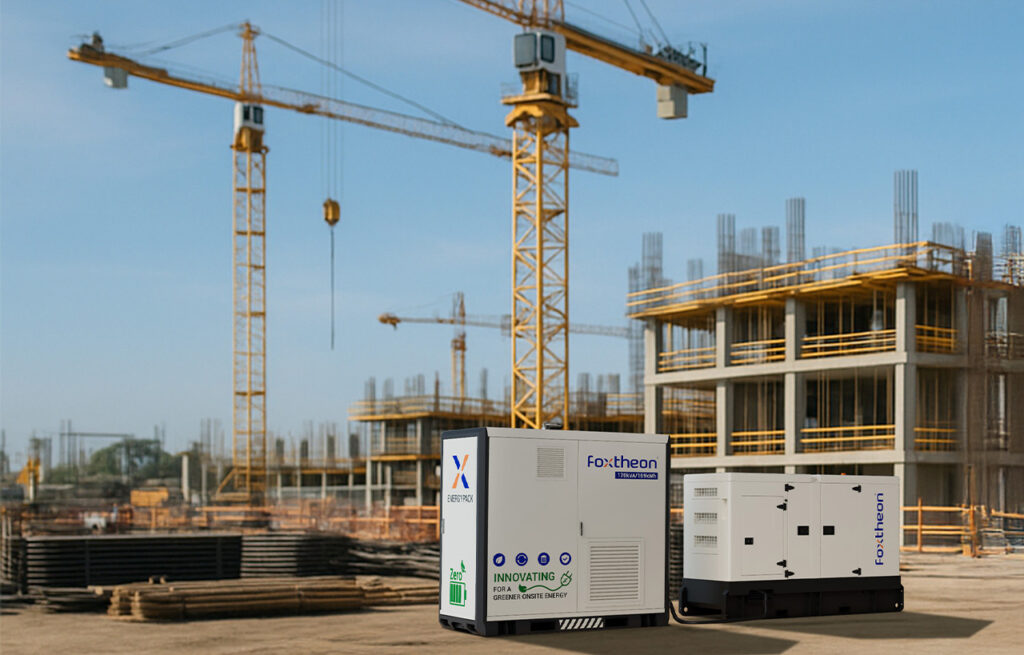
Foxtheon provides a non-intrusive EMS add-on that communicates via Modbus or CAN bus to the existing generator controller. The system does not replace any generator component, preserving the client’s capital investment while enabling hybrid operation.
5. Thermal Management Strategies for Harsh Environments
Off-grid containers often face temperature extremes from -30°C to +50°C. Without proper thermal regulation, battery cycle life drops by 50% for every 10°C above 35°C. Four proven approaches:
- Active liquid cooling (glycol loops): Best for large systems >500 kWh. Maintains cell temperature within ±2°C, enabling consistent performance. Requires periodic pump maintenance and coolant replacement.
- Forced air with bypass ducting: For medium systems (100–500 kWh). Use fans and evaporative coolers in dry climates. Ensure filters are accessible for cleaning every 6 months.
- Phase change materials (PCM): Passive solution where paraffin-based panels absorb heat during high load and release it at night. Ideal for standalone telecom shelters where maintenance access is difficult.
- Cold-weather self-heating: For sub-zero sites, LFP batteries require pre-heating before accepting charge. Use a small dedicated heating circuit powered by the generator or a separate PV heater panel. Charging below 0°C causes lithium plating and permanent damage.
6. Remote Monitoring and Predictive Maintenance for Storage Assets
Given the high cost of site visits, a professional telemetry platform is mandatory. The monitoring system should provide:
- Real-time SoC, SoH (state of health), and individual cell voltages with alarms for deviation >50mV from median.
- Thermal imaging of busbars and contactors (infrared sensors detect loose connections before meltdown).
- Logs of charge/discharge events with timestamps – useful for warranty claims or performance disputes.
- Secure remote firmware update capability with digital signatures to prevent cyber intrusions (IEC 62443-3-3 compliance).
When abnormal patterns are detected (e.g., internal resistance increase >20% over 30 days), the EMS automatically reduces maximum charge/discharge current and notifies the operator. In one agricultural pumping project, predictive alerts identified a failing cell module 14 days before it would have caused a complete string shutdown, avoiding irrigation loss.
7. Future Directions: Second-Life Batteries and DC Microgrids
Used EV batteries (with 70–80% remaining capacity) present an opportunity for low-cost stationary storage. However, they require BMS reprogramming to match the different voltage ranges and reduced C-rate capability. For reliable off grid energy storage systems, second-life packs should be deployed in separate strings with independent fusing and isolation monitoring. Additionally, emerging DC-coupled architectures eliminate multiple AC/DC conversions: all generation (solar, wind, generator rectifier) and storage feed a common 750V DC bus, improving end-to-end efficiency by 7–12%.
Frequently Asked Questions (Engineering Focus)
Q1: How do you prevent thermal runaway in LFP storage for off-grid telecom shelters?
A1: LFP has inherently high thermal runaway onset temperature (>270°C) compared to NMC (~150°C). However, proper design includes: cell-level fuses, a gas detection sensor (CO/H2), and a fire-rated enclosure with external venting. The BMS must disconnect the pack if any cell exceeds 60°C and inhibit charging until temperature drops below 45°C.
Q2: Can we parallel different battery chemistries (LFP + lead-carbon) in the same off-grid system?
A2: Direct parallel connection is not recommended due to different voltage curves and internal resistances. Instead, use separate DC/DC converters for each chemistry and let the EMS coordinate power sharing. Typically, LFP handles daily cycling, while lead-carbon stays at high SoC (90%) for weekly backup.
Q3: What is the typical response time for a BMS to disconnect under overcurrent?
A3: High-speed semiconductor fuses (or contactors with arc chutes) can disconnect in 2–5 milliseconds for short-circuit events. For moderate overcurrent (150% for 30 seconds), the BMS communicates with the inverter to reduce output rather than opening contactors, avoiding nuisance trips.
Q4: How do we maintain battery bank balancing when the site has irregular generator runs?
A4: Use a BMS with autonomous top-balancing. When any cell reaches the absorption voltage (e.g., 3.55V), the BMS shunts current around higher-voltage cells via resistors or active balancers. If generator runs are too short (<20 minutes), forced balancing may be needed – schedule a dedicated maintenance run once per month to hold absorption voltage for 2 hours.
Q5: Is it feasible to oversize the storage to avoid using a generator for a whole week?
A5: Technically yes, but economically the battery cost grows linearly with autonomy days. For most sites, 2–3 days autonomy + a generator run once per week yields lower total cost of ownership. Oversizing also increases parasitic losses (self-discharge and BMS power). A balanced design is recommended.
Need a technical assessment for your remote site’s storage requirements? The engineering team at Foxtheon offers a detailed hybrid storage simulation using real load data and local weather files. We provide a 30-page report including battery cycle life projection, EMS logic diagrams, and a component list compatible with your existing generators. Submit your project inquiry here – include your 12-month load profile and one-line diagram for a priority engineering review.