
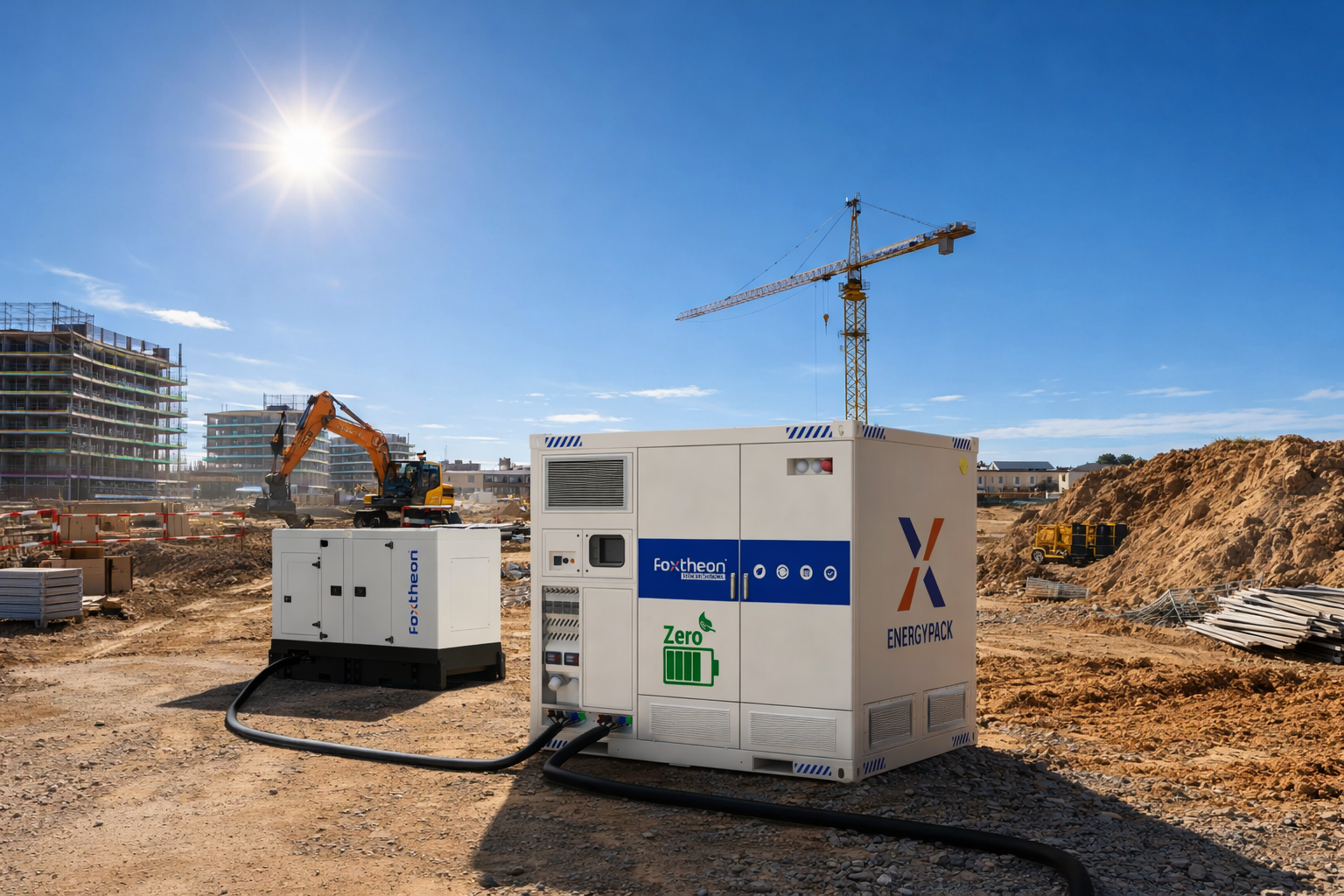
Industrial refrigeration is the backbone of the global food and pharmaceutical supply chain. Warehouses, distribution centers, and processing plants operate around the clock to keep perishable goods safe. However, this constant operation comes with a massive price tag. Energy consumption in these facilities is relentless. To manage these soaring costs and ensure operational resilience, facility managers are turning to new technologies. The most effective solution emerging in the market is BESS for industrial refrigeration.
A Battery Energy Storage System (BESS) changes how cold storage facilities interact with the power grid. Instead of simply drawing power whenever the compressors run, smart facilities now store energy. They buy electricity when it is cheap and use it when prices spike. This strategy reduces operating expenses significantly. Companies like Foxtheon are at the forefront of this shift, providing the intelligent hardware needed to manage these complex energy flows.
This article explores why battery storage is becoming essential for the cold chain. We will look at cost reduction, disaster prevention, and the integration of renewable energy.
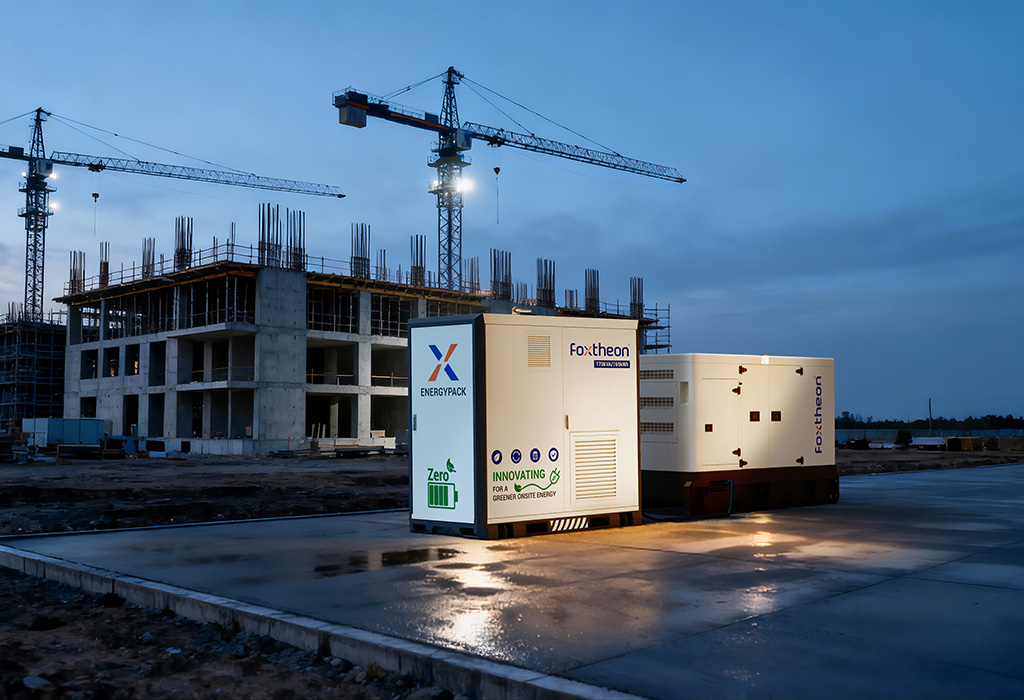
The High Cost of Cold: Why You Need BESS for Industrial Refrigeration
Refrigeration systems are unique because they cannot stop. A manufacturing plant can shut down a conveyor belt to save power, but a freezer must stay cold. This lack of flexibility makes cold storage facilities vulnerable to “peak demand” charges.
Understanding Peak Demand Charges
Utility companies charge commercial customers based on their highest usage period.
The Spike: When huge compressors turn on, they create a massive spike in power draw.
The Cost: The utility sets your monthly rate based on that single 15-minute spike.
The Solution: Using BESS for industrial refrigeration allows you to “shave” these peaks. The battery provides the surge power needed to start the motors, keeping your grid draw flat and your bills low.
Volatile Energy Markets
Electricity prices fluctuate throughout the day. In many regions, power is expensive in the late afternoon and cheap at night. Without storage, you are forced to pay high rates. With storage, you engage in “energy arbitrage.” You charge the batteries at night and discharge them during the expensive afternoon hours.
Technical Advantages of BESS for Industrial Refrigeration
Implementing a storage system is not just about economics; it is about operational excellence. The technology behind modern batteries offers technical benefits that old-school backup generators cannot match.
Instant Response Time
Diesel generators take time to start up and synchronize with the load. In contrast, battery systems respond in milliseconds.
Frequency Regulation: Batteries can smooth out minor inconsistencies in grid power.
Motor Protection: By providing clean, stable power, batteries protect sensitive variable frequency drives (VFDs) on your compressors.
Reducing Mechanical Stress
Refrigeration equipment wears out. Frequent hard starts place stress on mechanical components. A BESS for industrial refrigeration setup can act as a buffer. It handles the initial electrical load, allowing the grid connection to remain stable. This stability can actually extend the lifespan of your HVAC and refrigeration machinery.
Foxtheon and the Evolution of Smart Storage
The hardware used in these applications matters. Generic batteries often lack the sophisticated software required to predict compressor loads. This is where specialized providers like Foxtheon distinguish themselves. Their systems are designed with high-density cells and intelligent management software specifically suited for industrial loads.
A standard battery might fail to recognize a compressor surge. However, advanced systems analyze historical data. They predict when the chillers will kick in and prepare the battery to discharge at that exact moment. This predictive capability is what maximizes the ROI of BESS for industrial refrigeration.
Ensuring Business Continuity and Safety
In the cold chain, a power outage is a disaster. It is not just about downtime; it is about product loss. A warehouse full of frozen seafood or temperature-sensitive vaccines can be ruined in hours.
Bridging the Gap
Traditional backup generators are essential, but they are not perfect. They can fail to start, or run out of fuel.
Immediate Backup: Batteries provide instant power the moment the grid fails.
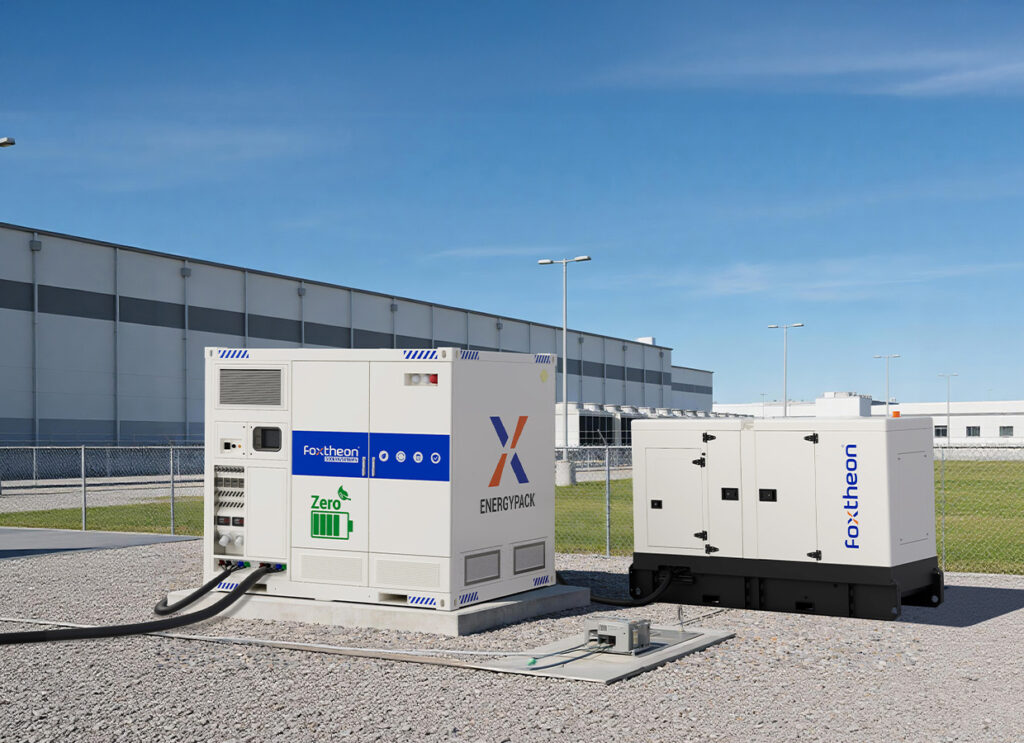
Generator Support: The battery carries the load while the generator warms up.
Short Outages: For outages lasting less than a few hours, the facility might not even need to turn on the diesel engines.
Protecting Brand Reputation
If a logistics company loses a client’s inventory due to temperature excursions, the reputational damage is severe. Implementing BESS for industrial refrigeration signals to clients that you take product safety seriously. It proves that your facility has redundant, fail-safe measures in place to maintain the “cold chain of custody.”
Integrating Renewables with BESS for Industrial Refrigeration
Most large cold storage facilities have one asset they rarely use: a massive roof. These flat, open spaces are perfect for solar photovoltaic (PV) panels. However, solar production does not always match refrigeration demand.
The Solar-Storage Synergy
Solar panels produce the most power at noon. While this aligns somewhat with cooling loads, much of that energy might be wasted if not used immediately.
Store Excess Solar: Instead of selling excess power back to the grid for pennies, you store it.
Nighttime Cooling: The stored solar energy runs the refrigeration units overnight.
Zero-Carbon Cooling: This combination creates a near-zero emission cooling cycle for a significant portion of the day.
Utilizing BESS for industrial refrigeration transforms a passive warehouse into an active energy asset. It allows the facility to run on green energy even when the sun is not shining.
Financial Analysis: ROI and Operating Expenses
Investing in large-scale battery storage requires capital. However, the return on investment (ROI) for cold storage is often faster than in other sectors due to the high energy intensity of the operations.
Calculating the Payback Period
To determine if this is right for you, consider the following:
Demand Charges: Look at your utility bill. How much of it is “demand” vs. “usage”? If demand charges are high, the ROI will be fast.
Grid Reliability: Estimate the cost of your last three power outages (lost product, labor, repairs).
Incentives: Many governments offer tax credits for installing energy storage.
When these factors are combined, a BESS for industrial refrigeration project often pays for itself in 3 to 5 years. After that period, the savings go directly to the bottom line.
Lowering Maintenance Costs
Running diesel generators for testing or during minor outages is expensive. Diesel fuel requires maintenance, fuel polishing, and filter changes. Batteries have few moving parts. By relying more on the battery and less on the diesel genset, you reduce the maintenance OpEx of your backup systems.
Sustainability and Regulatory Compliance
The pressure to decarbonize is mounting. Clients, investors, and regulators are demanding lower carbon footprints. Cold storage is a prime target for reduction strategies because it consumes so much power.
Meeting ESG Goals
Corporate Environmental, Social, and Governance (ESG) criteria are becoming standard in contracts.
Carbon Reduction: Storing renewable energy directly lowers Scope 2 emissions.
Grid Support: Helping the local grid stabilize during heatwaves (by using your batteries instead of grid power) is a community benefit.
Adopting BESS for industrial refrigeration is a concrete step toward net-zero operations. It moves sustainability from a marketing buzzword to a measurable operational reality.
Selecting the Right System for Your Facility
Not all batteries are created equal. When choosing a system, you must look at chemistry, software, and support.
Battery Chemistry
Lithium Iron Phosphate (LFP) is currently the preferred chemistry for stationary storage. It is safer and has a longer cycle life than the batteries used in consumer electronics. For an industrial facility, safety is paramount. You need a chemistry that is stable even under high thermal loads.
Intelligent Software
The hardware is useless without the brain. The management system must communicate with your Building Management System (BMS). It needs to know when the chillers are scheduling a defrost cycle or when a shift change is occurring.
Partnering with Experts
Working with established brands like Foxtheon ensures you get support throughout the lifecycle. From sizing the bank correctly to maintaining the inverters, having a reliable partner reduces the risk of the project.
The era of cheap, reliable grid power is fading in many parts of the world. At the same time, the demand for frozen and refrigerated goods is growing. To bridge this gap, facility managers must innovate. The integration of BESS for industrial refrigeration offers a path forward.
By smoothing out power spikes, integrating solar energy, and providing critical backup during outages, battery systems solve the most pressing problems in the cold chain. They turn energy from a fixed cost into a manageable asset. Whether the goal is saving money, saving the planet, or simply saving the ice cream, battery storage is the tool that makes it possible.
Companies that adopt these technologies now will gain a competitive advantage. They will operate at lower costs and with higher reliability than their competitors. As brands like Foxtheon continue to advance the capabilities of these systems, the transition to smart, battery-backed refrigeration will become the industry standard.
Frequently Asked Questions (FAQ)
Q1: What is the primary financial benefit of using BESS for industrial refrigeration?
A1: The biggest financial benefit is the reduction of peak demand charges. Refrigeration compressors draw huge amounts of power when they start, which spikes utility fees. A BESS for industrial refrigeration supplies this surge power from the battery rather than the grid, keeping the utility demand levels low and significantly reducing monthly bills.
Q2: Can a battery system completely replace my backup diesel generator?
A2: In most cases, it is a hybrid solution rather than a total replacement. While a battery system can handle short outages (ranging from minutes to several hours depending on size), a diesel generator is still recommended for long-duration power failures that last days. The battery acts as the first line of defense and bridges the gap until the generator is needed.
Q3: How does BESS interact with existing solar panels on a warehouse roof?
A3: It dramatically increases the value of solar panels. Without batteries, excess solar energy generated at noon often goes to waste or is sold back to the grid at low rates. A BESS stores this energy so it can be used to power refrigeration units at night or during expensive peak-rate hours, maximizing self-consumption.
Q4: Is the technology safe for facilities storing food or pharmaceuticals?
A4: Yes, modern industrial BESS units, particularly those using Lithium Iron Phosphate (LFP) chemistry, are extremely safe. They come with advanced fire suppression systems, thermal management, and rigorous safety certifications. They are clean and do not emit fumes, making them safer than running combustion engines near food processing areas.
Q5: How long does a BESS for industrial refrigeration last?
A5: Industrial battery systems are built for longevity. With proper thermal management and regular maintenance, a high-quality system can last between 10 to 15 years. The lifespan depends on how frequently the battery is cycled (charged and discharged), but most modern systems are rated for thousands of cycles before significant degradation occurs.