
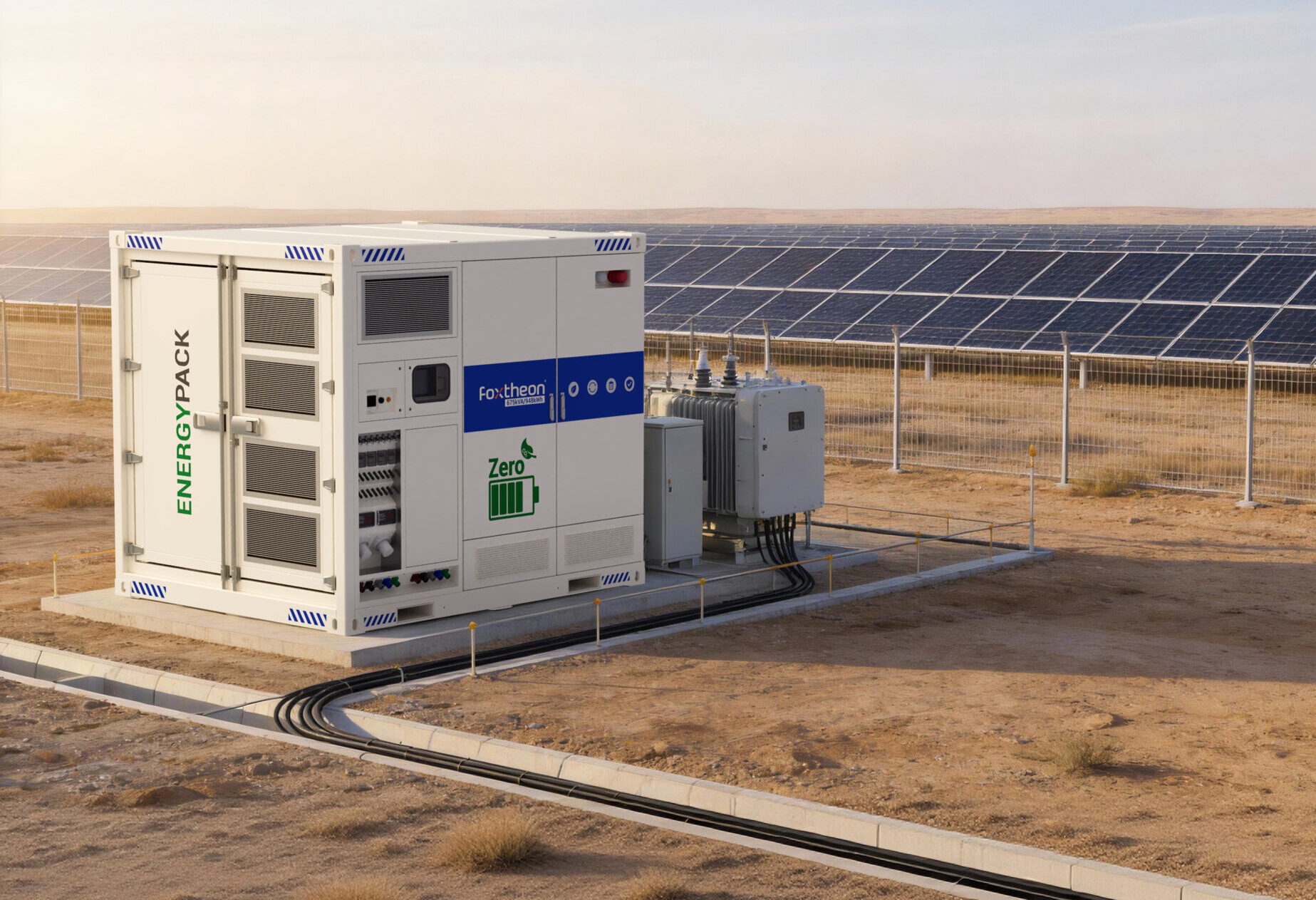
For remote industrial sites, off-grid agricultural operations, telecom towers, and islanded commercial facilities, energy autonomy depends on a single critical asset: the battery bank. Unlike grid-tied systems where storage provides economic optimization, off-grid power requires absolute reliability across variable weather, seasonal solar irradiance shifts, and unpredictable load spikes. Identifying the best batteries for off grid power involves more than comparing datasheets—it requires analyzing cycle life at partial state of charge (PSoC), round-trip efficiency under real-world temperatures, and compatibility with existing generator assets. This article provides a quantitative framework for selecting battery chemistries, sizing storage capacity, and designing hybrid systems that integrate renewable sources with backup generation, without discarding proven equipment.
Core Requirements for Off-Grid Energy Storage
An off-grid battery bank operates under conditions fundamentally different from grid-tied storage. The following parameters directly influence which battery technology qualifies as one of the best batteries for off grid power for a given application.
Cycle Life at Partial State of Charge (PSoC)
Grid-tied batteries often perform full cycles (discharge to 20% then recharge to 100%). Off-grid systems frequently operate in PSoC regimes—for example, discharging to 50% overnight, then receiving partial solar recharge before next discharge. Lead-acid batteries suffer rapid sulfation under PSoC operation, losing up to 50% of cycle life. Lithium iron phosphate (LFP) and nickel-iron (Ni-Fe) tolerate PSoC with minimal degradation. A LFP bank operating between 30% and 80% SoC can deliver 8,000+ cycles, whereas a standard flooded lead-acid might fail within 1,500 cycles under identical duty.
Temperature Resilience Without Active Cooling
Many off-grid sites lack HVAC for battery enclosures. In high ambient temperatures (40°C+), lead-acid batteries experience accelerated corrosion and water loss. Lithium chemistries with integrated battery management systems (BMS) typically limit charging above 45°C to prevent plating, reducing usable capacity. For extreme climates, nickel-iron batteries operate from -40°C to +60°C without thermal management, though they have lower energy density and higher self-discharge (15-25% monthly).
Depth of Discharge (DoD) vs. Usable Capacity
Manufacturer-rated capacity often assumes 80-100% DoD, but off-grid systems require reserve margins for multi-day autonomy. A 100Ah lead-acid battery provides only 50Ah usable (50% DoD) for acceptable cycle life. A LFP battery allows 80-90% DoD, meaning a 60Ah LFP bank provides the same usable capacity as a 100Ah lead-acid bank, with less weight and footprint.
Comparative Analysis: Battery Chemistries for Off-Grid Applications
The following table summarizes technical metrics for four dominant chemistries. Each has valid use cases—no single chemistry is universally the best batteries for off grid power without considering site-specific constraints.
- Lithium Iron Phosphate (LFP): Cycle life 6,000-10,000 cycles at 80% DoD; round-trip efficiency 92-96%; operating temp -20°C to 60°C (with reduced charge current below 0°C); requires BMS; high upfront cost but lowest levelized cost of storage (LCOS) for daily cycling applications.
- Advanced Lead-Carbon (PbC): Modified lead-acid with carbon additive to mitigate sulfation; cycle life 2,500-3,500 cycles at 50% DoD; efficiency 80-85%; works in PSoC regimes; lower upfront cost than lithium; suitable for seasonal cabins or backup-heavy sites with limited daily cycling.
- Nickel-Iron (Ni-Fe): Cycle life 10,000-15,000 cycles (40-year lifespan); tolerance to overcharge and deep discharge (100% DoD acceptable); efficiency only 65-70%; high self-discharge (1-2% per day); bulky and requires weekly electrolyte maintenance (potassium hydroxide). Preferred for remote telecommunication towers where maintenance visits are already scheduled.
- Flow Batteries (Vanadium Redox): Decoupled power and energy; cycle life 20,000+ cycles with zero capacity fade; efficiency 70-75%; high upfront cost (>$500/kWh) and large footprint; suitable for multi-day autonomy (e.g., island microgrids with week-long cloudy periods).
Sizing Methodologies for Off-Grid Battery Banks
Selecting the correct capacity involves three engineering steps. Undersizing leads to premature battery replacement; oversizing wastes capital.
Step 1: Load Profiling and Daily Energy Audit
Record every AC and DC load in watt-hours per day, including startup surges for pumps, compressors, or motors. For example, a remote water pumping station with a 5 HP pump (3,730W) running 2 hours daily requires 7.46 kWh, plus control systems (200Wh). Surge loads may be 4-6x running watts; the inverter and battery must handle this for 1-3 seconds.
Step 2: Days of Autonomy (DoA) and Depth of Discharge
DoA refers to how many days the system can operate without solar/wind input. For monsoon regions, design for 5-7 DoA. Multiply daily energy by DoA, then divide by planned DoD. Example: 10 kWh/day × 5 days = 50 kWh required at 100% DoD. With LFP at 80% DoD, nominal capacity = 50 / 0.8 = 62.5 kWh.
Step 3: Charge Rate and Solar Array Sizing
Battery must recharge within available sunlight hours. For LFP, recommended charge rate is 0.2C to 0.5C (20-50% of nominal capacity per hour). A 62.5 kWh bank would need 12.5 kW to 31.25 kW of solar array (after derating for efficiency and seasonal variation). This ratio prevents chronic undercharging, which reduces cycle life regardless of chemistry.
Integration with Existing Generators: Hybrid Off-Grid Systems
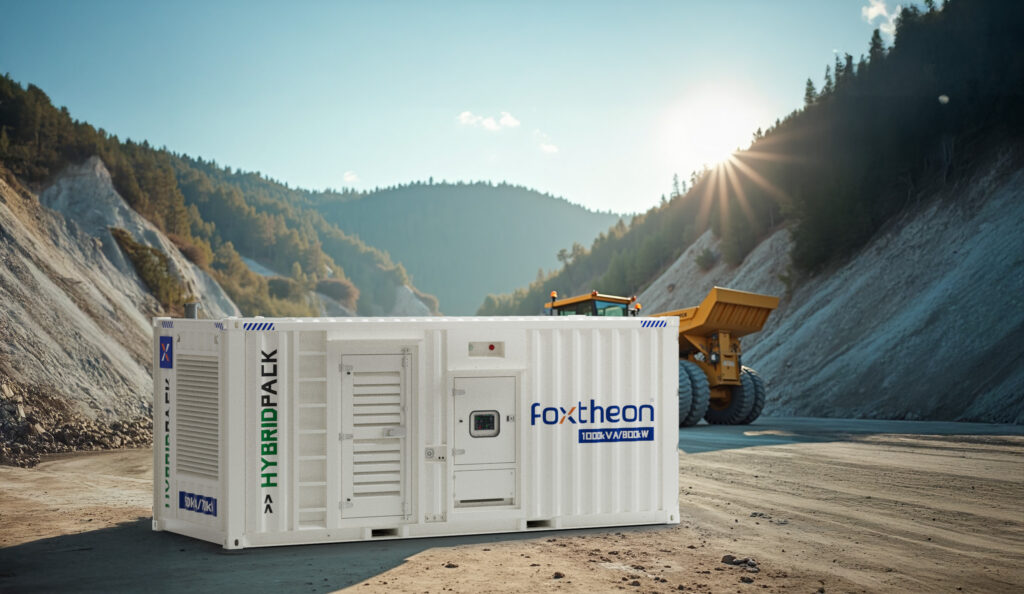
Many off-grid sites already operate diesel or propane generators for backup. Rather than replacing generators, the best batteries for off grid power work in parallel with these assets to reduce runtime, fuel consumption, and maintenance intervals. A hybrid controller manages three modes:
- Solar + Battery priority: Generator remains off; loads fed by renewables and stored energy.
- Generator-assisted charging: When battery SoC falls below a threshold (e.g., 30%) and solar insufficient, generator starts and runs at optimal 70-80% load, simultaneously powering loads and recharging battery. This avoids inefficient partial-load generator operation.
- Peak shaving with generator: For high surge loads (well pumps, large motors), battery provides instantaneous current while generator ramps up, preventing voltage sag and generator oversizing.
Field data from telecom off-grid sites shows that adding a LFP battery bank to an existing generator reduces diesel consumption by 65-80% and extends generator service intervals from 200 hours to over 1,000 hours. Foxtheon offers pre-engineered hybrid panels that interface with major generator brands (Caterpillar, Kohler, Perkins) using CAN or relay-based controls, preserving generator warranties while adding battery flexibility.
Key Performance Metrics: Round-Trip Efficiency, Self-Discharge, and LCOS
Comparing batteries requires a standardized economic metric: Levelized Cost of Storage (LCOS) expressed as $/kWh per cycle. Formula: (Total lifetime cost) / (Total lifetime throughput in kWh). For a 10 kWh usable system:
- LFP (6,000 cycles, 92% RTE): Initial cost $4,000 (including BMS), replacement after 12 years. LCOS = $0.09-$0.12/kWh.
- Lead-carbon (2,500 cycles, 82% RTE): Initial cost $2,000, replacement every 5 years. LCOS = $0.18-$0.25/kWh.
- Nickel-iron (10,000 cycles, 68% RTE): Initial cost $8,000, but 40-year life. LCOS = $0.14-$0.20/kWh when labor for electrolyte maintenance is excluded. Including weekly maintenance, LCOS rises above LFP.
Self-discharge matters for seasonal cabins. LFP loses 2-3% monthly; lead-acid loses 4-6%; nickel-iron loses 15-25% monthly, requiring regular top-up charging.
Safety, Certifications, and Installation Best Practices
Off-grid battery installations must comply with fire codes (NFPA 855 for the US, IEC 62485 for international). Key requirements:
- Thermal runaway propagation testing: UL 9540A for lithium systems. LFP has inherently lower runaway risk than NMC.
- Ventilation: Lead-acid emits hydrogen during charging; enclosures require forced ventilation or explosion-proof fittings. LFP and Ni-Fe produce minimal gas.
- Overcurrent protection: DC-rated breakers or fuses within 1 meter of battery terminals.
- BMS integration: For lithium, a closed-loop BMS communicating with inverter (via CAN or Modbus) ensures voltage and temperature limits are respected. Foxtheon’s off-grid energy systems incorporate multi-layer BMS with cell balancing and remote monitoring.
Foxtheon’s Approach to Reliable Off-Grid Power
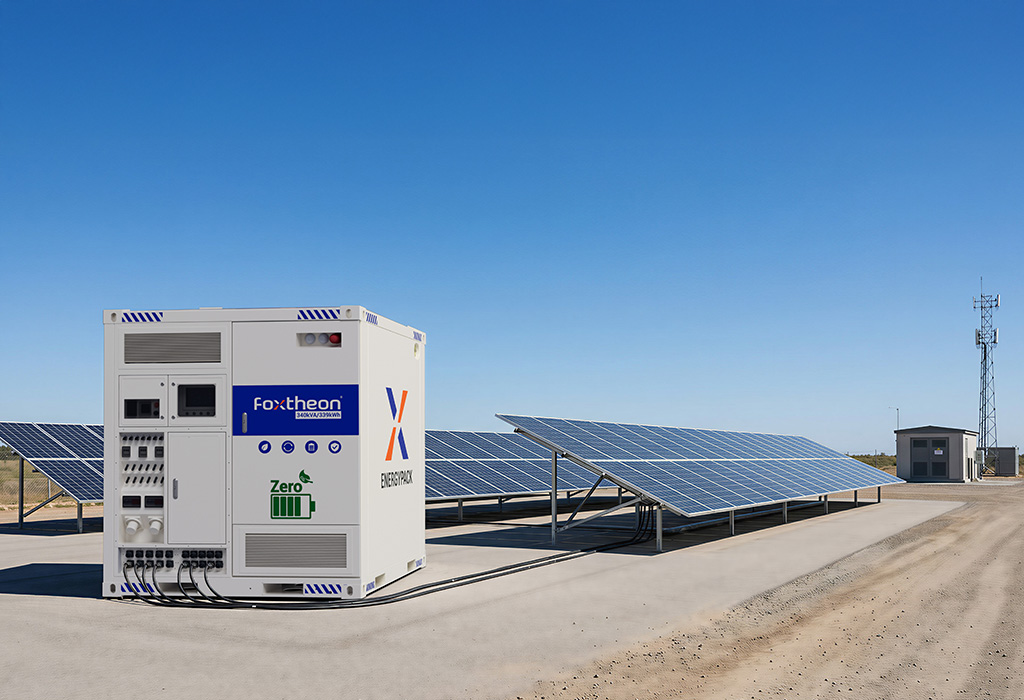
Rather than offering a single battery type, Foxtheon provides engineering consultations to select the best batteries for off grid power based on site-specific load data, climate, and existing generator assets. Their EnergyPack series (LFP-based) includes:
- Modular 5 kWh to 200 kWh blocks with integrated passive balancing and pre-charge circuits.
- Hybrid inverter compatibility (Victron, SMA, Schneider, Deye) via pre-configured communication profiles.
- Remote SoH monitoring with predictive alerts for cell imbalance or temperature drift.
- Optional lead-acid replacement kits that retrofit existing battery racks with LFP drop-in modules, preserving existing enclosures and cabling.
All Foxtheon off-grid solutions include a 10-year performance guarantee (70% capacity retention) and on-site commissioning support for hybrid generator integration.
Frequently Asked Questions (FAQ)
Q1: What are the best batteries for off grid power in cold climates (below -10°C)?
A1: For locations regularly below freezing, LFP batteries require internal heating pads or insulated enclosures with self-heating BMS (available from select manufacturers). Alternatively, nickel-iron batteries operate down to -40°C without heating, but efficiency drops to 55-60% and self-discharge increases. Lead-acid batteries lose 50% of capacity at -20°C and risk freezing if discharged below 40% SoC. The optimal solution is a heated LFP bank with proper enclosure sizing.
Q2: Can I mix different battery chemistries in the same off-grid system?
A2: Direct mixing is not recommended due to different voltage curves and charge acceptance. However, a hybrid configuration using separate charge controllers and DC-DC converters is possible (e.g., LFP for daily cycling and lead-acid for backup reserve). This adds complexity and cost. Most off-grid designers select a single chemistry sized for the worst-case scenario.
Q3: How often do off-grid LFP batteries need replacement compared to lead-acid?
A3: A properly sized LFP bank used daily (80% DoD) typically lasts 10-15 years. Flooded lead-acid lasts 3-5 years under similar duty, while AGM lasts 4-7 years. Even with LFP’s higher upfront cost, the total cost of ownership over 15 years favors LFP due to avoided replacement labor and freight to remote sites.
Q4: What happens when an off-grid battery bank reaches end-of-life?
A4: End-of-life is defined as 70-80% of nominal capacity for most manufacturers. The bank does not fail suddenly; usable runtime gradually decreases. At this point, cells can be repurposed for less demanding stationary applications (e.g., solar street lights). LFP cells are non-toxic and recyclable; lead-acid has a 99% recycling rate in regulated regions. Foxtheon offers take-back programs for spent batteries, providing recycling certificates.
Q5: Do I still need a generator if I install the best batteries for off grid power?
A5: For most commercial off-grid sites, a generator remains a valuable component for three scenarios: extended periods of low solar/wind (e.g., weeks of overcast), high surge loads exceeding inverter capacity, and battery maintenance bypass. The generator’s role shifts from primary power source to seasonal or emergency backup, reducing runtime by 80-90%. This preserves your generator investment while cutting fuel and maintenance costs.
Request a Technical Assessment for Your Off-Grid Project
Selecting the optimal battery chemistry and capacity requires site-specific modeling. Provide your team’s load profile (daily kWh, peak kW), location (for solar insolation data), and any existing generator specifications. The engineering team at Foxtheon will return:
- Comparative LCOS analysis for LFP, lead-carbon, and Ni-Fe over a 15-year horizon.
- Hybrid control logic diagram showing integration with your current generator model.
- Recommended battery bank size, inverter rating, and solar array configuration.
- Installation layout with thermal management recommendations for your climate zone.
Submit an inquiry through the Foxtheon contact page to schedule a no-obligation technical consultation. All assessments include a detailed report and a proposal for turnkey or component-level supply.