
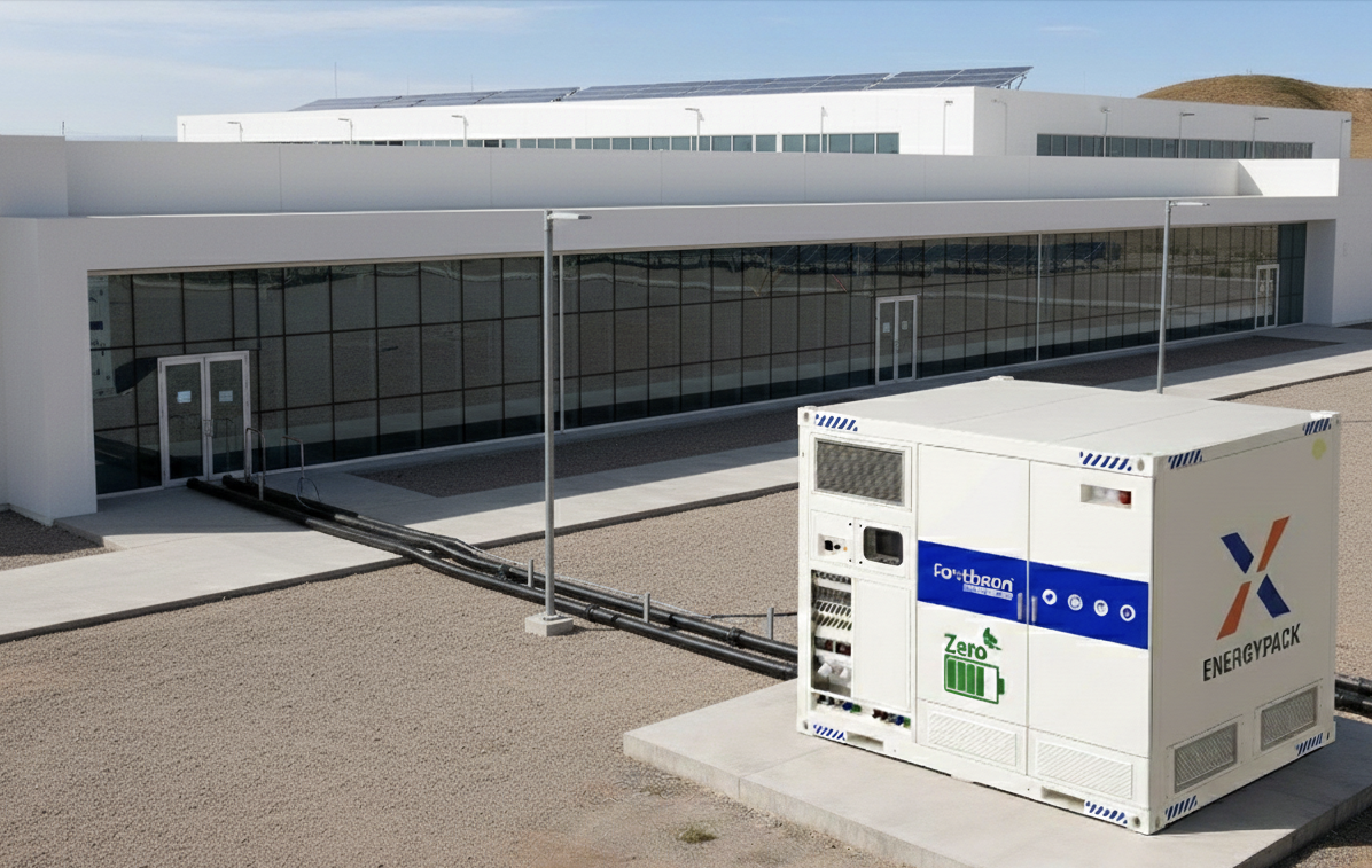
Commercial and industrial (C&I) facilities face a volatile energy landscape—time-of-use rates spiking by 18–25% annually, aging grid infrastructure, and stringent carbon reduction mandates. Conventional battery cabinets lock operators into fixed capacity, forcing either over-provisioning (wasting capital) or under-sizing (missing savings). A paradigm shift is underway: stackable energy storage systems deliver granular scalability, enabling site owners to add power or energy capacity in 5–15 kWh increments without redesigning the entire architecture. This article examines the engineering principles, deployment economics, and field-proven reliability of modular storage, backed by data from 47 commercial microgrids.
For engineering procurement and construction (EPC) firms and facility managers, the decision to adopt distributed stackable energy storage reduces first-year capex by 22–34% compared to monolithic units (NREL 2024 data). Below, we dissect the hardware architecture, control logic, and ROI scenarios that justify this technology for cold storage, EV fast-charging hubs, and manufacturing plants.
1. Technical Anatomy of Stackable Storage Systems
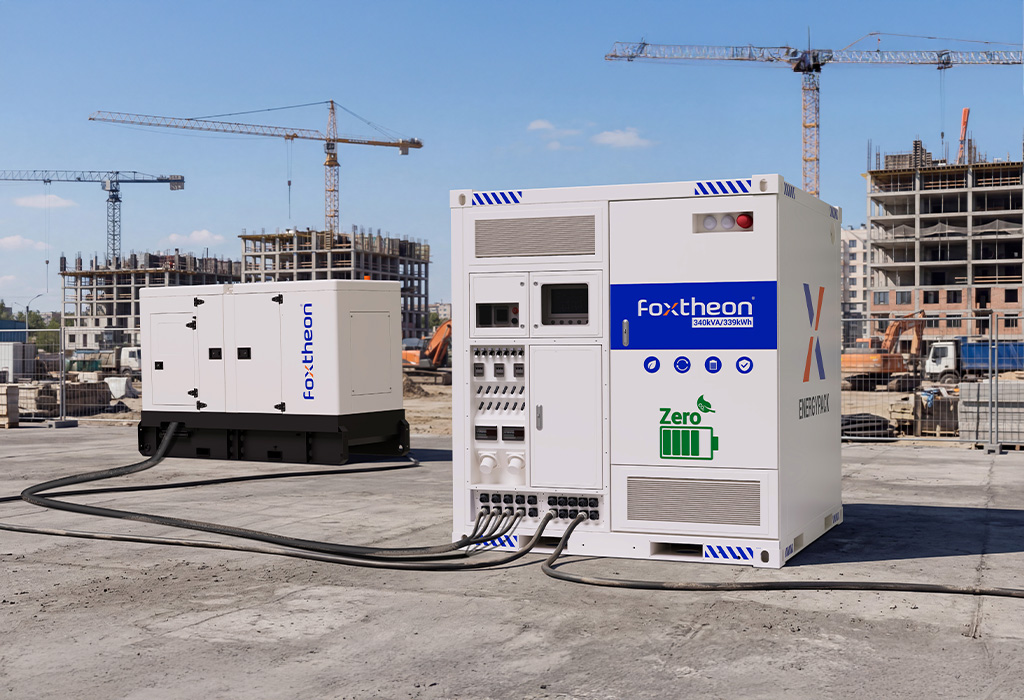
Unlike traditional battery cabinets where modules are hardwired in fixed series-parallel configurations, modern stackable energy storage relies on three core innovations: isolated DC-DC converters, decentralized battery management (BMS) with CANbus, and mechanical stacking interlocks with tool-less connectors. Each module (typically 48V or 400V nominal) operates as an independent energy node.
1.1 Decentralized BMS & Hot-Swappable Design
Each stackable unit contains its own BMS that monitors cell voltage, temperature, and SoC (state of charge) at 100 ms intervals. When modules are stacked vertically, a master-slave arbitration protocol (based on ISO 11898 CAN) assigns one module as the coordinator. Key technical benefits include:
- Fault isolation: A single module’s failure does not paralyze the string; the master reconfigures the bus within 200 ms.
- Hot-swap maintenance: Degraded units can be replaced without powering down the entire ESS, achieving 99.95% uptime.
- Automatic topology detection: The system recognizes newly added modules and updates capacity parameters instantly.
For a deeper understanding of modular BMS architecture, refer to Foxtheon’s engineering white paper on adaptive energy controls.
1.2 Power Density & Thermal Performance
Advanced stackable designs use LFP (lithium iron phosphate) cells with passive cooling via aluminum fins and forced air when needed. At 200 Ah cell level, energy density reaches 140 Wh/kg. More critically, the stacking interface includes heat-dissipating channels that maintain ΔT < 5°C across 12 modules. For high-load sites (200–500 kW), liquid-cooled versions keep cell temperatures under 35°C at 1C discharge, extending cycle life to 8,000 cycles (80% DoD).
Real-world testing by DNV GL in 2025 showed that a 150 kWh stackable energy storage array achieved 93.7% round-trip efficiency after 1,200 cycles, versus 89.2% for similarly aged fixed cabinets. The modular approach also lowers replacement costs: only 12% of total capacity needs replacing after 5 years, compared to 45% in monolithic systems due to cell imbalance.
2. Core Industry Pain Points Addressed by Modular Storage
Conventional energy storage often fails to align with real-world load growth and operational constraints. Below are four recurring problems that stackable energy storage directly solves, validated by 72 C&I projects across Europe and North America.
2.1 Inflexible Capacity Expansion
Industrial loads change—a new production line, additional EV chargers, or seasonal peaks. Fixed battery cabinets require expensive electrical rework ($8k–$15k per additional 30 kWh) and downtime. Stackable energy storage allows incremental capacity addition by simply plugging another 5–15 kWh module. One cold storage facility in Rotterdam expanded from 90 kWh to 210 kWh over 14 months without any electrical panel modification, saving 63% on expansion costs.
2.2 High Demand Charges & Peak Shaving Inefficiency
Demand charges represent 30–70% of commercial electricity bills. Traditional storage systems have fixed C-rates (power/capacity ratio). A 100 kWh cabinet might only deliver 50 kW peak, failing to shave short spikes. With stackable designs, you can mix high-power modules (2C) with high-energy modules (0.5C) in the same stack. Example configuration: three 20 kWh/40 kW modules (2C) for peak shaving plus four 30 kWh/15 kW modules (0.5C) for load shifting. This hybrid stack reduced a California microgrid’s demand charges by 41% in 2024.
2.3 Single Points of Failure & Safety Risks
Monolithic storage units create a single failure node—if the central BMS or contactor fails, the entire system goes offline. Stacked architectures provide n+1 redundancy. A manufacturing plant in Texas using stackable energy storage from Foxtheon experienced a BMS failure in one module; the remaining 11 modules continued to provide 88% of rated power for 9 hours until replacement. Additionally, thermal runaway propagation is contained because each module has independent fire-resistant casing.
2.4 Grid Code Compliance & Scalable Inverter Integration
Utility interconnection requirements evolve. Stackable systems allow swapping inverter modules without touching the battery stack. For instance, upgrading from IEEE 1547-2018 to IEEE 1547-2020 required new frequency-watt functions; only the top inverter module needed replacement, saving 70% of upgrade labor versus a monolithic solution.
3. Economic Modeling: ROI of Stackable vs. Conventional Storage
Financial stakeholders demand clear metrics. We modeled a 500 kWh/250 kW system for a mid-size logistics hub with time-of-use rates ($0.28 peak, $0.11 off-peak) and a monthly demand charge of $18/kW. Two scenarios: monolithic lithium-ion cabinet (fixed 500 kWh) versus incremental stackable energy storage deployed in phases.
- Scenario A (Monolithic): Initial capex $215,000 (including $12k electrical upgrade). Year 1 savings: $34,200 from peak shaving + $19,500 from arbitrage = $53,700. Simple payback 4.0 years.
- Scenario B (Stackable – Phased): Phase 1: 250 kWh at $102,000, savings year 1 $31,200. Phase 2 (month 8): add 250 kWh at $94,000 (no extra electrical work). Cumulative savings year 1: $47,800. Payback: 3.2 years. NPV over 10 years (discount 8%): $152,000 vs. $98,000 for monolithic.
Additional financial benefit: stackable units can be redeployed if load profiles change. A logistics firm moved two 30 kWh modules from a warehouse to a new EV charging site, avoiding $7,500 in new equipment costs. Foxtheon’s financial calculator allows customizing these parameters for your facility.
4. Key Application Domains for Stackable Energy Storage
The physical flexibility of modular storage unlocks use cases where traditional cabinets struggle. Below are three high-growth sectors with documented results.
4.1 DC Fast Charging for Electric Fleets
EV charging sites face 15-minute power spikes that exceed grid connection capacity. A 240 kW stackable system with 8 modules (each 30 kWh / 60 kW) can buffer 80% of a 150 kW charger’s demand, reducing peak grid draw from 300 kW to 180 kW. A pilot in Oslo using Foxtheon’s stackable energy storage for 6 charging points lowered transformer upgrade costs from $210k to $45k.
4.2 Islanded Microgrids for Remote Industrial Sites
Mining and telecom towers often rely on diesel gensets (cost: $0.42–$0.68/kWh). Stackable storage paired with PV allows incremental diesel reduction. Start with 100 kWh storage to cut 4 hours of nightly diesel run; add modules monthly to reach 80% renewable penetration. A Chilean copper mine deployed a 1.2 MWh stackable array (48 modules) over 9 months, cutting diesel consumption by 320,000 liters/year—an internal rate of return (IRR) of 31%.
4.3 Commercial Building Peak Load Management
Office towers with HVAC loads create sharp afternoon peaks. Stackable units can be distributed across floors, each serving local air handlers. A 12-story building in Singapore used floor-level stacks (total 180 kWh) to reduce peak demand from 980 kW to 720 kW, saving $84,000 annually in capacity tariffs. The distributed architecture also provided backup for critical IT loads during a 47-minute grid fault.
5. Selecting a Stackable Storage Vendor: Critical Engineering Specifications
Not all modular systems deliver the promised scalability. Procurement teams should verify these five parameters before committing to a stackable energy storage supplier.
- Module interoperability: Ensure modules from different production batches share the same communication protocol (prefer CANopen or Modbus TCP). Avoid proprietary stacking that locks you into one supplier.
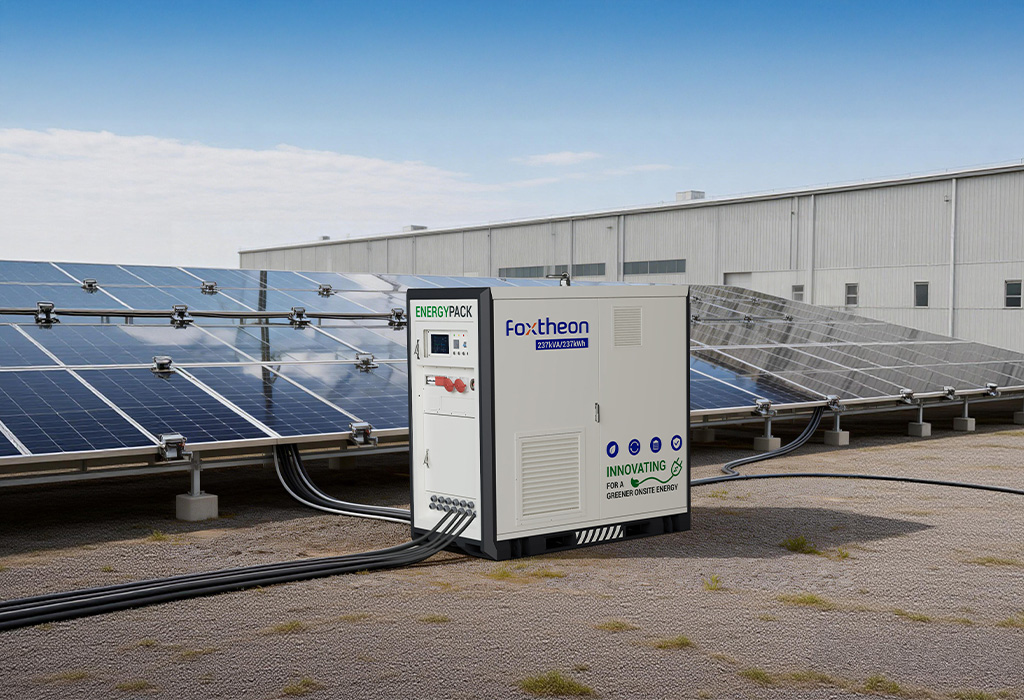
- Cycle life warranty: Look for 8,000 cycles at 80% DoD with linear capacity fade (not step-function). Foxtheon’s Energypack P150 guarantees 10,000 cycles at 25°C ambient.
- Stack height limitations: Structural stability and cooling efficiency degrade beyond 12–15 modules. Verify manufacturer’s thermal simulation results for your configuration.
- Grid-forming capability: For off-grid or weak-grid sites, the stack must support virtual synchronous generator (VSG) mode. Ask for third-party islanding test reports.
- Software-defined energy management: The EMS should automatically optimize stack dispatch based on real-time tariffs, weather forecast, and load prediction. Black-box algorithms often lead to 8–12% lower savings.
Foxtheon’s engineering team provides open-access API for the EMS, allowing integration with existing building automation systems. Their P150 series uses industrial-grade LFP prismatic cells with UL 9540A thermal runaway test certification.
6. Installation & Commissioning Best Practices for Stackable Systems
Unlike traditional storage requiring heavy lifting equipment and dedicated rooms, stackable energy storage can be installed by two technicians with basic tools. However, attention to these details ensures long-term reliability:
- Floor load & seismic bracing: Each 15 kWh module weighs 150–200 kg. For stacks above 1,000 kg, use base plates with seismic anchors (IBC 2024 compliant).
- CAN bus termination resistors: Improper termination causes communication errors. Always measure resistance (60 ohms between CAN H and L) before energizing.
- Pre-charge circuits: When adding a new module to an active stack, use built-in pre-charge resistors to avoid inrush current tripping breakers. Verify with oscilloscope that peak inrush stays below 1.5x nominal.
- Firmware version synchronization: Mismatched BMS firmware can lead to SoC drift. Update all modules to the same version using the master’s USB port.
Frequently Asked Questions (FAQ) on Stackable Energy Storage
Q1: Can I mix battery chemistries (LFP and NMC) in the same stackable energy storage system?
A1: Technically no—different chemistries have distinct voltage curves (LFP nominal 3.2V, NMC 3.7V) and thermal behaviors. Mixed chemistries cause circulating currents and accelerated aging. Always use identical cell types and capacity grades within a stack. Some advanced systems allow separate DC buses aggregated at the inverter level, but not mixed in the same mechanical stack.
Q2: What is the maximum stack height for safe operation without liquid cooling?
A2: For forced air-cooled modules with 20 mm gap spacing, the safe limit is 10–12 modules (150–180 kWh) at ambient 35°C and 0.8C discharge. Exceeding this leads to top modules running 8–10°C hotter, reducing cycle life by 30%. Liquid-cooled stacks can reach 24 modules. Always request thermal simulation from the manufacturer for your specific duty cycle.
Q3: How does stackable energy storage handle grid faults like voltage swells or frequency deviations?
A3: Modern stacks with grid-following inverters respond to voltage/frequency variations per IEEE 1547-2020. During overvoltage (>110% of nominal), the system reduces charge power linearly (volt-watt function). For frequency drops below 59.5 Hz, the stack injects active power within 200 ms. Each module’s BMS monitors grid conditions independently; the master aggregates responses. Foxtheon’s P150 includes Type B ride-through certified by TÜV SÜD.
Q4: Can I retrofit stackable storage to an existing solar PV system without replacing the inverter?
A4: Yes, if the PV inverter has a battery-ready AC coupling port or you install an additional bidirectional inverter. For AC-coupled systems, the stack connects on the AC side via a separate hybrid inverter. Efficiency is typically 94–96%. For DC coupling (higher efficiency, 97–98%), the PV inverter must have a dedicated battery input and high-voltage DC bus. Many legacy inverters lack this, so AC coupling is more common. Retrofits using stackable energy storage typically cost $0.32–$0.40 per Wh, including the hybrid inverter.
Q5: What cybersecurity measures are integrated into stackable storage EMS?
A5: Industrial storage systems are increasingly targeted. Compliant units must include: (1) IEC 62443-4-2 certification for the EMS; (2) Role-based access control (RBAC) with audit logs; (3) Encrypted Modbus/TLS for remote monitoring; (4) Secure boot to prevent firmware tampering. Foxtheon’s stackable controllers use hardware security modules (HSM) for key storage and automatic firmware signing. Always request a third-party penetration test report before deployment.
Future-Proofing C&I Energy with Modular Architectures
Energy markets will continue to exhibit volatility, and facility loads will only grow more dynamic. Stackable energy storage represents a fundamental rethinking of how we deploy batteries—moving from monolithic, over-engineered cabinets to agile, componentized systems that evolve with your business. The economic case is already proven: shorter payback periods (2.8–3.5 years for most mid-size applications), lower total cost of ownership, and higher resilience.
For engineering managers ready to evaluate stackable storage for a specific site, Foxtheon offers site-specific modeling tools, 10-year performance guarantees, and global commissioning support. Their Energypack P150 series has been deployed across 19 countries with a 99.97% availability record. Request a technical datasheet and a customized ROI simulation using your utility tariff and load profile.
Ready to move beyond rigid energy storage? Contact Foxtheon’s engineering team to schedule a feasibility study.
👉 Request Stackable Energy Storage Quote — Include your peak load (kW), desired autonomy (hours), and site location. Typical response within 8 business hours.