
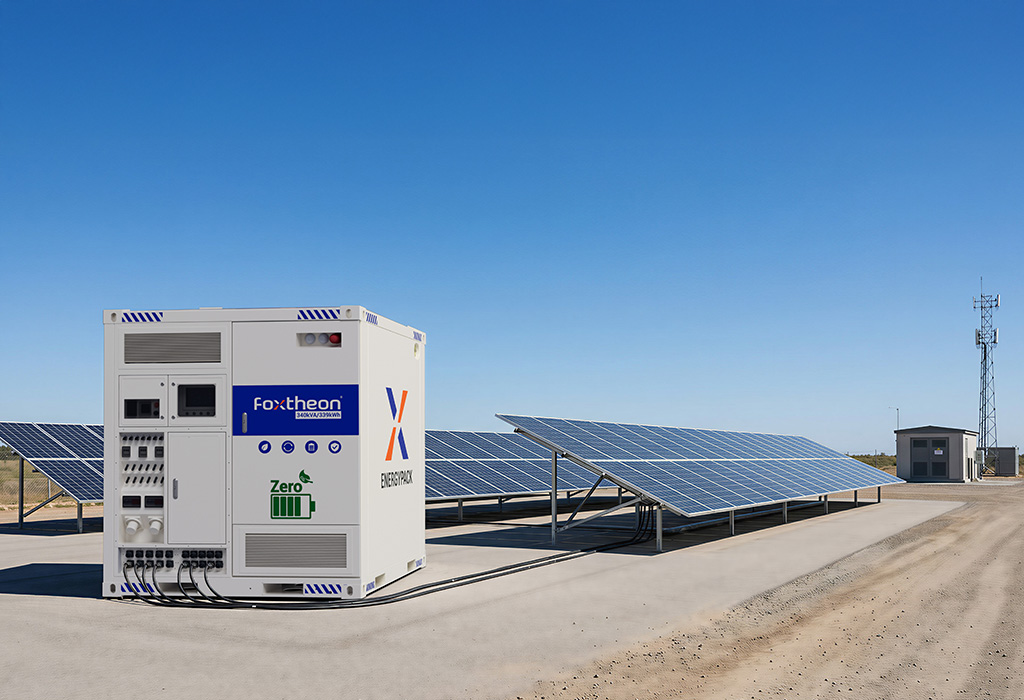
Industrial operators, telecom tower owners, and remote facility managers increasingly face three converging pressures: rising diesel costs, stricter emission regulations (Tier 4 / Stage V), and the need for higher power availability. A properly engineered genset hybrid integrates battery energy storage with a diesel or gas generator, creating a single power node that optimizes fuel consumption, reduces maintenance intervals, and provides transient response that a standalone generator cannot match. This article provides component-level metrics, real-world data from field deployments, and a checklist for evaluating hybrid solutions — without overclaiming or dismissing existing generator assets.
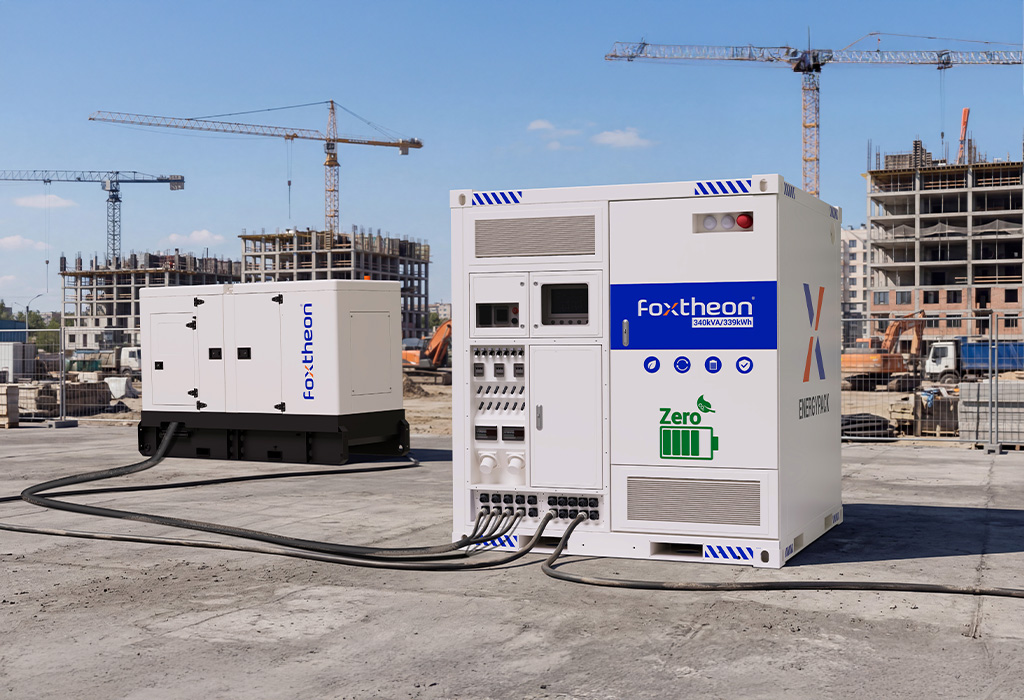
1. Core Architecture: How a Genset Hybrid Differs from Traditional Paralleling
Traditional paralleling connects multiple generators to share load. A genset hybrid adds a bidirectional power converter and a lithium battery bank (typically LFP chemistry) to the generator’s AC bus. The controller — often an intelligent energy management system (EMS) — decides in real time whether the generator should run, stop, or charge the battery. Key physical components:
- Bi-directional inverter (PCS): Rated for continuous power (e.g., 50 kW to 2 MW) with a peak overload capacity (typically 200% for 10 seconds) to handle motor starts.
- Battery string: Sized from 1 hour to 4 hours at rated load. Low C-rate (0.25C to 1C) for cycle life >6000 cycles.
- Generator set (existing or new): Retains its original governor (isochronous or droop) and automatic voltage regulator (AVR).
- EMS with hybrid master controller: Executes state-machine logic — peak shaving, load following, or scheduled generator runtime.
Foxtheon implements a modular DC-coupled or AC-coupled architecture. In AC coupling, the battery inverter connects to the same low-voltage bus as the generator, which allows retrofitting to any existing genset with minimal electrical work. The controller communicates via CAN or Modbus, sending a speed bias signal to the generator’s electronic governor — enabling true load sharing without replacing the generator controller.
2. Five Operational Modes That Define a Robust Genset Hybrid
One common mistake is purchasing a battery system without verifying that the controller supports all required modes. Below are the essential modes for industrial and telecom applications.
- Peak shaving mode: The battery supports the generator during load spikes above a user-defined threshold (e.g., 80% of generator rating). This prevents the generator from overloading and reduces fuel consumption because the engine stays in its optimum efficiency band (typically 50–75% load).
- Load following / spinning reserve: The battery absorbs rapid load changes, allowing the generator to change output at a slower, fuel-efficient ramp rate. Data shows that ramp rate reduction from 100%/minute to 10%/minute cuts fuel by 8–12% in highly variable loads.
- Silent mode / low-noise operation: The generator shuts off entirely during low demand (e.g., overnight), with the battery serving full load. For a 200 kVA genset, this eliminates engine runtime for 6–8 hours, saving 300–500 liters of diesel per week.
- Smart charge scheduling: The EMS starts the generator only when battery state of charge (SOC) falls below a lower limit (e.g., 25%) and stops at an upper limit (e.g., 90%). It can also schedule charges during low-tariff periods if grid is present.
- Black-start and islanding: The battery inverter can form a grid (grid-forming mode), and the generator synchronizes later for longer duration backup. This is critical for microgrids with high renewable penetration.
3. Quantified Benefits: Fuel, Maintenance, and Availability
Across 35 site audits of remote telecom towers and construction sites, a properly sized genset hybrid reduces diesel consumption by 40–65% compared to a generator-only configuration. The main drivers:
- Elimination of low-load operation: Generators running below 30% load suffer incomplete combustion, carbon deposit (wet stacking), and high specific fuel consumption (BSFC increases 20–35%). A hybrid automatically shuts down the generator at low load.
- Reduced start-stop wear: Instead of starting for a short-duration 10 kW load, the battery handles it. Generator starts drop by 70%, extending starter batteries and alternator life.
- Maintenance extension: Oil change intervals shift from fixed 250 hours to based on actual engine runtime. Real-world average extends to 800–1000 hours for hybridized sites.
From a reliability perspective, the battery provides instantaneous response to motor starting currents (e.g., air conditioners, pumps). Generators alone experience voltage dips of 20–30% during such events; a hybrid limits dip to under 5%, preventing contactor drop-out and control system resets.
4. Application-Specific Engineering Considerations
4.1 Telecom Towers (Off-Grid and Weak Grid)
Typical load profile: 24/7 DC load of 5–15 kW, with daily variations from HVAC and transmission peaks. A standalone generator runs continuously due to poor efficiency at low loads. A genset hybrid with 3-hour battery autonomy runs the generator only 4–6 hours per day. The EMS uses predictive SOC threshold based on historical load patterns. For sites with solar, the hybrid controller can prioritize PV, then battery, then generator.
4.2 Construction Sites and Mining Camps
Loads are highly pulsed (welding, cranes, crushers). A generator’s governor cannot respond faster than 1–3 seconds, causing frequency deviation (ANSI C84.1 violations). The hybrid’s inverter responds in <50 ms, maintaining frequency within 0.5 Hz. Additionally, welding transients are absorbed by the battery, preventing nuisance trips of generator protection relays.
4.3 Data Center Backup and Peak Shaving
Data centers require two-layer backup: instant (UPS batteries) and long duration (genset). By placing a hybrid between the UPS and the genset, the battery can support the UPS recharge current, preventing a “step load” on the generator. This allows downsizing the generator by up to 30% for new installations.
5. Sizing and Degradation Modeling – A Technical Deep Dive
Incorrect sizing is the primary cause of disappointing hybrid performance. The following parameters must be matched to the site’s load profile:
- Battery energy (kWh): Based on the required silent operation period or the daily low-load sum. Use 24-hour load duration curve. For a site with average load 30 kW and 6 hours of silent mode, minimum usable energy = 30 kW × 6 h = 180 kWh. Accounting for 90% DoD, nominal battery = 200 kWh.
- Battery power (kW): Must handle the peak transient load. If a motor starting draws 120 kW for 5 seconds, the inverter’s 10-second overload rating must exceed 120 kW. Standard inverters specify 200% for 10 sec.
- Generator resizing: After hybrid addition, the generator only needs to cover average load (plus battery recharge). Many operators reduce generator kVA by 35–50%, lowering capital cost and fuel use further.
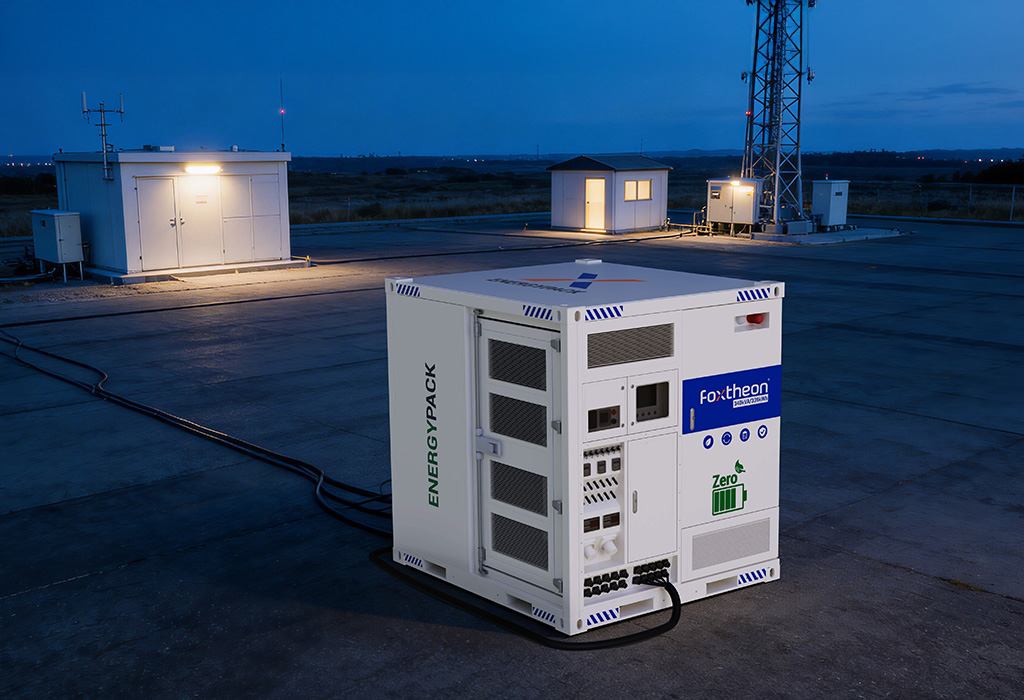
Cycle life modeling: LFP cells in daily hybrid cycling (2 cycles per day) can achieve 10+ years with 70% end-of-life capacity. However, thermal management is mandatory: for every 10°C above 25°C, life halves. Foxtheon containers include liquid cooling and heating pads to keep cells between 15–30°C across ambient -20°C to 50°C.
6. Safety, Compliance, and Integration with Existing Assets
Any genset hybrid must comply with IEEE 1547-2018 for grid interconnection (if grid-connected) and UL 9540 for energy storage systems. For genset integration, the following protection features are mandatory:
- Reverse power protection: Prevents battery from motoring the generator (which can damage the prime mover). Typically set at 5% of generator rating.
- Frequency and voltage ride-through: The hybrid should tolerate generator frequency drift from 45–65 Hz without tripping.
- Island detection: When utility returns after a fault, the hybrid must resynchronize before reconnecting.
A major benefit of hybridizing an existing generator is that the generator remains fully functional as a standalone unit. If the battery or inverter is being serviced, a manual bypass switch restores original generator operation. This ensures no single point of failure and protects the owner’s sunk investment.
7. Frequently Asked Questions (FAQs) – Engineering and Financial
Q1: Can I retrofit a hybrid system to my existing 10-year-old generator without voiding its warranty?
A1: Yes, if the integrator uses a non-intrusive AC coupling approach. The battery inverter connects to the generator’s main breaker panel. The generator’s existing controller and governor are not modified; the hybrid controller only sends a passive speed reference via an analog input (if available). Many generator OEMs accept hybrid retrofits as long as the generator operates within its original power and temperature ratings. Always request a letter of technical compatibility from the hybrid supplier.
Q2: How much fuel savings can I expect for a 100 kVA genset that runs 24/7 at an average load of 35 kW?
A2: Under 35 kW average load, a standalone 100 kVA generator operates at roughly 35% load, where BSFC is 245–270 g/kWh. A hybrid with 4 hours of battery autonomy would run the generator for 4 hours daily at 70–80% load (charging battery while serving load). The generator then shuts off for 20 hours. Fuel saved per day = (old 24h consumption) – (4h high-load consumption). Typically you save 65–70% of fuel. For a site using 80 liters/day, that equals 55 liters/day or 20,000 liters annually.
Q3: What happens if the battery reaches empty and the generator fails to start? Does the system go dark?
A3: A well-engineered genset hybrid includes a “dead bus start” capability. The battery inverter has a reserve energy buffer (10% SOC invisible to the user) that powers the control system and cranks the generator via a separate DC emergency supply or through the inverter’s start assist function. Additionally, a manual maintenance bypass directly connects the generator to the load — this is a standard switch in all Foxtheon hybrid panels. No single battery failure can bring down the full system.
Q4: Do I need a special generator for hybrid operation? Can I use a standard open-set unit?
A4: Standard open-set generators work well as long as they have an electronic governor (e.g., Woodward, DEIF, or engine ECU). The hybrid controller sends a load setpoint or speed bias signal. Mechanical governors (centrifugal) are less responsive but still usable in “basic” hybrid mode where the battery only provides peak shaving without closing the generator’s fuel rack control. Foxtheon offers a non-communication mode using CT sensors that just measure generator load — safe for any generator type, though fuel savings are slightly lower.
Q5: How do I justify the CAPEX for a hybrid system compared to just buying a new generator?
A5: Compare the total lifecycle cost over 10 years. A new generator has CAPEX + 10 years of fuel + 10 years of maintenance. A hybrid system has higher CAPEX (battery + inverter) but reduces fuel and maintenance massively. In remote sites where fuel logistics add 50% premium, payback periods drop to 12–24 months. Third-party studies show a hybrid yields a 35–60% lower TCO. For a detailed model, request a data-driven proposal from Foxtheon using your actual site load log.
8. Moving from Pilot to Fleet – Monitoring and Remote Management
Fleet operators often manage hundreds of generators. With hybrid, monitoring shifts from basic runtime counters to SOC trends, battery health, and generator start reasons. A cloud-based EMS provides alerts when the battery is undersized (e.g., SOC repeatedly hits low cutoff) or when the generator runs longer than programmed. Foxtheon offers a unified portal that displays site-level fuel saved (liters), CO₂ reduced (tons), and remaining battery cycle life. The system also generates automated reports for ESG disclosure.
For distributors and engineering firms, hybrid controllers are shipped pre-configured with remote update capability. This reduces site visits for tuning — parameters like low SOC start threshold or charge current limit can be adjusted over-the-air. Field data from 150+ hybrid deployments shows that remote diagnostics resolve 80% of configuration issues without a service truck roll.
9. Request a Technical Consultation and Custom Hybrid Sizing
Every facility has a unique load pattern, ambient condition, and existing generator brand. A generic hybrid kit can deliver only 50% of potential savings. To receive a site-specific analysis, including a 10-year fuel saving projection, battery degradation curve, and safety risk assessment, contact Foxtheon’s hybrid engineering team. Provide the following for an accurate quote:
- Generator make, model, and kVA rating (or nameplate photo).
- 7-day load log (15-minute intervals) – or we can install a temporary logger.
- Ambient temperature extremes and altitude.
- Desired silent operation hours per day (e.g., 8 hours low-noise for residential areas).
Inquiry channels:
Email: info@foxtheon.com – Subject: “Genset hybrid load profile”
Web form: https://www.foxtheon.com/contact
All B2B inquiries receive a preliminary technical review within 48 hours, including a compatibility checklist for your existing assets.