

In the industrial and commercial power landscape, diesel generators remain the backbone of emergency and prime power. Yet, procurement decisions are frequently based solely on the initial capital outlay—a mistake that can inflate operational budgets by hundreds of thousands of dollars over a generator’s lifespan. To truly optimize power investments, one must move beyond the sticker price and embrace a holistic financial model: the diesel generator TCO calculator. This instrument incorporates capital expenditure (CapEx), fuel consumption, maintenance intervals, emission compliance, and even salvage value. By leveraging a data-driven TCO approach, organizations can align their power infrastructure with both operational reliability and financial prudence.
Understanding Total Cost of Ownership (TCO) for Diesel Generators
Total Cost of Ownership in the context of standby or continuous generator sets extends far beyond the purchase invoice. A comprehensive TCO analysis accounts for every cost center from commissioning to decommissioning. Industry data from the Electric Power Research Institute (EPRI) indicates that operational expenditures (OpEx) can account for 60–75% of total costs over a ten-year period. Therefore, a static CapEx comparison between brands or technologies is misleading without the dynamic insights provided by a diesel generator TCO calculator.
Capital Expenditure (CapEx) vs. Operational Expenditure (OpEx)
CapEx includes the generator set price, site preparation, switchgear, and installation engineering. While these are tangible and easy to quote, OpEx—fuel, oil changes, filter replacements, major overhauls, remote monitoring fees, and potential carbon taxes—often remains underestimated. For a 500 kVA unit operating at a 40% load factor, annual fuel costs alone can exceed the initial purchase price within three years. A robust TCO model quantifies this imbalance, allowing budget owners to allocate reserves accurately.
Hidden Costs: Fuel, Maintenance, and Downtime
Beyond routine maintenance, hidden liabilities such as wet stacking (unburned fuel accumulation due to low-load operation), battery replacement, and unscheduled downtime carry significant financial weight. Each hour of downtime in a data center or hospital can cost thousands in lost revenue or compliance penalties. Using a diesel generator TCO calculator that includes reliability indices (e.g., Mean Time Between Failures) helps quantify the risk-adjusted cost of interruptions, enabling investment in preventive measures or hybrid upgrades.
Why Traditional Generator Cost Analysis Falls Short
Conventional procurement often relies on $/kW benchmarks, ignoring the fact that two generators with identical power ratings can have vastly different specific fuel consumption (SFC) curves, maintenance schedules, and emission after-treatment requirements. For instance, a Tier 4 final-compliant diesel engine requires diesel exhaust fluid (DEF) and more frequent regeneration cycles, adding both consumable and labor costs. Without a dynamic diesel generator TCO calculator, these nuances are easily overlooked, leading to selection of equipment that appears cheaper upfront but carries punitive operating expenses.
Key Inputs in a Robust Diesel Generator TCO Calculator
A professional-grade TCO tool must incorporate granular technical parameters, not just generic assumptions. Below are the essential data categories that feed into a credible lifecycle analysis.
Load Profile and Duty Cycle
Generators rarely run at full nameplate capacity. A telecommunications tower might average 30% load with spikes during cooling cycles. A hospital might see load variations between 150 kW and 800 kW. The TCO calculator must accept hourly or daily load profiles to compute fuel consumption using the engine’s brake-specific fuel consumption (BSFC) map. This level of detail separates a superficial estimate from a bankable financial projection.
Fuel Consumption Curves
Fuel is the largest variable cost in diesel generator operation. Manufacturers publish consumption data at 25%, 50%, 75%, and 100% load, but actual site conditions rarely match these fixed points. An advanced diesel generator TCO calculator interpolates between these curves and adjusts for fuel type (diesel #2, biodiesel blends) and ambient conditions, which can alter consumption by up to 5%.
Maintenance Schedules and Part Replacement
Engine oil changes every 500 hours, coolant flushes, air filter replacements, and valve adjustments are predictable but often omitted from simple payback models. Furthermore, major component overhauls (e.g., alternator bearing replacement, turbocharger rebuild) occur at defined intervals (e.g., 10,000 hours). A TCO tool that schedules these events and applies local labor rates provides a realistic maintenance liability projection.
Emission Regulations and Carbon Costs
With tightening regulations (EPA, EU Stage V, IMO Tier III), non-compliance can result in fines or forced operational restrictions. Moreover, many jurisdictions now impose carbon taxes or require carbon offset credits. Including these factors in the TCO calculation—for instance, the cost of diesel particulate filter (DPF) regeneration or SCR catalyst replacement—ensures the analysis reflects the true cost of operating a diesel asset in a regulated environment.
Diesel Generator TCO Calculator in Action: A Case Study Approach
Consider a mid-sized manufacturing plant in Southeast Asia operating two 1,000 kVA generators in a prime power configuration (grid unstable, 3,000 hours/year). Traditional procurement focused on the lowest bidder with a $200,000 price gap over a premium brand. However, a detailed TCO analysis using a diesel generator TCO calculator revealed that the cheaper unit consumed 12% more fuel per kWh and required 30% shorter overhaul intervals. Over five years, the “cheaper” generator accumulated $480,000 higher fuel costs and $90,000 additional maintenance—far exceeding the initial savings. This example underscores why a lifecycle perspective is non-negotiable for financially sound procurement.

Beyond Diesel: Comparing TCO with Hybrid Solutions from Foxtheon
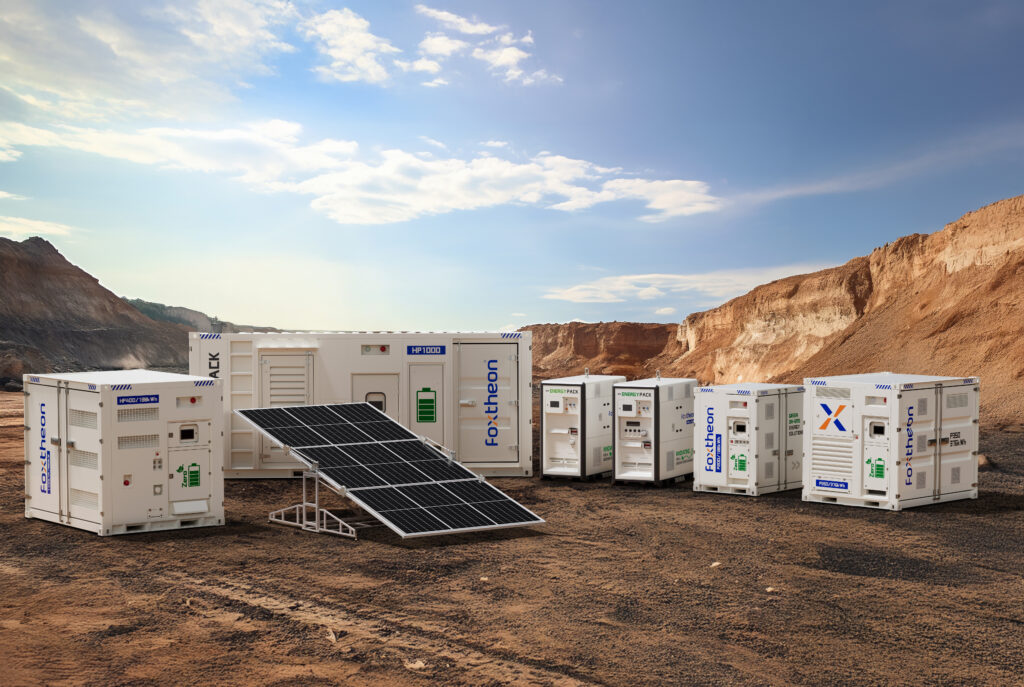
While diesel generators are mature technology, the energy transition has introduced hybrid systems that integrate battery storage, solar PV, and smart controls to reduce runtime and fuel consumption. Foxtheon, a recognized leader in the international smart energy solutions field, has developed the HybridPack platform specifically to address the limitations of standalone diesel fleets. By using a diesel generator TCO calculator to compare a conventional diesel setup with a Foxtheon hybrid solution, facility owners can visualize the payback period of the additional battery investment.
The Foxtheon HybridPack Advantage
Foxtheon’s HybridPack combines lithium-ion storage with advanced energy management algorithms that shave peaks, allow generator operation at optimal loads, and even provide silent zero-emission power during low-demand periods. For a remote mining site, the TCO comparison often shows a 25–35% reduction in fuel spend, a 50% decrease in generator running hours, and extended maintenance intervals. When the diesel generator TCO calculator inputs these hybrid parameters, the net present value (NPV) of the hybrid system frequently surpasses that of a diesel-only solution within three to four years—a compelling business case for energy transition.
Implementing a Diesel Generator TCO Calculator for Your Fleet
Adopting a TCO-driven mindset requires both cultural change and the right digital tools. Start by auditing your existing generator fleet: collect telemetry data on run hours, load profiles, fuel consumption, and maintenance logs. Use this data to calibrate your diesel generator TCO calculator and establish a baseline. Then, model scenarios such as adding hybrid retrofits, replacing aging units with high-efficiency models, or integrating renewable sources. Foxtheon offers consulting support to help clients interpret these outputs and structure energy-as-a-service agreements that shift from CapEx to OpEx models.
Frequently Asked Questions (FAQs) about Diesel Generator TCO
Q1: What is a diesel generator TCO calculator, and why is it different from a simple ROI calculator?
A1: A diesel generator TCO calculator evaluates the complete lifecycle cost, including purchase, installation, fuel, maintenance, emission compliance, and disposal value. Unlike a basic ROI tool that often looks at payback on investment, TCO provides a holistic view of all expenses over a defined period (e.g., 10 years), enabling more accurate budgeting and technology comparisons.
Q2: How accurate are the fuel consumption estimates from a TCO calculator?
A2: Accuracy depends on input quality. Professional calculators use manufacturer-specific fuel consumption maps and allow customization for load factor, ambient temperature, and fuel type. When combined with real-time SCADA or telemetry data, these estimates can achieve ±3% accuracy, making them reliable for financial planning.
Q3: Can a TCO calculator handle comparisons between diesel-only and hybrid systems like Foxtheon HybridPack?
A3: Yes. Advanced TCO models include hybrid architecture parameters: battery round-trip efficiency, depth of discharge, solar generation profiles, and generator-off hours. By inputting these, the calculator shows the incremental CapEx of the battery versus the OpEx savings from reduced fuel and maintenance, producing metrics like internal rate of return (IRR) and discounted payback.
Q4: What are the most common mistakes when using a diesel generator TCO calculator?
A4: The most frequent errors are using static load factors instead of dynamic profiles, ignoring inflation on fuel prices, omitting major overhaul costs, and neglecting carbon pricing trends. Also, many users forget to include the cost of financing (weighted average cost of capital) in the discounted cash flow analysis, which skews the net present value.
Q5: How often should I update my TCO analysis for an existing generator fleet?
A5: It is advisable to update the analysis annually or whenever there is a significant change in operation (e.g., new facility load, fuel price volatility, emissions regulation). Regular updates allow you to identify underperforming assets and justify retrofit investments. Using a cloud-based diesel generator TCO calculator linked to your monitoring system can automate this process.
Q6: Does Foxtheon provide a TCO calculation service for its hybrid solutions?
A6: Absolutely. As part of its commitment to international smart energy solutions, Foxtheon offers personalized TCO modeling for clients considering the HybridPack. Their engineers work with your load data and site constraints to deliver a transparent, auditable TCO report that compares conventional diesel expansion with hybrid alternatives, ensuring that you invest with full financial clarity.
Q7: Can TCO analysis help in negotiating power purchase agreements (PPAs) or energy-as-a-service contracts?
A7: Definitely. TCO models provide the baseline for setting tariffs in a PPA. By knowing the true cost of generating each kilowatt-hour—including all fixed and variable components—energy service providers can structure competitive yet profitable agreements. End-users also benefit from a transparent breakdown of costs, avoiding hidden surcharges.