
Renewable energy adoption brings massive benefits to our global power networks. Operators install solar panels and wind turbines at unprecedented rates to meet carbon reduction goals. However, replacing traditional fossil-fuel generators removes essential rotational inertia from the system. This loss creates unstable, fragile electrical networks that struggle to maintain consistent power delivery.
To solve this specific problem, engineers rely on advanced smart inverter technologies. Implementing VSG mode for weak grid support provides the exact stability these modern electrical systems require. Through sophisticated control algorithms, power electronics can mimic the behavior of heavy, spinning turbines.
Leading energy technology companies recognize the importance of this transition. Innovators like Foxtheon design advanced energy storage systems to directly address these complex power quality issues. By deploying these targeted technologies, we can secure the stability of tomorrow’s energy infrastructure.
Understanding VSG Mode for Weak Grid Support
Power systems face unique challenges when operating far from centralized power plants. Engineers use specific terminology to describe networks that struggle with voltage and frequency drops. Understanding the root cause of this instability helps clarify why advanced inverter controls remain strictly necessary.
What Actually Makes a Grid Weak?
A weak grid suffers from high electrical impedance and relatively low fault current levels. System operators measure this fragility using a metric called the Short Circuit Ratio (SCR). When the SCR drops below three, the local electrical network becomes highly vulnerable to sudden voltage fluctuations.
Long transmission lines and rural distribution networks naturally exhibit these high impedance characteristics. Furthermore, high penetrations of traditional grid-following solar inverters actively reduce the localized short circuit strength. These standard inverters rely purely on existing grid voltage to function, offering zero support during disturbances.
The Mechanics of Virtual Synchronous Generators
Standard inverters use Phase-Locked Loops (PLL) to track and synchronize with the main utility voltage. In a high-impedance network, sudden load changes cause the PLL to lose synchronization. This failure forces the inverter to disconnect, which can trigger a cascading blackout.
Virtual Synchronous Generator (VSG) technology changes this dynamic entirely. The system processes complex mathematical equations to emulate the physical characteristics of a traditional spinning generator. It essentially provides synthetic inertia and active damping without utilizing any physical moving parts.
Key components of this digital emulation include:
Real-time processing of the classic rotor swing equation.
Active power control loops to manage sudden frequency deviations.
Reactive power injection to stabilize dynamic voltage sags.
Continuous energy buffering, typically drawn from battery storage.
Droop control mechanisms for seamless load sharing among multiple units.
Key Benefits of VSG Mode for Weak Grid Support
Operators gain massive operational advantages when they deploy sophisticated power electronics. Upgrading standard energy systems with virtual inertia drastically improves the resilience of local distribution networks. This approach directly tackles the most pressing issues associated with renewable integration.
Active Frequency Regulation
Traditional power grids depend on the massive physical weight of steam and gas turbines. When power demand spikes unexpectedly, the physical momentum of these heavy rotors prevents the frequency from plummeting instantly. Modern solar and wind farms lack this physical mass completely.
The VSG algorithm mathematically simulates this momentum by releasing stored energy from a DC source instantly. This rapid response effectively limits the Rate of Change of Frequency (RoCoF) during major grid fault events. By slowing down the frequency drop, the system gives other protective relays enough time to react appropriately.
Dynamic Voltage Stability
High impedance networks struggle to maintain a steady voltage profile when large industrial motors start. The sudden draw of reactive power pulls the local voltage down dramatically. Standard inverters typically shut down when they detect these severe voltage dips to protect their internal hardware.
Advanced inverters equipped with virtual synchronous capabilities behave completely differently under stress. They actively inject massive amounts of reactive current into the network to prop up the falling voltage. This crucial capability ensures that sensitive industrial equipment remains online during temporary localized grid faults.
Implementing VSG Mode for Weak Grid Support in Smart Energy
Transitioning theoretical control algorithms into practical hardware requires robust engineering and integration. Project developers must combine these intelligent inverters with reliable energy sources to create functional power plants. This integration sits at the core of modern smart energy infrastructure.
Seamless Renewable Energy Integration
Solar and wind generation inherently suffer from weather-related intermittency. A passing cloud or a sudden drop in wind speed causes immediate power output fluctuations. On a fragile distribution line, these rapid fluctuations create severe power quality problems for local consumers.
By routing renewable generation through a VSG-enabled system, operators smooth out these harsh transitions. The synthetic inertia absorbs the sudden spikes and dips, sending a clean, stable power curve to the utility. This functionality allows utilities to approve larger renewable projects on constrained rural feeders.
Battery Energy Storage Systems (BESS)
Virtual inertia requires a fast-responding reserve of energy to function correctly. A standard solar inverter cannot simulate rotational mass if the sun is not currently shining. Therefore, engineers pair these advanced algorithms with high-capacity Battery Energy Storage Systems (BESS).
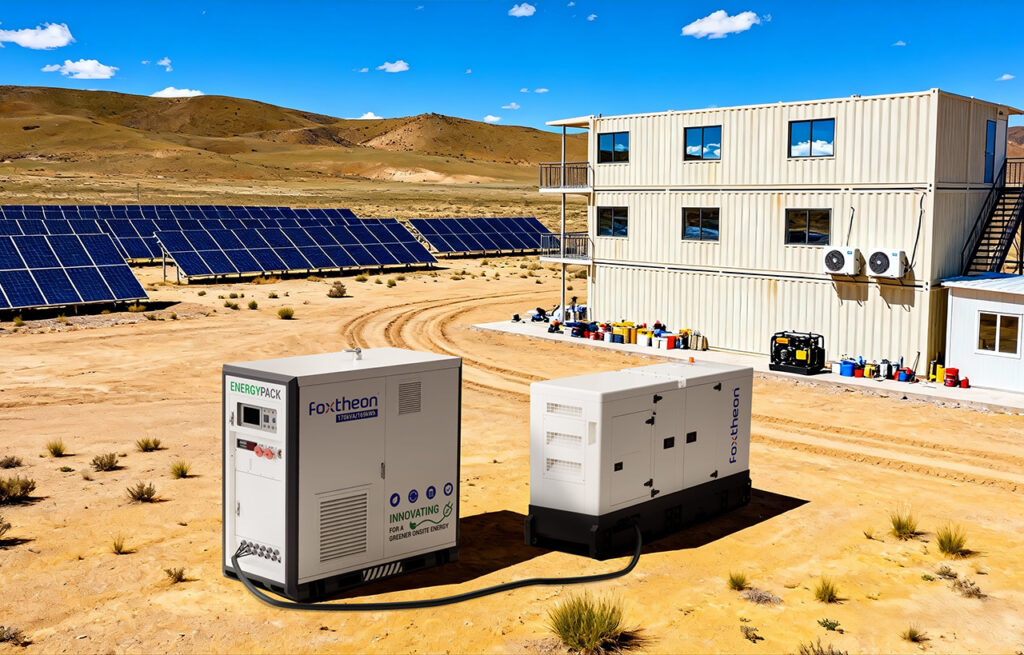
The batteries provide the immediate DC power required to stabilize the AC network during transient events. Foxtheon integrates sophisticated VSG algorithms directly into their commercial battery solutions. This powerful combination allows project developers to deploy reliable, grid-forming power plants in highly challenging environments.
Here are the operational advantages of pairing BESS with synthetic inertia:
Instantaneous discharge capabilities to halt frequency drops.
Bidirectional power flow to absorb excess generation smoothly.
Firm capacity dispatch during peak evening demand hours.
Seamless transition capabilities between grid-tied and off-grid states.
Practical Applications of VSG Mode for Weak Grid Support
Theoretical engineering concepts only prove their worth when deployed in actual commercial scenarios. Around the world, project managers use synthetic inertia to solve specific, highly localized power quality issues. These deployments save millions of dollars in traditional infrastructure upgrades.
Remote and Island Microgrids
Island communities historically rely on expensive, highly polluting diesel generators for their daily electricity. Transitioning these islands to 100% renewable energy poses massive technical hurdles due to the isolated nature of their grids. Removing the diesel generators removes the only source of voltage and frequency formation.
Deploying smart inverters programmed with grid-forming logic allows operators to safely turn off the diesel engines. The battery systems take over the responsibility of establishing the grid’s heartbeat. This strategy drastically reduces fuel import costs while maintaining continuous, high-quality power for the island residents.
Heavy Industrial Facilities
Mining operations and manufacturing plants often reside at the very edge of utility networks. These facilities utilize massive electrical motors, crushers, and pumps that demand heavy starting currents. The local utility lines frequently struggle to provide this current without sagging the regional voltage.
Installing a localized BESS equipped with virtual inertia functions acts as an electrical shock absorber. The system instantly delivers the necessary starting current locally, shielding the wider utility network from the disturbance. This prevents nuisance tripping of other equipment and avoids costly utility penalties for poor power quality.
Overcoming Challenges with VSG Mode for Weak Grid Support
While the technology provides incredible benefits, engineering teams face distinct hurdles during commissioning. Accurately mimicking a heavy physical machine with digital software requires precise calibration and powerful hardware. Operators must carefully manage these technical variables to ensure long-term reliability.
Tuning Control Parameters
Every electrical network possesses unique impedance characteristics and localized load profiles. A virtual synchronous algorithm requires precise mathematical tuning to match the specific conditions of its host network. Incorrectly tuned parameters can cause the inverter to fight against the utility, creating severe electrical resonance.
Engineers spend significant time utilizing specialized software to model the distribution system before deployment. They run hardware-in-the-loop (HIL) simulations to test how the inverter reacts to simulated grid faults. Proper site-specific calibration remains the most critical step in deploying grid-forming technologies successfully.
Hardware Processing Constraints
Calculating rotor swing equations and executing sub-millisecond power injections require immense processing power. Older inverter designs simply lack the computational speed to run complex grid-forming algorithms effectively. Standard microcontrollers cannot process the feedback loops fast enough to prevent instability.
Manufacturers now utilize advanced Digital Signal Processors (DSP) and high-frequency Silicon Carbide (SiC) switching components. These modern components allow the hardware to execute the VSG logic with incredible precision and speed. Securing this high-end hardware represents a significant upfront capital investment for project developers.
The Future of VSG Mode for Weak Grid Support
The global transition toward decentralized, renewable power generation will only accelerate in the coming decade. As more physical turbines retire, the necessity for digital grid stabilization will transition from optional to strictly mandatory. Utilities worldwide are already rewriting their interconnection codes to demand these specific grid-forming capabilities.
Future developments will likely focus on utilizing artificial intelligence to auto-tune these systems in real-time. Smart inverters will continuously monitor local impedance and adjust their virtual inertia parameters instantly. This self-healing approach will drastically reduce commissioning times and improve overall network resilience.
Reliable hardware remains the foundation of this clean energy transition. Companies like Foxtheon will continue pushing the boundaries of what energy storage systems can achieve on fragile networks. Ultimately, wide-scale adoption of VSG mode for weak grid support ensures that our future smart energy systems remain secure, stable, and completely reliable.
Frequently Asked Questions (FAQ)
Q1: What exactly does VSG stand for in power systems?
A1: VSG stands for Virtual Synchronous Generator. It is a control algorithm used in modern power inverters. It allows solid-state devices like solar and battery inverters to mimic the physical, stabilizing characteristics of traditional spinning generators.
Q2: Why do standard solar inverters fail on weak electrical grids?
A2: Standard inverters operate as grid-following devices, relying on Phase-Locked Loops (PLL) to read the existing utility voltage. On a weak grid with high impedance, sudden load changes distort the voltage heavily. This distortion causes the PLL to lose synchronization, forcing the inverter to shut down.
Q3: How does synthetic inertia differ from traditional physical inertia?
A3: Traditional inertia comes from the actual physical weight and momentum of massive spinning steel rotors in fossil-fuel plants. Synthetic inertia uses digital control algorithms and DC battery storage to mathematically calculate and inject the exact amount of power needed to replicate that physical momentum.
Q4: Can virtual synchronous generators operate completely off-grid?
A4: Yes. Because they establish their own voltage and frequency references, these advanced systems can easily operate independently. This makes them perfect for remote microgrids, island communities, and backing up facilities during total utility blackouts.
Q5: Do I need a battery system to implement this technology?
A5: Practically, yes. To accurately simulate the continuous momentum of a heavy generator, the inverter requires a reliable, instantaneous source of DC power. Battery Energy Storage Systems provide the exact rapid discharge and absorption capabilities required to make the algorithm function properly during grid faults.