
Energy storage has moved beyond static charge/discharge cycles. Today, intelligent energy storage refers to systems that continuously learn from load patterns, grid conditions, and battery electrochemistry to optimize every millisecond of operation. For industrial facilities—factories, data centers, ports, and mines—this intelligence translates to higher reliability, extended asset life, and seamless integration with existing generators. Unlike conventional storage that follows fixed rules, an intelligent energy storage system deploys machine learning at the edge, adaptive voltage regulation, and self-tuning state-of-charge (SoC) algorithms. This article dissects the technical architecture, control hierarchies, and field-proven applications of modern intelligent storage, with a focus on engineering decisions that improve uptime and operational efficiency.
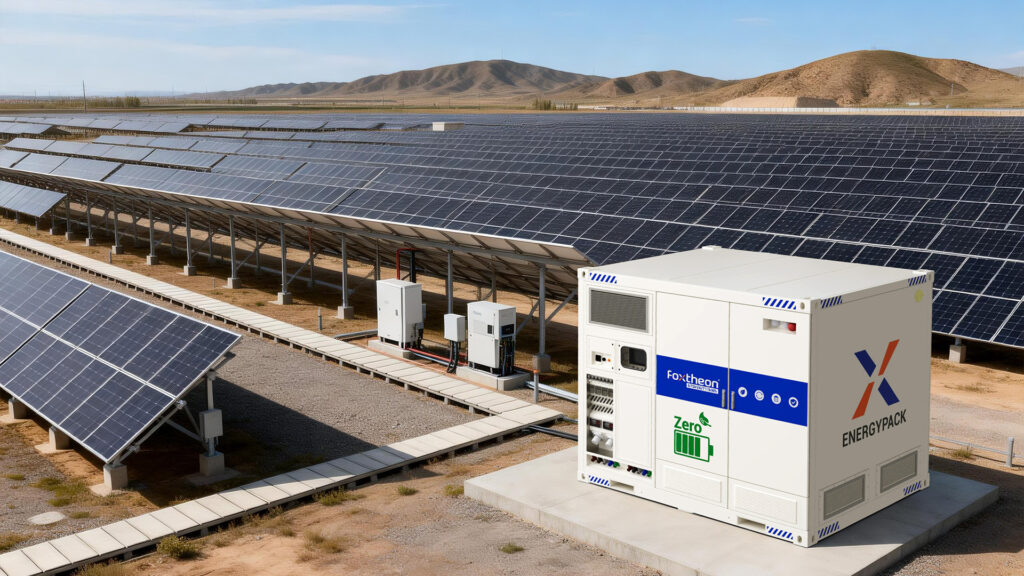
Defining the Intelligence Layer: Beyond Simple BMS
A standard battery management system (BMS) monitors voltage, current, and temperature. Intelligent energy storage adds three cognitive capabilities: predictive state estimation, adaptive charge/discharge scheduling, and self-diagnostic fault prediction. The first relies on extended Kalman filters or recurrent neural networks (RNNs) to estimate SoC and state-of-health (SoH) with error below 2%, even under dynamic industrial loads. The second uses reinforcement learning to decide when to store excess solar energy, when to shave a demand peak, and when to hold capacity for an expected grid event. The third analyzes electrochemical impedance spectroscopy (EIS) data to forecast cell dry-out or lithium plating hundreds of cycles before failure.
Field data shows that intelligent energy storage reduces forced downtime events by approximately 40% compared to rule‑based systems, primarily through predictive maintenance alerts. For industrial sites with multiple energy sources—grid feed, on-site generators, solar PV—the intelligence layer also performs automated source dispatch. During a brownout, the system decides within 20 milliseconds whether to draw from batteries, start a generator, or shed non‑critical loads. This decision incorporates real‑time fuel levels, battery temperature, and utility tariff signals.
Core Technical Pillars of Intelligent Storage
Four interdependent technologies transform a passive battery cabinet into an intelligent energy storage asset:
- Digital twin modeling: A real‑time virtual replica of the battery cells, power converters, and thermal system. The twin runs what‑if scenarios — for example, “If we discharge at 0.8 C for 15 minutes, cell temperature will rise 4.2 °C and remaining cycle life reduces by 0.3 %.” Operations then adjust dispatch limits.
- Edge‑cloud orchestration: Local controllers handle sub‑second protection and voltage support, while cloud‑based analytics perform weekly retraining of load‑forecast models. A communication link (4G, fiber, or satellite) synchronizes model updates without interrupting real‑time control.
- Grid‑forming with virtual inertia: When the main utility connection is weak or lost, the storage system autonomously creates a stable AC voltage reference. Virtual inertia algorithms mimic a synchronous generator’s rotating mass, preventing frequency overshoot during sudden load changes.
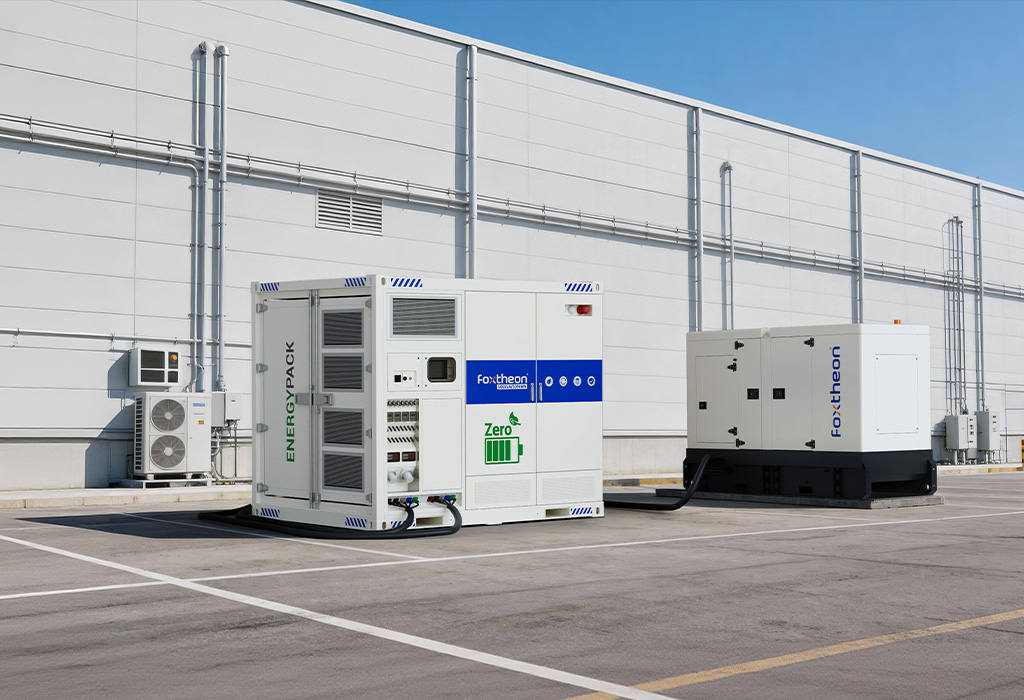
- Hybrid generator coordination: The storage controller communicates with existing genset controllers via Modbus or CAN bus. It starts the generator only when the battery’s SoC drops below a configurable threshold (typically 20%) and pre‑loads the generator with a soft ramp, avoiding step‑load shock. This approach preserves older generator assets and reduces fuel consumption by 18–25 % in typical island operations.
Each pillar requires extensive validation. For instance, digital twin models must be calibrated using actual charge/discharge profiles from the site, not generic laboratory cycles. Foxtheon implements site‑specific twin calibration during commissioning, capturing six weeks of load data before activating full autonomous mode. The result is an intelligent energy storage system that adapts to seasonal production changes and equipment upgrades without manual reprogramming.
Application‑Specific Intelligence: Three Industrial Cases
Generic storage performs acceptably in commercial buildings. Industrial environments demand application‑tuned intelligence.
1. High‑speed manufacturing (automotive, electronics)
Robotic assembly lines generate micro‑sags (voltage dips under 30 ms) that reset precision controllers. An intelligent energy storage system with waveform‑capture capability detects the sag within 2 ms and injects both real and reactive power to hold voltage within ±3 %. The intelligence layer also learns the specific sag patterns caused by each robot arm, pre‑charging the inverter for the most likely sag duration. After three months of operation, the system reduces product rework caused by power disturbances by up to 70 %.
2. Refrigerated warehouses and cold storage
Large compressor motors start sequentially, but poorly timed starts can exceed utility demand limits. Intelligent storage predicts compressor start schedules from the facility’s building automation system (BAS) and discharges during the overlapping start window. When grid frequency drops due to a distant fault, the storage instantly injects active power to prevent refrigeration controllers from tripping. This avoids spoilage events.
3. Port electrification and RTG cranes
Rubber‑tyred gantry cranes regenerate up to 600 kW during load lowering. A standard resistor bank wastes this energy as heat. Intelligent storage captures regenerated power and reuses it for the next lift. The intelligence layer learns crane operator behavior—typical lift heights, dwell times—and reserves storage capacity for the next regeneration event while still performing peak shaving for the terminal’s office load. Sites report net energy savings of 25–30 % for crane operations.
Addressing Industry Pain Points Without Replacing Existing Assets
Industrial energy managers often hesitate to adopt advanced storage due to concerns about compatibility with legacy generator fleets and switchgear. Intelligent energy storage solves this with non‑invasive paralleling. The storage connects to the same low‑voltage or medium‑voltage bus as existing generators, using current transformers (CTs) to sense load and generator output. The controller then acts as a virtual bus‑tie: when generator load exceeds 85 % of its rated capacity, storage provides the remaining power. When generator load falls below 30 %, storage absorbs the excess to keep the generator operating in its fuel‑efficient band. No generator replacement or switchgear reconfiguration is required.
Another frequent pain point is uncoordinated multiple storage units. A facility may add battery cabinets from different vendors over time. Intelligent energy storage platforms aggregate heterogeneous units into a single virtual asset using a distributed control protocol (IEC 61850-90-7). Each unit reports its SoC, SoH, and thermal margin; the master controller then allocates power setpoints to balance wear evenly. This extends the replacement cycle of the entire fleet.
For sites with existing solar PV, intelligent storage prevents reverse power flow above the utility‑allowed threshold. The system uses a short‑term solar forecast (based on on‑site pyranometer and sky camera) and reduces PV inverter output via rapid shutdown signals or curtails charging when a reverse‑power event is imminent. Utilities observe a smooth ramp‑rate below 10 % of capacity per minute, avoiding penalties.
Safety, Reliability, and Lifecycle Engineering
Intelligent energy storage introduces software-defined protection, supplementing traditional fuses and contactors. The control software implements dozens of concurrent safety checks: cell voltage imbalance >100 mV triggers balancing; temperature delta between modules >5 °C increases cooling fan speed; insulation resistance below 1 kΩ/V initiates a controlled shutdown. These checks run at 1 kHz, providing protection before hardware fuses blow. The system also maintains a black‑box recorder that logs the last 10,000 events, aiding forensic analysis after any fault.
Regarding lifecycle, intelligent storage typically includes a state‑of‑health guarantee: 80 % of nameplate capacity after 8 years or 5,000 full‑cycle equivalents. The cloud analytics continuously compare the site’s usage pattern to warranty conditions, alerting the facility manager if operational behavior (e.g., sustained high C‑rate, repeated full discharges) would prematurely age the cells. Adjustments—such as increasing the minimum SoC from 10 % to 20 %—are then recommended.
For installations with existing generator sets, the intelligent storage controller logs generator run hours, load factor, and number of start cycles. Maintenance intervals for oil and filters can be extended by 20–30 % because the storage handles transient loads and short‑duration peaks, allowing the generator to run at steady loads. This directly lowers operational expenses without requiring new hardware.
Frequently Asked Questions (FAQ)
Q1: Can intelligent energy storage operate in parallel with my existing diesel generators without modifying their control panels?
A1: Yes. The storage connects to the same bus through a standard circuit breaker. Its controller reads the generator’s output via external current transformers (non‑invasive). It then automatically adjusts charge/discharge power to keep generator loading within an optimal band. No changes to the generator’s own governor or AVR are needed.
Q2: How does the system adapt to seasonal changes in my facility’s load profile?
A2: The cloud analytics component retrains the load‑forecast model every week using the latest 90 days of data. When longer days increase solar PV output in summer, the model automatically shifts charging windows to capture excess energy. In winter, with shorter solar windows, it reserves more battery capacity for evening peak shaving. No manual reconfiguration is required.
Q3: What happens if the communication link to the cloud is lost?
A3: The local controller continues to operate using the last downloaded model and fallback rule‑based logic. All real‑time protection and voltage support functions remain active. When connectivity resumes, the system uploads buffered logs and receives an updated model. Critical sites can also deploy a fully local intelligence stack without any cloud dependency.
Q4: What safety certifications apply to intelligent energy storage in industrial settings?
A4: Certifications depend on region. For North America, UL 9540 (system safety) and UL 1973 (battery) are mandatory; additionally, the control software must comply with IEC 61508 (functional safety) for SIL‑2 level if used for emergency backup. For Europe, IEC 62619 (industrial batteries) and IEC 62477 (power converters) apply. Ask your supplier for third‑party test reports from TÜV or Intertek.
Q5: Can the same storage system provide both backup power and daily peak shaving?
A5: Yes. Intelligent energy storage continuously reserves a configurable percentage of capacity for emergency backup (e.g., 20 % SoC floor). The remaining capacity is actively used for peak shaving, load shifting, and renewable integration. If a grid outage occurs, the system instantly releases the reserved portion and extends discharge duration. The controller never depletes the backup reserve for economic functions.
Get a Technical Assessment for Your Facility
Every industrial site has unique load patterns, existing generator assets, and grid interconnection constraints. Generic storage proposals often miss critical details like harmonic interactions or protection coordination. Foxtheon provides engineering‑led evaluations that include power flow modeling, short‑circuit analysis, and control logic simulation before any hardware is committed. To initiate a feasibility study for intelligent energy storage at your site, send an inquiry with your one‑line diagram and 12 months of 15‑minute load data. The engineering team will respond with a preliminary system architecture, performance estimates, and a proposed integration plan that preserves your existing generator investment.
Request your site‑specific storage analysis → Contact Foxtheon’s industrial solutions group now (include average load, peak demand, and any existing solar or generator capacity).