
The global transition toward decentralized power systems has positioned electrochemical energy storage as a fundamental pillar of modern industrial infrastructure. For engineering procurement managers, commercial project developers, and system integrators, understanding the variables behind the current battery storage price is pivotal when designing reliable, dispatchable power systems. Rather than viewing energy storage merely as a commodity, a technical breakdown of its constituent parts reveals how chemistry choices, balance of plant (BOP) engineering, and manufacturing supply chains dictate project capitalization.
This analysis examines the multi-layered factors that govern system pricing, compares core electrochemical technologies, details safety and thermal management systems, and outlines structured sourcing methodologies for commercial energy assets.
Electrochemical Chemistry and Cell-Level Pricing Mechanics
At the core of any energy storage system lies the battery cell. The selection of electrochemical chemistry is the primary driver of both system performance and initial procurement expenditure. The raw materials used in the cathode, anode, and electrolyte directly dictate the baseline battery storage price of the raw equipment.
Lithium Iron Phosphate (LFP) vs. Nickel Manganese Cobalt (NMC)
In the commercial and industrial (C&I) sector, two lithium-ion chemistries dominate the market:
- Lithium Iron Phosphate (LiFePO4 / LFP): LFP has become the dominant chemistry for stationary energy storage. It offers superior thermal stability, with a thermal runaway threshold of approximately 270°C. LFP cells typically deliver a high cycle life (ranging from 4,000 to over 8,000 cycles at 80% Depth of Discharge). Because iron and phosphate are more abundant and less volatile than cobalt and nickel, LFP cells generally exhibit a lower and more stable pricing structure.
- Nickel Manganese Cobalt (LiNiMnCoO2 / NMC): NMC chemistries offer higher gravimetric and volumetric energy density, meaning they pack more energy into a smaller, lighter package. However, this high energy density comes with a lower thermal runaway threshold (around 210°C) and a shorter cycle life (typically 2,000 to 4,000 cycles). The reliance on cobalt and nickel makes NMC highly susceptible to raw mineral market volatility, leading to higher and less predictable pricing.
Emerging Chemistries and Solid-State Horizons
While lithium-ion chemistries represent the vast majority of current commercial deployments, alternative technologies continue to progress. Sodium-ion batteries, which replace lithium with more abundant sodium, present a promising alternative for stationary applications where footprint and weight are secondary concerns. Flow batteries, particularly vanadium redox systems, offer nearly unlimited cycle life and deep-discharge capabilities for multi-hour storage, though their mechanical complexity and lower round-trip efficiency keep their initial system procurement cost higher than lithium-ion equivalents.
Balance of Plant: Beyond the Battery Cell
Focusing solely on cell-level costs overlooks the comprehensive integration requirements of utility-scale or industrial storage. The battery cells themselves typically represent only 50% to 60% of the complete system integration cost. The remaining portion of the system cost is comprised of the Balance of Plant (BOP) components, which are vital for safety, efficiency, and grid synchronization.
Power Conversion Systems (PCS)
The PCS, or bi-directional inverter, manages the flow of electricity between the battery’s direct current (DC) and the facility’s or grid’s alternating current (AC). The cost of the PCS is driven by its power rating (kW/MW) rather than energy capacity (kWh/MWh). High-performance inverters must support complex functionalities such as:
- Black start capabilities to re-energize local microgrids without utility power.
- Grid-forming capabilities to provide synthetic inertia and voltage support.
- Rapid response times (often sub-millisecond) for frequency regulation applications.
These advanced electrical components add sophistication and represent a significant portion of the integrated system hardware cost.
Battery Management Systems (BMS)
The BMS is the intelligent operational center of the energy storage system, monitoring parameters such as cell voltage, current, temperature, state of charge (SoC), and state of health (SoH). A multi-tier BMS architecture—consisting of slave modules at the pack level, master controllers at the rack level, and system-level managers—prevents overcharging, over-discharging, and thermal runaway. A robust BMS design adds directly to the hardware value but protects the longevity of the cells.
Thermal Management: Liquid Cooling vs. Forced Air Cooling
Operating temperature directly affects degradation rates and thermal runaway risks. Thermal management systems are integrated to maintain cell temperatures within an optimal window of 15°C to 30°C:
- Forced Air Cooling: Lower in upfront cost and simpler to maintain, but less effective at preventing temperature gradients within large-scale enclosures. High temperature differentials across a pack can lead to uneven cell degradation.
- Liquid Cooling: Higher upfront cost but offers superior thermal conductivity. Liquid cooling plates maintain temperature uniformity within ±2°C across all cells, significantly extending cycle life and operating efficiency in hot climates. Systems designed by innovators such as Foxtheon integrate advanced liquid cooling to optimize performance and protect cell degradation curves.
Investing in liquid cooling increases the balance of plant hardware cost but improves system efficiency and prolongs operational life.
The engineering integration of these individual subsystems, including the physical container, internal busbars, structural racking, and advanced fire suppression (typically clean agent gas or water mist systems conforming to NFPA 855), contributes significantly to the global battery storage price of integrated enclosures.
Supply Chain Dynamics and Manufacturing Factors
The market pricing for commercial energy storage systems does not exist in a vacuum. It is heavily influenced by global raw material extraction, processing bottlenecks, and regional manufacturing capacities.
Raw Material Volatility
Lithium carbonate and lithium hydroxide are the primary chemical feedstocks for lithium-ion systems. The price of these minerals is subject to cyclical supply-and-demand imbalances, geopolitically driven mining restrictions, and processing capacities. When raw mineral processing lag behind battery assembly plant growth, price spikes occur. Conversely, when production capacities catch up, cell-level pricing stabilizes.
Regional Manufacturing Hubs and Quality Control
The concentration of battery cell manufacturing in specific regions plays a significant role in shipping fees, import tariffs, and logistics overheads. For global projects, procurement managers must evaluate import duties, compliance with local electrical codes (such as UL 1973 for battery packs and UL 9540 for complete systems), and localized shipping times, as geopolitical factors dictate the regional fluctuations in battery storage price metrics.
Hybrid System Integration: Coexistence and Operational Synergies
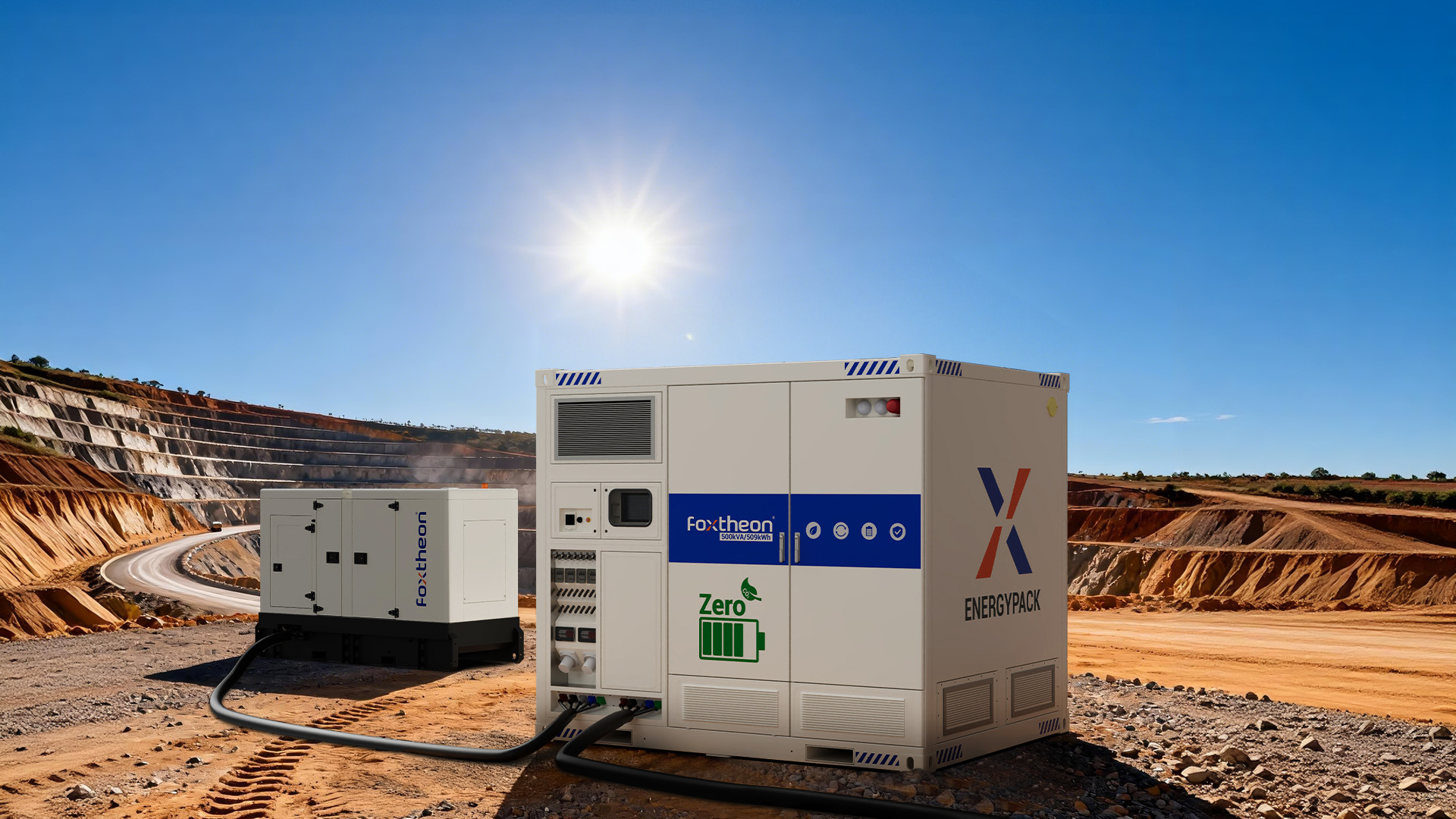
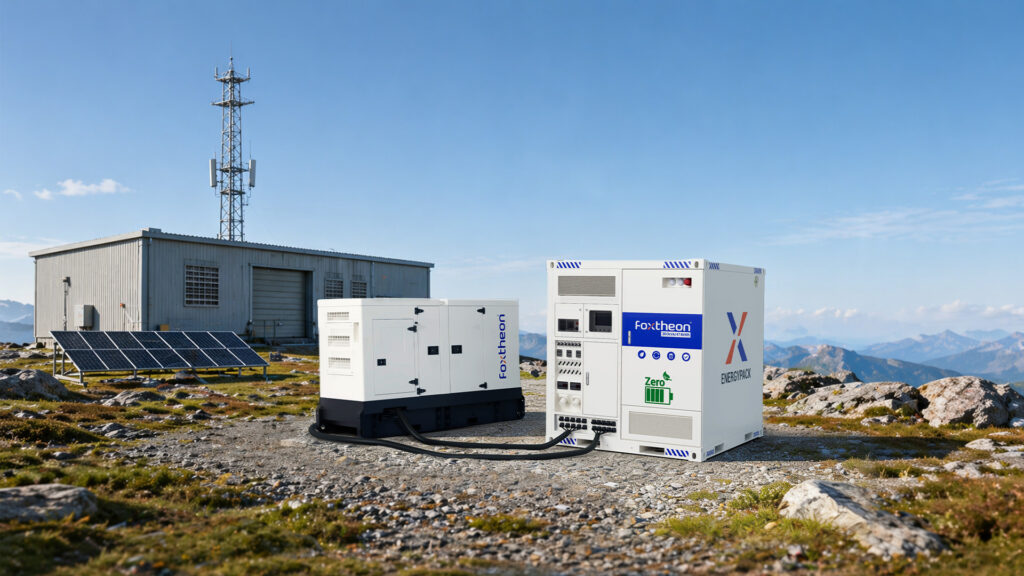
In many commercial and industrial microgrids, energy storage is not deployed as a standalone asset. Instead, it is integrated into hybrid energy systems alongside reciprocating internal combustion engines, such as diesel or natural gas generators. Far from making traditional generation obsolete, energy storage works to optimize these assets.
Reciprocating generators operate most efficiently at specific loading thresholds, typically between 70% and 90% of their rated capacity. When subjected to highly variable load demands or prolonged low-load operations, generators experience “wet stacking” (unburnt fuel accumulation in the exhaust system), increased wear, and high fuel consumption per kilowatt-hour produced.
By integrating a battery energy storage system (BESS), operators can implement hybrid strategies:
- Spinning Reserve Replacement: The BESS acts as a dynamic reserve, providing instantaneous power during load spikes or generator startup phases, allowing generators to remain offline when load demands are low.
- Load Leveling: The storage system absorbs transient load peaks and discharges during load drops, allowing the generator to run continuously at its optimal efficiency curve.
- Fuel Optimization: Decreasing the running hours of reciprocating generators during low-load intervals reduces maintenance intervals and extends the life of the generator.
Solutions engineered by Foxtheon utilize advanced power management controls to facilitate smooth coordination between electrochemical storage and reciprocating engines, ensuring stable local microgrids and lower operating fuel expenditures without compromising power reliability.
Sourcing Strategies for Enterprise Procurement
Procuring a commercial-scale energy storage system requires a structured evaluation framework that balances hardware quality, engineering support, and pricing models.
When reviewing bids, procurement managers must look beyond the initial battery storage price to evaluate cell grade and integration standards:
- Cell Grading: Ensure the vendor utilizes certified Grade-A cells from reputable tier-one manufacturers. Grade-B cells, which are often diverted to lower-demand consumer products, may exhibit higher self-discharge rates and shorter operational lifetimes.
- System Certifications: Verify compliance with regional and international safety standards. In North America and Europe, certifications such as UL 9540, UL 9540A (thermal runaway propagation testing), and IEC 62619 are vital for commercial insurance, building permitting, and safety validation.
- Warranty Structures: A standard warranty should guarantee a specific capacity retention level (e.g., 70% capacity) over a set period (e.g., 10 years) or a cumulative energy throughput (MWh) limit. Understanding these warranty clauses protects the asset from premature degradation risks.
Frequently Asked Questions
Q1: What is the primary driver of the commercial battery storage price differential between LFP and NMC technologies?
A1: The primary driver is raw material composition. LFP uses abundant, lower-cost iron and phosphate for its cathode chemistry, while NMC relies on scarcer, more volatile minerals like nickel and cobalt. This raw material difference, combined with LFP’s simpler manufacturing process and longer cycle life, generally makes LFP more cost-effective for stationary commercial applications.
Q2: Why does Balance of Plant (BOP) represent such a large percentage of system procurement?
A2: BOP components include the power conversion system (PCS), battery management system (BMS), thermal management (HVAC or liquid cooling), and fire suppression. These components are necessary to convert DC power to AC, monitor cell safety at millisecond intervals, maintain uniform operating temperatures, and comply with safety and grid codes.
Q3: How does liquid cooling affect the upfront capital cost compared to air cooling?
A3: Liquid cooling systems require more complex mechanical hardware, including coolant lines, chillers, and pumps, which increases the initial hardware cost. However, because liquid cooling maintains tighter temperature uniformity, it prevents hot spots, reduces cell degradation, and prolongs cycle life compared to standard forced-air systems.
Q4: Why is compliance with UL 9540 and UL 9540A testing necessary for C&I projects?
A4: These safety standards evaluate the thermal runaway fire propagation characteristics of the battery system. Compliance is often a strict requirement by local authorities having jurisdiction (AHJs) for permitting and is crucial for securing commercial property insurance at reasonable rates.
Q5: Can battery storage systems be integrated with existing backup diesel generators?
A5: Yes. In hybrid microgrids, battery systems operate alongside generators to handle transient loads and absorb sudden load steps. This allows the generator to run within its optimal efficiency range and reduces fuel consumption and maintenance wear during low-load periods.
Inquiry
To discuss your technical requirements, analyze battery options, or receive a detailed quotation for a commercial-scale energy storage project, please contact our engineering team. To consult with Foxtheon to design an optimized system for your specific application, submit an inquiry below.