
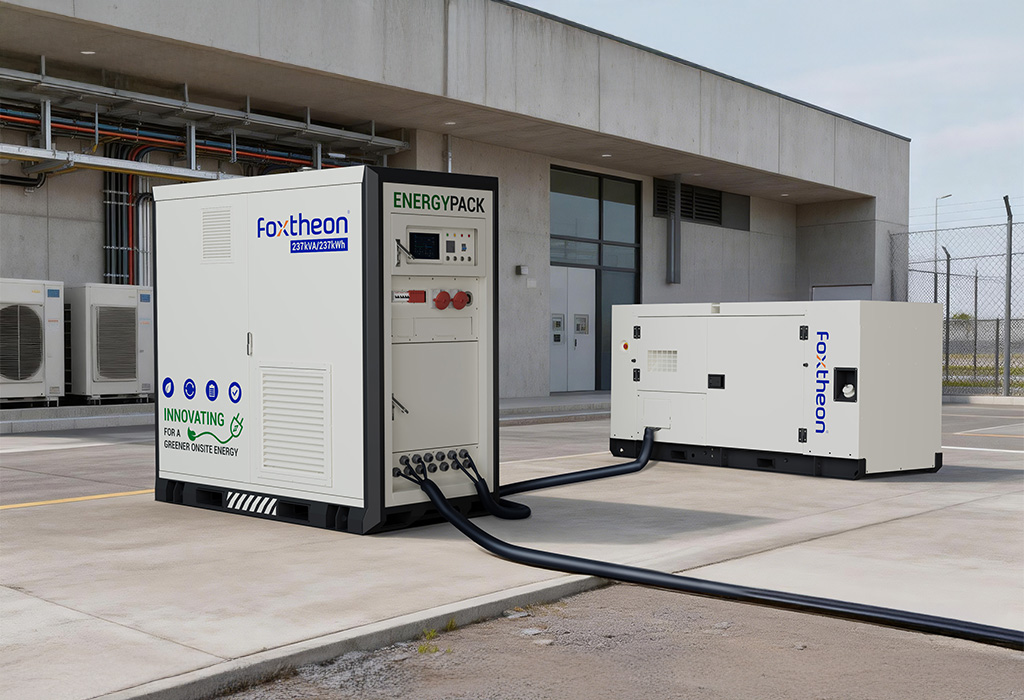
In remote industrial operations, maintaining a consistent and reliable power supply is a persistent operational challenge. Traditional localized energy setups have long relied solely on diesel generator sets. While these generators provide dependable baseload power, operating them continuously at low load profiles leads to inefficient fuel combustion, increased carbon emissions, and accelerated mechanical wear. To address these inefficiencies, modern industrial operators are increasingly deploying hybrid energy configurations.
Implementing robust off grid power storage systems has become a standard methodology for optimizing fuel consumption and securing power resilience. Rather than discarding existing infrastructure, modern energy engineering emphasizes the integration of electrochemical storage with traditional diesel assets and renewable generation. This approach provides a stable frequency and voltage reference, manages transient load spikes, and optimizes the overall lifecycle of the site’s energy assets.
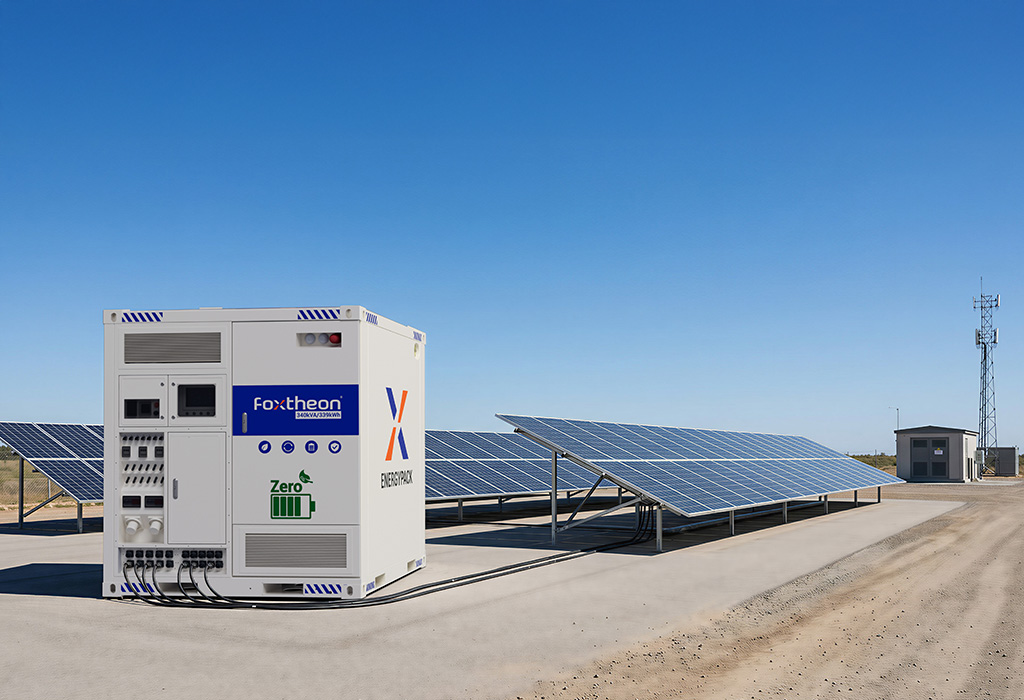
1. Technical Architecture of Modern off grid power storage systems
A commercial-grade off-grid energy storage setup is not merely a collection of battery cells. It is a highly integrated, multi-layered engineering system designed to manage power conversion, thermal stability, and load distribution under variable environmental conditions. Understanding the technical architecture is necessary for selecting the correct configuration for remote sites.
Electrochemical Battery Chemistry
The core of modern off grid power storage systems is the battery chemistry. While lead-acid batteries were historically common due to lower initial capital expenditure, Lithium Iron Phosphate (LiFePO4) has become the dominant technology for industrial deployments. LiFePO4 chemistry offers distinct advantages:
- High Cycle Life: Typically exceeding 4,000 to 6,000 cycles at 80% Depth of Discharge (DoD), compared to the 500–1,000 cycles of high-quality lead-acid equivalents.
- Thermal Stability: LiFePO4 possesses a high thermal runaway threshold, making it inherently safer in high-ambient-temperature environments.
- Energy Density: Higher volumetric and gravimetric density reduces the overall footprint and structural weight of the storage enclosure.
The Power Conversion System (PCS)
The PCS, or bi-directional inverter, manages the flow of electricity between the DC battery bank and the AC distribution bus. In off-grid configurations, the PCS must operate in “grid-forming” mode. Unlike grid-tied inverters that synchronize with an existing external utility grid, a grid-forming PCS establishes the voltage and frequency reference for the entire local microgrid. It must respond dynamically to load changes within milliseconds, preventing voltage sags or frequency deviations that could damage sensitive industrial machinery.
Battery Management System (BMS) and Energy Management System (EMS)
To ensure long-term reliability, a dual-layer control architecture is implemented:
- BMS (Component Level): Monitors cell-level parameters, including voltage, temperature, and State of Charge (SoC). It performs active or passive cell balancing to prevent localized overcharging or over-discharging, which can degrade capacity over time.
- EMS (System Level): Oversees the entire microgrid ecosystem. The EMS executes high-level control strategies, such as load shedding, peak-shaving, and the automated starting/stopping of backup diesel generators based on the current battery SoC and load forecasts.
2. Key Applications of Off Grid Power Storage Systems in Commercial Sectors
Deploying off grid power storage systems in remote industrial zones addresses specific operational constraints across several key sectors.
Remote Telecommunications Infrastructure
Telecom towers located in mountainous, desert, or rural areas require uninterrupted power to maintain network uptime. Traditionally, these sites run dual diesel generators in alternating cycles. By integrating a compact energy storage system, the site can operate on battery power during low-traffic periods (such as nighttime), running the generator only during peak hours or when the battery requires recharging. This hybrid approach significantly reduces annual engine run-hours, extending maintenance intervals from weeks to months.
Mining and Mineral Exploration Camps
Exploration camps often operate in extreme climates far from utility grids. Their load profiles are highly variable, characterized by heavy inductive loads from drilling equipment, pumps, and ventilation fans alongside steady residential loads from worker accommodations. A localized power storage container acts as a buffer, absorbing the startup currents of heavy motors and protecting the local mini-grid from transient faults.
Agricultural and Water Irrigation Facilities
Large-scale farming operations and water desalination plants often experience seasonal power demands. Running kilometers of high-voltage utility lines to remote pumping stations is frequently cost-prohibitive. Combining localized solar photovoltaic (PV) arrays with energy storage provides a reliable, self-sustained energy source that can support continuous water pumping cycles without relying solely on fuel deliveries.
3. Hybrid Energy Integration: Maximizing Generator Efficiency
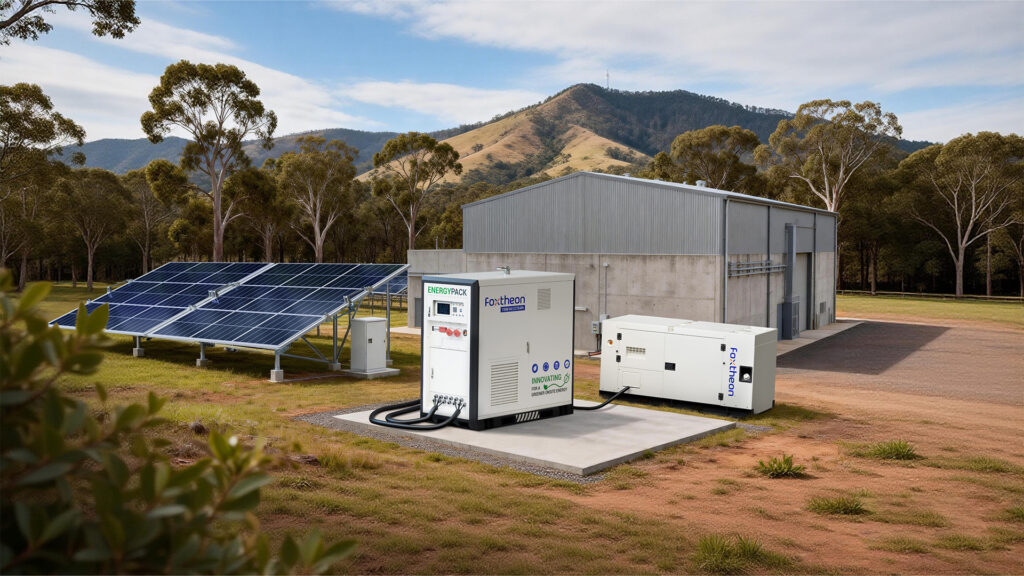
A common misconception is that transition to renewable energy requires the immediate decommissioning of existing diesel generators. In industrial practice, a hybrid configuration—combining photovoltaic arrays, diesel generator sets, and electrochemical storage—offers the most reliable and pragmatic path to energy security.
Diesel generators are highly efficient when operating between 70% and 90% of their rated capacity. When loads drop below 30% to 40%, generators suffer from “wet stacking”—a condition where unburnt fuel accumulates in the exhaust system due to low operating temperatures. This causes carbon buildup, damages internal components, and increases maintenance costs.
The integration of off grid power storage systems alongside existing diesel generators mitigates this issue through several mechanisms:
- Load Shifting and Peak Shaving: The battery system supplies power during peak demand periods, allowing the generator to be sized for average loads rather than peak loads.
- Dynamic Loading Optimization: The EMS can command the generator to run at its optimal fuel-efficiency curve. Any excess power generated beyond the instantaneous load demand is directed to charge the battery bank.
- Zero-Load Gen-Off Mode: During periods of minimal load, the generator can be turned off entirely, with the battery bank quietly supporting the site’s baseline requirements.
4. Engineering Considerations for System Selection
Specifying the correct energy storage system requires careful consideration of several environmental and electrical parameters. A poorly specified system can lead to premature battery degradation or frequent power outages.
| Engineering Parameter | Design Focus | Impact on Performance |
|---|---|---|
| C-Rate Capacity | Charge/Discharge Speed | Determines the system’s capability to handle high-power transient loads. |
| Thermal Management | Liquid vs. Forced-Air Cooling | Maintains cell temperatures within the optimal 15°C to 25°C window to prevent degradation. |
| Ingress Protection (IP) | Cabinet Sealing (e.g., IP54/IP55) | Prevents the entry of dust, moisture, and corrosive salt air in coastal or desert environments. |
| System Redundancy | Modular Inverters & Battery Racks | Ensures continuous partial system operation even if a single module experiences a fault. |
When selecting the appropriate off grid power storage systems for harsh environments, operators must evaluate the manufacturer’s design integration. Systems with integrated liquid cooling plates, for example, maintain more uniform internal temperatures across the battery cells than air-cooled enclosures, extending cell lifetime in desert regions where daytime temperatures regularly exceed 40°C.
5. Collaborative Engineering Solutions with Foxtheon
As an experienced specialist in smart energy equipment manufacturing, Foxtheon designs and builds highly reliable energy storage systems tailored for commercial and industrial hybrid microgrids. Understanding that every remote application presents unique environmental and electrical challenges, the company focuses on delivering robust, containerized, and cabinet-style systems that integrate smoothly into existing power generation frameworks.
In applications requiring portable, rapid-deployment power, such as disaster relief zones or temporary construction projects, Foxtheon provides hybrid power integration cabinets. These systems are designed to interface seamlessly with existing generator fleets, allowing distribution partners and fleet operators to optimize their current assets while introducing modern battery storage capabilities. The focus remains on high-quality manufacturing, reliable thermal management, and robust system integration to ensure long-term performance under demanding operating conditions.
Conclusion and Next Steps
Implementing advanced off grid power storage systems supports improved operational efficiency and power reliability for remote commercial enterprises. By partnering with experienced manufacturers, organizations can optimize their fuel consumption, protect sensitive equipment, and extend the functional lifespan of their existing generation assets.
To evaluate how hybrid energy storage can improve your specific remote power setup, contact the engineering team at Foxtheon today for a professional system evaluation and a tailored project proposal.
Frequently Asked Questions
Q1: What is the expected lifespan of the battery cells used in commercial off-grid storage?
A1: Modern commercial systems utilizing Lithium Iron Phosphate (LiFePO4) chemistry typically deliver between 4,000 and 6,000 charge-discharge cycles at an 80% Depth of Discharge (DoD) before their capacity degrades to 80% of its original rating. Under standard operating conditions with proper thermal management, this translates to a service life of approximately 10 to 15 years.
Q2: How do off-grid storage systems handle extreme ambient temperatures?
A2: Commercial-grade systems are engineered with active thermal management systems. Depending on the environmental demands of the installation site, this may include HVAC air-cooling or advanced liquid-cooling systems. These systems actively regulate the internal cabinet temperature to maintain the battery cells within their optimal operating window (typically 15°C to 25°C), preventing thermal degradation in hot climates and preheating cells in freezing conditions.
Q3: Can these systems be integrated with existing third-party diesel generators?
A3: Yes. Modern energy management systems (EMS) support standard industrial communication protocols, such as Modbus TCP/IP or CAN bus. This allows the storage system to send automatic start/stop signals to existing diesel generators based on the battery bank’s State of Charge (SoC) or current load demands, facilitating smooth hybrid operation without requiring the replacement of your current generator assets.
Q4: What is the difference between grid-forming and grid-following inverters?
A4: Grid-following inverters require an active external grid reference (voltage and frequency) to operate and will shut down if the grid goes offline. Grid-forming inverters, used in off-grid systems, possess internal voltage-source characteristics that allow them to establish and maintain a stable localized AC grid reference independently, acting as the primary voltage and frequency source for all connected loads.
Q5: How is the correct capacity of an off-grid energy storage system calculated?
A5: System sizing is calculated by analyzing the site’s peak power demand (kW), average daily energy consumption (kWh), the desired autonomy time (the duration the system must run without generator or solar input), and the dynamic start-up currents of inductive loads (such as motors and pumps). Proper sizing prevents over-dimensioning capital equipment while ensuring sufficient buffer capacity to handle transient peak loads.