
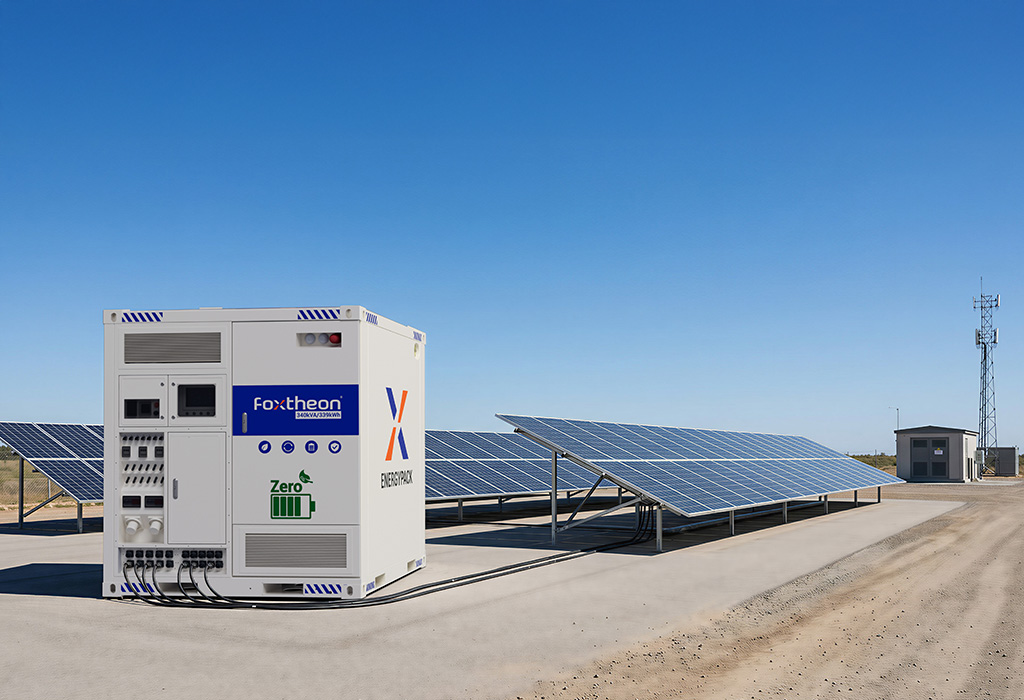
Remote industrial operations, agricultural facilities, and isolated community grids face significant power supply challenges. Historically, standalone diesel generator units have served as the primary method for off-grid electrification. While dependable, exclusive reliance on fuel combustion presents logistical complexities, such as transport constraints, variable fuel supply lines, and frequent maintenance requirements.
To address these challenges, modern power engineering favors a diversified approach. Integrating solar photovoltaic (PV) arrays, wind turbines, and battery energy storage systems (BESS) alongside existing thermal generation assets provides a balanced configuration. Implementing a robust off grid hybrid system minimizes operational risks, optimizes equipment run-times, and ensures high power quality in harsh environments.
.jpg)
1. System Architecture: AC-Coupled vs. DC-Coupled Topologies
The structural layout of a hybrid power network dictates how different energy sources interact with one another and how power flows to the loads. Choosing the appropriate coupling method is a pivotal step during the front-end engineering design (FEED) phase.
DC-Coupled Configurations
In a DC-coupled topology, renewable generation sources—primarily solar PV arrays—and the battery bank connect to a common DC bus. Solar energy goes through a Maximum Power Point Tracking (MPPT) charge controller before reaching the battery bank or entering the bidirectional inverter to supply AC loads.
- System Efficiency: DC-coupled systems demonstrate high efficiency when charging batteries directly from solar power, as there is no need for intermediate DC-to-AC conversion.
- Sizing Constraints: Scalability can be more complex, as expansion requires matching the battery voltage and charge controller specifications.
- Common Applications: This approach is suitable for smaller telecom base transceiver stations (BTS) and low-capacity domestic or commercial microgrids.
AC-Coupled Configurations
In an AC-coupled off grid hybrid system, solar PV arrays connect to their own grid-tied solar inverters, which feed directly into the main AC bus. The battery bank interacts with this same AC bus via a separate bidirectional battery inverter (or power conversion system – PCS).
- Operational Flexibility: AC-coupled systems allow solar generation to power AC loads directly during the day without passing through the battery storage, which improves direct-use efficiency.
- Scalability: Expanding the system is relatively straightforward. Additional PV inverters or battery storage units can be integrated at different points along the AC distribution line.
- Integration of Thermal Generation: Standard diesel generator sets connect directly to the AC bus, facilitating seamless synchronization and load-sharing. This configuration is widely favored for medium-to-large-scale industrial microgrids.
2. Advanced Power Control Strategies and EMS Integration
Within a modern off grid hybrid system, the dynamic balancing of supply and demand requires sophisticated control architecture. Because solar and wind resources are inherently intermittent, a centralized Energy Management System (EMS) is necessary to coordinate multiple power assets in real time.
By deploying solutions designed by Foxtheon, operators benefit from advanced EMS algorithms that monitor load demands, battery State of Charge (SoC), and weather patterns to determine the most stable operating profile.
State of Charge (SoC) Management
To preserve battery health and prolong cell lifespan, the EMS enforces strict upper and lower SoC limits. For instance, when utilizing Lithium Iron Phosphate (LiFePO4) chemistry, maintaining an operational SoC window between 10% and 90% helps avoid deep discharge cycles and overcharging stress. The control program utilizes these metrics to manage load shedding or to trigger auxiliary generator starts when renewable inputs are low.
Generator Loading and Wet Stacking Prevention
Diesel generators run inefficiently when operated at low loads (typically below 30-40% of their rated capacity). Operating under light loads causes incomplete combustion, a phenomenon known as wet stacking, which leads to carbon buildup and premature engine wear.
To prevent this, the EMS uses the BESS to absorb excess power during low-load periods, keeping the generator loaded within its optimal fuel-efficiency window (usually 60-80%). Alternatively, the generator can be shut down completely when the battery state of charge is sufficient to cover the peak load demand.
The table below outlines how control logic adjusts based on battery SoC thresholds:
| SoC Threshold | System Control Action | Primary Energy Source |
|---|---|---|
| SoC > 80% | Curtail renewable output if generation exceeds load; keep generator offline. | Solar PV / Battery Storage |
| SoC 30% – 80% | Use battery for peak shaving; load-following mode for renewables. | Solar PV / Battery Storage |
| SoC 20% – 30% | Signal generator to start; operate generator at optimal efficiency load. | Generator + Solar (Battery Charging) |
| SoC < 20% | Initiate non-priority load shedding; run generator at maximum continuous rating. | Generator (Battery Fast Charging) |
3. Key Applications of Industrial Off Grid Hybrid Systems
Applying hybrid microgrid technology across various B2B sectors demonstrates its adaptability to unique operational constraints and environmental challenges.
Remote Mining and Minerals Extraction
Mining operations often function in geographically isolated areas far from national transmission lines. These facilities require continuous, high-megawatt power for heavy machinery, ventilation, and processing plants.
A commercial-grade off grid hybrid system offers the stability needed to mitigate voltage sags and frequency fluctuations caused by starting heavy inductive motors. By integrating battery storage, mining sites can smooth out the rapid changes in solar generation caused by passing clouds.
Telecommunications Infrastructure
Isolated telecom towers require high reliability to maintain regional communications. Traditionally, these sites used dual diesel generators operating on alternating schedules.
Integrating compact hybrid solutions significantly reduces generator run-hours. This change extends the maintenance intervals for filters, oil, and mechanical components, which lowers the frequency of site visits to remote areas.
Agricultural Processing and Irrigation
Large-scale agricultural operations, such as grain drying facilities and deep-well water pumping stations, experience seasonal load profiles. During harvest or dry seasons, power demand increases dramatically, while during off-seasons, demand falls to baseline security levels.
A hybrid configuration scales dynamically to match these shifting seasonal requirements. It prevents the under-loading of large diesel generators during low-demand periods by routing power through a centralized energy storage unit.
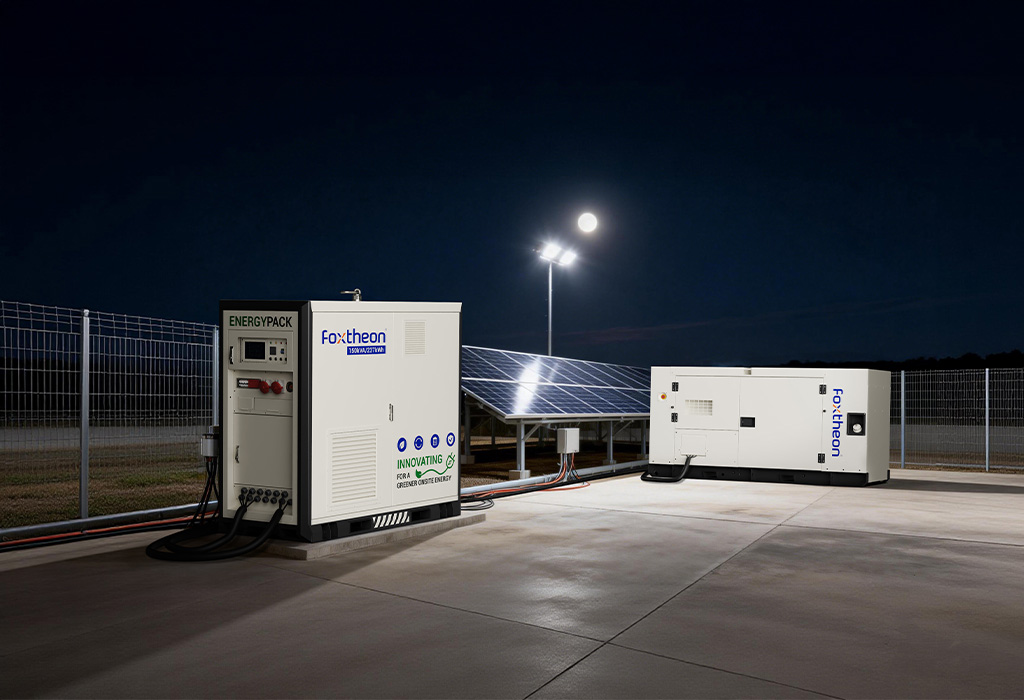
4. Sizing Methodology and Thermal Considerations
Designing and configuring an off grid hybrid system requires detailed load profiling and careful environmental planning. Over-sizing components leads to unnecessary capital commitment, while under-sizing compromises power availability and stresses backup generation assets.
Step-by-Step Sizing Approach
- Load Profile Assessment: Determine seasonal and daily load profiles, identifying peak kilowatt (kW) demand and baseline daily energy consumption in kilowatt-hours (kWh).
- Solar Resource Mapping: Analyze local meteorological data, including Peak Sun Hours (PSH) and worst-case winter solar irradiance, to establish a realistic baseline for solar generation.
- Battery Capacity Calculations: Size the battery energy storage system to support critical loads during planned autonomy days (periods with minimal solar input) while maintaining the desired depth of discharge.
- Generator Integration: Size the generator to meet peak demand independently in emergencies, ensuring it has the capacity to support both active load demands and battery charging cycles simultaneously when needed.
Environmental conditions also play a key role in component selection. Battery cells are sensitive to ambient temperature extremes. High operating temperatures accelerate cell degradation, while freezing conditions reduce usable capacity and limit charging current limits.
To address this, robust energy storage enclosures, such as those manufactured by Foxtheon, feature robust temperature control systems. Active liquid cooling or integrated HVAC systems maintain the batteries within their optimal temperature range (typically 15°C to 25°C), ensuring stable performance in desert, tropical, or high-altitude environments.
5. Frequently Asked Questions
Q1: What are the primary differences between AC-coupled and DC-coupled topologies in hybrid configurations?
A1: AC-coupled systems integrate solar and battery inverters along the main AC bus, making them highly scalable and efficient for powering AC loads directly. DC-coupled systems connect solar arrays and batteries to a single DC bus via charge controllers, which is simpler and highly efficient for direct battery charging in smaller installations.
Q2: How does a hybrid controller manage the transition between battery power and generator power?
A2: The controller monitors the battery State of Charge (SoC). When the SoC drops below a set threshold, the controller sends a dry-contact start signal to the generator. Once the generator reaches voltage and frequency synchronization with the AC bus, the bidirectional inverter manages the transition to prevent load interruption.
Q3: What role does the generator play when batteries are fully charged during peak solar hours?
A3: When batteries are fully charged and solar generation exceeds the active load, the EMS will automatically idle or shut down the generator. This minimizes fuel consumption. If the generator must run to maintain grid frequency, the solar inverter will curtail its output to prevent overcharging.
Q4: How do high ambient temperatures affect the overall performance of the system?
A4: Elevated temperatures can cause thermal derating in solar inverters and accelerate capacity fade in battery cells. Utilizing an engineered enclosure with active thermal management ensures that the electronics and battery cells remain within their optimal operating temperature range.
Q5: What protective safety standards should be integrated into industrial hybrid power designs?
A5: System designs should incorporate several safety features, including reverse-polarity protection, over-current circuit breakers, surge protection devices (SPDs), and battery management systems (BMS) with multi-level thermal runaway detection and built-in fire suppression.
Conclusion and Engineering Consultations
A well-configured off grid hybrid system balances renewable energy generation with thermal backup assets, ensuring continuous power delivery for remote applications. Achieving this level of reliability requires proper component sizing, careful thermal management, and robust system integration.
To evaluate how a hybrid configuration can optimize your off-grid operations, consult the technical specialists at Foxtheon. Our engineering team can help analyze your load profiles and design an efficient hybrid energy storage solution tailored to your operational needs.