
For engineering managers and facility operators, the selection of an energy storage asset goes beyond simple backup functions. A well-engineered microgrid battery storage system directly influences operational continuity, renewable integration efficiency, and dynamic grid interaction. This article examines five core technical dimensions—from electrochemical selection to grid-forming inverters—that define performance in real-world industrial deployments.
1. Core Architecture: Components That Define Reliability
Any industrial-grade microgrid battery storage system integrates four interdependent layers: the battery array, battery management system (BMS), power conversion system (PCS), and microgrid controller (MGCC). Unlike simple UPS units, these components must support islanding, black start, and seamless transition between grid-connected and isolated modes.
Battery Chemistry & Cell Topology
Lithium iron phosphate (LFP) remains the preferred chemistry for industrial microgrids due to its thermal stability and cycle life exceeding 6,000 cycles at 80% depth of discharge (DoD). Nickel manganese cobalt (NMC) offers higher energy density but requires more rigorous thermal management. String-level monitoring and passive/active balancing circuits are mandatory to prevent state-of charge (SoC) divergence across parallel strings.
Power Conversion & Inverter Characteristic
The PCS must support both grid-following and grid-forming modes. For weak grids or remote sites, grid-forming inverters provide voltage and frequency reference, allowing the microgrid battery storage system to operate without external synchronous generators. Typical industrial ratings range from 50 kW to 5 MW per module, with efficiency curves above 97% at partial load.
- BMS functions: cell voltage equalization, overcurrent protection, thermal runaway prediction (based on internal resistance trends).
- Controller communication: IEC 61850, Modbus TCP, CAN 2.0B for integration with existing protection relays and SCADA.
- Islanding detection: passive (ROCOF, vector shift) + active methods to meet IEEE 1547-2018.
2. Operational Modes: From Peak Shaving to Black Start
A modern industrial microgrid battery storage system operates in multiple dispatch modes, often switching within milliseconds based on grid conditions and load priorities.
Peak Shaving and Demand Charge Management
For facilities facing demand charges (e.g., 15-minute integrated intervals), the battery system discharges to flatten the import profile. Predictive algorithms using historical load data and weather forecasts optimize the discharge depth, preserving cycle life while reducing monthly utility bills. This mode requires submetering at feeder level and real-time SoC feedback.
Island Mode & Grid-Forming Capability
When the upstream feeder fails, the system must transition to island mode within 100 ms to prevent sensitive equipment tripping. Grid-forming inverters maintain voltage magnitude and phase angle, enabling seamless handover to on-site generators if present. For sites with renewable sources (solar PV, small wind), the battery storage system performs frequency-watt and volt-var functions automatically.
Black Start Service
In total blackouts, the microgrid battery storage system with black-start capability energizes the microgrid bus, then synchronizes and starts any auxiliary generator sets in a sequenced manner. This eliminates dependency on utility restoration and reduces downtime for critical industrial processes (refrigeration, continuous chemical reactors).
3. Key Application Scenarios for Industrial Microgrid Storage
While residential systems prioritize solar self-consumption, industrial microgrid batteries address operational continuity, power quality, and renewable firming. Below are four high-value deployments validated in engineering practice.
Remote Mining and Mineral Processing
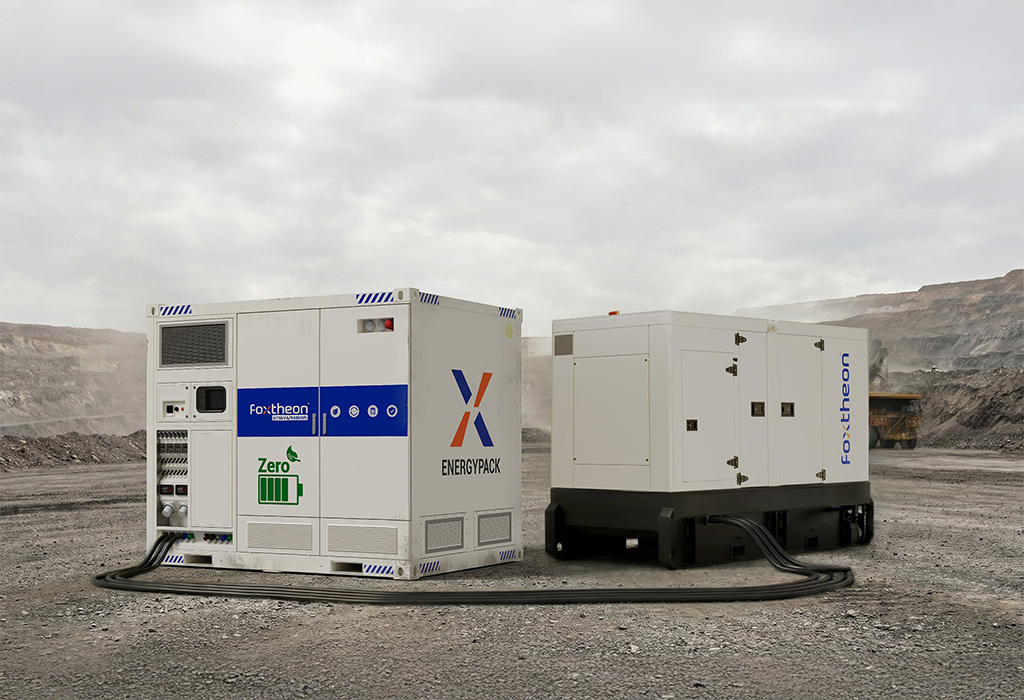
Sites located beyond utility reach often rely on diesel gensets. Adding a battery storage system reduces fuel consumption by 25–35% through load smoothing and enabling genset shutoff during low-load periods. The battery also absorbs regenerative energy from conveyors and drills, improving overall system efficiency without altering existing generator controls.
Commercial Buildings with EV Charging Hubs
Fast-charging stations produce erratic, high-power spikes that trigger demand penalties. A co-located battery system buffers these peaks, while also providing backup power for elevators, lighting, and security systems. The controller must prioritize charging sessions based on departure time prediction and battery SoC limits.
Data Center and Critical Communications
Though data centers already deploy UPS systems, a microgrid battery storage system extends runtime from minutes to hours by integrating with backup generators. More importantly, it improves power factor and mitigates harmonic distortion from switching power supplies. Tier-III and Tier-IV facilities increasingly adopt such hybrid architectures to achieve 99.999% availability without oversizing generators.
Island Communities and Ports
Marine microgrids require high-cycling capability due to tidal and wave energy variability. Battery systems provide instantaneous response to load changes from cranes and cold-ironing connections. Salt-mist protection (IP54 or higher) and double-conversion redundancy are standard engineering requirements.
4. Addressing Industry Pain Points with Intelligent Control
Decision-makers often hesitate to adopt battery storage due to concerns about integration complexity, control stability, and asset utilization. A properly engineered microgrid battery storage system resolves these issues through layered control strategies.
Pain Point: Renewable Intermittency and Ramp Rates
Solution: The battery controller uses moving-average ramp-rate limiting. For example, if solar PV output drops from 80% to 30% in 10 seconds, the battery discharges to cover the difference at a configurable slope (e.g., 5% per second). This avoids reverse power flow and voltage flicker on weak feeders.
Pain Point: Voltage Sags and Sub-Cycle Disturbances
Solution: Using fast IGBT-based inverters, the system can inject reactive current within 1 ms to support voltage during faults. Dynamic voltage restorer (DVR) functionality is embedded in many industrial PCS designs, protecting variable frequency drives and PLCs from process interruption.
Pain Point: Underutilized Assets and Degradation Awareness
Solution: Advanced BMS tracks internal resistance growth and coulombic efficiency. Using degradation models, the controller adjusts charge/discharge windows (e.g., limiting voltage to 3.45V/cell instead of 3.65V) to extend calendar life by 30%. The system also generates predictive alerts for end-of-warranty conditions.
5. Integrating a Microgrid Battery Storage System with Existing Infrastructure
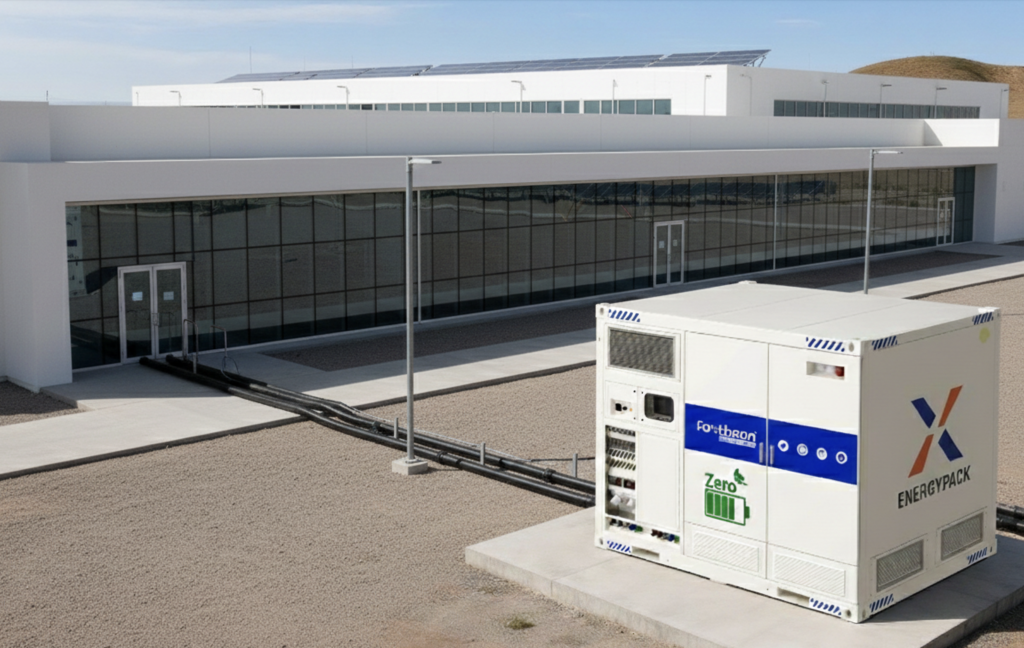
Retrofitting battery storage into a live industrial site requires careful assessment of point of common coupling (PCC), protective relaying, and existing generator controls. The goal is not to replace diesel or gas generators, but to operate them more efficiently and with lower mechanical stress.
Generator + Battery Hybrid Topology
In a typical hybrid, the battery system shaves transient load peaks, allowing generators to run at 70–85% of rated power (their optimal efficiency band). During low loads, the battery can be charged from the generator, then the generator is turned off for several hours. This reduces engine hours, oil changes, and overall maintenance costs—while preserving the generator as a primary long-duration backup asset.
Foxtheon provides industrial controllers that directly communicate with major generator brands (using J1939 or Modbus), enabling plug-and-play hybridization without voiding existing warranties. The control algorithm respects generator start/stop cycles and minimum run times, avoiding short-cycling that harms diesel engines.
Protection Coordination
Adding a battery changes fault current contribution. A protective device coordination study must be re-run, especially for the PCC breaker. Directional overcurrent relays (67) and reverse power protection (32) need updated settings. Many modern microgrid battery storage system controllers include a digital twin feature to simulate fault scenarios before physical commissioning.
Future-Proofing Industrial Energy Assets: Why Engineering Matters
Regulatory changes (e.g., grid codes for inverter-based resources) and increasing carbon reporting requirements will push more industrial sites toward microgrid enablement. But value is not automatic—it depends on proper sizing, mode selection, and integration with load forecasting. An undersized battery will hit SoC limits during peak events; an oversized one increases capital exposure without proportional benefits.
Foxtheon applies a three-stage engineering methodology: (1) load and generation profiling over 12 months, (2) simulation of 8760 hours using site-specific weather and tariff data, and (3) hardware-in-the-loop testing of controller responses to grid faults. This process ensures that the final microgrid battery storage system delivers measurable resilience and operational flexibility.
From mining operations to port microgrids, the technology has moved past early adoption into mature industrial practice. The remaining barriers—control logic validation and workforce training—are being addressed by standardized engineering packages and cloud-based performance monitoring.
Frequently Asked Questions (FAQ)
Q1: How does a microgrid battery storage system coordinate with existing on-site generators without causing instability?
A1: The microgrid controller uses a droop-based or master-slave coordination strategy. In grid-connected mode, the battery system performs peak shaving; the generator remains at minimum stable load. During island mode, the battery acts as the grid-forming source, and the generator follows its voltage and frequency reference. A deadband and synchronization check prevent cross-currents. This method respects the generator’s governor response time, typically 1-3 seconds, while the battery reacts in milliseconds.
Q2: What are the key safety standards for industrial microgrid battery installations?
A2: For North America, UL 9540 (energy storage systems) and UL 9540A (thermal runaway fire testing) are mandatory. Internationally, IEC 62619 (secondary lithium cells) and IEC 62477 (power converter safety) apply. Additionally, NFPA 855 limits installed energy per smoke zone. A certified microgrid battery storage system includes integrated gas detection, pressure relief vents, and a two-layer fire suppression system (aerosol or water mist).
Q3: Can a microgrid battery storage system improve power quality for sensitive industrial equipment?
A3: Yes. The PCS can be programmed to provide active filtering, compensating for harmonics up to the 25th order. It also mitigates voltage sags by injecting reactive current in less than 2 ms. For facilities with arc furnaces, spot welders, or large motor starts, the battery acts as a stiff voltage source, reducing flicker and preventing nuisance trips of adjustable speed drives.
Q4: What is the typical lifecycle management process for a microgrid battery storage system?
A4: Industrial systems are designed for 10-15 years of service. The BMS tracks capacity fade and internal resistance increase quarterly. When the battery reaches 70-80% of rated capacity (depending on application), it can be repurposed for less demanding stationary applications or recycled through licensed facilities. Module-level replacement is standard; system operators keep spare modules to minimize downtime.
Q5: What site data is required to properly size a microgrid battery storage system?
A5: Engineers require: (a) 12 months of 15-min interval load data, (b) utility tariff structure (demand charges, time-of-use periods), (c) on-site generator nameplate and load step acceptance, (d) renewable generation profiles if any, and (e) minimum required backup autonomy (in minutes). Based on this, the system is sized for either peak shaving capacity (kW) or energy capacity (kWh). A rule of thumb: industrial microgrids typically size battery power at 20-30% of peak load.
Ready to optimize your facility’s energy resilience with an engineered microgrid battery storage system? Foxtheon provides end-to-end technical support—from feasibility simulation to on-site commissioning and remote performance monitoring. Submit your project inquiry through our official website to receive a preliminary system architecture review and a compliance checklist for your local grid interconnection.
→ Request a Technical Consultation (Inquiry Form) — our application engineers respond within 24 business hours with a tailored data collection questionnaire.