
In modern industrial operations, deploying reliable energy infrastructure is vital to maintaining operational continuity and optimizing electricity distribution. As commercial facilities transition toward more complex, multi-source power architectures, selecting the correct energy storage system becomes a primary engineering decision. To safeguard valuable equipment and maintain continuous operations, facility managers require robust storage for lithium ion batteries designed to match precise operational requirements.
Developing an effective industrial energy setup involves evaluating how battery storage integrates with existing utility feeds, local generation assets, and fluctuating facility loads. An experienced systems provider like Foxtheon offers commercial operations the technical support and hardware integration necessary to build stable, long-term power networks. This technical analysis explores five key parameters that define industrial energy storage design, focusing on thermal safety, battery management, microgrid synchronization, standards compliance, and system dimensioning.
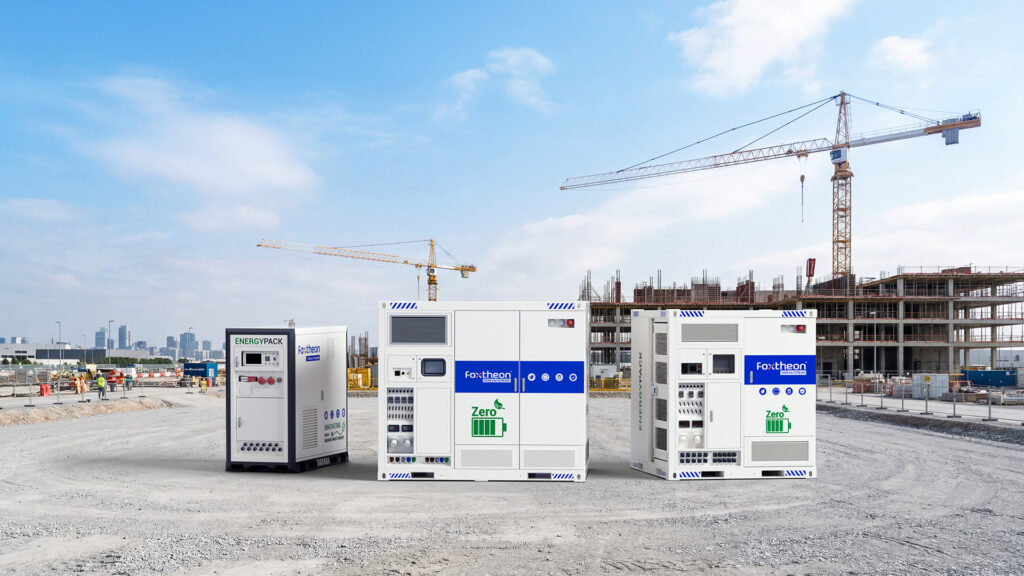
1. Thermal Management and Environmental Controls in storage for lithium ion batteries
Operating temperature directly affects the lifecycle degradation, safety profile, and round-trip efficiency of lithium iron phosphate (LFP) cells. Industrial battery enclosures must maintain cell temperatures within a narrow band, typically between 15°C and 30°C, regardless of external ambient conditions. Deviations from this window can cause uneven degradation or accelerated capacity fade.
Active Liquid Cooling versus Forced Air Cooling
For high-capacity, high-C-rate applications, active liquid cooling has become a standard approach. Liquid-cooled systems utilize a network of cooling plates in direct contact with the cells, circulating a mixture of ethylene glycol and water. This design achieves high heat-transfer coefficients and keeps cell-to-cell temperature differentials below 3°C, which helps prevent localized hot spots.
Air-cooled systems, while simpler in mechanical design, are typically reserved for lower-duty-cycle applications or environments with moderate ambient temperatures. Air-forced thermal management relies on internal ducting and variable-speed fan configurations to maintain convective heat dissipation. However, maintaining tight cell-to-cell temperature uniformity is more challenging with air cooling in high-density rack configurations.
Condensation Prevention and Humidity Control
- HVAC Integration: Enclosures must feature industrial-grade HVAC units with dehumidification modes to manage internal humidity levels.
- Dew Point Monitoring: Advanced control algorithms continuously track internal air temperature and relative humidity against the cell surface temperature to prevent condensation.
- Ingress Protection: Enclosures designed for outdoor deployment typically carry minimum ratings of IP54 or NEMA 3R to protect internal electronics from moisture, dust, and corrosive airborne particulates.
2. Battery Management System (BMS) Architecture and State Estimation
The Battery Management System (BMS) acts as the primary monitoring and protection layer within industrial energy storage. A reliable BMS requires a multi-tiered architecture—consisting of local slave modules, rack-level master controllers, and system-level central controllers—to maintain granular operational control.
State of Charge (SOC) and State of Health (SOH) Estimation
Accurate state estimation prevents overcharging and over-discharging, both of which can lead to accelerated degradation or internal cell damage. The BMS uses algorithms to combine Coulomb counting, open-circuit voltage (OCV) mapping, and extended Kalman filtering to track SOC with high precision. SOH is calculated by analyzing dynamic internal impedance changes and tracking cumulative capacity throughput over time.
Cell Balancing Mechanisms
Cell imbalance occurs naturally due to slight manufacturing variances and uneven thermal distribution across the rack. The BMS manages this through passive or active balancing:
- Passive Balancing: Uses shunt resistors to dissipate excess energy from higher-voltage cells as heat during the end of the charging cycle. This is a cost-effective and reliable method, though it generates minor thermal waste.
- Active Balancing: Redistributes charge from higher-capacity cells to lower-capacity cells using capacitive or inductive transfer circuits. While more complex, this approach improves overall system efficiency and minimizes thermal load.
Communications Protocols and EMS Integration
To integrate with broader site energy systems, the BMS communicates with the Power Conversion System (PCS) and Energy Management System (EMS). This communication relies on industry-standard protocols such as Modbus TCP/IP, CAN bus (Controller Area Network), and IEC 61850. Real-time telemetry data—including cell voltages, current, temperature profiles, and diagnostic fault codes—must be transmitted at high frequencies (typically sub-100ms intervals) to trigger rapid protection mechanisms when operating thresholds are exceeded.
3. Integration with Existing Infrastructure and Generator Assets
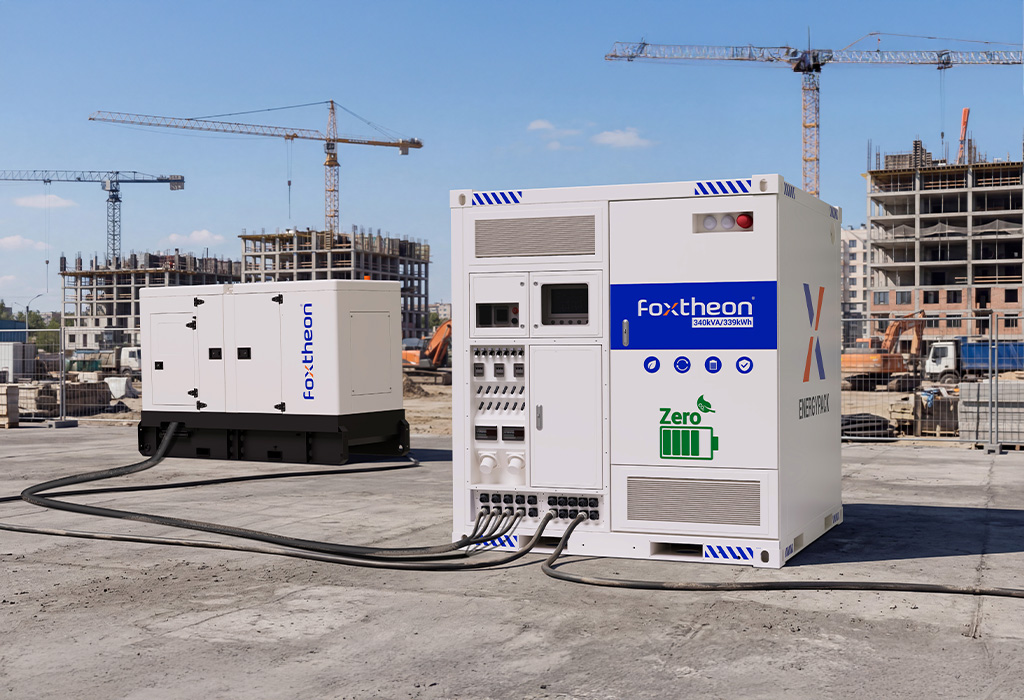
Industrial facilities often operate existing on-site power generation, such as diesel or gas generator sets. Integrating modern battery storage with these systems requires careful coordination to maximize fuel efficiency and prevent operational conflicts.
Dynamic Load Following and Generator Loading
Internal combustion generators operate most efficiently within specific load ranges, typically above 40% of their rated capacity. Low-load operation, often called “wet stacking,” leads to unburnt fuel accumulation, increased carbon deposits, and frequent maintenance requirements. By deploying battery storage alongside generators, the battery can handle fast-moving load transitions and low-load periods, allowing the generators to run within their optimal efficiency window.
Microgrid Synchronization and Black Start Capability
In microgrid applications, the battery storage inverter must operate in both grid-following and grid-forming modes:
- Grid-Following Mode: The inverter locks onto the voltage and frequency reference of the utility grid or an operating generator, injecting real and reactive power as directed.
- Grid-Forming Mode: In islanded conditions, the inverter acts as the voltage and frequency source, establishing a stable reference for the rest of the microgrid.
- Black Start Capability: The battery system provides the initial power required to energize step-up transformers and start auxiliary systems on larger generator assets during a complete system outage.
4. Safety Regulations and Compliance Standards
Due to the high energy densities involved, safety compliance is a major factor in the design and installation of industrial systems. Ensuring compliance with these standards when deploying storage for lithium ion batteries is non-negotiable.
Key Global Standards
- UL 9540: The standard for safety of energy storage systems and equipment, covering electrical, mechanical, fluid, and environmental safety parameters.
- UL 9540A: A standardized test method for evaluating thermal runaway fire propagation in battery systems, helping engineers determine safe separation distances and ventilation requirements.
- IEC 62619: Specifies safety requirements for secondary lithium cells and batteries used in industrial applications, including stationary and mobile systems.
- NFPA 855: The standard for the installation of stationary energy storage systems, regulating spatial separation, fire suppression system design, and emergency planning.
Active and Passive Fire Mitigation
Modern battery enclosures use multi-layered safety mechanisms to address thermal hazards before they propagate. This includes early-stage off-gas detection, such as carbon monoxide and hydrogen sensors, which identify cell venting before thermal runaway occurs. Automated fire suppression systems, typically utilizing clean agent gases (like Novec 1230) or specialized aerosol systems, are integrated to suppress fires quickly. Additionally, structural deflagration panels (explosion venting) are built into the enclosure walls to vent overpressure safely away from personnel and surrounding infrastructure.
5. Application Scenarios for Industrial Energy Storage
Industrial energy storage is deployed across a range of commercial and industrial settings, each requiring customized configurations to meet specific operational goals.
Peak Shaving and Demand Charge Management
Many commercial utility tariffs include heavy fees based on the peak power draw recorded during billing cycles. Energy storage systems monitor real-time facility power consumption and discharge stored energy during peak periods. This limits the maximum draw from the utility grid, smoothing the facility’s demand profile.
Backup Power and UPS Functionality
For facilities where brief power interruptions can disrupt manufacturing lines, data centers, or communication networks, battery storage provides critical backup support. When paired with high-speed transfer switches, the storage system transitions to islanded mode within milliseconds of a grid failure, keeping vital loads active until primary grid power is restored or backup generators reach operating speed.
Hybrid Off-Grid and Microgrid Systems
In remote installations, such as mining sites, agricultural hubs, or isolated telecommunication installations, establishing a reliable power grid is difficult. Deploying robust storage for lithium ion batteries enables seamless transition and stable power delivery by balancing intermittent renewable generation (such as solar PV) with local diesel generators. Equipment manufacturers such as Foxtheon have developed advanced containerized systems designed to withstand harsh outdoor conditions in these remote settings.
6. Engineering Guidelines for Capacity Sizing
Properly dimensioning an energy storage installation involves balancing system longevity, continuous performance, and physical constraints. Designers must analyze both power capacity (kilowatts) and energy capacity (kilowatt-hours) to ensure the system matches the facility’s load profile.
Determining C-Rate Requirements
The C-rate measures the speed at which a battery is charged or discharged relative to its total capacity. A 1C rate discharges the entire battery capacity in one hour, while a 0.5C rate discharges it over two hours. For applications like frequency regulation or dynamic peak shaving, high-C-rate configurations (1C to 2C) are required. For energy shift applications, a lower C-rate system (0.25C to 0.5C) with larger energy reservoirs is more appropriate.
Managing Depth of Discharge (DoD)
Operating a battery through deep charge-discharge cycles accelerates capacity loss. While LFP chemistry supports deep cycling, restricting the daily Depth of Discharge (DoD) to between 80% and 90% significantly extends the system’s operational lifespan. Keeping cell voltages within safe limits helps preserve the active lithium inside the cells, allowing systems to maintain reliable performance over thousands of cycles.
Future-Proofing Commercial Energy Systems
Selecting high-performance storage for lithium ion batteries requires a thorough understanding of thermal management, safety standards, and system integration. By focusing on robust engineering standards, industrial operators can build stable power configurations that support their operational goals, improve power quality, and integrate smoothly with existing generator assets. Partnering with Foxtheon provides access to engineering support and modular hardware solutions tailored to your facility’s specific energy needs.
To discuss your technical requirements and explore customized energy storage options for your commercial or industrial facility, please submit an inquiry to our engineering team today.
Frequently Asked Questions
Q1: What is the differences in performance between liquid cooling and air cooling for industrial LFP battery systems?
A1: Liquid cooling offers superior thermal conductivity, keeping cell-to-cell temperature variations under 3°C, which is ideal for high-C-rate and high-duty-cycle applications. Air cooling is mechanically simpler and easier to maintain, but it may struggle to maintain strict temperature uniformity in dense, high-capacity rack setups.
Q2: How does an energy storage system prevent thermal runaway propagation?
A2: Multi-layer safety designs prevent thermal runaway propagation by incorporating physical insulation barriers between cells, active BMS monitoring to isolate fault zones, early-stage off-gas sensors (detecting CO/H2), and automated clean-agent fire suppression systems. Enclosures must also pass UL 9540A testing to verify that runaway cannot spread between adjacent modules.
Q3: Can lithium-ion storage systems be connected directly to existing diesel generators?
A3: Yes, battery storage systems integrate with existing diesel generators via centralized Energy Management Systems (EMS) using protocols like Modbus or CAN. The battery handles transient peak loads and low-load periods, allowing the generator to operate within its most efficient load range (typically 60-80%), which reduces maintenance needs and fuel consumption.
Q4: What communications protocols are used to integrate industrial battery storage with building management systems?
A4: Industrial systems primarily utilize Modbus TCP/IP, CAN bus, and IEC 61850. These protocols enable high-frequency telemetry data transfer between the BMS, Power Conversion System (PCS), and local Energy Management System (EMS).
Q5: Why is Depth of Discharge (DoD) monitoring important for industrial batteries?
A5: Restricting the daily Depth of Discharge (typically to 80% or 90%) reduces stress on the LFP cell chemistry. This prevents premature capacity degradation and extends the functional life of the system, helping the battery maintain stable performance over thousands of charge-discharge cycles.