
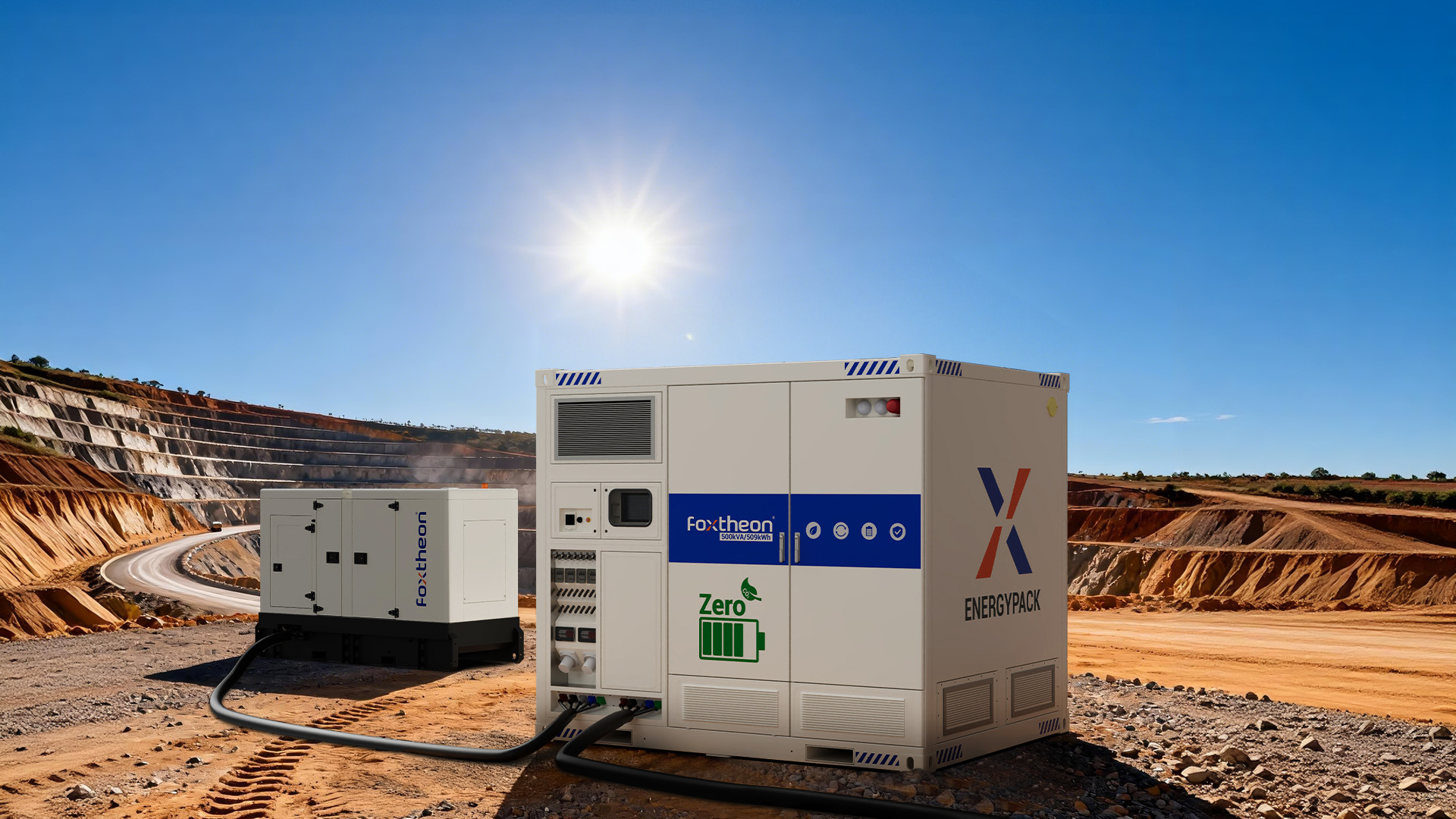
The global energy landscape places increasing pressure on industrial and commercial facilities to manage power reliability, peak demand charges, and renewable integration. Traditional backup assets—such as diesel or gas generators—remain essential for extended outages, yet they operate suboptimally under partial loads and offer no daily energy arbitrage capabilities. This is where modern storage battery solutions deliver quantifiable value. By integrating intelligent battery storage, businesses can reduce operational friction, improve power quality, and create a hybrid energy architecture that extends the life of existing generator assets without replacing them.
As a B2B energy specialist, I evaluate battery systems based on cycle economics, safety certifications, and field-proven interoperability. This article details technical foundations, specific industry pain points, deployment phases, and a practical FAQ—all grounded in engineering realities. You will also learn how Foxtheon engineers its portfolio to meet these exacting standards.
Technical Architecture of Modern Storage Battery Systems
Understanding the core components of storage battery solutions is essential for procurement and integration planning. A professionally engineered system is not a single device but an orchestrated stack of hardware and software. Below are the critical subsystems:
- Battery Cell & Module Chemistry – Lithium iron phosphate (LFP) currently dominates industrial applications due to its thermal stability, 6000–8000 cycle life at 80% depth of discharge, and absence of cobalt supply chain risks. Nickel manganese cobalt (NMC) offers higher energy density but reduced cycle life. For stationary applications, LFP provides superior safety and total cycle throughput.
- Battery Management System (BMS) – A multi-layer BMS monitors cell voltage, temperature, and current. It performs passive or active balancing, over-current protection, and insulation monitoring. Industrial-grade BMS also logs historical data for predictive maintenance and communicates via Modbus TCP, CAN bus, or IEC 61850.
- Energy Management System (EMS) & Controller – The EMS runs optimization algorithms: peak shaving, load shifting, demand response dispatch, and solar self-consumption. Advanced controllers integrate with weather forecasts and real-time utility tariffs. For hybrid generator + battery sites, the EMS manages start/stop logic, reducing generator runtime by 60–80% without eliminating it.
- Power Conversion System (PCS) – Bi-directional inverters with grid-forming or grid-following capabilities. Look for low total harmonic distortion (<3%) and islanding detection. Modular PCS architectures allow N+1 redundancy and paralleling for capacity expansion up to multi-MW scales.
- Thermal Management – Liquid cooling is increasingly standard for high-power systems (≥200 kW) to maintain cell temperatures within 15–35°C, maximizing cycle life. For smaller units, forced-air cooling with dust filters is acceptable.
- Enclosure & Environmental Protection – IP54 or IP55 ratings for outdoor installations, along with C3/C4 corrosion resistance for coastal or industrial environments. Seismic certification (IBC 2018) may be required in certain regions.
Selecting storage battery solutions without evaluating these subsystems often leads to safety incidents or premature capacity fade. Reputable suppliers provide third-party test reports (UL 1973, IEC 62619, UN38.3) and thermal runaway propagation test results.
Addressing Key Industry Pain Points with Storage Battery Solutions
B2B facilities face recurring challenges that well-designed battery storage resolves without discarding existing infrastructure. Below are the four most critical pain points and their technical countermeasures.
1. Demand (Peak) Charges and Time-of-Use Tariffs
Commercial and industrial electricity bills are heavily influenced by peak demand measured in 15- or 30-minute intervals. A battery system discharges during these windows, cutting demand spikes by up to 40% while respecting the site’s load profile. The EMS learns load patterns and adjusts discharge power to remain below a configurable threshold. This approach does not require replacing existing transformers or generator sets—the battery works alongside them as a non-invasive performance optimizer.
2. Short-Duration Power Interruptions & Grid Transients
Even a few seconds of outage can interrupt manufacturing batch processes or cause data corruption. Traditional automatic transfer switches (ATS) take 5–10 seconds to start a generator. Storage battery solutions with UPS-mode capability bridge that gap seamlessly: they provide sub-20 ms response during the interval between grid failure and generator steady-state. After the generator synchronizes, the battery recharges from the generator or grid, ready for the next event. This hybrid topology extends generator starter and alternator life because the engine starts less frequently and runs at higher average loads.
3. Renewable Energy Intermittency (Solar/Wind Integration)
Solar generation creates ramping events (cloud passage) that destabilize low-voltage grids. Battery storage provides ramp-rate control, absorbing or injecting power to keep feeder voltages within ±5%. For islanded microgrids, a battery with grid-forming inverter acts as the voltage reference, allowing renewable penetration up to 100% during sunny hours. This enables facilities to meet corporate sustainability targets without compromising operational continuity.
4. Generator Fuel Efficiency and Maintenance Optimization
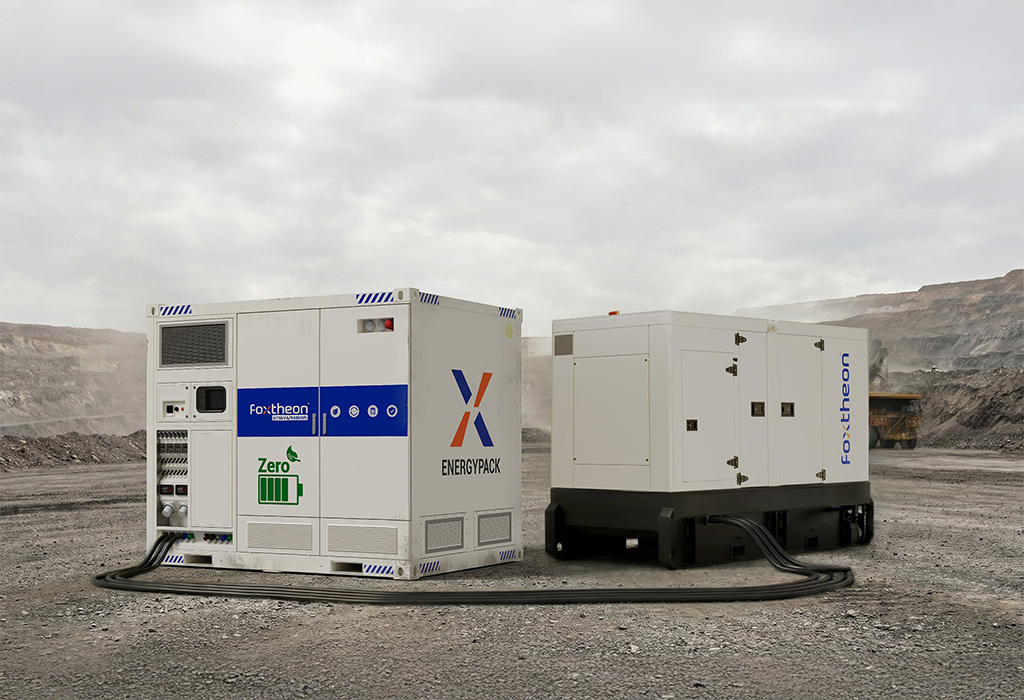
Diesel generators operated at low load (<30%) experience wet stacking, carbon buildup, and reduced lifespan. Instead of replacing the generator, a battery can supply the initial surge loads while the generator operates at an optimal 70–80% load setpoint. The battery handles transient spikes, and the generator steadily recharges the battery pack. Field data shows this reduces fuel consumption by 25–35% and extends oil-change intervals by up to 200 hours annually. Neither the generator nor the battery is positioned as superior; each asset performs its best role in a coordinated system.
Core Application Scenarios for Battery Storage in B2B Environments
Industrial verticals adopt storage battery solutions based on distinct operational drivers. The following table summarizes four typical use cases (conceptual, not brand-specific).
- Manufacturing plants – 1–5 MW systems for peak shaving and power factor correction. Automated stamping or CNC lines require consistent voltage; batteries eliminate sags caused by inrush currents from large motors.
- Data centers (colocation and enterprise) – Tier III/IV facilities deploy N+1 battery racks alongside generators. Lithium batteries occupy 50% less floor space than VRLA, and their higher operating temperature tolerance reduces cooling demand.
- EV fast-charging hubs – Charging multiple heavy trucks simultaneously creates demand peaks. A 500 kW battery buffers the grid connection, allowing a smaller transformer (e.g., 300 kW) while still delivering 800 kW peak to chargers—saving grid upgrade costs.
- Remote industrial sites (mining, telecom towers) – High diesel transport costs make solar + storage viable. The battery cycles daily to cover evening load peaks, reducing generator runtime to only 2–4 hours per day for top-up charging.
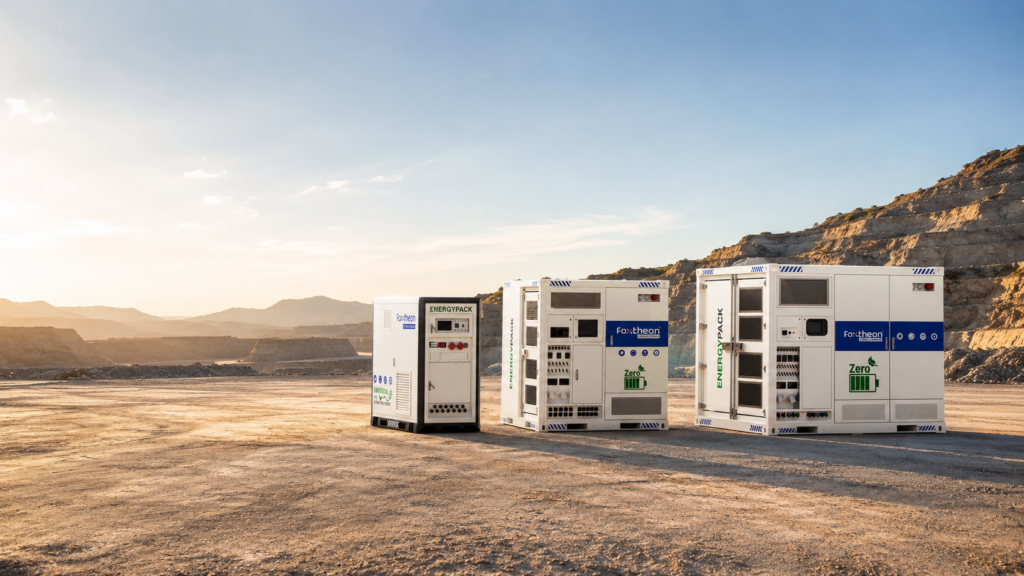
Foxtheon provides pre-engineered containerized systems (250 kWh to 5 MWh) for these scenarios, with each unit factory-tested for BMS-PCS communication and thermal runaway prevention. Their modular design allows scaling from a single cabinet to multi-megawatt installations without redesigning the central controller.
Why Choose Foxtheon for Your Energy Storage Needs
Many suppliers offer battery racks, but few deliver fully validated solutions with cyber-secure remote management. Foxtheon focuses on three engineering advantages that matter to B2B asset owners:
- Native generator integration – The EMS includes dedicated logic for hybrid operation (generator + storage), respecting existing ATS and paralleling switchgear. No field programming needed for different generator brands (Caterpillar, Cummins, MTU, etc.).
- Hardened communication – Dual-redundant Modbus TCP ports and 4G backup ensure control continuity even if primary network fails. OPC UA is available for direct SCADA integration.
- Site-specific safety packages – Smoke detection, aerosol fire suppression (NFPA 855 compliant), and remote emergency stop via dry contacts. Each system includes a safety data sheet (SDS) for first responders.
Foxtheon also offers a 10-year performance warranty (≥70% remaining capacity) with annual remote diagnostics—removing the guesswork from asset management. Their engineering team supports site audits, single-line diagram modifications, and local code compliance.
Implementing Storage Battery Solutions: A Phased Approach
Successful deployment follows four distinct phases. Rushing any step leads to suboptimal return on investment.
Phase 1 – Load and Utility Tariff Analysis
Measure 15-minute interval data for 12 months. Identify peak demand periods, load factor, and existing generator start/stop logs. Use simulation software (e.g., Homer Pro, or a supplier’s proprietary tool) to size battery power (kW) and energy (kWh) based on at least three daily cycles.
Phase 2 – System Architecture & Protection Coordination
Design the single-line diagram with dedicated battery breaker, upstream overcurrent protection, and interlocking logic to prevent islanding when grid is down. Verify that the generator’s governor can accept a load step change when the battery transitions from charging to discharging.
Phase 3 – Factory Acceptance and Site Integration
Witness testing of BMS alarms, EMS schedules, and generator state detection. After delivery, install the battery in a non-habitable area with 1m clearance for service. Commission the communication link to the building automation system (BAS).
Phase 4 – Performance Validation & Operator Training
Run a 72-hour trial under real load conditions. Compare actual demand reduction against simulation. Train facility staff on the HMI: how to override schedules, view cell temperatures, and acknowledge safety alerts. Provide emergency response procedures for thermal events.
Experienced engineering partners like Foxtheon can execute these phases as a turnkey project or support your in-house team with remote technical direction.
Frequently Asked Questions about Storage Battery Solutions
Q1: How do storage battery solutions integrate with my existing diesel generator without replacing it?
A1: The battery connects to the same low-voltage busbar as the generator, downstream of the automatic transfer switch (ATS) or paralleling switchgear. The energy management system (EMS) monitors grid and generator status. During a blackout, the battery instantly supplies load while the generator starts and synchronizes. Once the generator reaches stable voltage/frequency, the EMS transitions the load to the generator and recharges the battery at a controlled rate. Your generator remains the primary long-duration backup; the battery improves response time and reduces its runtime for short events. No generator retrofit is required—only addition of a battery breaker and communication wiring.
Q2: What safety certifications should I look for in industrial battery storage?
A2: Minimum requirements: UL 1973 (stationary battery), UL 9540 (energy storage system), and UL 9540A (fire propagation test). For international projects, IEC 62619 (safety of industrial batteries) and IEC 62477 (power conversion equipment). Also request cell-level test reports for nail penetration, overcharge, and external short circuit. All storage battery solutions from Foxtheon carry these certifications, with third-party witnessed testing.
Q3: Can battery storage provide black start capability for my microgrid?
A3: Yes, if the inverter is grid-forming (supplies voltage and frequency reference). Most grid-following inverters collapse when disconnected from the utility. A grid-forming battery inverter can black-start your entire facility, re-synchronizing with the grid when it returns. Ensure your EMS includes anti-islanding protection to prevent backfeeding utility lines. This configuration is common for critical manufacturing and data centers that require total independence during extended outages.
Q4: What is the typical service life and degradation pattern of LFP batteries?
A4: Quality LFP cells provide 6,000–8,000 cycles to 70% state of health (SOH) at 25°C ambient and 0.5C charge/discharge rate. Degradation is linear after the first 500 cycles (2–3% capacity fade per 1,000 cycles). Calendar aging adds 1–2% per year. For a facility cycling the battery once per day, useful life exceeds 15 years. Note that operating above 35°C accelerates aging by 2x per 10°C rise; thus thermal management is critical. Foxtheon’s liquid-cooled systems maintain cells within ±2°C, maximizing cycle yield.
Q5: How do I size the battery power (kW) vs. energy (kWh) correctly?
A5: Start with peak demand shaving: measure the highest 15-minute demand value (e.g., 500 kW). Decide a target demand limit (e.g., 400 kW). Required battery power is 100 kW. Energy (kWh) is the power multiplied by the duration of the peak event (typically 1–2 hours). For backup bridging, calculate the load you want to support while generator starts (e.g., 200 kW for 10 seconds = 0.56 kWh; then add safety factor). For solar time shifting, energy equals the solar production during peak sun hours that exceeds self-consumption. Always run a simulation with one year of site data—oversizing energy (kWh) adds unnecessary capital cost. A professional storage battery solutions provider will perform this analysis before quoting.
Implementing industrial battery storage requires careful component selection, safety validation, and integration with existing generator assets. The engineering principles outlined above—from BMS topology to load profiling—ensure reliable operation without displacing or devaluing current infrastructure.
For a site-specific assessment or to request technical datasheets and single-line diagram examples, contact the Foxtheon engineering team directly. They offer remote consultations, on-site load audits, and performance simulations that align with your operational budget and reliability targets.
Ready to evaluate storage battery solutions for your facility?
Submit your site’s annual load data and generator specs using the inquiry form. One of Foxtheon’s application engineers will provide a technical feasibility analysis and a compliance checklist within three business days. No commitment required—only engineering-grade advice.