
The modernization of global electrical grids requires robust mechanisms for energy buffering and load management. As grid operators manage varying power flows and industrial facilities seek higher power reliability, the structural integrity of power networks depends heavily on advanced energy buffering technologies. At the center of this transition is megawatt scale battery storage, a technological framework designed to bridge the temporal gap between energy generation and consumption.
Rather than functioning merely as standalone backup reserves, modern high-capacity Battery Energy Storage Systems (BESS) are dynamic assets. They stabilize frequency fluctuations, provide synthetic inertia, and work synergistically with existing rotary power generation equipment. This comprehensive technical analysis explores the systemic architecture, economic models, integration methodologies, and safety protocols that define high-capacity utility storage installations.
Technical Anatomy of High-Capacity Storage Arrays
A utility-scale storage plant is a complex matrix of electrochemical, power electronic, and thermal management systems operating in unison. Understanding the hardware and software layers is a prerequisite for project developers evaluating deployment feasibility.
1. Electrochemical Core: Battery Chemistry and Configurations
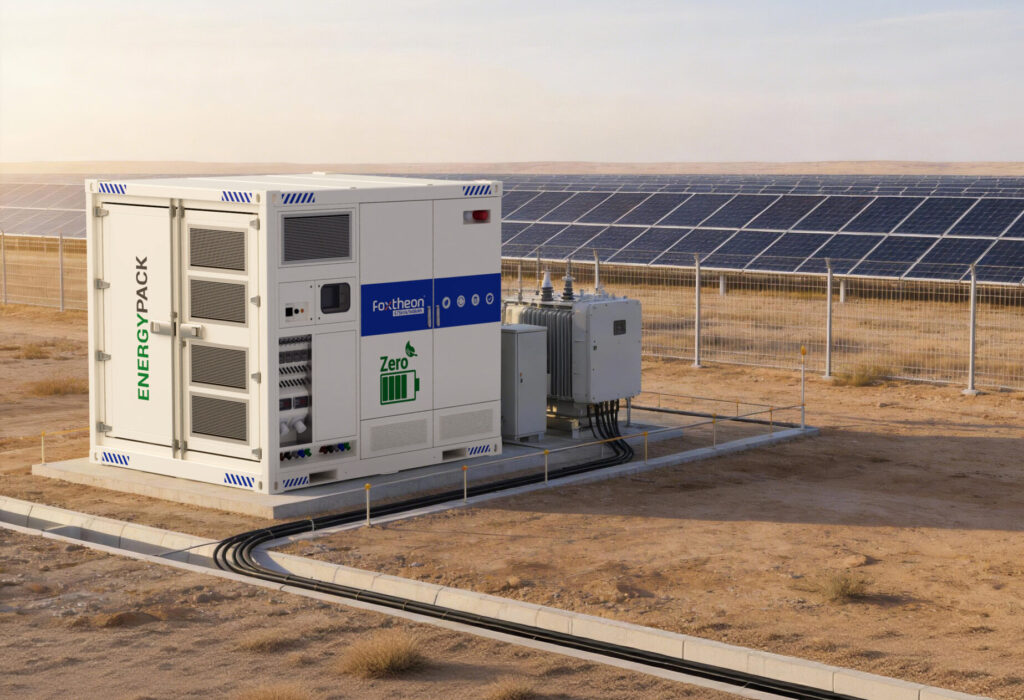
The fundamental unit of any BESS is the battery cell. In large commercial and industrial (C&I) applications, Lithium Iron Phosphate (LFP) has emerged as the dominant chemistry. Compared to Nickel Manganese Cobalt (NMC), LFP offers superior thermal stability, a higher threshold for thermal runaway, and a longer cycle life. Cells are aggregated into modules, which are then integrated into racks. A standard containerized megawatt scale battery storage unit houses multiple racks connected in parallel to achieve the desired direct current (DC) voltage and capacity.
2. Power Conversion Systems (PCS)
The PCS serves as the bidirectional gateway between the DC battery array and the alternating current (AC) grid. It dictates the charge and discharge rates, measured in C-rates. For instance, a 1C system can fully discharge its capacity in one hour, making it suitable for rapid frequency response. A 0.25C system, discharging over four hours, is optimized for energy shifting and peak shaving. Advanced PCS units also provide reactive power support, improving the power factor of the local grid.
3. Energy Management (EMS) and Battery Management Systems (BMS)
The intelligence of the system resides in its control layers:
- BMS (Battery Management System): Operates at the module and rack level. It continuously monitors the State of Charge (SOC), State of Health (SOH), temperature, and voltage of individual cells, ensuring balanced degradation and preventing overcharging.
- EMS (Energy Management System): Operates at the macro level. It interfaces with external grid signals, executing dispatch commands, managing revenue-stacking algorithms, and communicating with site SCADA systems.
4. Thermal Management Infrastructure
Electrochemical efficiency is highly temperature-dependent. High-capacity BESS employ either forced air cooling or liquid cooling loops. Liquid cooling is increasingly standard in dense, high-capacity deployments because it maintains a tighter temperature differential (typically within 3°C across the entire container), which significantly reduces localized cell degradation and extends the overall asset lifespan.
Strategic Applications in Grid Infrastructure
Deploying high-capacity batteries serves multiple engineering and financial objectives for independent power producers (IPPs) and grid operators.
Frequency Regulation and Ancillary Services
Electrical grids must maintain a strict frequency (typically 50Hz or 60Hz). Deviations caused by sudden load changes or generation drops can lead to grid instability. Traditional rotary generators take time to ramp up. In contrast, solid-state inverters in a BESS can detect frequency anomalies and inject or absorb active power within milliseconds. This Fast Frequency Response (FFR) is a highly valued ancillary service in deregulated energy markets.
Peak Shaving and Energy Arbitrage
Industrial facilities face significant demand charges based on their highest 15-minute interval of power consumption during a billing cycle. By discharging during these peak load periods, a BESS effectively “shaves” the peak, lowering utility costs. Furthermore, operators can perform energy arbitrage—charging the system when energy market prices are low (or negative) and discharging during peak pricing periods.
Renewable Energy Integration
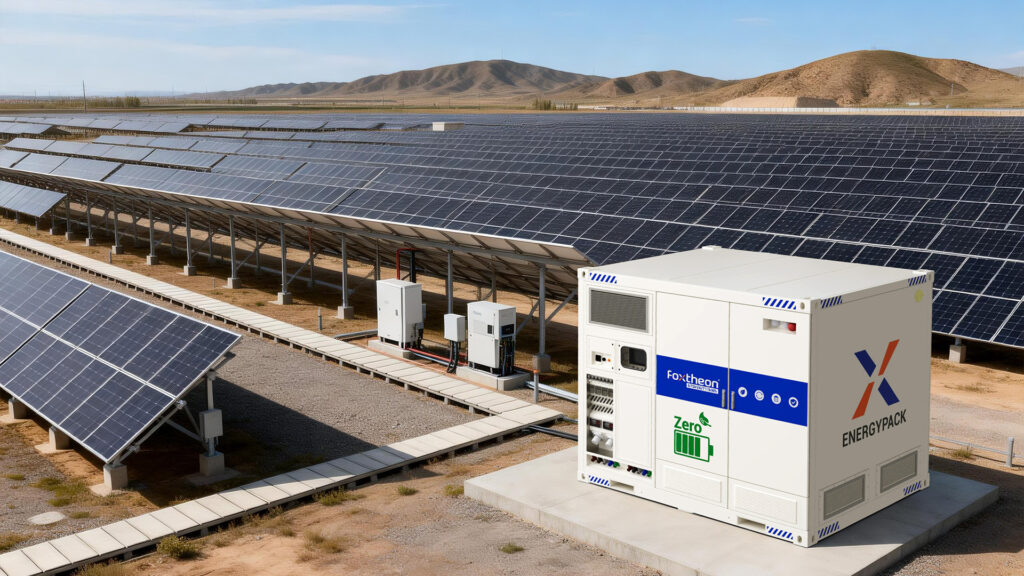
Solar and wind generation profiles rarely align perfectly with human consumption patterns. This mismatch often leads to curtailment, where excess power is wasted. A strategically located megawatt scale battery storage facility absorbs this excess generation, storing it for dispatch during evening peaks, thereby maximizing the utilization rate of renewable installations.
Synergistic Integration with Existing Power Assets
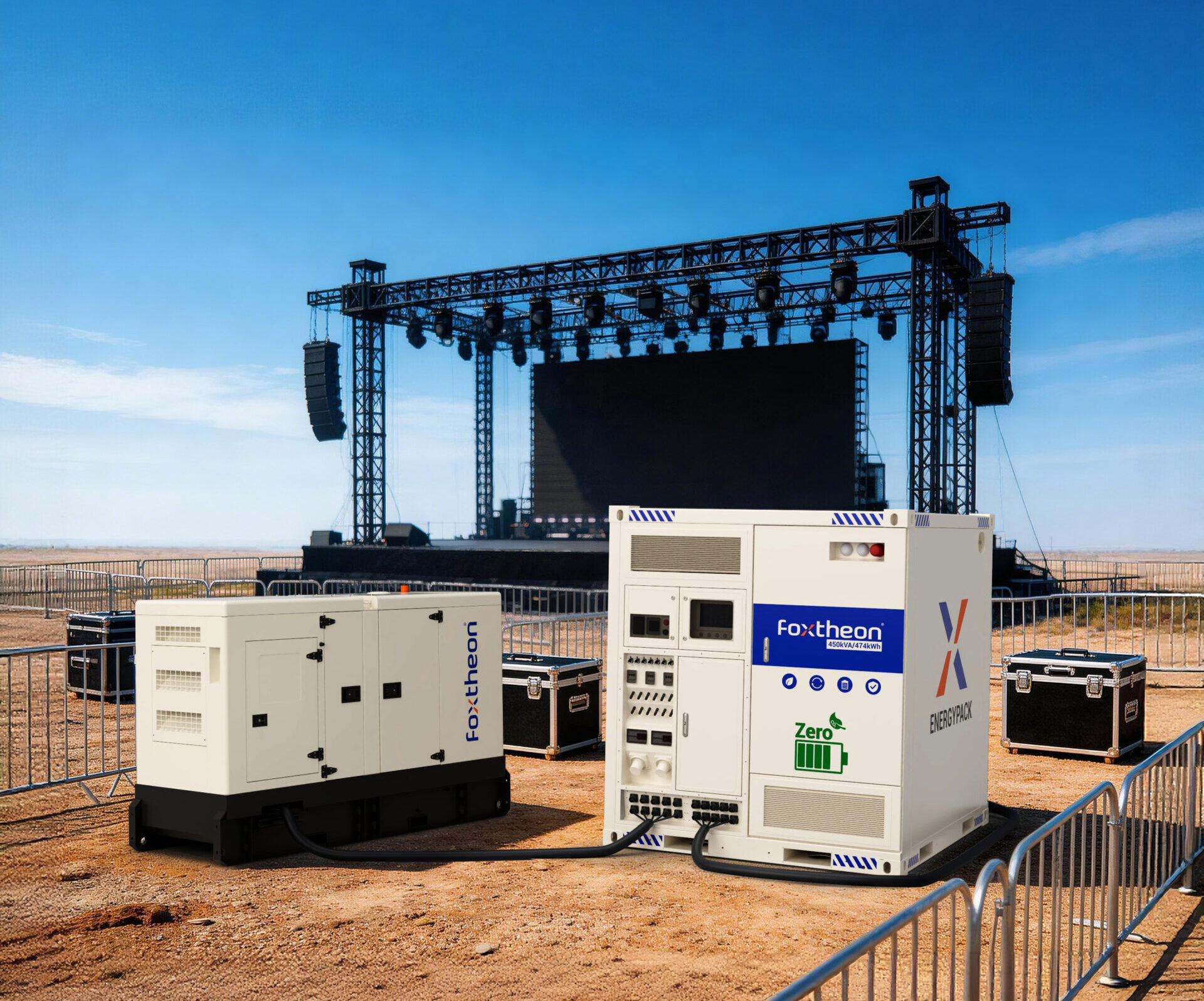
A fundamental principle of modern power architecture is maximizing the return on investment for existing infrastructure. High-capacity battery systems are engineered to operate in hybrid configurations alongside existing gas, diesel, or heavy fuel oil (HFO) generators. The goal is asset optimization, not necessarily substitution.
Rotary generators operate at peak fuel efficiency and lowest specific fuel consumption (SFC) when running at 70% to 85% of their rated load. Operating generators at low loads (e.g., 20% to 30%) causes incomplete combustion, “wet stacking,” and increased maintenance overhead. By integrating a BESS into a microgrid or industrial facility, the battery can handle the base load or low-load periods. When demand surges, the generator is brought online to run at its optimal efficiency point, while the battery manages momentary load spikes (transients).
Providers like Foxtheon specialize in designing control architectures that seamlessly hybridize continuous power systems. This synergy significantly reduces fuel consumption, extends generator maintenance intervals, and improves power quality by using the battery as a virtual spinning reserve.
Financial Modeling: Evaluating the Levelized Cost of Storage (LCOS)
For project developers, financial viability is quantified using the Levelized Cost of Storage (LCOS). This metric accounts for all capital and operational expenditures over the system’s life, divided by the total discharged energy.
- Capital Expenditure (CAPEX): Includes the procurement of battery racks, PCS, transformers, containerization, site preparation, civil works, and grid interconnection hardware.
- Operational Expenditure (OPEX): Encompasses routine maintenance, software licensing for EMS platforms, insurance, and cooling costs.
- Degradation and Augmentation: Lithium-ion cells naturally degrade through cycling and calendar aging. Financial models must account for “augmentation”—the process of adding new battery racks in years 5, 7, or 10 to maintain the plant’s contracted megawatt-hour (MWh) capacity.
To maximize ROI, operators employ “revenue stacking.” A single megawatt scale battery storage plant might participate in the capacity market (receiving fixed payments for availability), the frequency regulation market, and the day-ahead arbitrage market simultaneously, driven by complex algorithmic bidding software.
Navigating Regulatory Frameworks and Safety Standards
The concentration of immense electrochemical energy necessitates rigorous adherence to international safety protocols. Developers and EPC (Engineering, Procurement, and Construction) contractors must align with standards such as NFPA 855 (Standard for the Installation of Stationary Energy Storage Systems) and UL 9540/UL 9540A.
UL 9540A is particularly vital; it is a test method that evaluates the thermal runaway fire propagation in BESS. Modern systems utilize a multi-tiered safety architecture:
- Early Detection: Off-gas sensors detect the volatile organic compounds (VOCs) released by a failing cell minutes before thermal runaway occurs, triggering an immediate shutdown of the affected rack.
- Active Suppression: Automated fire suppression systems utilizing clean agents (like Novec 1230) or targeted water mist systems are deployed to cool the environment and suppress ignition.
- Deflagration Venting: Structural pressure relief panels are engineered into the container to safely vent explosive gases, protecting site personnel and adjacent equipment.
Engineering-driven manufacturers like Foxtheon integrate these safety layers at the design phase, ensuring that site deployments pass rigorous Authority Having Jurisdiction (AHJ) inspections and secure favorable insurance premiums.
Frequently Asked Questions (FAQ)
Q1: What is the typical operational lifespan of a utility-scale battery system?
A1: The lifespan is heavily dependent on the Depth of Discharge (DOD), cycle frequency, and thermal management. A system utilizing LFP chemistry, operating at 1 cycle per day at 80% DOD with active liquid cooling, typically retains 70-80% of its initial capacity after 10 to 15 years. Augmentation strategies are often employed to extend the plant’s useful life to 20 years or more.
Q2: How does a BESS improve the efficiency of existing diesel generator sets?
A2: A megawatt scale battery storage system acts as a buffer. Instead of running a 2MW generator at a highly inefficient 300kW load during off-peak hours, the battery handles the 300kW load. Once the battery is depleted or the load spikes to 1.8MW, the generator turns on, running at its highest fuel efficiency point to supply power and recharge the battery simultaneously.
Q3: What are the differences between liquid cooling and forced air cooling in these systems?
A3: Forced air cooling uses HVAC systems to circulate cold air through the container. It is mechanically simpler but can result in temperature variations between racks near the AC unit and those further away. Liquid cooling uses coolant channels integrated directly into the battery modules. This provides superior heat dissipation, maintains uniform cell temperatures, allows for higher energy density packaging, and reduces parasitic load (auxiliary power consumption).
Q4: What role does the Power Conversion System (PCS) play in grid compliance?
A4: The PCS is responsible for synchronizing the DC battery power with the AC grid voltage and frequency. It handles advanced grid-support functions like fault ride-through (staying connected during transient grid voltage drops), reactive power compensation (VAR support), and harmonic filtering to ensure the power injected into the grid meets stringent power quality codes.
Q5: What are the primary site preparation and civil works required for a megawatt-class deployment?
A5: Site preparation involves pouring reinforced concrete pads rated for heavy static loads (a fully loaded BESS container can weigh upwards of 30 tons). It also requires trenching for medium-voltage AC cabling and communication lines, installing step-up transformers, constructing grounding grids, and implementing security perimeter fencing compliant with local utility regulations.
Conclusion and Next Steps
The integration of high-capacity energy buffering into power grids and industrial facilities is a precise engineering exercise. It requires meticulous evaluation of battery chemistry, thermal dynamics, PCS specifications, and financial modeling. By carefully managing load profiles, optimizing the operation of existing generating assets, and providing instantaneous grid support, advanced energy storage systems represent a cornerstone of modern power reliability and economic efficiency.
For organizations looking to engineer customized, high-reliability megawatt scale battery storage solutions, partnering with experienced technology providers is paramount. Foxtheon provides comprehensive B2B engineering support, from initial load profiling and LCOS calculations to full system integration and commissioning.
Submit an Inquiry:
To discuss technical specifications, request a feasibility study, or receive a commercial quotation for your utility or C&I energy project, please contact our engineering sales team today to initiate a detailed technical consultation.