
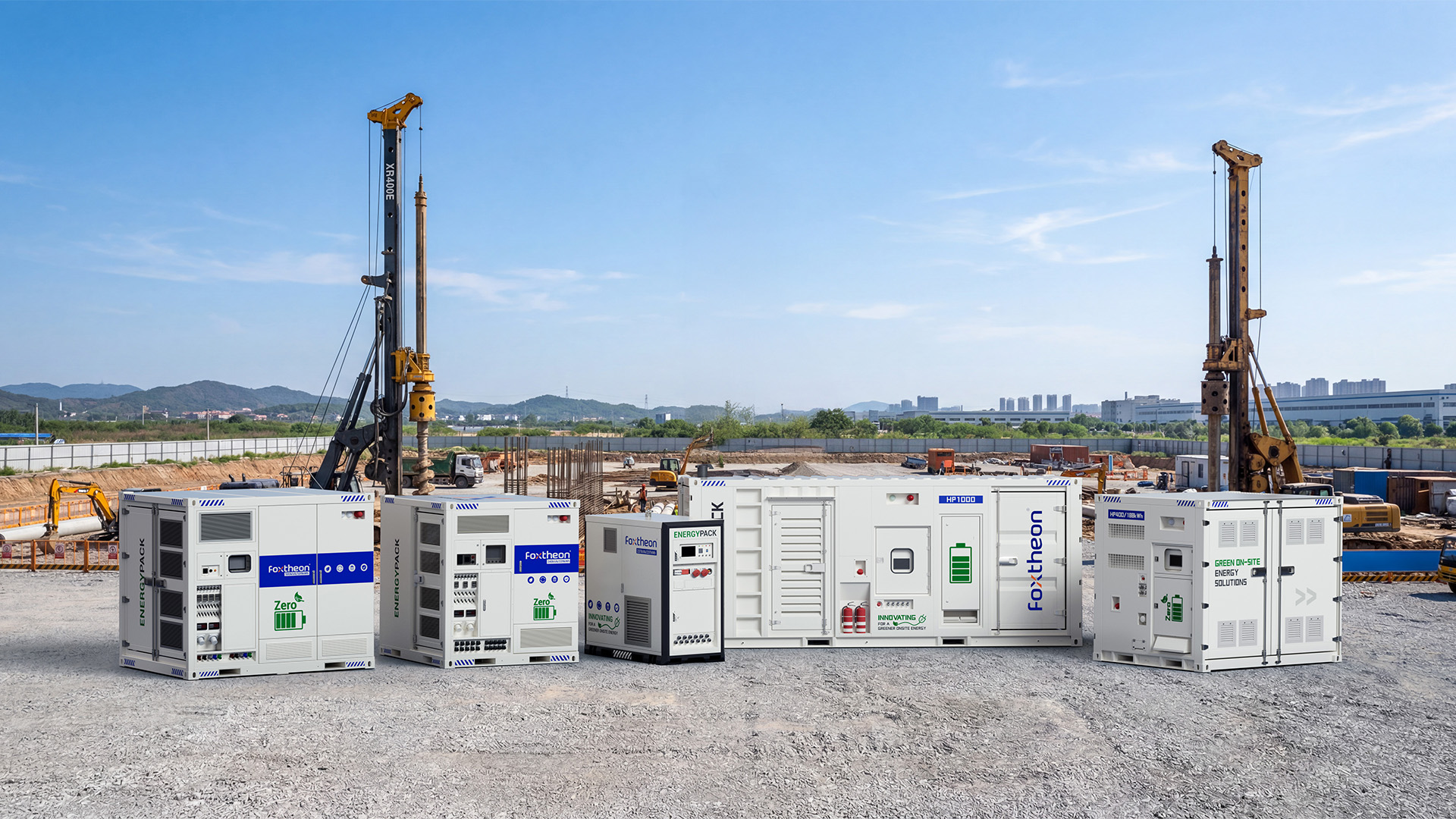
How to Identify the best battery storage system for Industrial and Commercial Applications
Energy-intensive operations across manufacturing, data centers, logistics hubs, and commercial real estate are facing unprecedented pressure on their electrical infrastructure. Voltage sags, demand charge escalation, and limitations on grid interconnection capacity require a more nuanced approach than simply adding backup generation. A properly specified battery energy storage system (BESS) provides grid services, optimizes energy spend, and enhances operational continuity—but only when the technical specifications align precisely with the site’s load profile. For procurement and engineering teams, discerning the best battery storage system means looking beyond nominal capacity ratings and evaluating cell chemistry, thermal management architecture, and power conversion efficiency under real-world operating conditions.
In many large facilities, the existing power generation fleet—comprising diesel or natural gas gensets—remains a viable and necessary asset. A modern BESS does not devalue these installations; rather, it augments them by reducing runtime hours, lowering maintenance frequency, and enabling seamless transitions during grid events. The objective is not replacement but intelligent co-optimization. The following analysis outlines the engineering criteria that define a superior storage asset, with reference to industry best practices and the specific approaches employed by Foxtheon in its commercial and industrial deployments.
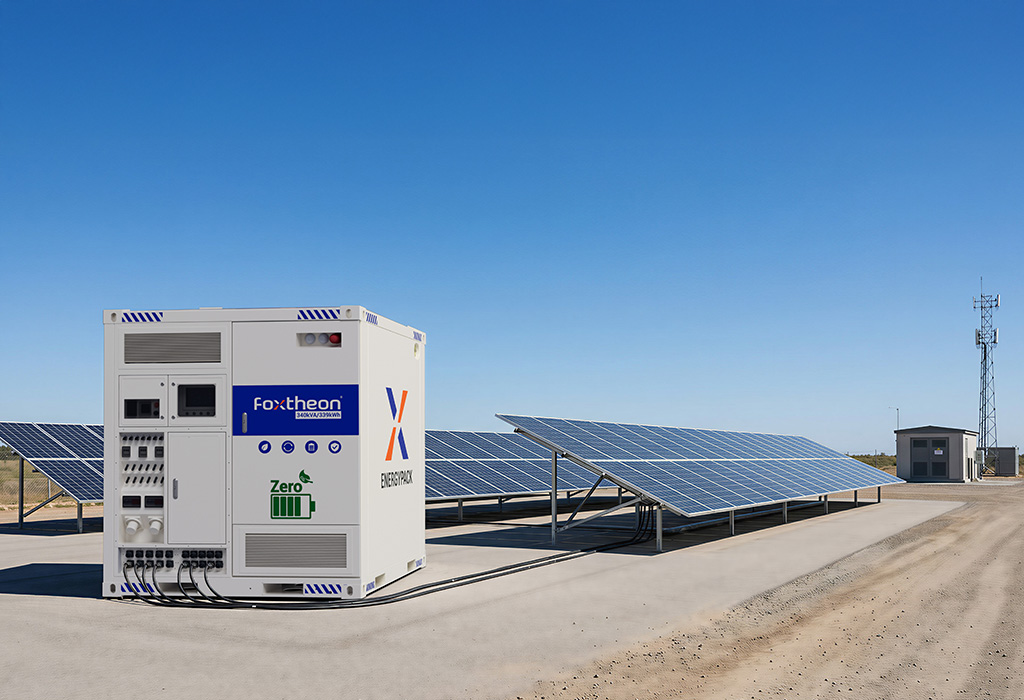
Technical Architecture: What Distinguishes a Premium BESS from Standard Offerings
A battery storage system is not a commodity product. Variations in cell selection, battery management system (BMS) granularity, and enclosure design have a direct impact on round-trip efficiency (RTE), cycle life degradation, and overall safety. When evaluating the best battery storage system for a C&I site, the following sub-system attributes must be scrutinized.
Cell Chemistry: LFP Dominance in Stationary Storage
Lithium Iron Phosphate (LFP) has become the predominant cathode material for grid-tied commercial storage due to its thermal stability and extended cycle life. Unlike Nickel Manganese Cobalt (NMC) formulations, LFP exhibits a higher thermal runaway onset temperature (typically exceeding 250°C), reducing the complexity and cost of fire suppression systems. Furthermore, LFP cells routinely achieve 6,000 to 8,000 cycles at 80% depth of discharge (DoD) before reaching 70% state of health (SOH). For industrial operators seeking a 15-year asset life, this electrochemical durability is a primary driver of total cost of ownership (TCO).
Power Conversion System (PCS) and Round-Trip Efficiency
The inverter or PCS bridge between the DC battery rack and the AC facility bus. Leading systems utilize silicon carbide (SiC) semiconductors to minimize switching losses, achieving peak efficiencies above 98.5%. However, rated efficiency is only part of the story. The best battery storage system maintains high conversion efficiency even at partial load—a critical factor during frequency regulation or low-power load shifting events. Additionally, the PCS must support grid-forming capabilities (GFM) if the site intends to operate in islanded microgrid mode without a synchronous generator reference.
Thermal Management: Liquid Cooling vs. Forced Air
Temperature delta across a battery rack accelerates cell aging and creates state-of-charge (SoC) imbalance. Forced air cooling, while cost-effective for low C-rate applications, struggles to maintain tight cell-to-cell temperature uniformity in dense, high-power configurations. Liquid cooling plates integrated into the module design keep cell temperature variation within ±2°C, enabling sustained 1C charge/discharge rates without derating. This is particularly relevant for peak shaving applications where the system must deliver full rated power for 2-4 hour windows daily. The thermal management loop also provides a pathway for waste heat recovery in colder climates, improving overall site energy efficiency.
BMS and System-Level Intelligence
A robust BMS operates at three levels: cell monitoring (voltage, temperature), module balancing (active or passive), and rack-level orchestration. Beyond safety interlocks, the BMS software stack should incorporate adaptive state estimation algorithms (Kalman filtering or equivalent) to provide accurate SoC and state of power (SoP) predictions. This data feeds the site controller to prevent premature curtailment and maximize revenue from demand charge management or ancillary service participation.
Application-Specific Optimization: Matching Storage to Load Profiles
Identifying the best battery storage system requires a detailed understanding of the facility’s 15-minute interval data. Storage assets are flexible, but their economic value is maximized when the energy-to-power ratio (E/P ratio) is tailored to the specific use case.
- Peak Shaving (Demand Charge Management): Requires high power density and fast response times. Systems are sized to shave the top 10-20% of peak kW draw. Typically an E/P ratio of 2:1 to 4:1 is optimal. The BESS must integrate with the building management system (BMS) or PLC to forecast load and dispatch precisely during the utility’s peak pricing window.
- Load Shifting (Energy Arbitrage): Involves charging during off-peak, low-cost periods and discharging during on-peak, high-cost periods. This application favors a higher E/P ratio (4:1 to 6:1) and relies on calendar life rather than just cycle count. It is particularly compelling in regions with wide time-of-use (TOU) spreads.
- Microgrid Islanding and Resilience: The BESS serves as the primary grid-forming asset during utility outages. It must support black start capability and manage inrush currents from motors and transformers. In this scenario, the system often works in tandem with existing diesel gensets, enabling the generator to run at optimal load (minimizing wet stacking) while the battery handles transient load steps.
- EV Fleet Charging Support: As depot electrification accelerates, the combined load of multiple Level 3 chargers exceeds existing service capacity. A BESS provides a buffered power source, allowing depot operators to avoid costly utility transformer upgrades and demand ratchet penalties.
Operational Pain Points in Industrial Energy Management and BESS Mitigation
Industrial facilities face a distinct set of electrical challenges that differ from residential or utility-scale contexts. Understanding these pain points is essential to configuring the best battery storage system for the job.
Demand Ratchets and Unpredictable Coincident Peaks
Many industrial tariffs include a demand ratchet clause, where a single high 15-minute peak in June can set the demand charge multiplier for the subsequent 11 months. A BESS with predictive analytics can discharge preemptively to clip these unexpected spikes, delivering significant annual savings even if the battery cycles relatively few times.
Voltage Flicker and Power Quality for Sensitive Processes
Semiconductor fabrication, injection molding, and precision machining are sensitive to voltage sags lasting just a few cycles. While traditional UPS systems cover critical IT loads, a larger BESS can buffer entire production lines against utility-side disturbances. Advanced PCS designs provide reactive power support (VAR compensation) to stabilize local bus voltage.
Interconnection Bottlenecks and Grid Hosting Capacity
When expanding a facility or adding new production lines, the utility may quote a multi-year lead time and significant capital expenditure for a service upgrade. A BESS deployed behind the meter effectively increases the site’s “virtual capacity,” allowing the operator to defer or avoid the upgrade entirely while maintaining compliance with the existing interconnection agreement.
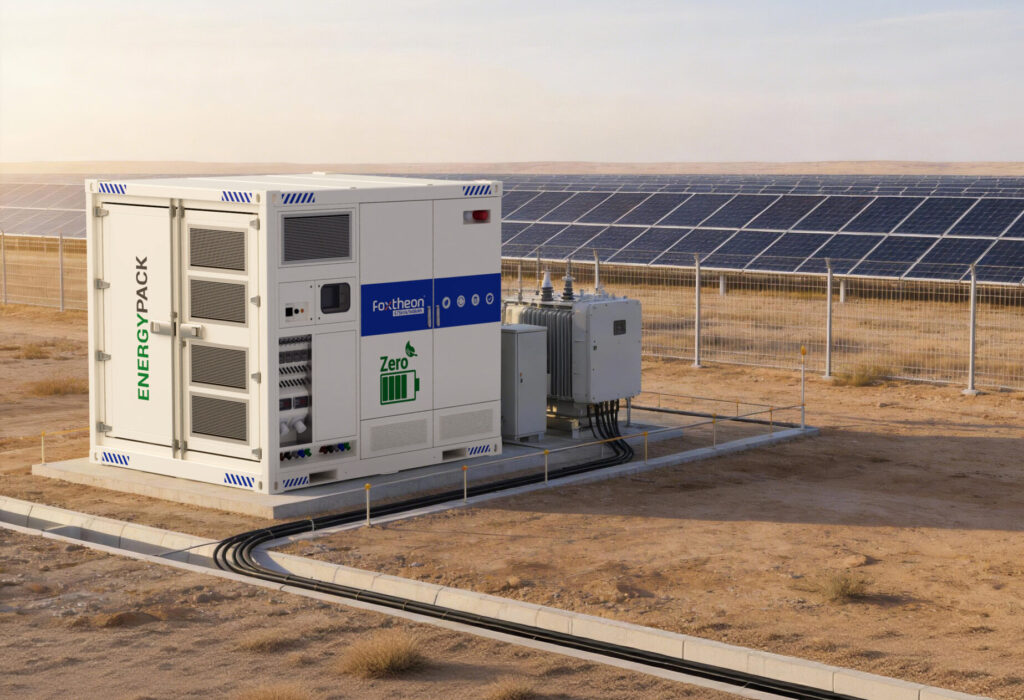
The Foxtheon Approach: Engineering for Long-Term Industrial Value
In the competitive landscape of energy storage manufacturing, the differentiation often lies in the rigor of the engineering validation and the flexibility of the system architecture. Foxtheon’s commercial and industrial energy storage portfolio is designed with an emphasis on operational continuity and seamless integration with legacy power infrastructure.
Specific design choices that align with the criteria for the best battery storage system include:
- Modular String Architecture: Rather than a single centralized inverter, distributed power electronics at the string level reduce single points of failure. If one battery rack requires maintenance, the remainder of the system remains online.
- Harsh Environment Readiness: Enclosures rated for NEMA 4X or IP55 protection, with integrated HVAC capable of operating in ambient temperatures from -20°C to 50°C, ensuring the asset performs reliably on factory rooftops or in remote substation yards.
- Generator Synchronization Logic: The control firmware includes specific operational modes for generator paralleling, allowing the BESS to provide spinning reserve and load leveling for the genset without causing reverse power trips or frequency instability.
Financial Metrics: Calculating Total Cost of Ownership (TCO) and Return on Investment
Procurement decisions for capital-intensive assets like battery storage require a thorough financial model. While upfront price per kilowatt-hour ($/kWh) is a common benchmark, it is an incomplete metric. A rigorous TCO analysis for the best battery storage system should incorporate the following variables:
- Augmentation Cost: As cells degrade, some systems require a mid-life capacity augmentation to maintain contracted performance. Systems with lower degradation rates (high-quality LFP with liquid cooling) defer this capital outlay.
- Parasitic Load: The energy consumed by the thermal management system (fans, pumps, compressors) directly subtracts from RTE. A system with a 1% lower parasitic load translates to thousands of dollars in additional energy savings over a decade.
- Warranty and Performance Guarantees: Standard warranties cover manufacturing defects, but a premium BESS offering includes an energy throughput warranty guaranteeing a minimum MWh delivered over the term. This provides revenue certainty for financed projects.
For energy managers and facility directors, the decision to deploy storage is a strategic investment in operational resilience and predictable energy costs. The objective is to select a solution engineered for the unique thermal, electrical, and spatial constraints of the industrial environment.
Frequently Asked Questions
Q1: How does a battery storage system interface with my existing building management system (BMS) or SCADA?
A1: Modern industrial BESS platforms support standard industrial protocols including Modbus TCP/IP, BACnet, and DNP3. Integration typically involves a supervisory controller that reads meter data and dispatches the battery based on pre-configured thresholds for import/export power. A well-designed system operates autonomously with minimal manual intervention, but provides full visibility and override capability to the facility operator.
Q2: What is the expected operational lifespan of an LFP battery storage system in a daily cycling application?
A2: In a typical daily peak shaving scenario (one full cycle per day), a high-quality LFP system with active thermal management can operate for 12 to 15 years while retaining 70-80% of its original nameplate capacity. Actual lifespan depends heavily on the average operating temperature and the depth of discharge. Limiting DoD to 80-90% rather than 100% can extend calendar life by several years.
Q3: Can the battery system keep my facility running if the grid goes down and I have existing diesel generators?
A3: Yes. In a properly configured microgrid, the BESS acts as the “grid-forming” asset during the transition. When the grid fails, the BESS instantaneously picks up the critical load (in milliseconds) while the diesel generator starts and warms up. Once the generator is online, the battery and generator share the load. The battery handles load steps and power factor correction, allowing the generator to operate at a steady, efficient setpoint. This reduces fuel consumption and engine wear compared to a generator-only backup strategy.
Q4: How much space is required for a commercial-scale battery storage system?
A4: Footprint varies by energy capacity and form factor. A typical outdoor-rated 500 kW / 1,000 kWh liquid-cooled cabinet occupies approximately 80-100 square feet, including required clearance for airflow and maintenance access. Indoor-rated racks can be denser but require adequate HVAC capacity in the electrical room to reject the heat generated during operation. Site selection should also account for weight loading, as a 1 MWh system can exceed 25,000 lbs.
Q5: What safety certifications and standards apply to industrial battery storage installations?
A5: In North America, systems should be certified to UL 9540 (Energy Storage Systems and Equipment) and UL 9540A (Test Method for Evaluating Thermal Runaway Fire Propagation). In international markets, IEC 62619 and IEC 62933 series standards are applicable. Additionally, local fire codes (such as NFPA 855) dictate spacing, suppression requirements, and allowable energy capacity based on building construction type and location.
Next Steps: Technical Consultation and Site Evaluation
Selecting the appropriate energy storage configuration requires a detailed analysis of interval meter data, existing single-line diagrams, and operational goals. As a provider of intelligent energy solutions, Foxtheon offers engineering support to help quantify the financial and operational benefits for specific industrial applications.
To discuss a feasibility study or to request a technical proposal tailored to your facility’s load profile and energy objectives, please contact our applications engineering team.
Submit an inquiry through our official project portal to initiate a preliminary analysis and receive a detailed response from a power systems specialist.