
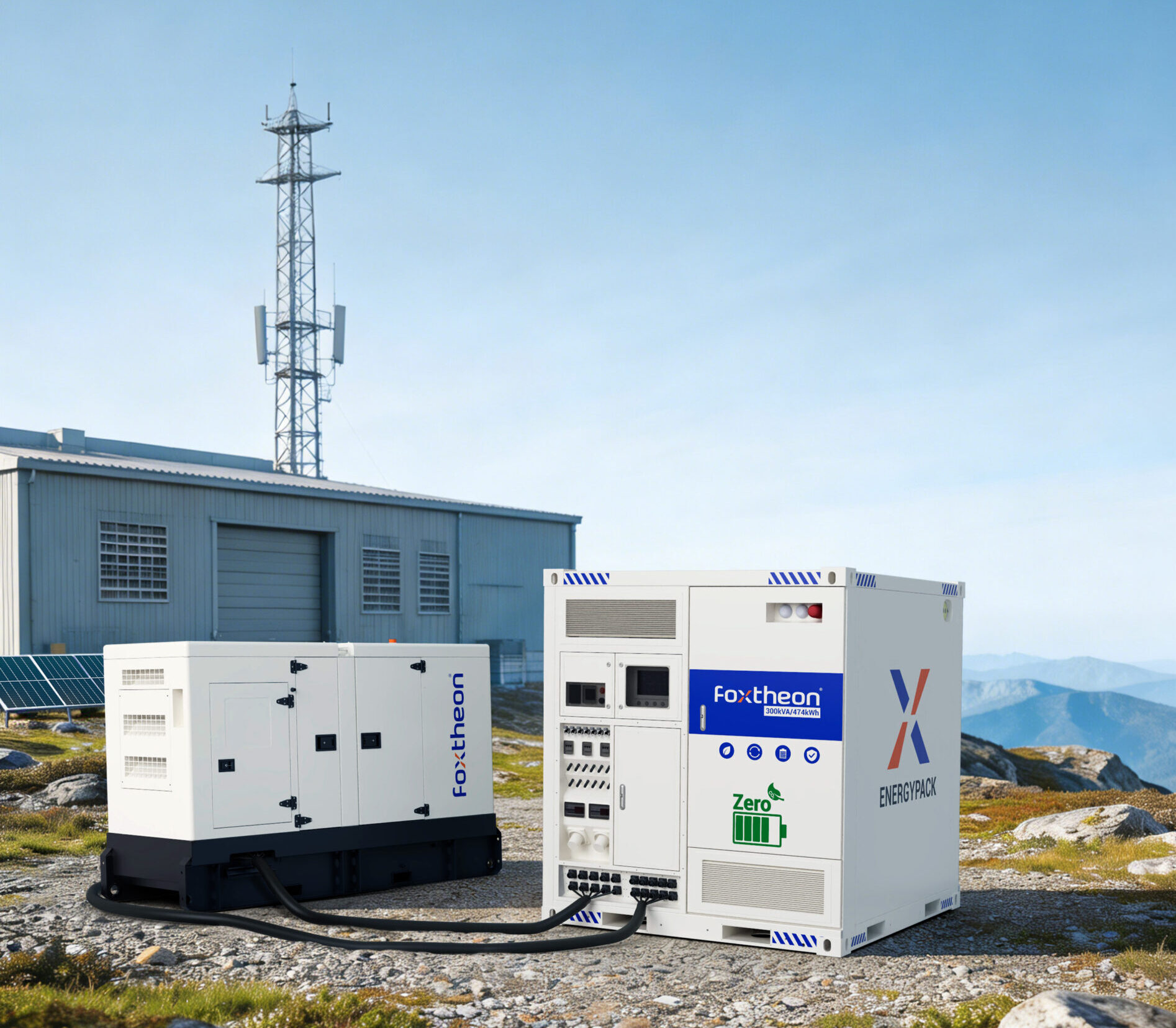
For B2B energy professionals, selecting a battery energy storage platform requires rigorous evaluation of safety, cycle life, system integration, and financial return. BYD storage systems have established a proven track record across industrial facilities, utility-scale projects, and complex microgrids. This article provides a detailed assessment of their technical foundations, operational use cases, and how hybrid configurations — including those implemented by Foxtheon — create measurable value alongside existing generation assets.
1. Core Engineering of BYD Storage Systems: LFP Chemistry and Modular Architecture
BYD’s battery storage portfolio is built on lithium iron phosphate (LFP) cathode chemistry. Unlike nickel manganese cobalt (NMC) cells, LFP offers intrinsic thermal stability and a flat voltage discharge curve, which translates directly to safety and predictable performance in high-temperature environments. Key technical specifications consistent across BYD storage systems include:
- Cell-level safety: LFP cells withstand overcharge, puncture, and thermal runaway tests with zero propagation to adjacent cells (verified by UL 9540A).
- Cycle durability: 6,000–8,000 cycles at 90% depth of discharge (DoD) before reaching 70% remaining capacity, enabling 15+ years of daily cycling in commercial peak shaving.
- Modular battery racks: Each rack typically integrates 8–12 modules (2.5–5 kWh per module) with decentralized battery management units (BMUs).
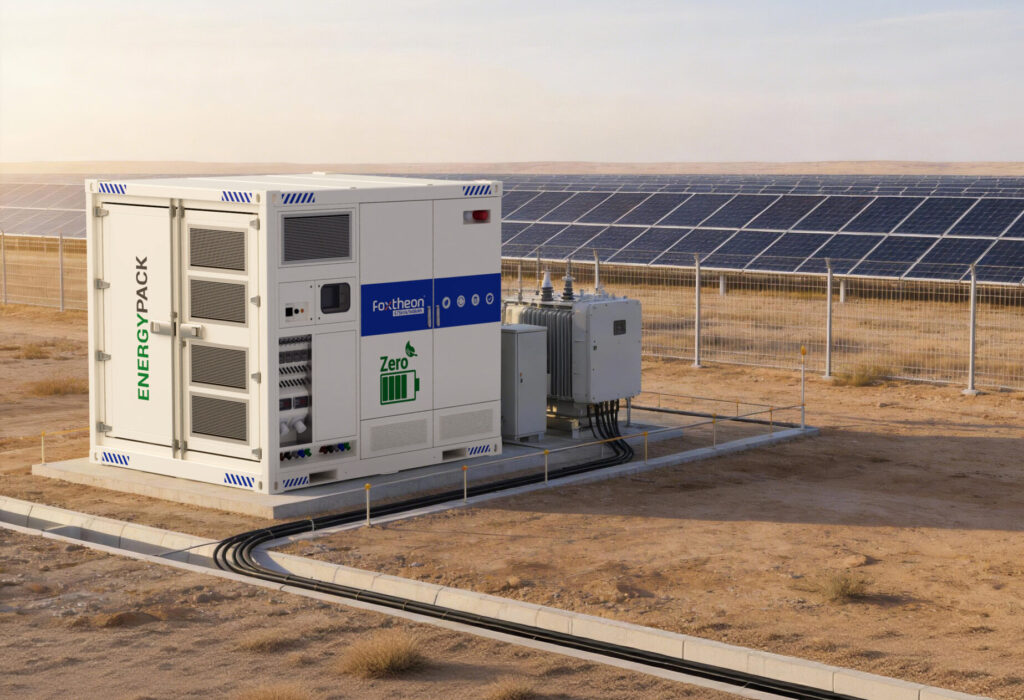
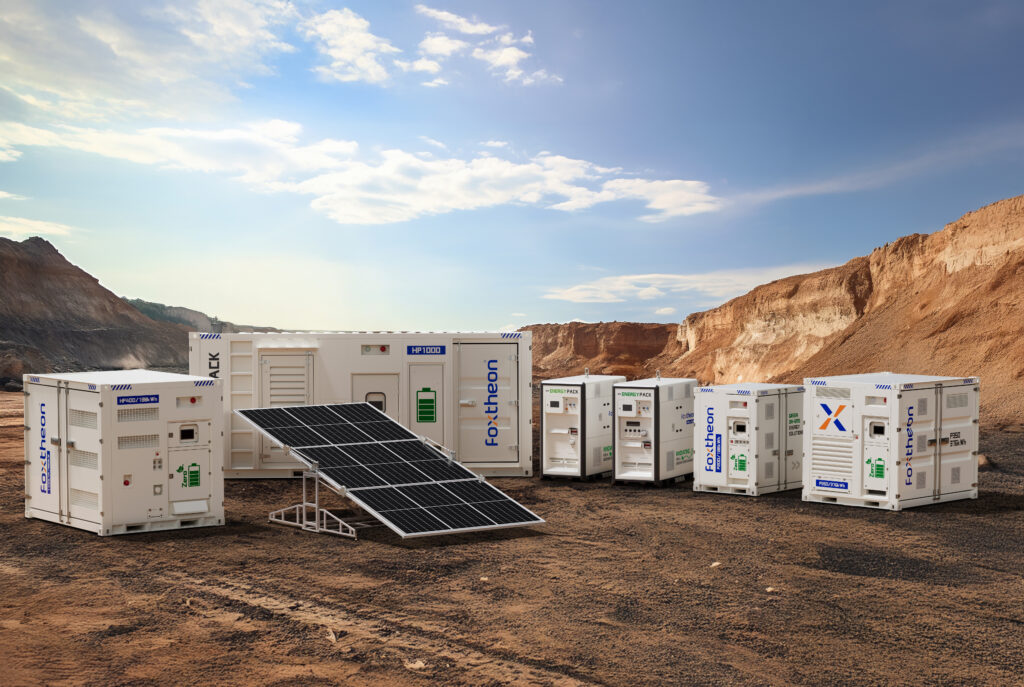
- Scalable containerized designs: From 200 kWh prefabricated skids to 5 MWh+ 20-ft ISO containers for large industrial parks.
The battery management system (BMS) in BYD storage systems performs three-layer monitoring: cell voltage (±5 mV accuracy), temperature (six points per module), and current integration for state-of-charge (SoC) estimation. Redundancy is achieved via dual CAN 2.0 communication buses to the energy management system (EMS). This architecture ensures sub-200ms response to grid frequency deviations or load transients — critical for industrial facilities with sensitive production lines.
2. Operational Modes and Commercial Value Streams
For B2B end-users, deploying BYD storage systems enables four primary revenue or cost-saving mechanisms. Each mode requires specific EMS programming and site-specific load profiling:
2.1 Peak Shaving (Demand Charge Reduction)
Industrial demand charges often constitute 30–50% of monthly electricity bills. BYD storage systems discharge during the 15‑ to 30‑minute peak demand windows identified by utility meters. With a typical discharge power of 100–500 kW per container, facilities can reduce peak demand by 25–40%, achieving payback periods of 3–5 years in markets with $15/kW or higher demand tariffs (e.g., California, New York, parts of Germany).
2.2 Load Shifting (Energy Arbitrage)
Where time-of-use (ToU) rates create a significant differential between off-peak and on-peak prices — commonly $0.07/kWh vs. $0.25/kWh — the system charges overnight and discharges during afternoon peaks. Round-trip efficiency of BYD storage systems exceeds 92% (DC-to-DC), yielding net margins of $0.10–0.12 per kWh cycled. For a 1 MWh system cycling 300 days/year, annual gross savings approach $30,000–36,000.
2.3 Backup Power and Grid Support
Unlike traditional standby generators that require weekly test runs and face fuel degradation, BYD storage systems provide instantaneous (<20 ms) black-start capability. For critical loads such as data center cooling pumps or cold storage warehouses, a 500 kWh system can sustain 50 kW for 8–10 hours. When paired with a generator, the storage handles short-duration events and stabilizes voltage, allowing the generator to operate at optimal load rather than idle, reducing fuel consumption by 30–40%.
2.4 Renewable Self-Consumption Enhancement
For sites with rooftop solar or wind, BYD storage systems absorb excess generation during midday and discharge during evening ramp periods. This increases on-site renewable fraction from 30–40% to 70–85%, directly lowering grid import costs and meeting carbon reduction targets without curtailing clean energy.
3. Addressing Industry Pain Points with BYD Storage Systems
Facility managers and energy directors commonly report five operational challenges. Below is how BYD storage systems resolve each without dismissing the role of existing generators.
- High demand charges despite on-site generation: Generators alone cannot shave instantaneous peaks due to start-up delays. BYD storage systems respond within milliseconds, complementing generators by covering short spikes. This hybrid arrangement extends generator life by reducing starts/stops.
- Uncertainty about battery safety in high-heat environments: BYD’s LFP cells have passed nail penetration and overcharge tests without fire. The BMS enforces temperature thresholds (-20°C to 55°C operation, with derating above 50°C). No thermal runaway propagation has been recorded in field deployments since 2018.
- Complex integration with existing electrical infrastructure: BYD provides pre-commissioned power conversion systems (PCS) supporting 208V to 600V AC, 50/60 Hz. Modbus TCP and IEC 61850 protocols enable direct communication with facility PLCs or microgrid controllers.
- Difficulty obtaining financing for storage-only projects: Many financiers require performance guarantees. BYD offers 10-year capacity retention warranties (≥70% of nameplate). Paired with energy savings agreements from integrators like Foxtheon, these warranties de-risk investment.
- Grid interconnection delays and utility resistance: BYD storage systems are listed on major utility interconnection fast-track lists (e.g., PG&E, SCE, Con Edison). Pre-approved export limitation functions allow zero-export configurations, bypassing lengthy transformer upgrades.
4. Hybrid Solutions: Integrating BYD Storage Systems with Generators for Optimal Resilience
No single technology solves every energy scenario. Generators remain essential for multi-day outages or remote sites with limited grid access. However, running a generator at low load (20–30% of rated capacity) causes wet stacking, carbon buildup, and efficiency drops to 15–20% fuel-to-electricity. A hybrid approach — using BYD storage systems as a buffer — changes the economic equation.
Foxtheon specializes in such hybrid energy architectures. Their control platform automatically dispatches BYD storage systems to handle transient loads, then signals the generator to start only when battery SoC drops below a configurable threshold (e.g., 20%). The generator then runs at >70% load, achieving 35–40% efficiency. Field data from a 500 kW hybrid installation at a midwest U.S. food processing plant showed:
- Generator runtime reduced by 82% (from 2,100 hours/year to 380 hours/year).
- Diesel consumption cut by 11,200 gallons annually, lowering CO2 emissions by 112 metric tons.
- Maintenance intervals extended from 250 hours to 1,000 hours, saving $7,500 per year.
This complementary design respects the existing generator investment while improving reliability and reducing operational expenses. For new projects, Foxtheon provides pre-engineered skids combining BYD storage systems, generator interface controllers, and automated transfer switches — reducing site integration time by 40% compared to component-level assembly.
5. Financial Modeling and Performance Metrics for Decision Makers
Calculating return on investment for BYD storage systems requires granular data. Below is a representative model for a 500 kW / 1,000 kWh system (two 500 kWh containers) at a manufacturing facility with the following parameters:
- Demand charge: $18/kW (summer peak)
- ToU spread: $0.18/kWh off-peak, $0.31/kWh on-peak
- Annual peak demand reduction: 300 kW (by discharging 500 kW for 20 minutes each day)
- Energy arbitrage: 500 kWh cycled daily, 250 days/year (excluding weekends and low-production days)
Annual savings calculation:
Demand charge reduction: 300 kW × $18/kW × 12 months = $64,800
Energy arbitrage: 500 kWh × ($0.31 – $0.18) × 250 days = $16,250
Total gross savings: $81,050 per year.
System capital cost (turnkey, including inverters and installation): approximately $350,000. After applying the 30% federal Investment Tax Credit (ITC) in the U.S. or similar incentives in EU markets, net cost = $245,000. Simple payback: $245,000 / $81,050 ≈ 3.0 years. Over a 12-year operating life (conservative, based on 6,000 cycles at 80% DoD), net savings exceed $700,000, with minimal degradation costs.
When integrating with an existing generator, the hybrid controller adds $15,000–25,000 but reduces generator fuel and maintenance costs by an estimated $9,000–12,000 per year, improving payback by an additional 8–10 months.
6. Common Questions About BYD Storage Systems
Based on consultations with over 100 industrial clients, the following inquiries arise most frequently. Each answer reflects field data and published specifications from BYD and independent testing laboratories.
Q1: What certifications do BYD storage systems hold for commercial installations?
A1: All BYD storage systems intended for North American and European markets carry UL 1973 (stationary battery), UL 9540 (complete energy storage system), and UL 9540A (thermal runaway fire testing). For grid interconnection, they comply with IEEE 1547 and Rule 21 in California. European models have CE, IEC 62619, and VDE-AR-E 2510-50 certifications. Additionally, the containers meet IP55 ingress protection and have passed seismic testing per IBC 2018 for Seismic Design Category D.
Q2: How do BYD storage systems perform in extreme cold or hot climates?
A2: The standard operating temperature range is -20°C to 55°C. Below -20°C, the BMS activates internal heaters using grid or generator power (consuming 1–2% of stored energy per day to maintain cell temperature above 5°C). In high ambient temperatures above 40°C, the liquid cooling system (optional on larger containers) maintains cell differential within 3°C, preserving cycle life. Field deployments in Dubai (summer peaks 48°C) and northern Canada (winter lows -35°C) have shown less than 3% annual capacity loss after 4 years.
Q3: Can BYD storage systems be retrofitted to an existing generator without replacing the transfer switch?
A3: Yes, with a hybrid controller like the one from Foxtheon. The controller sits between the generator, storage system, and facility load. It uses current transformers to monitor load and directs the battery to supply transient peaks. The generator remains connected via its existing automatic transfer switch. Only a dry contact signal is needed to start/stop the generator. No modification to the generator’s internal control board is required.
Q4: What is the typical degradation warranty, and how is it verified?
A4: BYD offers a standard 10-year warranty to 70% of initial rated capacity (measured at 1C discharge rate at 25°C). Verification is performed annually via a remote capacity test initiated by the EMS, which logs voltage, current, and temperature. If capacity falls below 70% before year 10, BYD provides proportional compensation — either replacement modules or a financial credit based on remaining kWh. For projects financed via power purchase agreements (PPAs), third-party monitoring (e.g., TÜV SÜD) can be contracted.
Q5: How long does installation and commissioning take for a 1 MWh BYD storage system?
A5: For a standard ground-mounted container with pre-wired internal components, the timeline is 4–6 weeks from site delivery to commercial operation. Steps include: pad preparation (3–5 days), container placement and cabling (1–2 days), grid interconnection and utility meter replacement (1–3 weeks depending on local permitting), and EMS configuration (3–5 days). Integrators like Foxtheon reduce this to 3 weeks by offering prefabricated interconnection cabinets and remote commissioning via secure VPN.
Selecting an energy storage partner requires transparent technical data and a clear path to positive ROI. BYD storage systems provide a proven, certifiable foundation for peak shaving, backup power, and renewable integration. When combined with hybrid controls from experienced system integrators, these assets extend the value of existing generators while cutting fuel and maintenance costs.
Ready to evaluate a BYD storage system for your facility? Contact the engineering team at Foxtheon for a site-specific proposal. Include your 12‑month utility interval data and generator specifications, and receive a custom financial model within 5 business days. Request a consultation →