
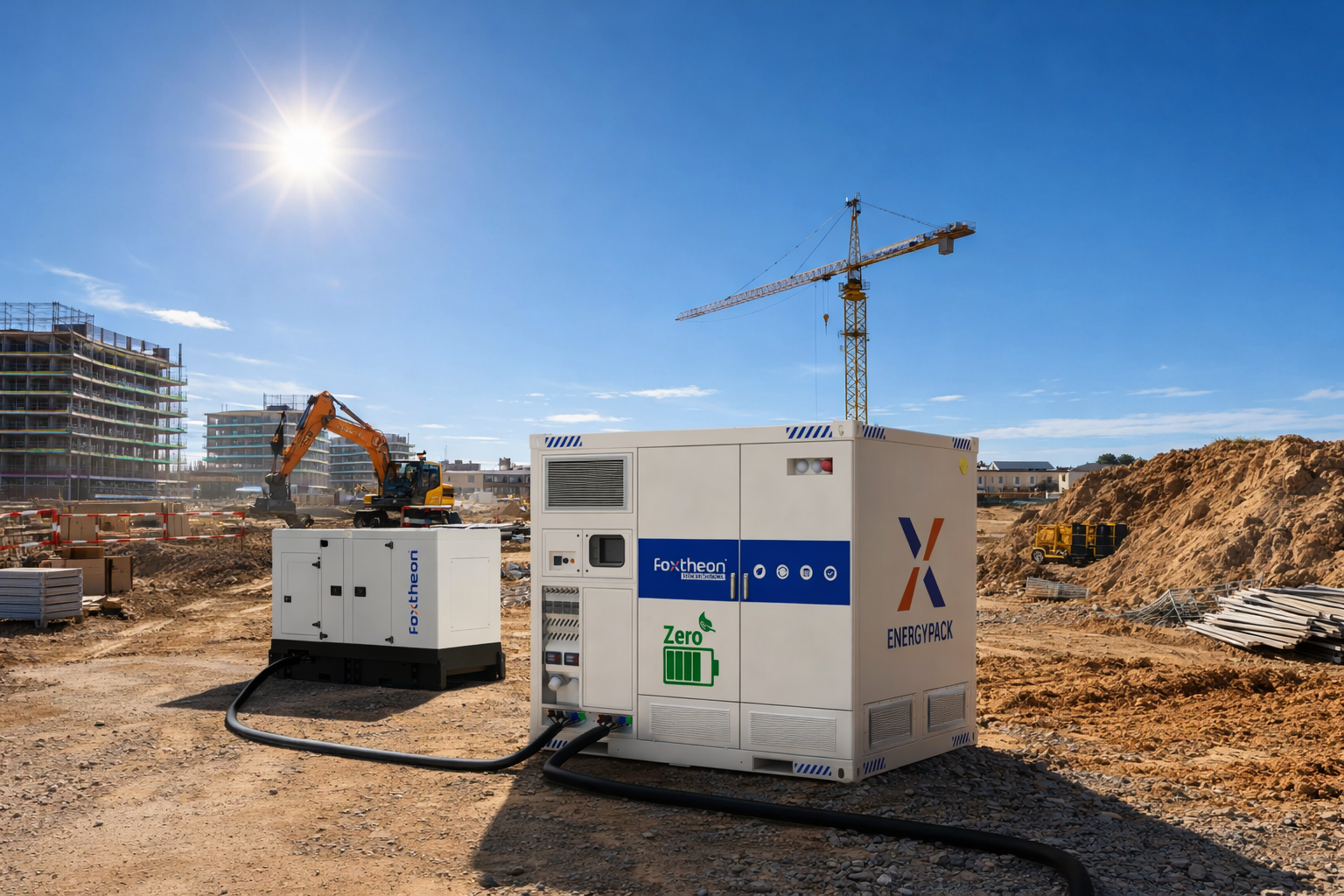
For commercial and industrial energy managers, evaluating the cost of battery energy storage system goes far beyond the initial purchase price. A complete assessment must include hardware selection, installation labor, interconnection fees, ongoing maintenance, degradation curves, and the financial value of demand charge reduction, energy arbitrage, and backup reliability. This article provides a component-level breakdown of current costs, explains how system design influences total expenditure, and quantifies the economics of hybrid configurations — including those engineered by Foxtheon — that work alongside existing generators to optimize return on investment.
.jpg)
1. Deconstructing the Cost of Battery Energy Storage System: Hardware and Soft Costs
The total installed cost of battery energy storage system for a typical 500 kW / 1,000 kWh commercial installation ranges from $350 to $450 per kWh in 2026, depending on region, chemistry, and integration complexity. Below is a detailed breakdown of cost categories based on actual project data from North America and Europe.
1.1 Battery Pack and Rack Hardware (50–55% of total)
- Lithium iron phosphate (LFP) cells: $90–110 per kWh (cell-level, delivered). LFP dominates C&I storage due to longer cycle life (6,000–8,000 cycles) and lower fire risk compared to NMC.
- Module assembly and racking: $25–35 per kWh. Includes cell holders, busbars, and passive balancing circuits.
- Battery management system (BMS): $15–20 per kWh. Provides cell voltage monitoring, temperature sensing, and SoC/SoH algorithms.
- Thermal management: $10–15 per kWh for passive air cooling; $25–35 per kWh for active liquid cooling (recommended for high-ambient or high-cycle applications).
1.2 Power Conversion System (PCS) and Electrical Balance (20–25%)
- Bi-directional inverter: $70–100 per kW (not per kWh). For a 500 kW system, inverter cost is $35,000–50,000.
- Transformer and switchgear: $15,000–25,000 per project, depending on voltage level (208V to 600V).
- AC and DC cabling, breakers, enclosures: $10,000–18,000 for a typical containerized system.
1.3 Soft Costs and Installation (25–30%)
- Engineering and permitting: $8,000–15,000 per project. Includes site survey, single-line diagrams, and utility interconnection applications.
- Labor for installation and commissioning: $10,000–20,000. Rates vary by region; union vs. non-union.
- Freight and logistics: $3,000–8,000 for domestic shipping; $10,000–20,000 for international container delivery.
- Project management and contingency: 5–10% of hardware subtotal.
As an example, a 1,000 kWh turnkey system using LFP batteries and liquid cooling currently averages $380,000–420,000 installed, or $380–420 per kWh. Prices have declined 12–15% over the past two years due to scaled manufacturing and raw material stabilization, but further reductions depend on lithium carbonate markets and trade policies.
2. Operational Expenditure (Opex): Degradation, Maintenance, and Replacement
Evaluating the cost of battery energy storage system must include annual operating expenses. For a well-designed LFP system, typical opex components are:
- Routine maintenance: $2,000–4,000 per year for a 500 kW system. Includes thermal management filter cleaning, torque checks on connections, and firmware updates. Remote monitoring reduces on-site visits.
- Capacity degradation: LFP cells lose 0.5–1.5% capacity per year depending on average temperature and depth of discharge. Over a 10-year period, effective usable capacity drops to ~85% of initial rating. This reduces revenue from arbitrage and demand shaving gradually.
- End-of-life replacement: After 6,000–8,000 cycles (12–15 years), battery modules may require replacement. Current replacement cost is projected at $120–150 per kWh in 2036 (assuming continued price declines).
- Insurance and performance guarantees: Approximately 0.5–1% of installed capital per year.
Using a levelized cost of storage (LCOS) model — which divides total lifetime costs (capex + opex + replacement) by total lifetime energy throughput — a typical C&I LFP system achieves LCOS of $0.12–0.18 per kWh discharged. This competes favorably with retail peak rates above $0.25/kWh and demand charges above $15/kW.
3. Factors That Significantly Influence the Cost of Battery Energy Storage System
Several technical and commercial variables cause the cost of battery energy storage system to vary by ±30% across similar-sized projects. Understanding these drivers helps avoid over-specification and reduces payback periods.
3.1 Duration (Energy-to-Power Ratio)
A 500 kW / 1,000 kWh system has a 2-hour duration. Systems with 4-hour duration (500 kW / 2,000 kWh) have lower $/kWh because the power conversion and balance-of-system costs are shared over more energy. For example, a 4-hour system may cost $330–370 per kWh, while a 1-hour system costs $450–500 per kWh. Select duration based on your peak shaving window or arbitrage period — longer is not always better.
3.2 Chemistry: LFP vs. NMC
NMC batteries have higher energy density but shorter cycle life (3,000–4,000 cycles) and require more aggressive thermal management. NMC systems typically have lower upfront $/kWh ($320–380) but higher replacement frequency, raising LCOS. For daily cycling applications, LFP’s longer life almost always produces lower total cost over 12 years.
3.3 Site Conditions and Electrical Infrastructure
If existing switchgear lacks spare breaker slots or requires upgrade to handle bidirectional power, add $10,000–30,000. Sites with poor ventilation require reinforced container HVAC, adding $5,000–8,000. Remote locations increase freight and travel expenses.
3.4 Software and Control Intelligence
Basic EMS with fixed schedules costs $5,000–10,000. Advanced predictive EMS that uses weather forecasting, load learning, and real-time market prices costs $15,000–30,000 but typically improves annual savings by 15–25% through optimized dispatch. This directly reduces effective cost per kWh stored.
4. Hybrid Economics: Integrating Storage with Existing Generators
Many industrial sites already own diesel or natural gas generators for backup. Adding a battery storage system does not replace the generator — instead, a hybrid controller enables both assets to work together, significantly lowering the overall cost of battery energy storage system when measured as cost per avoided outage hour or per reduced demand event.
Foxtheon specializes in these hybrid architectures. Their controller performs three functions:
- Continuously monitors facility load and battery state-of-charge.
- Dispatches the battery for short-duration peaks (seconds to minutes), preventing generator start-ups for transient events.
- Starts the generator only when battery SoC falls below a threshold (e.g., 20%), then runs the generator at >70% load for optimal efficiency.
Field data from a 400 kW hybrid installation at a Michigan automotive parts plant (existing 600 kW diesel generator) showed:
- Generator runtime reduced from 1,200 hours/year to 320 hours/year (73% reduction).
- Fuel consumption dropped by 9,800 gallons annually, saving $34,000 at $3.50/gallon.
- Maintenance costs (oil, filters, spark plugs) reduced by $7,200 per year.
- The 300 kW / 600 kWh BYD-based storage system cost $210,000 installed. With hybrid controller ($18,000) and generator interface, total project cost $228,000.
- Annual savings from reduced generator use + demand shaving: $51,000. Payback: 4.5 years.
Without the battery, the generator alone would incur higher fuel and maintenance costs. The hybrid approach extracts value from the existing generator while lowering its operating expenses — a true win-win.
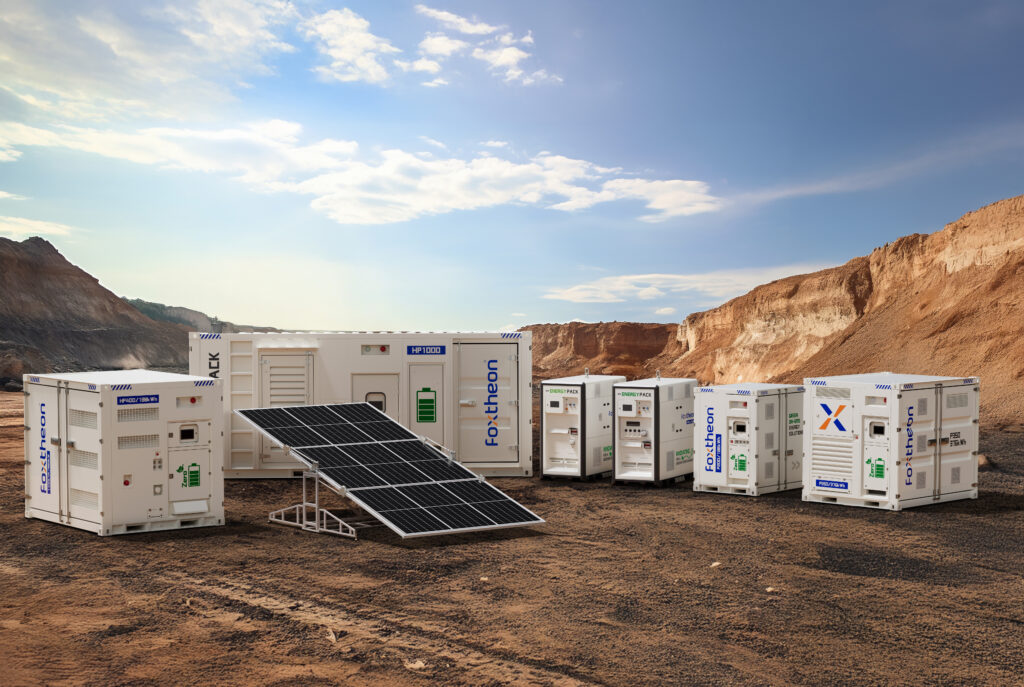
5. Comparing Cost of Battery Energy Storage System Across Project Sizes
Economies of scale are significant. Below are typical fully installed $/kWh ranges for 2026, based on LFP systems with 2-hour duration, including BMS, PCS, and standard installation (excluding land and grid upgrade fees).
- 50 kW / 100 kWh (small commercial): $550–700 per kWh. Small systems suffer from fixed overhead (engineering, travel, interconnection) spread over fewer kWh.
- 200 kW / 400 kWh: $420–500 per kWh.
- 500 kW / 1,000 kWh (typical mid-size industrial): $360–420 per kWh.
- 2 MW / 4 MWh (large facility or microgrid): $290–340 per kWh. Containerized multi-unit deployments achieve lower inverter and labor costs per kWh.
- 10 MW / 40 MWh (utility-scale): $230–280 per kWh, though these projects fall outside typical C&I scope.
For projects above 1 MWh, many integrators offer volume discounts on cells and PCS units, and one set of permits covers multiple containers. Owners should obtain at least three competitive bids and request a detailed line-item breakdown to identify cost drivers.
6. Five-Year Outlook: Future Trends in Battery Storage Costs
Projections by BloombergNEF and the U.S. Department of Energy suggest the average cost of battery energy storage system for C&I applications will decline by another 20–30% by 2030. Key drivers include:
- LFP cell production capacity expansion (CATL, BYD, and others adding >500 GWh annually).
- Standardization of containerized designs, reducing engineering overhead.
- Software automation for commissioning, cutting labor hours.
- Second-life battery applications (though quality concerns remain for critical backup).
However, trade tariffs on Chinese-made cells (currently 25% in the U.S.) and rising labor costs may offset some reductions. Energy managers should not wait indefinitely for lower prices; current payback periods of 3–6 years are already attractive for many load profiles, especially when paired with hybrid generator controls.
7. Frequently Asked Questions About the Cost of Battery Energy Storage System
Based on hundreds of client discussions, these are the most common questions regarding storage economics.
Q1: What is the typical payback period for a battery storage system in a manufacturing facility?
A1: For a 500 kW / 1,000 kWh system performing peak shaving and energy arbitrage, payback typically ranges from 3 to 6 years, depending on local demand charges ($/kW) and the spread between off-peak and on-peak electricity prices. Facilities with demand charges above $15/kW and ToU spreads above $0.12/kWh often see payback under 4 years. Hybrid configurations that also reduce generator runtime shorten payback further by adding fuel savings.
Q2: How much does installation add to the hardware cost?
A2: Installation (soft costs) typically adds 25–35% to the hardware price. For a $300,000 hardware package, expect total installed cost of $375,000–405,000. Soft costs include engineering, permits, electrical labor, commissioning, and project management. Some regions with streamlined permitting (e.g., California’s expedited storage permit process) can reduce this to 20%.
Q3: Does the cost of battery energy storage system include a warranty against degradation?
A3: Most reputable suppliers include a performance warranty in the upfront price. For LFP-based systems, standard warranty is 10 years or 6,000 cycles, whichever comes first, with capacity remaining ≥70% of nameplate. Verify that the warranty covers both cell defects and capacity fade, and check for exclusions (e.g., operating outside temperature range). Extended warranties beyond 10 years are available for an additional 5–10% of hardware cost.
Q4: Can I finance a battery storage system to avoid large upfront capital expenditure?
A4: Yes. Equipment leases, energy savings agreements (ESA), and power purchase agreements (PPA) for storage are increasingly common. Under an ESA, the integrator owns the system and charges a monthly fee based on actual savings or a fixed capacity payment. This shifts the upfront cost to the provider. Foxtheon offers such financing structures for qualified C&I clients, with zero down payment and positive cash flow from month one.
Q5: How does the cost compare between a standalone battery system and a hybrid battery-generator system?
A5: A hybrid system adds $15,000–25,000 for the controller and additional relays, roughly 5–8% of total project cost. However, the hybrid configuration reduces generator runtime by 70–80%, saving $8,000–20,000 per year in fuel and maintenance. Over 10 years, net savings from hybridization often exceed $80,000, making the additional upfront cost negligible. The hybrid approach also extends generator life by reducing start-stop cycles.
Understanding the full cost of battery energy storage system — from initial capex to lifetime opex and hybrid integration — is essential for making a sound investment. With LFP prices declining and hybrid controls maturing, many industrial facilities now achieve sub‑5‑year paybacks while improving resilience.
Ready to calculate the exact cost and savings for your facility? The engineering team at Foxtheon provides free preliminary assessments. Submit your 12-month utility bills and generator service logs, and receive a detailed financial model including payback, LCOS, and hybrid savings within 7 business days. Send an inquiry →