
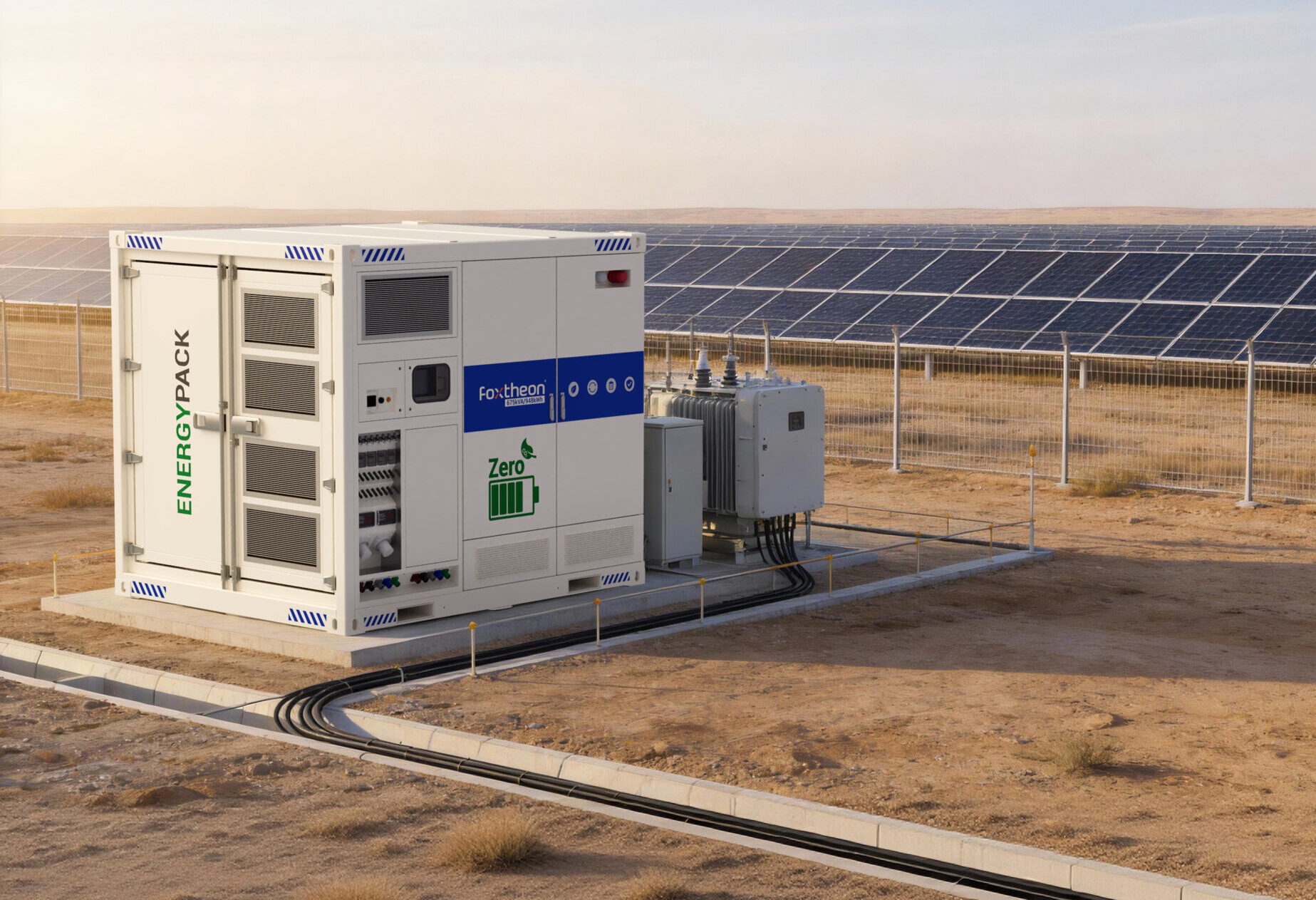
Establishing dependable electrical networks in remote geographic areas is a fundamental challenge for industrial planners, telecommunications operators, and microgrid developers. Traditional utility grid extensions are often impractical due to geological barriers or prohibitive logistical constraints. Historically, remote projects relied entirely on diesel-powered generation. However, modern engineering standards focus on high-efficiency hybridization, combining thermal generation assets with photovoltaic arrays and modern battery storage technologies.
In high-availability environments, the implementation of reliable off grid power systems has progressed beyond simple backup setups. Designing these advanced microgrids requires a deep understanding of load dynamics, system inertia, power conversion mechanics, and intelligent control architectures. Integrated solutions from providers like Foxtheon assist in matching generation curves with fluctuating industrial load profiles, ensuring continuous uptime in severe environments.
1. Industrial Challenges in Remote Power Operations
Operating a localized power grid independent of a national utility network introduces acute engineering challenges. To maintain system stability, power generation must continuously match power demand in real time. Industrial loads fluctuate unpredictably, creating several operational hazards.
Transient Load Spikes and System Stability
Remote industrial sites, such as mining facilities, construction camps, or water treatment plants, frequently operate heavy inductive loads. The startup currents of large electric motors, pumps, and compressors can be four to eight times higher than their steady-state operating currents. In an isolated microgrid lacking centralized utility inertia, these transient surges cause immediate voltage sags and frequency drops. If these deviations exceed safe operating margins, protective relays will trip, leading to sudden, unplanned system-wide blackouts.
The Problem of Generator Light Loading (Wet Stacking)
Diesel generators are engineered to operate most efficiently when loaded to 70% to 80% of their rated capacity. However, daily load curves in remote sites often feature deep valleys during nighttime or off-peak hours. When a diesel generator runs at less than 30% to 40% of its rated capacity, the internal combustion temperatures drop too low to achieve complete fuel combustion. This leads to “wet stacking,” where unburned fuel and soot accumulate in the exhaust manifold. Wet stacking reduces engine efficiency, accelerates component wear, increases maintenance frequencies, and can result in premature engine failure.
Fuel Logistics and Operational Risks
Relying solely on fuel transport for continuous power generation exposes operations to severe supply chain vulnerabilities. Severe weather, seasonal route closures, and geographical isolation can delay fuel deliveries. For telecom towers on high mountain peaks or remote islands, fuel delivery represents a high-risk operational vulnerability where any delay directly impacts localized service availability.
2. Engineering Foundations for reliable off grid power
To overcome these challenges, modern microgrids integrate Battery Energy Storage Systems (BESS) with existing generation sources. This process, known as hybridization, creates a flexible power generation architecture.
A hybrid off-grid power architecture consists of several key layers:
- Primary Generation Assets: These include photovoltaic (PV) arrays, wind turbines, and diesel generator sets, which produce the bulk of the raw electrical energy.
- Electrochemical Energy Storage: Battery banks that absorb excess energy during high-generation periods and discharge during high-demand periods.
- Power Conversion Systems (PCS): Bi-directional inverters that manage power flow between the DC battery bank and the AC distribution grid.
- Switchgear and Distribution: Safety devices, transformers, and distribution panels that route power safely to various loads.
Integrating these systems allows operators to optimize the run hours of their diesel generators. Instead of running a generator continuously under light loads, the battery storage system supports the base load. The generator is started only when the battery state of charge (SoC) drops below a predetermined threshold or when a heavy peak load is detected. This integration is highly vital to establishing reliable off grid power architecture.
3. Deep Technical Analysis of Energy Storage Integration
To design a robust hybrid microgrid, engineers must specify storage components that can withstand constant cycling, dynamic load shifts, and harsh environments.
Lithium Iron Phosphate (LFP) Battery Chemistry
In industrial off-grid applications, Lithium Iron Phosphate (LiFePO4 or LFP) has become the standard battery chemistry. Compared to Nickel Manganese Cobalt (NMC) and traditional lead-acid batteries, LFP chemistry offers distinct technical advantages:
- Thermal Stability: LFP cells have a high thermal runaway threshold (approximately 270°C), making them stable in high-temperature environments.
- Extended Cycle Life: LFP batteries routinely deliver over 6,000 charge-discharge cycles at an 80% Depth of Discharge (DoD), ensuring long asset life.
- High C-Rate Performance: LFP cells can support high charge and discharge rates, which is necessary when handling transient motor-starting currents.
Grid-Forming vs. Grid-Following Inverters
In a standard grid-tied solar system, the inverters operate in “grid-following” mode. They monitor the existing grid voltage and frequency and inject power in synchronization with that reference. In an isolated off-grid system, however, at least one power source must operate in “grid-forming” mode.
A grid-forming inverter acts as a virtual synchronous generator. It establishes the voltage and frequency reference for the entire microgrid. When the diesel generator is shut down to conserve fuel, the grid-forming BESS inverter maintains the 50Hz or 60Hz grid frequency and manages active and reactive power balance dynamically.
Thermal Management and Environmental Protection
Battery performance and lifespan degrade if cells are exposed to extreme hot or cold temperatures. Industrial-grade energy storage systems utilize advanced thermal management systems—such as liquid cooling plates or smart HVAC climate control—integrated directly into IP54 or IP55 rated enclosures. These systems keep internal cell temperatures within the optimal 15°C to 25°C window, even when outdoor ambient temperatures range from -20°C in sub-arctic regions to +50°C in arid deserts.
4. The Control Layers: EMS and BMS Orchestration
A hybrid microgrid is only as robust as the control systems that govern its real-time operation. Without proper coordination, generation assets can conflict with one another, leading to system instability.
The control system is divided into two major layers: the Battery Management System (BMS) and the Energy Management System (EMS).
The Battery Management System (BMS)
The BMS operates at the micro-level, monitoring individual cell voltages, module temperatures, and total string currents. It calculates the State of Charge (SoC) and State of Health (SoH) and balances the charge across all cells. If the BMS detects an over-voltage, under-voltage, or over-temperature condition, it opens safety contactors to isolate the affected battery string before thermal damage occurs.
The Energy Management System (EMS)
The EMS operates at the macro-level. It is the central controller that monitors and commands the PCS, the solar inverters, and the diesel generator controllers. The EMS coordinates power distribution using several advanced algorithms:
- Peak Shaving: The EMS detects rapid increases in load and commands the BESS to discharge, preventing the diesel generator from overloading or suffering from transient frequency drops.
- Renewable Curtailment and Optimization: When renewable generation exceeds the load and the batteries are fully charged, the EMS safely curtails solar output to prevent reverse power flow into the generator.
- Black Start Support: If a complete system shutdown occurs, the EMS coordinates the grid-forming inverter to re-energize the distribution transformers in a controlled sequence, avoiding high inrush current trips.
By executing these actions in milliseconds, this coordinated strategy maintains reliable off grid power with minimal operator intervention.
5. Industrial Application Scenarios
Hybrid power systems are customized to match the specific load profiles and operational requirements of different industrial applications.
Telecommunications Base Transceiver Stations (BTS)
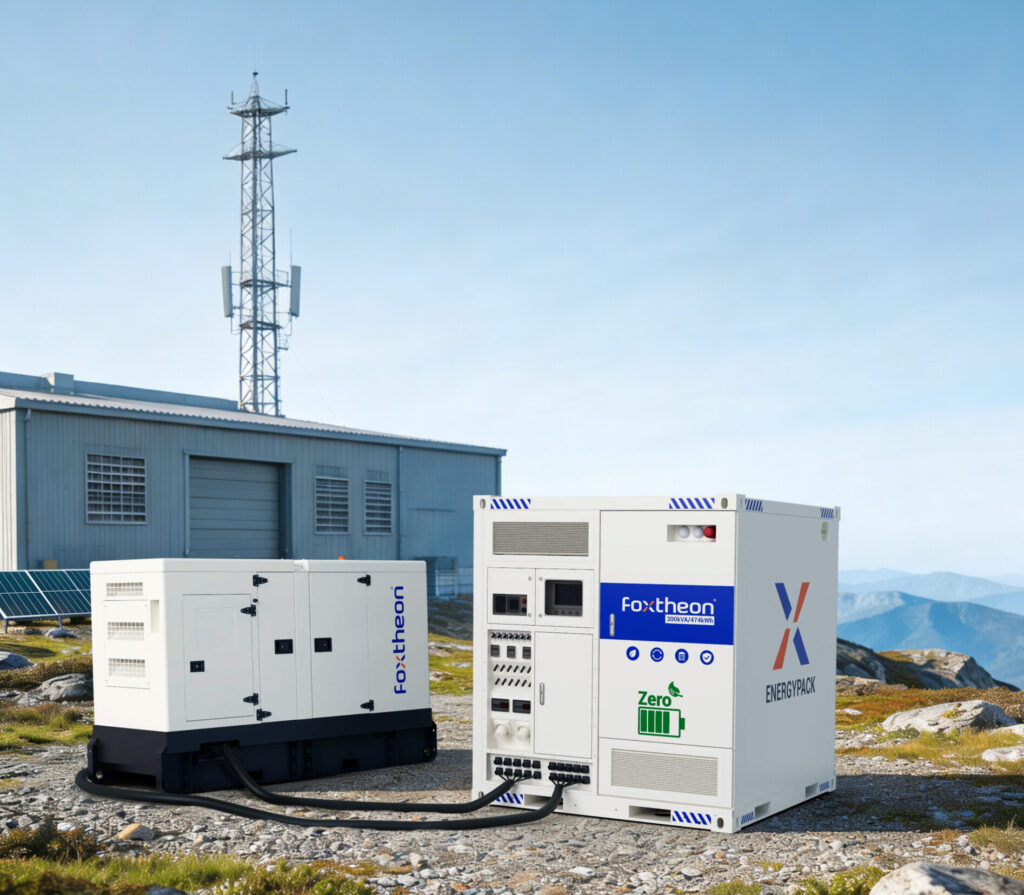
Remote telecom towers require continuous, low-to-medium power (typically 1 kW to 15 kW) to maintain communications. In a typical hybrid setup, a solar array and a compact LFP battery storage system support the load for most of the day. A small back-up generator is configured to run only when solar production is low for consecutive days. This setup reduces generator run hours, extending service intervals from weeks to months and securing communication uptime.
Mining Exploration and Site Infrastructure
Mining exploration camps require highly mobile, ruggedized power systems. These facilities feature heavy dynamic loads from laboratory equipment, assaying tools, and domestic facilities. Containerized BESS solutions can be deployed alongside mobile solar arrays and existing rental generators. The BESS acts as a stabilizer, smoothing out load spikes from heavy tools and ensuring high power quality for sensitive testing equipment.
Agricultural Microgrids and Irrigation
Large-scale agricultural operations in remote areas require power for irrigation pumps, processing equipment, and cold storage units. These loads are highly seasonal. During peak harvest, power demand is intense; during off-seasons, demand drops significantly. A modular hybrid system allows agricultural operators to scale their power output up or down, running generators efficiently during high-demand months and relying on solar-battery setups during low-demand periods.
6. Why Choose Foxtheon Solutions?
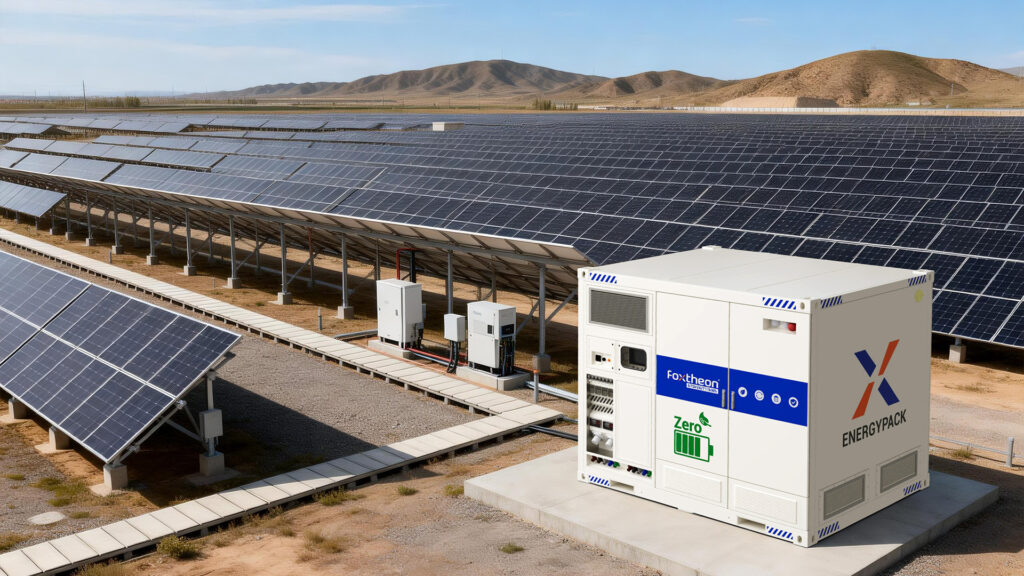
When selecting a hybrid off-grid power solution, engineering teams prioritize modularity, system integration, and robust build quality. Systems developed by Foxtheon provide high thermal stability, advanced control algorithms, and easy integration with existing generator infrastructure.
Rather than sourcing separate inverters, batteries, and control software from different suppliers, project developers can utilize pre-engineered, integrated platforms. This approach reduces design errors, simplifies on-site installation, and ensures that the BMS, EMS, and PCS are fully compatible. By matching battery storage capacities to specific field requirements, transitioning to a more reliable off grid power setup becomes straightforward for field operators and EPC companies alike.
7. Key Specification Checklist for B2B Project Planners
When drafting technical specifications for a hybrid off-grid project, procurement and engineering teams should include the following core parameters:
| Parameter | Specification Detail | Engineering Importance |
|---|---|---|
| System Ingress Rating | IP54, IP55, or IP65 | Protects sensitive electronic components from dust, sand, and moisture ingress. |
| Overload Capacity | 150% for 10 seconds (minimum) | Allows the system to handle high startup currents from inductive motor loads. |
| Communication Interfaces | Modbus TCP/IP, CAN, Fiber Optic | Ensures low-latency telemetry and seamless integration with SCADA systems. |
| Fire Suppression Systems | FM200, Novec 1230, or Aerosol | Provides automatic, multi-zone fire suppression to protect critical storage assets. |
| Modular Scalability | Parallel multi-unit configuration | Allows operators to scale energy and power capacity as site load increases. |
8. Summary and Strategic Action
Achieving stable electrical performance in remote locations requires a balanced engineering approach. Rather than relying on a single power source, modern hybrid microgrids combine the continuous availability of diesel generators with the rapid response and clean profile of solar-battery systems. Through partnership with advanced manufacturers like Foxtheon, engineering firms can design robust networks that protect existing generator investments while lowering fuel consumption and emissions.
If you are currently planning a remote industrial microgrid, telecom expansion, or agricultural power system, contact our technical application team today to request a customized load-profile simulation and technical system proposal.
Submit Your Technical Inquiry to Our Engineering Specialists
Frequently Asked Questions (FAQ)
Q1: How does a battery storage system protect a diesel generator from wet stacking?
A1: When site loads drop below the generator’s optimal operating threshold, the Energy Management System (EMS) directs excess generator power to charge the battery bank, keeping the generator loaded above 60% of its capacity. Alternatively, during very low load periods, the EMS can shut down the generator completely and run the site entirely from the battery, eliminating light-load operation.
Q2: What is the technical difference between grid-forming and grid-following inverters in an off-grid system?
A2: Grid-following inverters require an existing voltage and frequency reference from a generator or utility grid to function. Grid-forming inverters act as a virtual synchronous source, establishing the voltage and frequency reference themselves. This allows the microgrid to run safely when all diesel generators are turned off.
Q3: Why is Lithium Iron Phosphate (LFP) preferred over other chemistries for remote industrial applications?
A3: LFP offers superior safety due to its high thermal runaway threshold, making it highly stable in hot climates. It also provides a long cycle life (typically over 6,000 cycles), high power density, and does not require active liquid cooling in moderate climates, unlike NMC chemistries.
Q4: Can a hybrid off-grid system handle heavy inductive loads like deep-well pumps?
A4: Yes. By selecting a Power Conversion System (PCS) with high transient overload capacity (typically 150% to 200% for short durations), the system can supply the high inrush current required to start inductive motors without causing voltage sags across the microgrid.
Q5: How does the EMS manage system stability during sudden cloud cover in solar-heavy systems?
A5: The EMS continuously monitors battery state of charge and solar generation. If solar output drops suddenly due to cloud cover, the EMS commands the bi-directional PCS to discharge the battery in milliseconds to cover the deficit. This fast response maintains grid frequency and prevents the need to start a backup generator for brief solar fluctuations.