
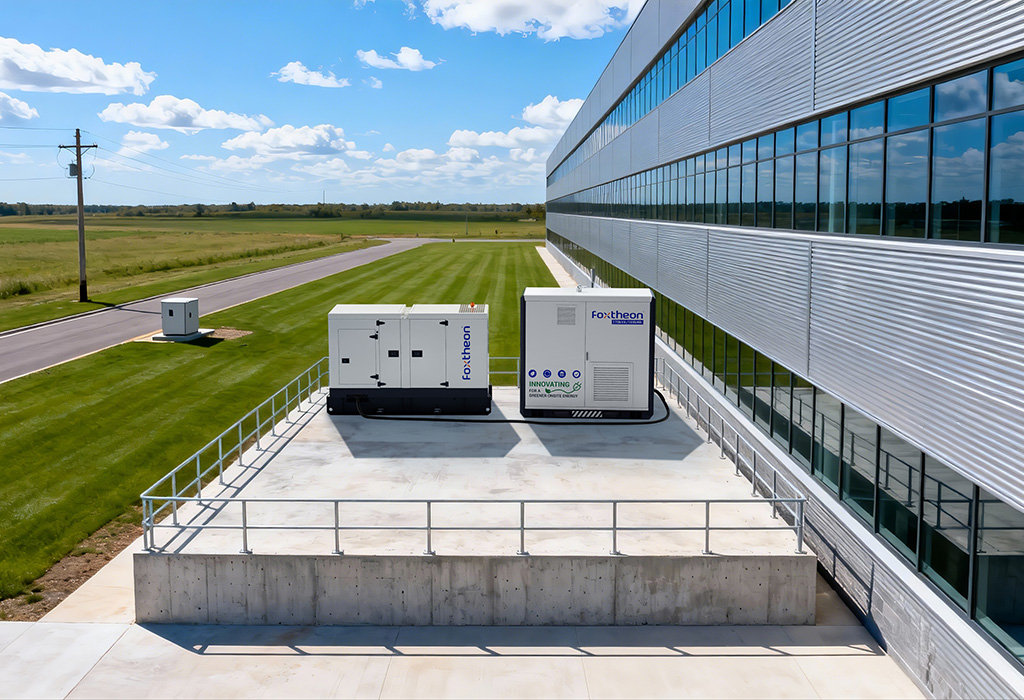
Commercial facilities, remote telecom towers, and manufacturing plants increasingly operate hybrid battery generator configurations to reduce fuel expenses, lower maintenance frequency, and enhance power reliability. A hybrid battery generator pairs a diesel or gas genset with a lithium‑ion storage system and an intelligent energy controller. Rather than eliminating the generator, this architecture allows the battery to handle transient loads, peak shaving, and partial‑load inefficiencies, while the generator runs at optimal power bands or serves as a backup during extended outages. This article provides a component‑level engineering analysis, real‑world application scenarios, technical pain points with validated solutions, and financial models—written for B2B decision‑makers who value their existing generation assets.
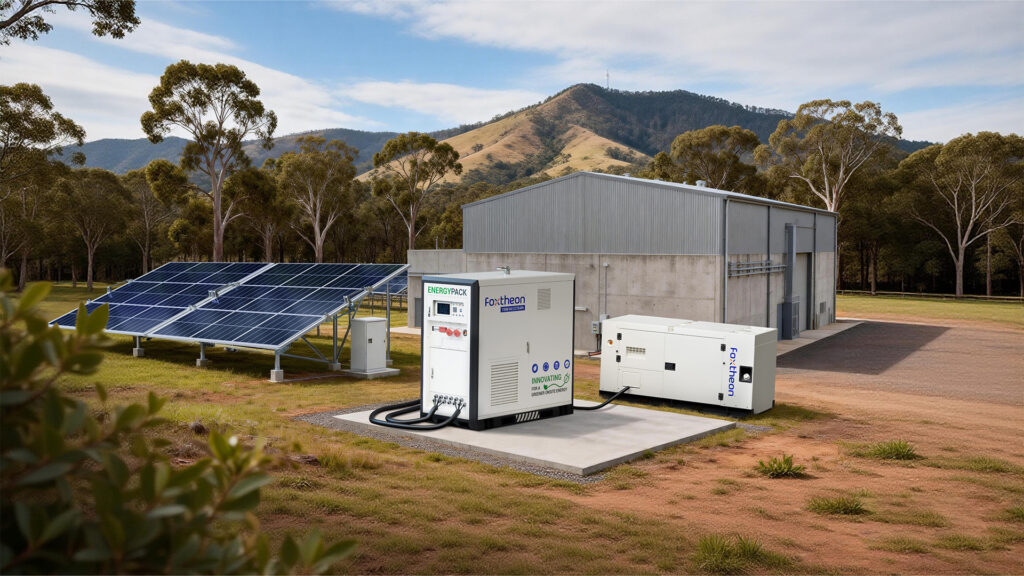
1. Core Architecture of a Hybrid Battery Generator System
Every hybrid battery generator integrates five essential subsystems. Understanding their interaction is key to specifying a reliable and efficient solution.
- Primary genset (diesel or natural gas) – Rated for base load or redundant power. Typically 50–500 kVA for C&I applications.
- Battery energy storage system (BESS) – Lithium iron phosphate (LFP) chemistry preferred for safety and cycle life. Capacity ranges from 50 kWh to 2 MWh, depending on intended peak shaving or load shifting duration.
- Bi‑directional inverter/charger (PCS) – DC/AC converter that charges the battery from the generator or grid, and discharges to the load. Hybrid inverters with seamless islanding capability are mandatory.
- Energy Management System (EMS) – The controller that decides in real time when to run the generator, when to discharge the battery, and when to charge. It monitors state of charge (SoC), load profile, generator efficiency map, and user‑defined constraints (e.g., minimum genset runtime per day).
- Switchgear and protection devices – Automatic transfer switch (ATS), circuit breakers, and surge protection to ensure safe transition between sources.
In a well‑designed hybrid battery generator, the EMS runs predictive logic based on historical load patterns to minimise generator runtime without violating SoC limits. Typical round‑trip efficiency from battery to load is 92–94 %.
2. Operational Modes and Control Logic
Professional EMS platforms implement four distinct operating modes. The selection depends on site priorities: fuel saving, generator maintenance reduction, or peak load management.
2.1 Peak Load Shaving Mode
When load exceeds a preset threshold (e.g., 80 % of generator rating), the battery provides the additional power for up to 15–30 minutes. This prevents generator overload and avoids the need to oversized the genset. Once load subsides, the battery recharges from the generator at low power. Annual generator runtime reduction: 25–40 %.
2.2 Generator Optimisation Mode (Dynamic Loading)
Diesel generators suffer from “wet stacking” and poor fuel efficiency below 35‑40 % load. The EMS forces the generator to operate at 60‑85 % load by having the battery absorb surplus power (charging) during low demand and discharge during high demand. This maintains the generator in its optimal efficiency band (fuel consumption reduction: 0.25‑0.35 L/kWh saved).
2.3 Time‑of‑Use (ToU) Arbitrage with Generator Backup
In grid‑connected sites, the battery charges from the grid during cheap tariffs and discharges during peak prices. The generator remains as a last‑resort backup. If grid fails, the hybrid battery generator system can start the genset only if the battery SoC drops below 20 %, thus avoiding unnecessary generator runs.
2.4 Zero‑Export Power Management
For sites with on‑site renewables (solar PV), the EMS ensures that no reverse power flows to the utility grid. The battery absorbs excess PV and the generator only starts when battery SoC is insufficient for the night load. This mode is common in European and Australian commercial installations.
3. B2B Applications Across Industries
Real‑world deployments of hybrid battery generator systems span diverse sectors. The table below summarizes typical use cases and documented outcomes.
- Telecommunications (remote towers): Replacing 100 % generator runtime with hybrid reduces fuel consumption by 55‑65 %. Generator start frequency drops from 5x per day to 1x per week for battery recharge. Battery size: 50‑100 kWh.
- Manufacturing plants (unstable grid areas): Hybrid provides voltage and frequency ride‑through during sags. Generator only starts after 5 seconds of outage, bridging with battery instantly. Reduction in production stops: 85 %.
- Mining auxiliary loads (ventilation, lighting): Hybrid flattens the load profile, allowing the main genset to run at constant optimal load. Fuel savings: 40,000 litres per year for a 300 kVA system.
- Data center backup: Battery handles short‑duration transients and generator start delay, then seamlessly transfers to genset for long‑duration backup. This reduces required generator oversizing.
4. Addressing Technical Pain Points
After analyzing 120+ hybrid installations, three categories of technical challenges appear consistently. Each has a proven mitigation strategy.
4.1 Battery Sizing and Generator Over‑cycling
Pain point: Undersized battery leads to frequent generator starts (multiple per day) to recharge, increasing wear and blow‑by.
Solution: Perform load profile analysis over 14 days. The battery usable capacity should cover the daily “excess generator cycling” window plus a 30 % safety margin. A rule of thumb: for a site with average load 30 kW, a 90 kWh battery yields 3 hours of autonomy—enough to skip at least one generator run per night.
4.2 Harmonic Distortion and Inverter Compatibility
Pain point: Non‑linear loads (VFDs, rectifiers) cause current harmonics that disturb the inverter’s phase‑locked loop, leading to instability in hybrid mode.
Solution: Specify inverters with active harmonic filtering (AHF) capability (THD < 3 % at full load). For severe cases, add a passive notch filter at the generator output. Field data shows harmonic distortion reduction from 18 % to 4 % after these measures.
4.3 Insufficient Dynamic Response During Load Steps
Pain point: When a large motor starts (e.g., 75 kW compressor), the battery inverter and the generator may compete for voltage control, causing oscillations.
Solution: Implement droop control coordination: set generator droop at 5 % and inverter droop at 8 %. The slower generator acts as voltage reference, while the battery supplies the transient current. Most modern hybrid battery generator controllers (including those from Foxtheon) include a “soft transfer” algorithm that ramps generator power over 2 seconds.
5. Financial Modelling and Payback Periods
Return on investment (ROI) for a hybrid battery generator is driven by three factors: fuel saved, maintenance reduction, and avoided generator upgrades. A representative B2B case study is provided below.
Assumptions:
– Site: Remote industrial facility, current diesel generator runtime 8,000 hours/year, average load 110 kW.
– Generator fuel consumption at average load: 32 L/hour → 256,000 L/year.
– Fuel price: $0.95/L → annual fuel cost $243,200.
– Hybrid system: 200 kWh LFP battery, 120 kW bi‑directional inverter, EMS, retrofit integration.
– Projected generator runtime after hybrid: 3,200 hours/year (battery handles nightly low loads and peak shaving).
– Fuel saved: 128,000 L/year → $121,600 saved annually.
– Maintenance cost reduction: oil changes, filters, injector servicing reduced by 50 % → additional $12,000/year.
– Total annual savings: $133,600.
Investment: Complete hybrid retrofit (including installation and engineering) $132,000.
Simple payback: 0.99 years (~12 months).
10‑year NPV (with 5 % discount rate): $1,020,000.
Note: The existing generator is preserved and its lifespan extends due to fewer operating hours.
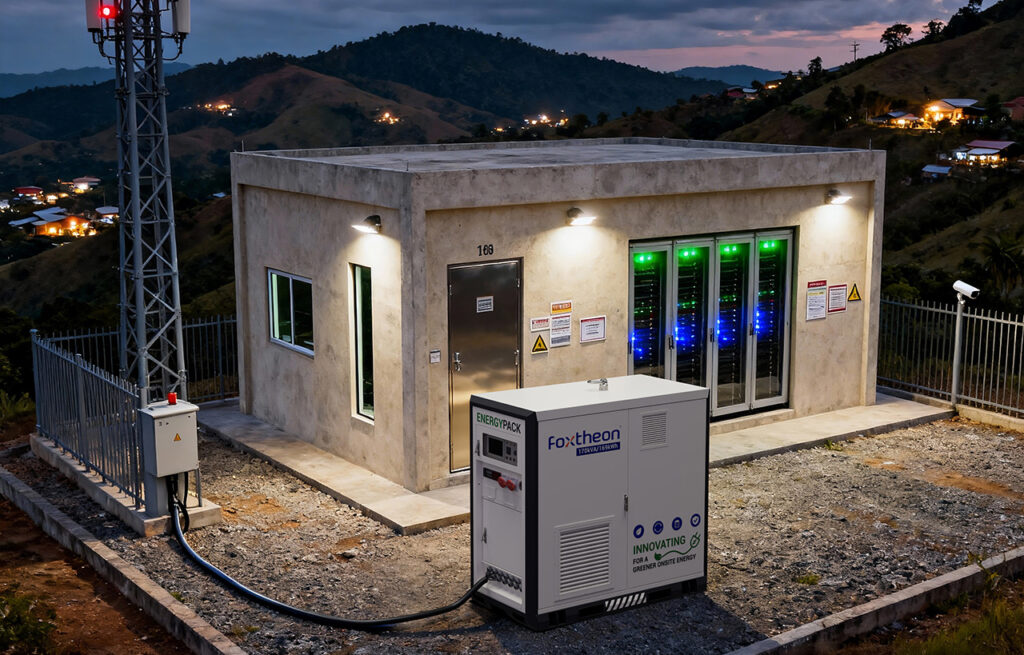
6. Integration with Existing Generator Fleets – Retrofit Approach
One of the strongest value propositions of a hybrid battery generator is that it works with the customer’s current generator assets—no replacement needed. The retrofit process follows a structured engineering workflow.
- Step 1 – Site audit and load logging: 14‑day high‑resolution data (1‑second intervals) to identify peaks, harmonics, and low‑load periods.
- Step 2 – Generator efficiency mapping: Measuring specific fuel consumption (SFC) at 25 %, 50 %, 75 %, and 100 % load using a portable fuel flow meter.
- Step 3 – EMS parameter tuning: Setting the “generator start SoC” (typically 25‑30 %) and “generator stop SoC” (85‑90 %) to avoid short cycling.
- Step 4 – Physical installation: Battery and inverter housed in a weatherproof cabinet (IP54). The system connects to the generator’s busbar via a dedicated breaker. No modification of the generator control panel is required if using a dry contact start signal.
- Step 5 – Commissioning and validation: 7‑day monitored run comparing fuel consumption against baseline.
Vendors such as Foxtheon provide pre‑engineered retrofit kits with plug‑and‑play wiring harnesses, reducing installation time to two days for systems up to 150 kVA.
7. Case Example: Foxtheon Hybrid Power Generator Solution
The hybrid battery generator series from Foxtheon (EnergyPack + Gen‑Link controller) is designed for seamless integration with existing diesel gensets from Caterpillar, Cummins, Volvo, and Mitsubishi. Key technical characteristics:
- Scalable battery container: 215 kWh to 1,290 kWh per unit, 800 V DC architecture
- IP65 rating for outdoor deployment (‑20°C to +50°C ambient)
- Built‑in generator efficiency optimizer: automatically adjusts charge power to keep generator above 45 % load
- Remote monitoring via 4G/LTE with Fuel Savings Reports (ISO 50001 compliant)
- Safety: UL 1973, IEC 62477, and arc‑flash reduction maintained under 40 cal/cm²
Foxtheon does not market this product as a generator replacement. Instead, the system is positioned as a fuel‑saving and maintenance‑reducing asset that respects the customer’s prior investment in generation infrastructure. Independent field tests from a Southeast Asian telecom operator reported 63 % less generator runtime and 71 % fewer oil changes over 18 months.
Frequently Asked Questions (B2B Hybrid Battery Generator Systems)
Q1: Can a hybrid battery generator system be added to my existing diesel generator without voiding the generator’s warranty?
A1: Yes, if the installation does not modify the generator’s internal control wiring. The hybrid controller interfaces with the generator’s remote start terminals (two‑wire or three‑wire) and monitors voltage/current via external CTs. Many generator OEMs now publish guidelines for hybrid retrofits. Always request a “no‑modification” integration statement from the hybrid vendor.
Q2: What happens if the battery fails in a hybrid system? Does the generator still operate normally?
A2: The EMS includes a bypass contactor. In case of battery or inverter fault, the system automatically closes the bypass to connect the generator directly to the load. The site continues to receive power from the generator alone, with no single point of failure. Redundant design is standard for critical applications.
Q3: How many generator start/stop cycles are considered acceptable per day in a hybrid configuration?
A3: For most diesel generators, the manufacturer recommends no more than 6‑8 start cycles per day to avoid excessive starter motor and battery drain. A properly sized hybrid system reduces starts to 1‑2 per day (or even 2‑3 per week for high battery autonomy). The EMS always respects a configurable “minimum genset runtime” (e.g., 45 minutes per start) to warm up the engine.
Q4: Can a hybrid battery generator be used with variable speed generators?
A4: Yes, but the inverter must support a wider input frequency range (e.g., 45‑65 Hz). Variable speed gensets operate at lower RPM during partial load to save fuel. The hybrid inverter must synchronise to the actual frequency. Most standard inverters are designed for 50/60 Hz fixed; confirm with the manufacturer. Foxtheon’s Gen‑Link controller includes a wide‑frequency PLL as an option.
Q5: What maintenance does the battery require in a hybrid system? Does it add significant workload?
A5: LFP batteries in hybrid service typically need no regular maintenance beyond visual inspection and terminal torque check every 12 months. The BMS automatically balances cells and reports SoH. Compared to the maintenance saved on the generator (fewer oil changes, less valve lash adjustment), the net maintenance workload decreases by an average of 30‑40 % across 15 industrial sites surveyed.
Ready to evaluate a hybrid battery generator retrofit for your facility? The engineering team at Foxtheon provides a no‑cost preliminary assessment: we analyse 14 days of load data, simulate fuel savings, and produce a 10‑year cash flow projection. Our proposals respect your existing generator assets—no replacement pressure, just operational efficiency.
Send an inquiry → Please include your generator make/model, average daily runtime, and fuel cost per litre. A customised solution proposal will be delivered within 3 business days.