
Commercial and industrial (C&I) facilities today face a fragmented energy landscape: utility grids with increasing volatility, on-site renewables that generate intermittently, and existing generators that are fuel-dependent and less responsive to rapid load changes. A hybrid power supply solution integrates multiple energy sources—utility grid, battery storage, solar PV, and generator sets—under a unified control architecture. This approach ensures continuous, optimized power delivery while improving fuel efficiency and renewable utilization.
Unlike single-source backup systems, a properly engineered hybrid power supply dynamically prioritizes among sources based on real-time load, fuel cost, emissions limits, and grid conditions. For facility managers and energy directors, the value lies in three outcomes: reduced exposure to demand charges, extended asset life of existing generation equipment, and seamless ride-through of grid disturbances.
.jpg)
Core Technical Architecture of a Modern Hybrid Power Supply
A resilient hybrid power supply system integrates four interdependent layers:
- Bidirectional power conversion (hybrid inverter/PCS): The central unit that rectifies AC from grid/generator to DC for batteries, and inverts DC from batteries/PV to AC for loads. Key specifications include wide DC input range (200–900V) and seamless transition time (<20 ms between sources).
- Energy storage bank (Li-ion LFP): Provides high-cycle life (6,000+ cycles at 80% DoD) and rapid response. The battery bank handles short-duration peaks (15–60 minutes for most C&I applications) and provides voltage/frequency support during transient events.
- Energy management system (EMS) with predictive logic: The EMS orchestrates source selection using algorithms that incorporate load forecasting, tariff schedules, weather forecasts, and generator health data. It communicates via Modbus TCP, CAN bus, or industrial protocols to all assets.
- Automatic transfer and synchronizing switchgear: Manages physical connection between grid, generator, and inverter. For multi-generator sites, the switchgear synchronizes parallel operation with the hybrid inverter output.
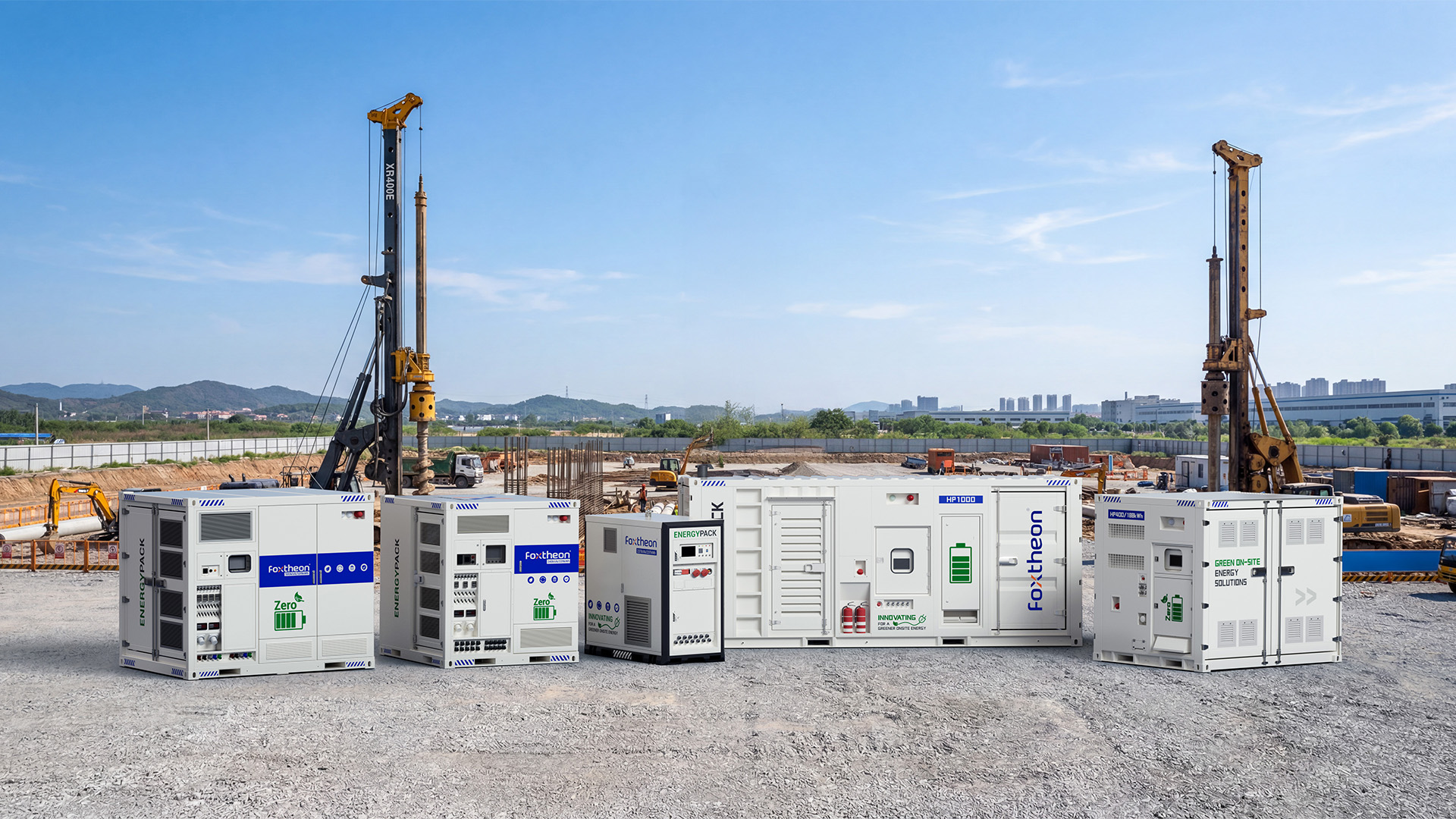
Foxtheon pre-integrates these layers into modular cabinets (30kW to 2MW), reducing field engineering complexity and commissioning time for facilities with existing generator fleets.
Operational Control Strategies – Beyond Simple Backup
A sophisticated hybrid power supply executes multiple operational modes based on site priorities:
- Peak load shaving: During periods of high import from the grid (e.g., 2–5 PM), the battery discharges to keep the net drawn power below a user-defined threshold. This reduces monthly demand charges without requiring generator operation.
- Generator optimization (load smoothing): For sites with existing diesel/gas generators, the hybrid inverter absorbs transient load swings and short-duration peaks, allowing the generator to operate at its most efficient (70-85% load) rather than cycling or idling. This reduces fuel consumption and carbon deposit buildup.
- Grid backup & islanding: Upon grid failure, the system disconnects via automatic transfer switch (typically within 150ms). The inverter forms a local microgrid, with batteries supplying initial power; the EMS then starts the generator only when battery state-of-charge (SoC) drops below a programmed floor (e.g., 20%).
- Renewable self-consumption maximization: When on-site PV or wind generates more than immediate loads, the hybrid power supply diverts excess energy to charge batteries instead of exporting – improving renewable utilization from typical 30-40% to 85-95%.
- Time-of-use arbitrage: The EMS charges batteries during low-tariff periods (e.g., midnight to 6 AM) and discharges during high-tariff periods, offsetting energy costs while preserving generator hours for genuine emergencies.
Advanced controllers, such as those in Foxtheon systems, incorporate weather prediction to pre-charge batteries before forecasted cloudy days, ensuring sufficient reserve for evening peak.
Addressing Real-World Power Supply Challenges in C&I Settings
Energy managers consistently report four operational pain points that a well-specified hybrid power supply resolves without requiring complete replacement of existing assets:
- Grid instability and brief interruptions: Welding lines, CNC machines, and refrigeration systems are sensitive to voltage sags and frequency deviations. A hybrid inverter with line-interactive topology corrects undervoltage events within 10 ms, protecting variable frequency drives (VFDs) and programmable logic controllers (PLCs).
- Generator underloading and wet stacking: Generators that run at less than 30-40% of rated load for extended periods suffer from incomplete combustion and carbon buildup. The hybrid power supply adds a controlled load (by charging batteries) when generator output exceeds site demand, keeping the generator in a healthy load range.
- Transformer capacity constraints: Adding EV chargers or new production lines often requires expensive upgrade of the site transformer. The hybrid system shaves peaks seen by the transformer, effectively increasing usable capacity by 25-40% without physical replacement.
- Renewable curtailment: Many grid-tied solar arrays must reduce output when export limits are reached. A hybrid power supply with battery storage absorbs this otherwise curtailed energy, later used during high-demand periods.
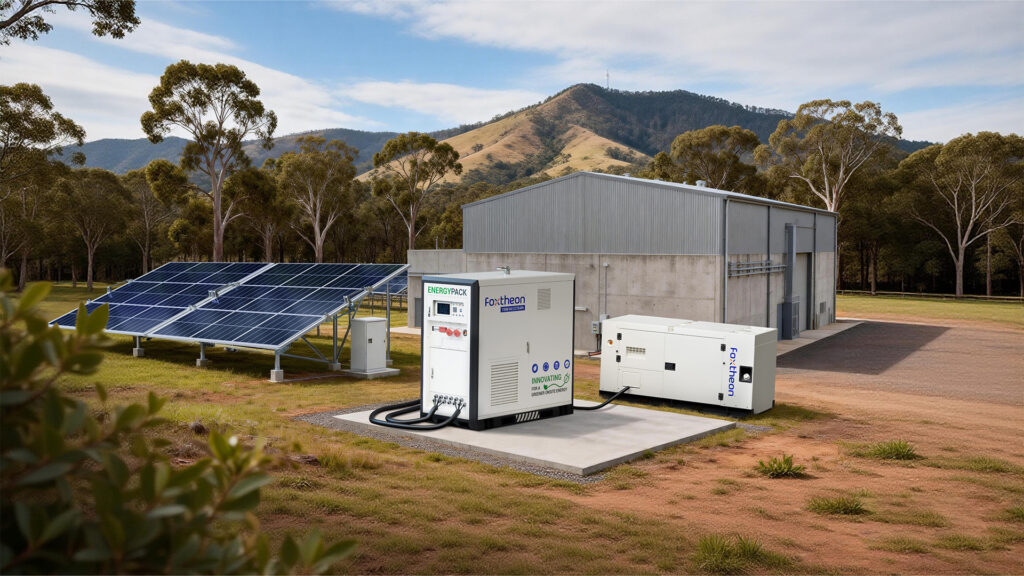
Critically, the hybrid power supply works alongside existing generator assets – it does not replace them but enhances their operational efficiency and responsiveness. The EMS can coordinate with generator controllers using dry contacts or serial links, allowing seamless handover during extended outages.
Application Scenarios – From Remote Industrial Sites to Urban Commercial Hubs
Remote manufacturing and logistics centers (weak grid areas)
Facilities located at the end of long distribution feeders experience frequent voltage dips and momentary outages. A hybrid power supply with 30–60 minutes of battery autonomy absorbs these disturbances, preventing production stops. If a prolonged outage occurs, the generator starts only after the battery reaches a lower SoC threshold, reducing generator runtime by 50-70% compared to generator-only setups.
Data centers and telecom shelters
These facilities require zero-break power and high reliability. The hybrid inverter operates in online double-conversion mode: AC from grid/generator is converted to DC, then back to AC, with battery connected on the DC bus. Grid disturbances are completely isolated, and stored energy provides ride-through until generator synchronization.
Commercial campuses with EV charging infrastructure
Parking garages with rapid EV chargers can create sudden load spikes exceeding site transformer ratings. The hybrid power supply buffers these spikes using battery power, while the EMS communicates with charger controllers to manage overall site import – often deferring utility infrastructure upgrades by years.
Foxtheon has engineered its hybrid power supply skids with NEMA 3R/IP54 enclosures and wide temperature tolerance (-20°C to 50°C), enabling outdoor placement near existing generators or substations without climate-controlled buildings.
Engineering Considerations for Deployment
Properly implementing a hybrid power supply system requires three pre-engineering steps:
- Load profile measurement: Collect 15-minute interval data over 12 months to identify peak demand, load factor, and frequency of transients. This determines battery power rating (kW) and energy capacity (kWh). For peak shaving, battery power is typically 20-30% of facility peak load.
- Generator compatibility audit: Modern generators with electronic governors (isochronous) integrate more smoothly with hybrid inverters than older mechanical governor units. Voltage regulator response and minimum load threshold must be documented. The EMS can simulate an additional load bank when needed.
- Utility interconnection review: Some grid operators require export limits or zero-export configurations. The hybrid inverter must support external current transformers and communicate with utility meters accordingly.
For sites with multiple generators, the hybrid power supply can be placed on the common bus after the main switchgear, serving as a shared resource for all downstream loads.
Summary of Operational Benefits
- Reduced generator runtime and maintenance intervals through load smoothing
- Enhanced renewable self-consumption without export curtailment
- Protection from grid anomalies – voltage sags, frequency drift, brief interruptions
- Deferred transformer and distribution upgrades via peak shaving
- Real-time remote monitoring and control through cloud-based EMS dashboards
Ready to evaluate a hybrid power supply configuration for your facility? The engineering team at Foxtheon provides site-specific modeling, generator integration assessments, and ROI-neutral feasibility studies. Submit an inquiry to receive a technical assessment and preliminary system sizing — with actionable recommendations, not generic proposals.
Frequently Asked Questions (FAQs)
Q1: Does a hybrid power supply require solar PV to function?
A1: No. The system operates as a battery-backed power manager even without PV. It can perform peak shaving, generator optimization, and grid backup using only grid charging (during off-peak times) or generator charging. PV integration is optional and can be added later via AC or DC coupling.
Q2: How does a hybrid power supply work with my existing diesel generator?
A2: The hybrid inverter connects in parallel with the generator output through synchronizing switchgear. During normal operation, the EMS may run the generator at optimal load by using the battery to absorb or supply transient differences. During an outage, the battery provides instant response; if the outage exceeds battery autonomy, the generator starts and the hybrid inverter synchronizes to it without load interruption.
Q3: Can the same hybrid power supply serve both emergency backup and daily peak shaving?
A3: Yes, that is the intended design. The EMS reserves a programmable percentage of battery capacity (e.g., 20%) for grid outage backup, while using the remaining capacity for daily peak shaving and arbitrage. The reservation can be dynamic based on time of day and weather forecasts.
Q4: What is the typical transition time when switching from grid to islanded backup?
A4: For UL 1741-compliant hybrid inverters, the transfer switch opens within 150ms after grid anomaly detection, and the inverter establishes island voltage within another 20ms. Total break time for downstream loads is typically 100-200ms. For loads intolerant to any interruption, an additional online UPS can be placed on critical circuits.
Q5: Is a hybrid power supply suitable for three-phase industrial applications above 500kW?
A5: Absolutely. Modular hybrid power supply cabinets can be paralleled to reach 5MW+ in three-phase 208V, 480V, or 600V configurations. Foxtheon offers turnkey assemblies with integrated switchgear, EMS, and battery racks for manufacturing plants, data centers, and campus microgrids.