
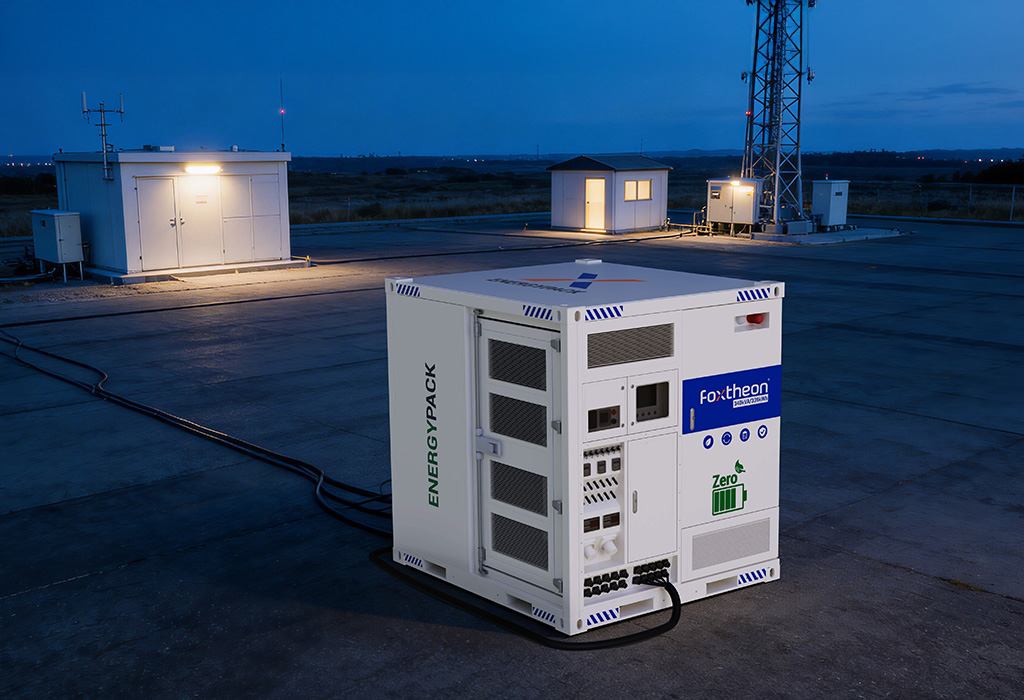
Modern industrial and commercial facilities operate under complex electrical environments. The integration of distributed energy resources (DERs), such as on-site solar photovoltaics, battery energy storage systems (BESS), and traditional backup generators, requires precise coordination. Without an intelligent central coordinator, managing these fragmented energy assets can lead to operational inefficiencies, voltage fluctuations, and increased demand charges. Implementing a robust Smart Energy Management System has become a standard approach to achieving balancing, stability, and control across C&I power networks.
To establish a resilient power architecture, system integrators and utility managers require a deep understanding of how software-driven orchestration interacts with physical electrical infrastructure. Manufacturers like Foxtheon design advanced control hardware and software platforms that bridge the gap between local power generation and grid-level demands.
The Technical Architecture of a Modern Energy Management Platform
A high-performance Smart Energy Management System does not simply monitor data; it actively governs the bidirectional flow of electricity. It acts as the brain of the microgrid, processing inputs from utility meters, inverters, weather sensors, and load profiles to execute real-time control algorithms.
Data Acquisition and Protocol Translation
In industrial settings, hardware components speak different protocols. The control system must aggregate data from legacy gen-sets, modern lithium-ion battery management systems (BMS), and solar inverters. This requires native support for multiple communication standards:
- Modbus RTU / TCP: For communication with power meters, protective relays, and older variable frequency drives (VFDs).
- CAN bus (Controller Area Network): Frequently utilized for rapid, low-latency communication with the battery packs and internal power conversion systems (PCS).
- IEC 61850: The international standard for substation automation, enabling seamless integration with utility-scale equipment.
- DNP3 or OPC UA: Enabling secure uplink communication to supervisory control and data acquisition (SCADA) systems and utility dispatch centers.
Algorithmic Decision-Making
At the core of the software layer are predictive and deterministic control algorithms. The system continuously evaluates the State of Charge (SoC) and State of Health (SoH) of connected storage assets alongside real-time consumption patterns. By analyzing historical load data and forecasting PV generation, the controller determines the most efficient dispatch strategy. This prevents unnecessary battery cycling, protects chemical cell life, and maintains the required spinning reserves.
Addressing Core Commercial and Industrial Power Challenges
C&I facility managers face persistent operational difficulties regarding power quality, peak demand tariffs, and supply continuity. A properly configured Smart Energy Management System provides a systematic solution to these technical pain points.
1. Managing Peak Demand and Demand Charges
Utility companies impose high tariffs based on the maximum power drawn during peak windows. If an industrial plant starts up heavy machinery simultaneously, the resulting demand spike can drastically increase monthly operating costs. The management software mitigates this through peak shaving. When the aggregate load approaches a predefined threshold, the system automatically dispatches power from the local BESS to cover the excess demand, keeping the utility grid draw flat and predictable.
2. Mitigating Power Quality Issues
Non-linear loads, such as large motor drives, rectifiers, and IT equipment, introduce harmonics, voltage sags, and power factor imbalances into the facility’s local network. The controller interfaces with active power filters and modern hybrid inverters to inject reactive power (VAR compensation) and stabilize voltage levels. This protects sensitive laboratory or fabrication equipment from premature degradation caused by poor power quality.
3. Coordinating Hybrid Energy Assets
Many facilities maintain existing diesel generator fleets to ensure long-duration backup. However, running generators at low load factors leads to wet stacking and fuel inefficiency. A unified control framework, such as those engineered by Foxtheon, coordinates the generator with solar and battery assets. The battery handles sudden load changes and microsecond-level transient surges, allowing the generator to start smoothly and operate continuously within its optimal thermal and mechanical efficiency window.
Core Functions of a Smart Energy Management System
An industrial-grade controller provides several primary operational modes, which can be configured to execute automatically based on grid conditions or manually dispatched via a remote interface.
Dynamic Load Shedding
During an unexpected utility outage or a severe drop in localized generation, the system executes a pre-configured load-shedding hierarchy. Non-essential systems, such as comfort HVAC or auxiliary lighting, are temporarily powered down. This ensures that the remaining power supply is reserved entirely for key production lines, data centers, or safety systems, preventing a complete site-wide blackout.
Seamless Grid Transition (Black Start and Islanding)
When the main utility grid fails, the facility must transition to “island mode” without interrupting operations. The Smart Energy Management System coordinates this transition by signaling the grid-forming inverter to establish a local voltage and frequency reference. In the event of a total shutdown, the system manages the “black start” sequence, systematically energizing transformers and busbars to avoid high inrush currents that could trigger protective relays.
Optimized Charging and Discharging Schedules
To maximize the utility of on-site renewables, the system manages energy shifting. During periods of high solar production and low local demand, excess energy is directed to the BESS rather than being curtailed or exported to the grid at low feed-in tariffs. This stored energy is then systematically discharged during peak hours, reducing reliance on external grid purchases.
The Integration of Hardware and Software Solutions
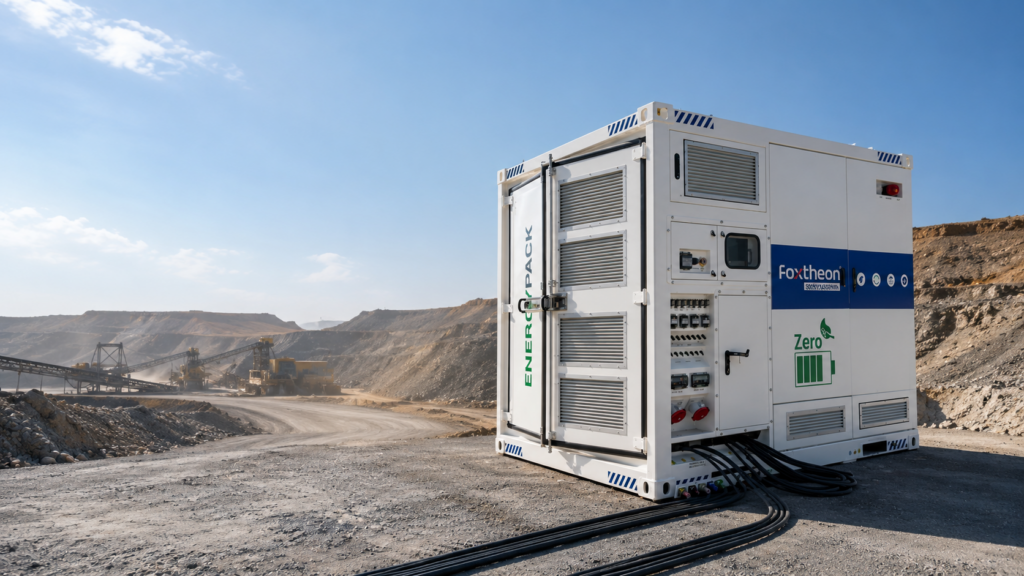
Software capability is only as good as the hardware execution. High-performance system integration requires ruggedized edge controllers capable of operating in harsh industrial environments with wide temperature fluctuations and electromagnetic interference.
By deploying specialized controllers developed by Foxtheon, industrial operators can implement complex control logic directly at the site boundary. These hardware units feature redundant power supplies, isolated communication ports, and physical digital/analog I/O channels to interface directly with circuit breakers and switchgear. This localized control minimizes latency, ensuring that grid-protective actions are taken in milliseconds, independent of internet connectivity or cloud latency.
Technical Specifications and Integration Checklist
When evaluating a Smart Energy Management System for an existing facility, several engineering parameters must be assessed:
- Control Loop Response Time: For active frequency regulation, the response time must be under 100 milliseconds; for peak shaving, a response time of 1 to 5 seconds is generally sufficient.
- Scalability: The software architecture should allow for modular expansions, such as adding more battery racks or scaling up solar PV capacity without requiring a complete rewrite of the control logic.
- Cybersecurity Compliance: The system must adhere to industrial security standards, including IEC 62443, utilizing encrypted communication protocols, firewalls, and multi-factor authentication for remote access.
- Existing Asset Compatibility: Ensure the system features pre-built drivers for your current inverter brands, generator controllers, and power quality analyzers.
Optimizing Operations for System Integrators
For channel partners and engineering, procurement, and construction (EPC) companies, delivering a functional microgrid requires minimizing commissioning times and reducing custom programming overhead. Modern software solutions simplify this process by providing graphical configuration tools, pre-tested logic blocks, and standardized templates for common C&I scenarios. This standardized approach allows integrators to focus on physical deployment and system testing, ensuring projects are completed on schedule and meet local grid code requirements.
Developing a stable microgrid requires careful planning, accurate load profiling, and deep technical integration. Every industrial facility presents unique electrical demands, space constraints, and localized utility regulations. Partnering with experienced system designers ensures that hardware sizing, protective relay coordination, and software control logic are aligned to your specific operating parameters.
Our team of technical experts is available to assist you in evaluating your current power infrastructure, analyzing load profiles, and designing a tailored integration strategy. If you are planning a microgrid project or looking to optimize your existing distributed energy assets, please submit a detailed inquiry to begin a technical consultation.
Frequently Asked Questions
Q1: How does a Smart Energy Management System interface with existing emergency diesel generators?
A1: The system connects to the generator’s automatic mains failure (AMF) controller via standard industrial protocols like Modbus or dry contact relays. Instead of replacing the generator, the system optimizes its operation by managing the load sharing. It ensures the generator runs within its optimal fuel efficiency range while using the battery storage system to absorb sudden load steps and transient spikes.
Q2: Can the control system operate without an active internet connection?
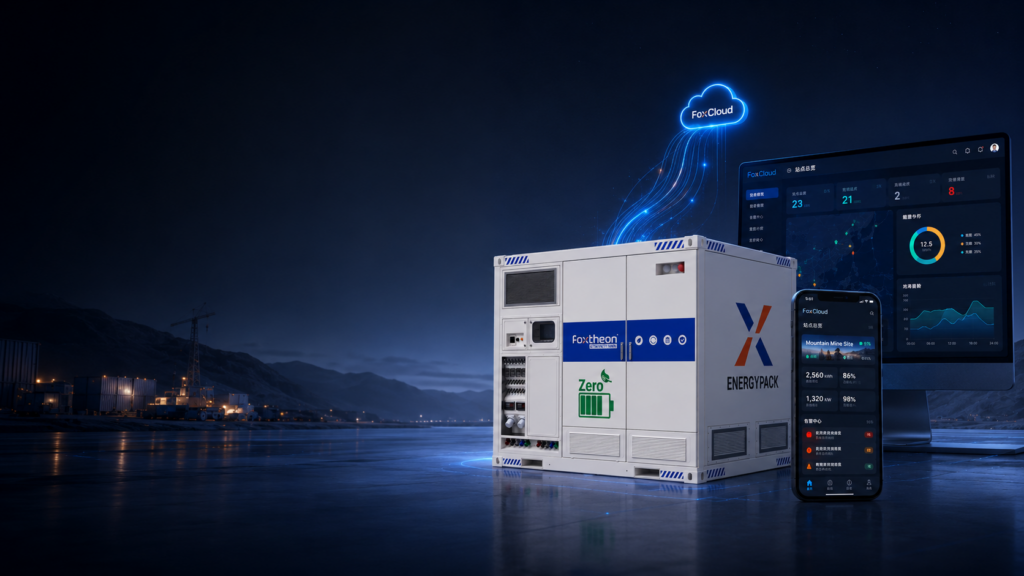
A2: Yes. Industrial-grade energy management systems run control algorithms locally on a ruggedized edge controller. While cloud connectivity is useful for remote monitoring, firmware updates, and historical data logging, all primary control loops, protective actions, and dynamic load-shedding schedules run locally to ensure continuous operation during internet outages.
Q3: What is the typical installation process for integrating a Smart Energy Management System into an existing facility?
A3: The installation typically involves mounting the edge controller in a standard electrical cabinet, installing power meters at key distribution points, and routing communication cables (such as shielded twisted-pair or fiber optics) to the inverters, battery systems, and generators. Once physically connected, the software is configured with the facility’s specific load profiles, tariff structures, and operational priorities during the commissioning phase.
Q4: How does the system prevent the battery storage system from degrading prematurely?
A4: The management software communicates continuously with the Battery Management System (BMS) to monitor temperature, cell voltages, and State of Charge (SoC). It applies intelligent algorithms to limit depth of discharge (DoD), prevent overcharging, and manage charge/discharge rates based on ambient conditions, thereby preserving the physical health of the battery cells.
Q5: Is it possible to scale the system if our facility expands its solar array or battery storage in the future?
A5: Yes, professional systems are built on modular architectures. New distributed energy assets can be integrated into the control framework by adding new communication nodes and updating the capacity parameters within the software configuration, without requiring a complete redesign of the core electrical control loop.