
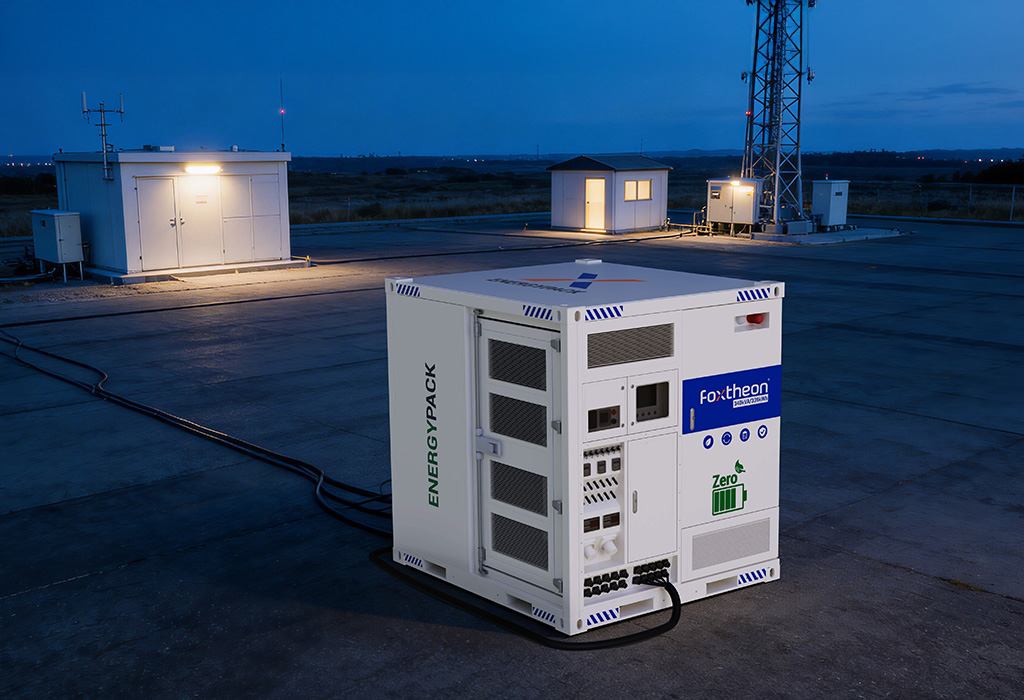
Commercial and industrial (C&I) facilities operate under stringent power quality requirements and complex demand-charge structures. To maintain operational stability and optimize energy utilization, engineering teams are increasingly integrating advanced electrical energy storage devices into their facility infrastructure. These systems function as intelligent buffers, absorbing excess power during low-demand periods and discharging it precisely when site loads peak. Selecting the correct system requires a thorough evaluation of electrochemistry, cycle life, thermal management capabilities, and system integration protocols.
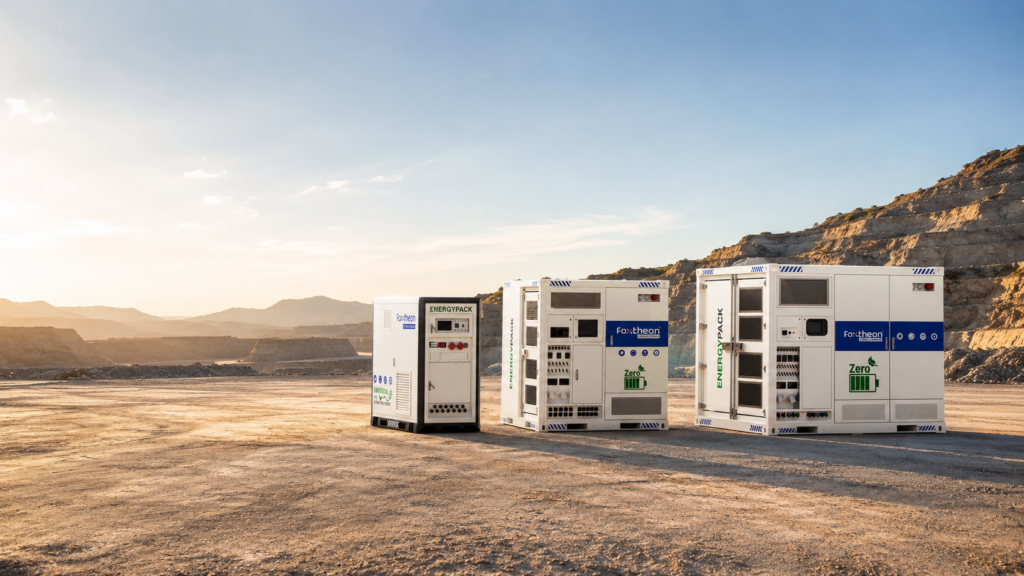
Technical Classification and Chemistry Analysis
The core performance of any energy management system is dictated by its underlying chemical or mechanical principles. Industrial applications demand systems capable of sustaining high cycle rates while maintaining structural integrity over a 10 to 15-year operational lifespan.
Lithium-Ion Technology and Cell Materials
Lithium-ion architectures dominate the C&I sector due to their high energy density and modular scalability. Within this category, the choice of cathode materials directly influences performance metrics. Lithium Iron Phosphate (LFP) cells are widely adopted in commercial environments. The molecular structure of LFP provides robust thermal stability, minimizing heat generation during rapid charge and discharge cycles. This stability translates to a cycle life often exceeding 6,000 to 8,000 cycles at a 80% Depth of Discharge (DoD). Nickel Manganese Cobalt (NMC) chemistries offer higher energy density, meaning they require less physical footprint per kilowatt-hour, making them suitable for facilities with severe spatial constraints. Industrial buyers must evaluate the internal cell materials, separator quality, and the algorithms governing the Battery Management System (BMS) to ensure consistent cell balancing across the entire rack.
Redox Flow Battery Systems
Facilities requiring long-duration storage—typically exceeding six to eight hours of continuous discharge—often evaluate redox flow technologies. Vanadium redox flow systems operate by circulating liquid electrolytes through a central membrane stack. A unique engineering advantage of flow electrical energy storage devices is the decoupling of power and capacity. To increase capacity, facility engineers simply specify larger electrolyte storage tanks; to increase power output, they expand the membrane stack. This architecture experiences virtually zero degradation over tens of thousands of cycles, making it highly viable for heavy industrial sites that require constant, prolonged load shifting throughout multiple production shifts.
High-Power Mechanical and Electrostatic Systems
Certain industrial processes, such as semiconductor manufacturing or precision machining, are highly sensitive to microsecond voltage sags or frequency deviations. For these applications, supercapacitors and flywheel systems provide instantaneous power injection. Supercapacitors store energy electrostatically, allowing them to discharge massive amounts of power in fractions of a second. Flywheels store energy kinetically through a rotating mass suspended on magnetic bearings. While these systems do not offer the kilowatt-hour capacity of chemical batteries, their ability to deliver intense bursts of power makes them highly effective for power quality correction and seamless parallel operation with existing facility power generation infrastructure.
Primary Application Scenarios in Commercial Facilities
Deploying energy storage hardware requires a strategic alignment with facility load profiles. The operational software, known as the Energy Management System (EMS), dictates how the hardware interacts with the local grid and internal loads.
Peak Shaving and Demand Management
Utility companies impose high demand charges based on the maximum power drawn during a specific 15-minute interval within a billing cycle. Industrial electrical energy storage devices monitor facility power consumption in real-time. When the EMS detects that the facility load is approaching a pre-determined threshold, the system autonomously discharges. This process shaves the peak off the facility’s demand profile, smoothing the draw from the utility grid and significantly altering the facility’s utility billing structure without interrupting manufacturing operations.
Renewable Energy Integration
Facilities equipped with large-scale solar photovoltaic (PV) arrays face the challenge of intermittency. Solar generation curves rarely align perfectly with industrial consumption curves. By routing excess mid-day solar generation into electrical energy storage devices, facilities can capture this energy for use during evening shifts or periods of heavy cloud cover. The integration process requires sophisticated hybrid inverters that manage the DC-coupled or AC-coupled connections between the PV arrays, the battery racks, and the main switchgear.
Microgrid Support and Grid Independence
Complex manufacturing campuses often operate private microgrids. These local energy networks incorporate various power assets, including grid connections, solar arrays, and onsite generators. Foxtheon specializes in integrating storage systems that act as the stabilizing heartbeat of these microgrids. The storage unit manages frequency and voltage regulation, ensuring that all connected assets operate harmoniously. If the main utility grid experiences an outage, the storage system can instantly provide the reference voltage required for other onsite power assets to synchronize and continue operations seamlessly.
Addressing Industry Pain Points Through Storage Integration
Modern industrial operations face escalating challenges regarding power reliability. Aging utility infrastructure in many regions leads to frequent micro-outages and voltage fluctuations. Even a momentary drop in voltage can cause automated assembly lines to trip off, resulting in ruined product batches and expensive restart procedures. High-performance storage systems mitigate these anomalies by actively conditioning the power before it reaches sensitive equipment.
Grid congestion presents another significant pain point. Facilities looking to expand their manufacturing capacity often discover that the local utility cannot provide the required power upgrades without lengthy delays and costly substation modifications. Deploying Foxtheon energy storage solutions allows facilities to augment their peak power availability internally, bypassing utility bottlenecks and accelerating facility expansion timelines.
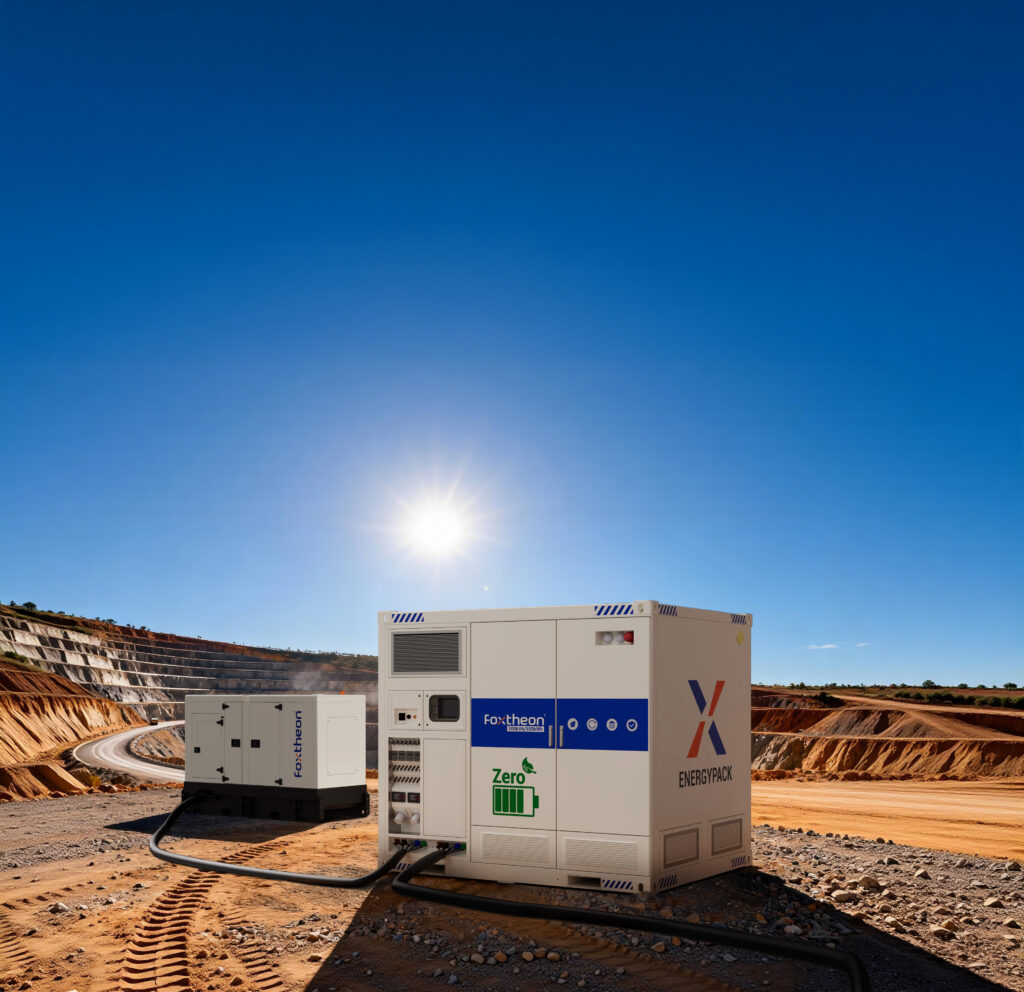
Procurement Criteria: Sourcing Suppliers and Pricing Structures
Navigating the procurement process for industrial-scale storage requires rigorous technical evaluation. Pricing models in this sector are highly customized based on project specifications, typically broken down into Capital Expenditure (CapEx) metrics such as dollars per kilowatt-hour ($/kWh) for the battery modules, and dollars per kilowatt ($/kW) for the Power Conversion System (PCS).
When sourcing suppliers, procurement engineers must evaluate the integration capabilities of the hardware. The physical cells represent only one component of the system. The quality of the BMS, the thermal management system (whether air-cooled or liquid-cooled), and the EMS software are equally important. Liquid-cooled systems, while carrying a higher upfront CapEx, offer superior temperature uniformity across battery modules, which directly extends the operational life of the cells under heavy industrial use.
Supplier selection should also hinge on safety certifications and testing standards. Rigorous compliance with standards such as UL 9540 (Energy Storage Systems and Equipment) and IEC 62619 (Safety requirements for secondary lithium cells) demonstrates a manufacturer’s commitment to engineering integrity. Foxtheon emphasizes the importance of selecting partners who provide comprehensive factory acceptance testing (FAT) and robust aftermarket engineering support. The ideal supplier acts as a system integrator, ensuring that the inverters, transformers, and battery racks communicate flawlessly via standard industrial protocols like Modbus TCP/IP or CAN bus.
Transparency in pricing structures allows buyers to accurately forecast capital deployment. Quotations should clearly delineate hardware costs from software licensing, commissioning fees, and ongoing maintenance service level agreements (SLAs). Advanced electrical energy storage devices require routine software updates and physical inspections to maintain optimal charge and discharge efficiencies. Buyers should carefully review warranty terms, specifically looking at throughput warranties (total energy discharged over the lifespan) rather than just time-based guarantees.
Frequently Asked Questions (FAQ)
Q1: How does Depth of Discharge (DoD) affect the lifespan of industrial battery systems?
A1: DoD refers to the percentage of the battery’s total capacity that has been used. Operating a lithium-ion system at a shallower DoD (e.g., 60% instead of 90%) significantly increases the total number of cycles the battery can perform. The BMS is typically programmed to restrict deep discharges to maximize hardware longevity.
Q2: Can commercial storage systems be expanded if facility power demands increase?
A2: Yes. Most modern electrical energy storage devices utilize a modular architecture. Facilities can install additional battery racks and connect them to the existing DC bus, provided the initial Power Conversion System (PCS) is sized appropriately to handle the increased capacity.
Q3: What routine maintenance is required for a liquid-cooled energy storage system?
A3: Maintenance protocols involve inspecting coolant levels, verifying pump operation, checking for leaks, and replacing coolant fluid according to the manufacturer’s schedule. Additionally, technicians will verify electrical connections, inspect switchgear, and review EMS error logs.
Q4: How do energy storage systems communicate with existing facility management software?
A4: The Energy Management System (EMS) communicates via standard industrial protocols such as Modbus RTU, Modbus TCP/IP, or DNP3. This allows the storage system to integrate smoothly with existing SCADA (Supervisory Control and Data Acquisition) or Building Management Systems (BMS).
Q5: What are the optimal operating temperature ranges for lithium-based storage systems?
A5: While industrial systems are housed in rugged enclosures, the internal battery modules perform best between 15°C and 25°C (59°F to 77°F). Active thermal management systems (HVAC or liquid cooling) work continuously to maintain this internal environment regardless of external ambient conditions.
Inquiry
For technical specifications, detailed system sizing, and procurement pricing regarding advanced C&I energy storage integration, contact our engineering team directly at Foxtheon.