
Grid Booster Mode
Weak Grid & Utility Capacity Expansion Solutions
Unlock more usable power from a limited grid connection. Foxtheon EnergyPack charges when site demand is low and supplies fast battery power during peaks, keeping grid draw within the permitted limit.
The Grid Constraint
A practical alternative to waiting for a larger grid connection
A site may have enough grid energy across the day but not enough instantaneous power for motors, cranes, pumps or simultaneous production loads. A hybrid BESS turns spare off-peak capacity into stored energy and releases it exactly when the site needs more power.
The permitted grid connection cannot cover short-duration peaks or new equipment.
Voltage events, overload trips and fluctuating loads interrupt critical operations.
Transformer expansion, approvals and civil works may not match the project schedule.
Weak-Grid Capacity Expansion Mode
How the grid booster architecture works
FoxMind monitors site demand and coordinates grid import with the EnergyPack inverter and battery. The grid supplies the planned base load; the BESS covers the difference above the configured grid limit.
Limited Utility Grid
A steady, controlled grid supply provides base-load power and recharges the battery during lower-demand periods.
EnergyPack Hybrid BESS
FoxMind enforces the grid-import setpoint, stores off-peak energy and responds when site demand rises.
Full Site Demand
Dynamic equipment receives the combined power it needs without pushing utility import above the agreed limit.
Measure
Read grid import and site load continuously.
Charge
Store available grid energy when demand is below the limit.
Boost
Discharge instantly when equipment demand exceeds grid capacity.
Recover
Return to controlled charging after the peak passes.
Applications
Built for sites where peak power matters more than average demand
The solution is especially effective when high-power events are intermittent and the existing connection has time to recharge the battery between peaks.
Construction & Tower Cranes
Support hoists, cranes and other fast-changing loads without exceeding the site grid allocation.
Pumps & Large Motors
Cover motor starting and acceleration demand while protecting the grid-import limit.
Industrial Expansion
Add equipment or shifts before permanent transformer and utility upgrades are available.
Weak-Grid Sites
Improve power continuity for remote industrial and infrastructure operations.
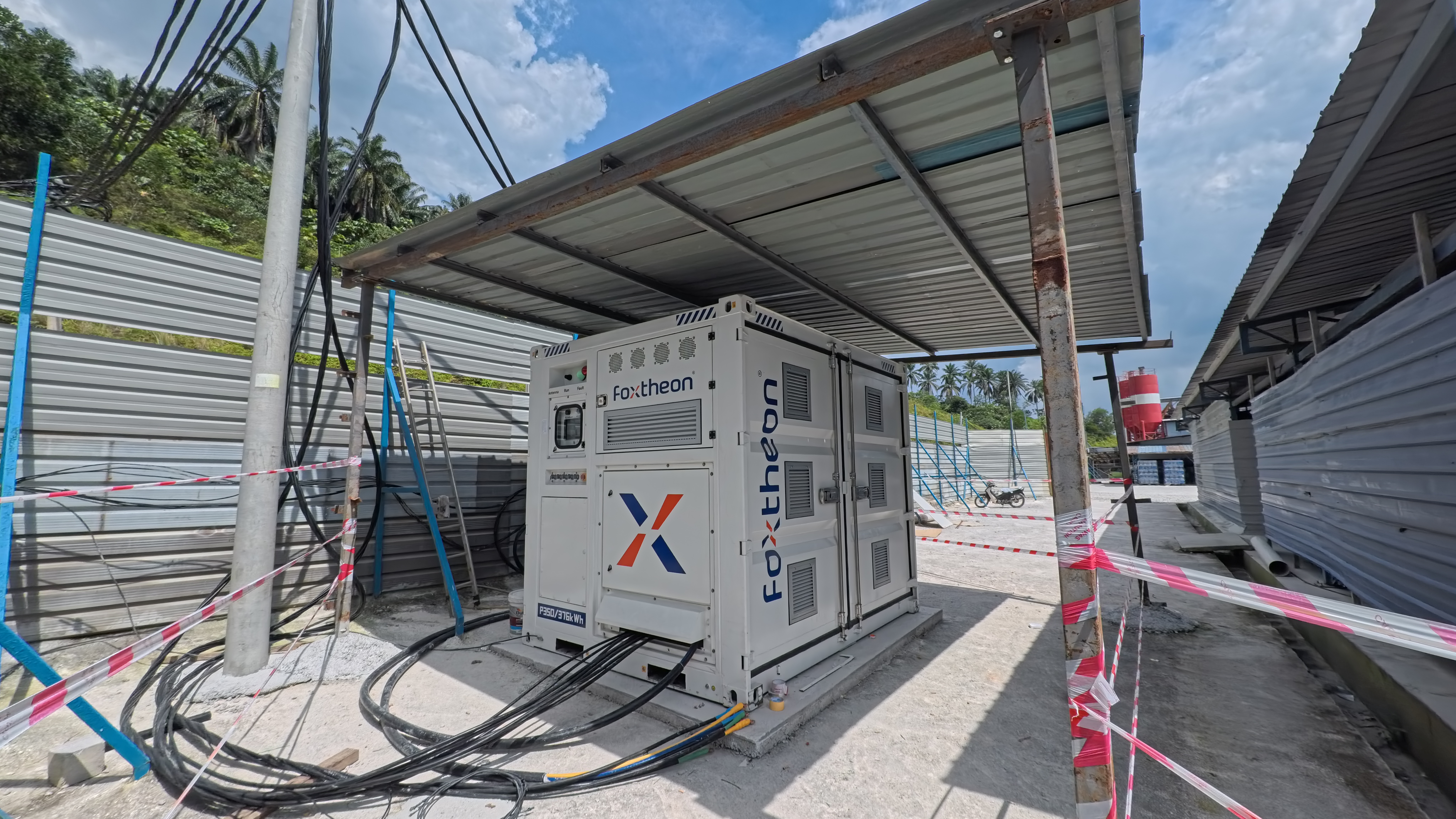
Proven in Malaysia
Three tower cranes powered from a 110 kW grid connection
At a Malaysian infrastructure project, an EnergyPack P350 was installed as an intelligent power buffer. It kept grid import within the utility limit while supplying the shortfall during simultaneous crane peaks.
EnergyPack Selection
Match battery power and energy to the site deficit
Final sizing depends on the grid limit, peak load, event duration, recovery time, load type and required operating margin.
EnergyPack P150
For mobile projects, temporary grid support and dynamic equipment with frequent short peaks.
EnergyPack P300
For larger construction, industrial and motor loads that need stronger peak-shaving support.
EnergyPack P500
For high-demand sites, wider operating margins and scalable hybrid power architectures.
Frequently Asked Questions
Weak grid and capacity expansion FAQs
Does a hybrid BESS actually increase the utility connection?
No. It increases usable site power behind the meter by combining the existing grid supply with battery discharge. The contracted utility limit stays unchanged unless the utility approves a separate upgrade.
How is the system sized for grid booster mode?
Power rating is based mainly on the maximum gap between site demand and available grid power. Energy capacity is based on peak duration, frequency, recharge opportunity, operating reserve and the site duty cycle.
Can EnergyPack work with a generator or solar as well as the grid?
Yes. EnergyPack supports hybrid architectures that can coordinate grid, generator and solar inputs. The final topology and controls are selected after reviewing the site’s sources, loads and operating priorities.
What site data is needed for an assessment?
Useful inputs include the utility limit, voltage and frequency, interval load data, maximum peaks, peak duration, equipment starting characteristics, operating hours, future load growth and any critical-load requirements.
Can this avoid a transformer upgrade?
It can often defer or reduce the need for an upgrade when the main problem is short-duration peak demand. A site and utility compliance review is still required before deciding whether grid reinforcement can be avoided.
Start With Your Load Profile
Find out how much additional usable power your existing grid connection can support
Share your grid limit and load data. Foxtheon will recommend the required BESS power, energy capacity and control strategy.