
Industry Insight · Europe · Electrification
Europe Is Electrifying. Can Temporary Power Keep Up?
Europe's Electrification Action Plan targets electricity at 46% of final energy use by 2040. But electrification makes power demand more dynamic—and raises a harder question for temporary and off-grid projects: can the power infrastructure keep pace?
Europe's electrification target: 46% by 2040
Europe has made one thing clear: electricity will play a much bigger role in its future energy system.
With the release of the EU Electrification Action Plan, the European Commission has set a target to increase electricity's share of final energy consumption to 46% by 2040. The plan supports broader objectives including decarbonisation, energy security and industrial competitiveness, while highlighting the importance of expanding electrification across transport, buildings and industry.
Electrification is also a demand problem
For the power industry, however, the announcement raises an equally important question.
As Europe electrifies, can its power infrastructure keep pace?
The conversation is often centred on renewable energy. More wind farms, more solar capacity and more grid investment are all essential to achieving Europe's long-term ambitions.
But increasing electricity supply is only part of the challenge.
Demand becomes more dynamic
Electrification also changes how electricity is consumed. As more equipment, vehicles and industrial processes become electric, power demand becomes more dynamic. Construction sites, manufacturing facilities and temporary infrastructure projects rarely operate with stable loads. Instead, demand rises and falls throughout the day, creating frequent peak loads and placing greater pressure on local grid connections.
For many projects, waiting for grid upgrades simply isn't an option.
The plan leans on three enablers
The EU's Electrification Action Plan places strong emphasis on energy storage, grid flexibility and digitalisation (including demand-side flexibility). These technologies help make better use of existing electricity infrastructure rather than relying solely on expanding generation capacity.
The trend is already visible beyond Europe
The same trend is already visible far beyond Europe. Across construction and industrial projects worldwide, project owners are increasingly looking for ways to support growing electrical demand without oversizing generators or investing in costly temporary grid upgrades.
Tower cranes vs. the grid connection
On one infrastructure project, for example, multiple tower cranes operating simultaneously created significant peak loads that risked overloading the site's available grid connection. Instead of upgrading the transformer, the project adopted a hybrid power solution that combined battery energy storage with intelligent energy management. The battery supplied short-duration peak demand, while the generator continued operating within its most efficient range. As a result, the project maintained reliable power while significantly reducing daily operating costs.
A Dutch precast plant cuts diesel from 170 to 100 litres per day
A similar challenge emerged at a precast concrete manufacturing facility in the Netherlands. Although sufficient generating capacity was available, fluctuating loads meant diesel generators frequently operated inefficiently. By integrating battery energy storage with an Energy Management System (EMS), unnecessary generator runtime was reduced and daily fuel consumption dropped from approximately 170 litres to 100 litres, improving both operational efficiency and fuel economy without replacing existing assets.
Reliable peak support
Battery storage absorbs short-duration peaks, so the site avoids overloading its grid connection or oversizing the generator.
Lower fuel consumption
At the Dutch precast plant, daily diesel fell from about 170 to 100 litres once storage and EMS were added.
Generators in their efficient range
When the generator runs, it stays within its most efficient operating band instead of constantly chasing variable load.
No asset replacement
Existing generators and grid connections stay in place—the upgrade is layered on top, not ripped out.
From "generate more" to "use it intelligently"
Although these projects took place outside the context of the EU Electrification Action Plan, they illustrate a broader industry shift.
As electrification accelerates, the question is no longer simply "How do we generate more electricity?"
Increasingly, it is becoming:
"How do we use electricity more intelligently?"
This is where hybrid power systems are creating new value. Battery energy storage can absorb peak loads, stabilise power supply and reduce unnecessary generator operation. But batteries alone are not enough. The real performance of a hybrid system depends on how effectively different energy sources work together.
The role of Energy Management Systems
That is why intelligent Energy Management Systems are becoming a critical part of modern power infrastructure. By continuously analysing load profiles and automatically coordinating batteries, generators and grid power, EMS enables projects to improve efficiency, reduce fuel consumption and maximise the value of existing electrical infrastructure.
How hybrid power with EMS works
Available sources feed the site, an intelligent controller coordinates them, and loads are served more efficiently than any single source could manage alone.
Storage, existing diesel generation and grid supply are combined instead of running one source continuously.
Continuously analyses load profiles and automatically starts, stops and balances each source.
Peaks are absorbed, fuel is reduced and generators run in their efficient range.
What this means for temporary power
At Foxtheon, we see this transition becoming increasingly relevant across construction, equipment rental, mining and other temporary power applications. Customers are no longer looking only for reliable electricity. They are looking for smarter ways to manage energy as electrical demand continues to grow.
Europe's Electrification Action Plan is an important milestone, but its implications extend well beyond Europe. As countries around the world continue to electrify their economies, the ability to balance power, optimise energy use and improve system flexibility will become just as important as expanding electricity generation itself.
The next phase of the energy transition will not be defined solely by how much electricity we produce. It will be defined by how intelligently we manage it.
Key takeaways
The EU's Electrification Action Plan sets an ambitious direction, but the harder operational question is how to serve more dynamic, peak-heavy demand. Hybrid power and intelligent energy management are already answering it:
- Europe targets electricity at 46% of final energy use by 2040, but electrification makes demand more dynamic
- Storage, flexibility and digitalisation are the plan's central enablers
- Hybrid power meets peak demand without grid upgrades—proven on a tower-crane infrastructure project
- Adding storage and EMS cut diesel from ~170 to 100 litres per day at a Dutch precast plant, with no asset replacement
- The question is shifting from generation to intelligent management
- The pattern is relevant across construction, equipment rental, mining and temporary power
Frequently asked questions
Electrification and temporary power: common questions
What is the EU Electrification Action Plan?
It is the European Commission's strategy to increase electricity's share of final energy consumption to 46% by 2040, supporting decarbonisation, energy security and industrial competitiveness. It also emphasises storage, grid flexibility and digitalisation as ways to use existing infrastructure more efficiently.
Why does electrification increase peak loads?
As more equipment, vehicles and industrial processes become electric, power demand grows and becomes less stable. Construction sites, manufacturing facilities and temporary infrastructure often swing between low and high demand throughout the day, creating frequent peaks that strain local grid connections.
How can hybrid power help temporary or off-grid sites?
By combining battery storage, existing generators and grid power under intelligent control, a hybrid system can absorb short-duration peaks and keep generators in their efficient range. That maintains reliable power without oversizing generators or paying for costly temporary grid upgrades.
What does an Energy Management System actually do?
An EMS continuously analyses load profiles and automatically coordinates batteries, generators and grid power. It decides when to charge or discharge storage and when to start or stop the generator, improving efficiency and reducing fuel consumption without manual intervention.
Can batteries reduce diesel without replacing generators?
Yes. At the Dutch precast plant described above, adding battery storage and an EMS reduced daily diesel from about 170 to 100 litres while the existing generators stayed in place. The upgrade is layered on top of current assets rather than replacing them.
How is Foxtheon supporting this transition?
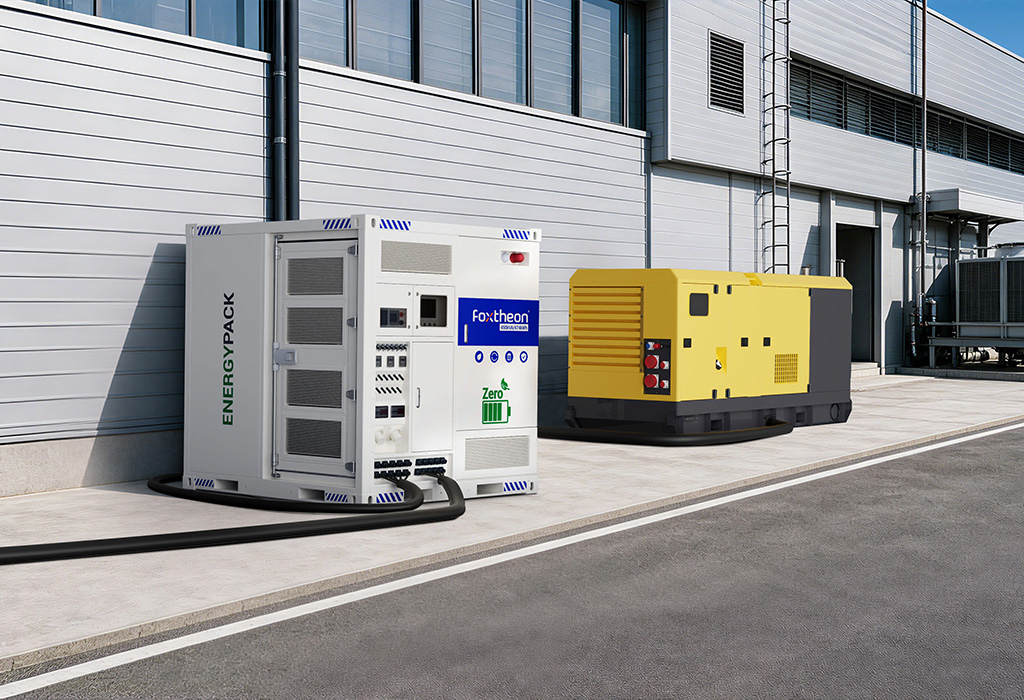
Foxtheon develops hybrid power solutions that integrate EnergyPack battery storage, HybridPack systems, SolarPad and FoxMind / Foxcloud energy management. A site assessment can define the right mix of storage, generation and control for construction, rental, mining and other temporary power applications.
Planning power for an electrifying project?
Foxtheon builds hybrid power solutions that combine EnergyPack battery storage, HybridPack, SolarPad and FoxMind / Foxcloud energy management. A site assessment can help define battery capacity, generator strategy and control logic based on your real load profile.
Case-study figures (such as the 170 to 100 litres per day reduction) are reported as described in the source material and reflect specific project conditions. Actual results depend on load profile, solar and grid availability, generator efficiency, control settings and seasonal demand.